Stenosis of the spinal canal
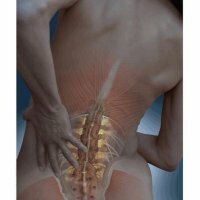
This disease is a chronic process of pathological narrowing of the central canal of the spine. The canal and the intervertebral foramen are pinched by bone, soft tissue and cartilaginous structures. There is their invasion of the spaces occupied by the spinal cord and nerve roots. Narrowing of the canal caused by disc herniation and leading to acute compression of the neurovascular structure does not concern stenosis.
Clinical manifestations of
In acute stenosis of the lumbar spine in the spine, the clinic is very diverse. Most often, patients complain of pronounced prolonged low back pain, which occurs in the supine or sitting position and sharply increases with walking and the slightest physical exertion. Pain can be concentrated in the buttocks, in the thighs, which requires differential diagnosis for hip joints. One-third of patients complain of leg pain during fast walking. These pains appear swiftly, intensify as the movement continues, do not pass after stopping. Relief can bring only flexion of the spine in the lumbar region. Symptoms of acute compression of the roots are infrequent and are due to the often accompanying herniated intervertebral disc.
Causes of
Degenerative changes that cause the development of vertebral stenosis arise due to increased pressure on the facet joints, a decrease in disk space and an increase in the angle of extension. By itself degenerative stenosis is an indispensable sign of hypertrophic proliferation of affected intervertebral joints, originally caused by progressive degeneration of the vertebral disc. During the process of destruction of the joints, the hypertrophic process begins to intensify, which leads to local ankylosing. Hypertrophy and calcification of the yellow ligament, as well as venous hypertension can lead to massive bone growth. Microtrauma, activity associated with a constant load on the lumbar vertebral column are not the cause of the development of stenosis. However, they substantially increase its flow.
Conservative treatment of
It includes the complete exclusion of loads on the spine( lumbar region), the use of non-steroidal anti-inflammatory drugs, in particularly acute cases, bed rest is indicated. Outer fixation with orthoses is often used to relieve the axial load and some restriction of excessive extension in the area of the affected department.
For the full adaptation of patients to the disease, one must undergo a course of training in the correct mechanics of body movements, learn posture, competent and suitable organization of the workplace. Surgical treatment is prescribed only when the conservative is completely ineffective.
Surgical treatment
For the final treatment of spinal stenosis, decompression is performed - the release of nerve endings from the compressive bone-ligament formations. During the intervention, the stability of the spine is slightly disturbed, so fixation is performed at the surgical site after surgical decompression. In the treatment of lumbar stenosis, clinicians use posterior decompression by resection of the vertebral arcs of the damaged segment. Then a transpedicular fixator is installed to restore stability and stability. Such operations have a good clinical effect, are the world standard in the treatment of lumbar stenoses.