Allergy to alcohol
 Allergy to alcohol - a fairly common disease caused by various components of alcoholic beverages. Like any substance ingested in the body, alcohol, in addition to a truly destructive effect on all systems and organs of the body, can provoke the development of an allergic response to immune defense. The fact that many who drink even occasionally people feel itching and redness of the skin after drinking any alcoholic beverage norm, in fact often the first sign of allergy manifestation
allergic to alcohol - Causes
In addition to ethanol, which is the main component of most of theAlcoholic beverages, alcohol allergy can be caused by such numerous additives and components as flavors, polyphenolic compounds, synthetic dyes, etc. In hot drinksnovnymi allergens are polysaccharides( thickeners, cellulose, starch, pectin) and protein substances. Alcohol allergy is both acquired and hereditary.
Acquired allergy to alcohol develops in people due to the systematic use of low-quality alcoholic beverages with a large number of different chemical impurities and dyes. If a person drinks alcohol in small amounts and only on large holidays, he does not need to pay attention to the red spots on his arms, neck and face after using a glass of champagne. Most people believe that this is a food allergy to a product that is in a very wide range presented at any festive event. However, if in addition to red spots begins to manifest and other symptoms, represented by lowering blood pressure, increased fatigue, skin flaking and severe headache - you can most likely talk about alcohol allergies.
Hereditary allergy to alcohol is most often manifested in the whole genus, both on the maternal and paternal lines. In the case of a hereditary form of allergy, a person can not consume any alcohol in any quantity. Otherwise, even after a tiny dose of alcoholic beverage, it can develop not only intolerable headaches and vomiting, but also such an extremely dangerous and serious condition as anaphylactic shock.
Many common and champagne wines contain sulfuric anhydride, which is also used in the wine industry to stabilize the initial wort, from the grape obtained by processing it. In some people, these sulfur compounds cause a very strong allergic reaction. Allergy
after alcohol may be caused by a deficiency in the body of the enzyme aldehyde dehydrogenase, which after intake of alcohol, to prevent toxic lesions, processes it in acetic acid. In the case of deficiency of this enzyme, there is a strong poisoning of the body and as a result - a severe allergic reaction
allergic to alcohol -
symptoms Allergy symptoms of alcohol in the early stages of the disease are expressed quite weak and usually occur only reddish spots on the skin. Then, after some time, various metabolic disturbances start to appear - strong headaches develop, constipation appears, chronic intestinal diseases become worse, gastritis appears. In some cases, panic attacks and fainting may occur.
If you do not take all the necessary measures in a timely manner, you may develop such extremely dangerous symptoms as hemolytic crisis, Quincke's edema, bronchial spasm and anaphylactic shock.
Typical allergy to alcohol symptoms:
• After alcohol redness torso, arms,
face • After taking the usual dose of alcohol comes very quick intoxication
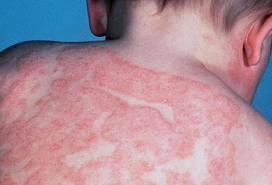
• On the torso, neck and face appear reddish spots, may experience dry, flaking and cracking
skin • pain in the stomach, nausea and vomiting
• Swelling of the face of the skin, rash, itching
• fever, asthma attacks, runny
• Severe headaches, tide Ms. Tin of blood
• Tachycardia, increased blood pressure
True allergy after drinking alcohol is actually much less common than people diagnose it themselves. In most cases, this allergy means complaints that people associate with the after-effects of alcohol after effects. Usually it is the appearance of itchy red spots on the skin, or filled with transparent contents of small bubbles. These symptoms are very similar to the symptoms of alcoholic allergy, but do not forget that usually at any festive table a person often uses delicacies, rarely present in his daily diet. So, an allergic reaction can develop on these products.
In some cases, there may be an allergy to alcohol, which treats injection site injections. However, due to the fact that pure alcohol is used very rarely in medical institutions today, and boric and salicylic acids are part of the disinfection solution used, an allergy can occur not on the alcohol itself, but specifically on these components.
Diagnosis of alcohol allergy is no different from diagnostic procedures in determining other types of allergic diseases. A biochemical blood test, an immunoenzyme and a skin test are carried out. In case the alcohol allergy has been confirmed, there are following ways out of this situation: complete refusal of alcoholic beverages and minimizing the risk of alcohol allergy development. This is in principle possible if one adheres to the following recommendations:
• It is mandatory to use only high-quality alcohol products, without polysaccharides, protein compounds, chemical additives and dyes
• When consuming alcohol, be sure to follow the measure, since tasting good alcohol should enjoy a bouquet of taste of the drink, And not to remain in a comatose state from its unbearable consumption of
• To your condition when using alcohol should be treated very carefully, soAs an allergy is usually caused by far not all alcoholic products. It should be observed after which exactly the beverage began to show allergic signs and refuse to use it
In case of an allergic reaction to strong alcohol, one should completely eliminate such alcoholic drinks with a complex composition like moonshine, whiskey and tequila. It is best to switch to the use of an exceptionally good cognac, It contains tannins that reduce the permeability of the intestinal barrier.
In the case of an irregular development of an allergic reaction and the absence of its direct connection with the dose and a specific alcoholic beverage, close attention should be paid to the foods consumed together with alcohol, since they, and not alcohol, can cause allergic manifestations.
Allergy to alcohol treatment
Complete and irrevocable refusal of alcohol is the best way to get rid of alcoholic allergy. In the case of a developed strong alcohol dependence, there are special rehabilitation programs, where a person with alcoholism is taught to live without alcohol.
Many fans of alcoholic beverages often wonder whether it is possible and if so, how to cure an allergy to alcohol, while still being able to drink as before, but there were no allergic reactions? Such people want to upset, as according to experts, with established alcohol dependence, neither medicinal, nor psychotherapeutic, nor physiotherapy methods can not guarantee the consumption of alcoholic beverages without the development of any further consequences.
If there are no signs of alcoholism in a person, you can reduce the risk of allergic reactions to alcohol consumption by giving up poor quality alcohol with various additives and dyes. In the event that the alcohol allergy has already developed, the best option is a complete refusal of alcohol.
After the detection of allergy to alcohol, preferably without delaying, you should seek help from an allergist, rather than self-medicate, becauseMost drugs from alcohol allergy are not compatible and can cause any unpredictable reaction of the body.