Symptoms of concussion of the brain
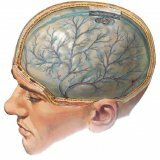 Concussion of the brain can be attributed to mild damage to the brain. As a basis for the manifestation of concussion, a violation of the bonds observed between nerve cells is taken. However, until the end is not clear and there is much controversy in the development of this disease, it will be treated as an easy degree of damage.
There is a structure of craniocerebral trauma, in which the concussion ranks first( that is, it occurs more often than other injuries).
Causes of concussion
Causes of concussion: accidents, industrial, domestic, sports head injuries, criminal circumstances. During the impact, the brain is sharply shaken, which, due to inertia from the inside, hits the cranium.
While doctors do not give an unambiguous answer, what happens to the brain as a result of a concussion.
There are, of course, opinions that have much in common, but on the whole differ:
- suffers the whole brain;The brain tissue is not disturbed, but the interrelation between the different parts of the brain and the brain cells is temporarily lost. This dissociation leads to a malfunction of the brain.
- believe that because of a sudden increase in intracranial pressure( which is usually short-lived) at the time of injury, the physico-chemical property of the brain substance begins to change, as well as the colloidal balance of proteins in the cells.
- it is assumed that the functional separation between the hemispheres and the brain stem takes place. Histological and macroscopic changes in brain tissue are not observed.
- may worsen the supply of brain cells, the appearance of an easy displacement of layers of brain tissue, the disruption of connections between certain think tanks;
- rotation and movement of the cerebral hemispheres of a relatively more fixed cerebral trunk with a slow-acceleration injury with axon tearing and tension;
- is a shock wave that extends from the site of the injuring resident's application to the head through the brain to the pole of the opposite side with sudden pressure drops at the points of impact, as well as a counter strike;
- resonant cavitation, and also the shock effect of bone-cranial deformation, hydrodynamic shock, cerebrospinal fluid at the time of trauma from the wide cavities of the ventricles is directed to the interventricular orifice of the brain and the aqueduct of the brain.
Symptoms of brain concussion
Immediately after a concussion, vomiting is observed( usually single), a slight increase in breathing, a slowing or a faster increase in heart rate, but soon these indicators come back to normal. In most cases, the blood pressure quickly normalizes, but there are cases when the blood pressure increases steadily, is caused by both the trauma itself and accompanying stressful situations. With a concussion of the brain, the temperature of the body does not change, it remains normal.
When consciousness recovers, complaints of dizziness, headache, tinnitus, weakness, sweating, sleep disturbance, discomfort, movement of the eyes, pain, reading of the discrepancy of the eyeballs.
General condition after concussion usually improves during the first week, rarely only during the second week.
However, in some cases, the symptoms of tremor can last much longer, this is due to various reasons.
The picture of concussion is also affected by age factors.
Shaking in young children, as well as in infancy, usually proceeds without disturbance of consciousness. Symptoms at the time of trauma in children: a sharp pallor of the skin( especially the skin of the face), increased heart rate, lethargy, drowsiness. When feeding, there is regurgitation, vomiting, the child behaves restlessly, a sleep disorder is noted. This symptomatology passes after 2-3 days. Concussion in children of preschool age proceeds without loss of consciousness. After a maximum of three days the general condition of the child improves.
People with old age have a primary loss of consciousness with a concussion of the brain, in young people, as well as in people of middle age, loss of consciousness is observed more often. Along with this, there is often a pronounced disorientation in time and place, dizziness is not uncommon. Often, headaches are of a pulsating nature, arising in the occipital region, which lasts up to one week, in people with hypertensive pain more intense.
Diagnosis of concussion
When diagnosing an important factor is the information of witnesses of the incident and the circumstances of the injury. The next thing that should be paid attention is whether there are traces of trauma on the head, as well as on the psychological state and alcoholic intoxication of the victim.
Functional studies can also indirectly contribute to the objectification of concussion, for example, ultrasound intracranial dopplerography, electroencephalography, ophthalmoscopy. The most informative is otoneurological examination with the use of audiometry, electrohystometry, and electrostatistics.
Usually with concussion there are no fractures of the bones of the skull. The composition and pressure of the cerebrospinal fluid remains unchanged. M-echo is not biased. Density of white and gray matter within normal limits( according to computed tomography, which shows that there are no abnormalities in the state of the brain substance, and also in the liquor-containing intracranial spaces).With concussion of the brain, the result of magnetic resonance imaging will show that there are no lesions.
Treatment of concussion of the brain
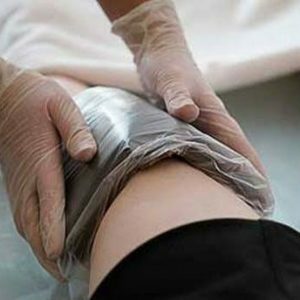
The first thing to do is to provide the victim with mental and physical peace, put him with his head elevated, the gate is better to unbutton, put a wet and cold towel on his forehead. In case of concussion, a consultation between a traumatologist and a neuropathologist is mandatory.
If the victim is unconscious, he should be placed on his side in a stabilized position. This will prevent the tongue lagging, as well as aspiration of vomit. If necessary, the victim is hospitalized for 2 weeks for observation and strict bed rest.
Inpatient treatment is performed by intravenous injection of glucose, ascorbic acid, calcium chloride and subcutaneous injections of diphenhydramine. In some cases, oral non-narcotic analgesics are prescribed.