Chronic periodontitis: symptoms and treatment in the acute stage
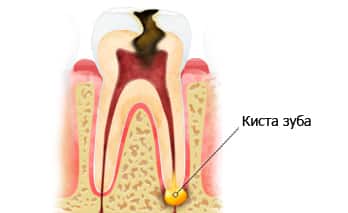
Chronic fibrous periodontitis is a consequence of the development of periodontitis in acute form, or develops after treatment of a chronic disease in such forms as granulating or granulomatous periodontitis.The disease is an inflammation of the membranes of the tooth root and the adjacent tissues.Occurs, as a rule, because of the penetration of infection through the opening of the upper part of the root canal, or with caries lesions.
The disease is accompanied by an increasing, throbbing pain of a localized nature.The pain sensation amplifies and becomes intolerable at loading, a closing of a teeth.In some cases, patients have a fever, which should be addressed urgently to specialists.
Description
Fibrous periodontitis is characterized by a decrease in the number of cells and an increase in coarsely fibrous fibrous tissue.The disease is diagnosed as a chronic form with prolonged inflammation with remission periods and exacerbations.
In places of periodontal disease there is sclerosis of vessels
with inflammatory small-focal infiltrates, as well as a diffuse thickening of the periodontal top and a kind of scar tissue is acquired.The disease can occur as a result of transition from acute to chronic form after cured pulpitis, or it can develop independently due to impaired bite and for a number of other reasons.
Often the chronic periodontitis of symptoms does not have , the patients do not have anxiety, there is no discomfort, but only the sensitivity can be increased when pressing, biting on the tooth.
In the image, experts note a uniform expansion of small dimensions in the crevice, enlarged in the distal root part.

Chronic fibrous periodontitis
We suggest to consider a picture on the photo of chronic periodontitis in the stage of exacerbation and calm course of the disease.It shows bone tissue with fuzzy defect boundaries that resemble flames.
Specialists point out when finding a disease an interesting fact is that the reason to make an X-ray in patients is another problem of dental disease, or gums.Often in patients, a fibrotic change in the periodontium is observed when examining the destroyed teeth, or during their treatment.
The main causes of the development of the disease include:
- Infection for a long time periodontal tissue microflora, which developed with resorption of the root filling;
- prolonged chronic lesions of periodontium injuries, affecting the height of the occlusion;
- incorrectly installed dentures of various types;
- presence of foreign components in the periodontium( filling material, fragments of broken tools, etc.);
- endocrine system diseases, diabetes mellitus, chronic diseases of internal organs, provoking the onset of chronic periodontitis;
- decreased immunity, metabolic disorders.
Danger of fibrous chronic periodontitis

Granulomatous periodontitis
Specialists, among the existing forms of chronic periodontitis, distinguish fibrous inflammation as one of the most stable, characterized by a favorable development forecast of .The presence of inflammation with a positive cure for other forms is not taken into account.
But in the case of an independent formation of the fibrous focus, the predictions are not comforting, which is explained by the development of the disease due to infection, or prolonged traumatic loads on the teeth.
Exacerbation and set of therapeutic measures
Exacerbation of chronic periodontitis is initially perceived as an acute form, but an accurate diagnosis is determined based on the X-ray image and the patient's condition.
The reason for this is the similarity of the main symptoms of the acute form with a chronic disease, while the treatment regimen is similarly performed in several stages.
Chronic periodontitis treatment of the fibrous form without exacerbations is not performed if there are a number of indications:
- no complaints, symptoms, obvious signs of pain;
- correct sealing with good quality seals;
- therapeutic measures of other dental diseases.
In the presence of defects in the established seal, or it is not in the tooth at all, then there is a need for appropriate treatment, carried out in stages with a visit to the dentist several times.
On the first visit, the specialist performs the examination, examines the tooth images, according to which possible passability of the channels is noted, their position and sizes are estimated.After the examination, local anesthesia is performed and the dental cavity is opened, then the doctor cleans the channels with antiseptic means.
In the future, the doctor widens the channels of the to the possible optimal diameter, and at the same time the damaged tissues are removed.Then the dental cavity is sealed with a temporary filling and calcium preparations.
The material of the temporary seal is removed after five days, and the channels are treated with antiseptics again.

X-ray picture of chronic periodontitis
The absence of unpleasant symptoms with the presence of temporary filling material allows for the installation of a permanent seal.And after a second shot, the outer part of the damaged tooth is restored.
When the patient after the first visit feels pain, chronic periodontitis in the acute stage makes itself felt, the dentist changes the treatment schedule.For this, a temporary filling is removed, the tooth is left open for several days.
In doing so, the doctor performs an autopsy of the pulp , removes the nerve, clears the dental cavity for a normal exit of pus.Then, at home, the mouth is rinsed to wash out purulent accumulations, antibacterial agents are taken.But also there may be no need to hide the tooth, but a cut is made and the periosteum is cut at the site of the transitional fold, with further installation of elastic drainage.
The procedure is performed with the introduction of local anesthesia , followed by the administration of antibiotics.When the symptoms of exacerbation have passed, you can continue treatment according to the usual scheme.In some cases, physiotherapy procedures are additionally prescribed for relieving the exacerbation.
Prevention
Correctly organized preventive measures are based on the understanding that chronic forms of inflammation arise as a result of untreated caries, or the development of pathogenic microflora.
The cleaning procedure should be carried out at least twice a day, and after eating it is necessary to rinse the mouth and go to sleep only after hygiene procedures.
In this case, there will not be any complications and pathological formations that can lead to periodontitis.
When wearing orthodontic structures , experts recommend the use of a gel that protects the gums and teeth from inflammation.A special rinse aid will help to ensure the correct microflora.
Gentle care is required to provide and dentures, braces, since their prolonged wearing can create mechanical injuries and loads to the teeth.

Proper oral hygiene is the prevention of dental diseases
To prevent the formation of carious stains in the foci of periodontal inflammation, it is important to visit the dentist regularly for preventive examination and prevention of the disease.
An important issue in preventive activities is balanced nutrition, which excludes the use of sweet foods.Also, the appearance of the first alarming symptoms should not be left without attention and whenever possible you should visit a dentist.
As the trip to the modern dental office does not cause fears and fears, due to the intensive development of dental medicine and the introduction of innovative equipment and preparations.
In conclusion, we note that the timely detection of chronic fibrous periodontitis and its professional treatment will preserve the integrity of the dentition for many years.