Shinning teeth: what it is, photos before and after
The consequence of some dental diseases is pathological mobility of the teeth, which in the future leads to their premature destruction and loss.Patients with complications of periodontal disease and osteomyelitis are interested in what is the splinting of the teeth and how it can help preserve the functionality of the oral cavity.
The question remains as to which type of splinting is preferable, and what complications this dental procedure is fraught with.
The essence of the procedure
Splinting is a series of dental manipulations by that help to fasten the elements in the dentition, preventing them from falling out.In the process, a special strong thread is laid on the posterior surface of the teeth - a tire that literally holds the patient loose teeth and ensures their safety.
The event is effective only in the early stages of the disease with mandatory combination with conservative treatment.
Indications for the procedure.

Teeth splinting
- The dentition was broken in the process of pathological development, the resulting injury or complications of the disease.The mobility of its elements and their displacement are noted.
- Abnormal arrangement of teeth.
- Complex diseases of soft tissues( alveolitis, periodontitis, periodontitis, etc.), as well as increased bleeding gums.
- Deep gingival pockets.
- In the root and cervical areas of the tooth a pathological amount of deposits( plaque, pigments, food remnants, dark stone, etc.) is formed.
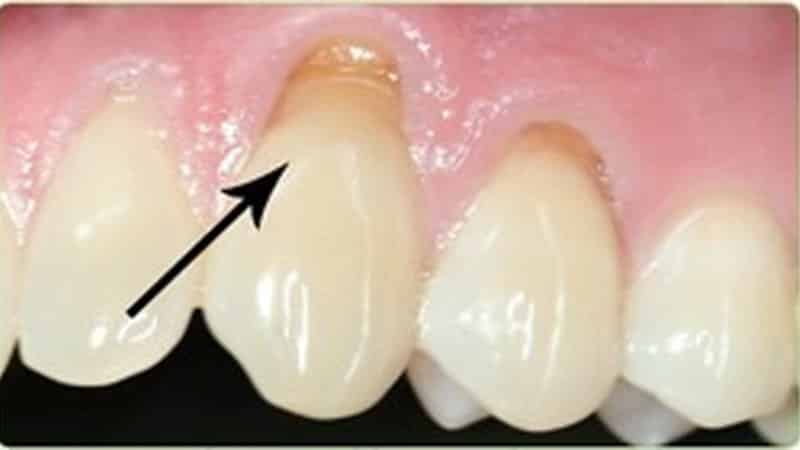
- Exposure of dental roots due to non-carious lesions of the row.
For such a responsible procedure, special materials are selected, to which presents a number of dental requirements:
- ability to reliably fix a series with minimal traumatization of hard tissues and gums;
- complete elimination of pathological mobility;
- imperceptibility for the interlocutor, safety of smile aesthetics;
- comfort of the patient during communication( safety of diction) and eating, performing regular hygiene of the area;
- durability and durability.
Choosing quality materials for the procedure, patients are asked whether it is necessary to do splinting of teeth with fiberglass( reviews on the material are only positive).Dentists advise to dwell on this material, as well as on silk and polyethylene, which ensures maximum imperceptibility on the teeth.
In some cases, particularly reliable and strong threads, for example aramid, are required.
Non-detachable method
When it comes to prostheses, this design is the most durable and durable.This kind of splinting is assigned, when in a number there are several elements missing, especially consecutive.
Crowns are also reliable and wearable, however, their installation involves some difficulties.In order to install the structure and fix it on healthy teeth, they should be previously depulped and sharpened to the desired shape.In the presence of periodontitis and a number of other pathologies, this method is not applied.
Clasp prosthetics is aimed at the isolation and fixation of the entire dentition, as well as the replacement of missing teeth by artificial ones.

Splinting teeth before and after photos
Splinting of teeth with a floss( photo before and after above) is assigned if all the elements of the tooth row are preserved, since this method is gentle. Main advantages: does not require depulping and turning of adjacent teeth, traumatization of hard tissues is minimal.
In case of proper installation, optimal distribution of the masticatory load and elimination of pathological interdental spaces are ensured.
Stages of non-removable thread splicing.
- The nurse places a conductive anesthetic in the affected area.
- The doctor performs an equal groove on the posterior surface of the teeth( loosened and healthy), the depth of which is 0.5 mm.
- A special thread from the selected material is laid in the groove, after which it is fixed with the heliocomposite.
- In case of splitting the lower row, additional fixation of the molars is required.For this, the furrow is drilled on the masticatory surface, and the thread is drawn from above.
Removable method
This measure is assigned in case of serious pathologies and severe forms of the disease, when the teeth not only lose their mobility, but also drop out.To save a number of dentists develop an individual design that will fix healthy teeth and restore artificial crowns dropped.
A removable procedure is used after mechanical damage to the , such as a fracture and a severe jawbone injury.This will fix the dental row for the period of recovery and prevent its elements from changing the natural location.
As a rule, plastic or metal is used for manufacturing removable tires.

Removable tire with vestibulural clasp
Shunting of movable teeth involves the use of various removable structures.
- The Elbrecht system .It is made of a flexible and durable alloy, which ensures comfortable wearing and durability.Mobility is eliminated in all directions, however, there is no protection against uneven masticatory load.Therefore, the model is used in the early stages of diseases and in the presence of mobility of teeth of the first degree.The arrangement of the tire can be different( upper, middle, lower), and the design is standard or extended, which will depend on the anatomical features of the client's jaw.
- Elbrecht system with clasps for the front teeth .The model reliably fixes the dentition, but is also used for mobility of the first degree and absence of periodontal and periodontal inflammation.
- System with one-piece sealing. Represents a modification of the Elbrecht system.It is aimed at fixing the frontal teeth( incisors, canines) with the help of special protective caps.The model protects the dental arch from increased and uneven masticatory load.
- Circular tire ( conventional and with nail claws).It is often used for splinting teeth( expert reviews are only positive).Effective in the case of an unexplained mobility, is not used when the teeth deviate from the axis.
The design is made in the dental laboratory on an individual impression of the patient's jaw.The degree of deformation of the series, the number of missing crowns, the degree of development of periodontitis, the age of the patient, the type of pathology, the form of bite, the quality of regular hygiene, and other factors are taken into account.

Filling dentures
Manufacturing requires several visits to the dentist and consists of the main stages.
- A visual and mechanical examination of the periodontal condition is performed.In some cases, radiography is prescribed.
- A dentition is prepared, which is followed by the individual cast.
- Simulation and selection of the design of the tire.
- Execution of wax material model( reproduction).
- Checking the system directly in the patient's mouth, correction.
- Finish and polish tires, manufacture from the selected material.
Advantages and disadvantages of the
The procedure allows to restore the dentition and eliminate pathological mobility.It is effectively used to correct pathologies as a result of anatomical and age-related changes, mechanical damage.
Splinting teeth in periodontal diseases is almost the most effective way to preserve the functionality of the series.
Tires allow to reduce interdental spaces, which, unfortunately, is impossible with the use of other similar structures.Also splinting acts as an alternative to prosthetics when it comes to the restoration of lost crowns.
The plus is the ability to maintain healthy teeth, as there is no need for their turning and preliminary depulpation.The completed groove is densely laid with a composite.
Well, the last important plus - the design is strong, reliable and durable - judging by the feedback, they serve patients for more than one year.
- splinting slightly complicates oral hygiene( especially dentogingival pockets);
- illiterate installation can cause exacerbations of periodontitis and other dental diseases;
- deep groove can open the pulp chamber, provoking pulpitis and very severe pain;
- in some cases increases the sensitivity of the enamel, which requires additional care;
- bus may break due to a violation of manufacturing technology, as well as due to natural deformation and overheating;
- under the tire can also develop diseases in case of insufficient polishing( caries is common).
The splinting is a modern service that allows you to keep the dentition and protect it from heavy loads.If you perform the procedure in a good clinic, you will gain an inconspicuous way to keep healthy teeth, even if dental diseases develop.