
Food poisoning in children: symptoms, treatment and prevention
At least once in a life each person faced food poisoning. The most vulnerable to this condition are children, since a baby's body, which is not strong, can not fully combat microbes and poisons that provoke intoxication. Food poisoning in children - is an acute reaction of the body to products containing toxic substances.

Poisoning is usually manifested in a whole list of symptoms: diarrhea, vomiting, dehydration, fever and general intoxication of the body. Food poisoning in a child is more severe than in an adult, since most digestive functions and the immune system are still in development and do not have adequate protection against toxic infections.
Causes of
Food poisoning causes or known poisonous food( for example, inedible berries, mushrooms, plants, etc.), or ordinary food that contains toxins and microbes. Food poisoning is still commonly referred to as food poisoning, if the product used contained pathogens of intestinal pathologies - salmonella, E. coli, staphylococcus and others. More about food poisoning →
Potentially hazardous products are :
- dairy products( especially curd and ice cream);
- eggs;
- fish and seafood;
- meat;
- baking with cream.
Of course, to limit the child in ice cream is not necessary, it is not necessary that he will poison them. Just need to choose quality products, learn how to properly store them, not to teach your child to eat in fast food, emphasizing his attention to the benefits of home food.
Symptoms of poisoning
With a mild form of poisoning, the child may experience allergies in the form of skin rashes and slight swelling, as well as general weakness and lack of appetite.
In more severe cases, a child may complain of abdominal pain, attacks of nausea and vomiting, diarrhea and fever. Diarrhea usually manifests itself in the form of a plentiful and watery stool, with the inclusion of undigested food particles.
The most dangerous signs of poisoning are unceasing vomiting and diarrhea. These symptoms not only exhaust the body, but also lead to its dehydration, with violation of water-salt metabolism and blood thickening, which is fraught with the risk of thrombosis. To admit such a condition is impossible, repeated vomiting and diarrhea are indications for inpatient treatment.

Classification of food poisoning
Children can have two types of food poisoning:
- Infectious poisoning, which provokes pathogens and their toxins. It can be food poisoning and toxicosis - botulism, bacterial toxics.
- Noninfectious poisoning caused by toxic products of vegetable and animal origin( inedible fungi, berries and plants), with impurities of poisons and heavy metals.
Flow Stages
When poisoning in children, there are three stages in the course of the pathological process.
Latent or asymptomatic
Begins from the moment that toxins enter the digestive tract of a child, before the first signs of poisoning appear. The latent stage depends on the age and individual characteristics of the small patient, as well as the amount of toxins that have entered his organism.
If you suspect food poisoning at this stage in children, until the poisons have not yet fully absorbed by the body, you can avoid the following stages of pathology development, immediately begin treatment of the child with enema, gastric lavage and sorbent intake, for example, Activated Carbon.
Toxicogenic
Begins with the detection of the first symptoms of food poisoning in children before removing toxins and pathogenic microbes from the body. Symptomatic at this stage is fairly developed, its nature depends on the type of toxic infection.
Treatment at this stage is carried out by removing toxins from the body( gastric lavage, enema, etc.), Detoxification and symptomatic therapy, e.g., destination antipyretics.

convalescence
At this stage, food poisoning, the problems of the child, is over, but the body needs time and effort to restore disturbed functions -.. Immune, digestive, enzymatic, excretory, etc.
First Aid
Assistance includes the following activities:
- Enema from cool water and sorbent( for example, Smekty).The volume of enema depends on the age of the child. In 1 year - 70 ml, in 2 years - 120 ml, in 3 years - 200 ml, from 4 years - 300 ml.
- Receiving Activated Carbon. To year - 1 tablet 1-3 years - 2 tablets 3-6 years - 3 tablets with 6 years - the child's weight divided by 10.
- gastric lavage with 6 years slightly pink solution of potassium permanganate( 10 ml / kg body weight).
- Drink plenty of boiled water, rest and refusal to eat for at least 6 hours.
What can not be done?
It is not allowed to treat food poisoning in children without consulting a doctor. You can not independently select antibiotics for your child, as well as preparations for diarrhea and vomiting. These funds can harm him, since they can block the natural release of toxins from the body.
It is forbidden to give a child sorbents, if in his anamnesis there is a stomach ulcer or a tendency to intestinal bleeding.
Diagnosis
The doctor begins the treatment of food poisoning with a diagnosis.
To determine the true cause of poisoning are needed:
- complete blood count;
- study of vomit, urine and feces to identify the causative agent;
- study of the remnants of food that the child consumed.
After receiving the results of the survey, the specialist determines the further tactics of effective care.
Treatment
Depending on the severity of food poisoning in the child, the doctor prescribes what to treat the pathology. Conservative therapy should be combined with a special diet.
drugs prescribed in this case :
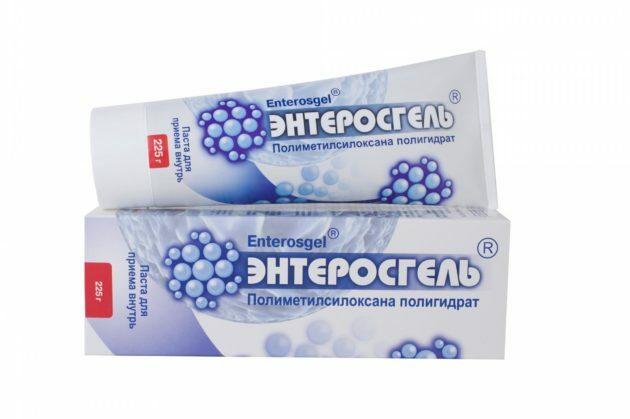
- sorbents - Smecta, Enterosgel, Polyphepan and activated charcoal. These drugs are prescribed for food poisoning, which is accompanied by vomiting and diarrhea, as a comprehensive treatment.
- Probiotics - Lactobacterin, Bifiform Baby. Sources of probiotic microorganisms, improve the state of intestinal infections and dysbiosis.
- Antibiotics - Cefix, Nifuroxazide. The need for antibiotic therapy occurs in 10% of cases of foodborne disease. These antibiotics are effective for intestinal infections and are safe for the baby's body.
Can Activated Carbon be given to children?
For poisoning and infectious diseases, especially for the digestive organs, children are given Activated Carbon. For young children, the preparation must be ground and mixed with water, the so-called suspension is obtained.
Dosage of Activated Carbon is calculated according to the weight of the child. If there are no other instructions from the doctor, the weight of the baby should be divided by the number "10" - the number given indicates how many tablets should be taken at a time. There should be three doses per day.
There should be at least 2 hours between taking other medications and coal, otherwise the sorbent will simply absorb the medicament components and the drugs will not work. Most often the Activated angle is assigned to children for 3 days.

Power supply
Diet for food poisoning - is one of the most important aspects of treatment. The main task of parents is to organize proper nutrition for the child. When the first symptoms of poisoning appear, it is important to exclude any meals during the next 6 hours. At the same time, the child should receive enough water - the more, the better.
After this time, the diet for food poisoning in a child should be as gentle as possible. Food should be wiped, offering her baby in a liquid or semi-solid form. Multiplicity of food intake is recommended to be increased up to 8 times, while portions should be small.
Refuse to have fresh baked goods, whole milk and sweets - these foods enhance the processes of fermentation in the intestines, and, therefore, exacerbate the symptoms of poisoning. You also need to minimize the amount of fat in the baby's diet.
How to feed a child in food poisoning? The basis of the therapeutic diet should be porridge on the water, vegetable soups and meat( in a grated form), crackers or yesterday's bread, sour-milk products.
The listed products should be fed to the child until complete recovery. Then, over the next two weeks, the diet should still be special: food steamed, giving up fried and fatty, raw vegetables and fruits.
Prevention
Prevention of foodborne disease is the organization of proper storage of products and their adequate heat treatment, boiling drinking water, observance of basic hygiene rules. It is also necessary to introduce children to inedible plants and mushrooms, to explain their danger.
Food poisoning refers to diseases that are common among children. To prevent poisoning in the child, it is necessary to monitor his pastime, keep out household poisons and chemicals, and follow preventive measures.
Author: Olga Rogozhkina, doctor,
specially for Moizhivot.ru


