Systemic vasculitis
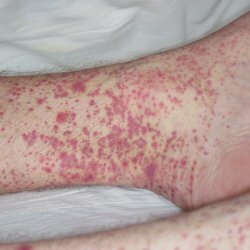 Systemic vasculitis is a clinical and pathological syndrome, a clear sign of which is inflammation and necrosis of the vascular walls, ischemic tissue change. Note that inflammatory processes develop in the vessels of any localization. Systemic vasculitis is a group of diseases in which the root cause of necrosis and ischemia is the inflammation of the blood vessels.
The main types of
To date, these types of this type of disease are distinguished:
- Wegener's granulomatosis - the main characteristic is the initial damage of the blood vessels of the upper respiratory tract, lungs, and then the kidney vessels.
- nodular periarteritis, manifests itself in that it is a partial( segmental) lesion of small and medium-sized arteries.
- nonspecific aortoarteritis( Takayasu's disease) - it is characterized by inflammation of large arteries and aorta.
- obliterating thromboangiitis, affects the veins and arteries of the muscle type.
- giant-cell temporal arteritis - inflammation of the vessels of the head.
- Behcet's syndrome - it is characterized by a change in three directions at once: stomatitis, inflammation of the eyes, changes in mucous genital organs.
Systemic vasculitis is most often manifested in men who have exchanged the fourth or fifth dozen lives. But there are kinds of vasculitides that can manifest themselves at a young age. The peak of this disease often falls on the winter-spring season. The reason for the appearance and etiology of most vasculitis is not known to this day.
Symptoms of
What can be attributed to the primary signs of the manifestation of the disease we will consider further.
The main manifestations that are the initial symptoms are: loss of appetite, carnage, fever, asthenia. With systemic vasculitis, one can observe a hemorrhagic rash, various manifestations, a rash. Musculo-articular manifestations of this disease are characterized by arthritis, arthralgia.
Vaskulty also have an influence on the peripheral nervous system: it is possible to observe motor disorders, various sensitive and vegetative disorders. When a nonspecific type of aortoarteriitis occurs, one can observe such manifestations as generalized pain, violation of blood flow in the upper limbs, angina pectoris.and even heart failure.
The temporal arteritis, better known as Horton's disease, occurs with such symptoms: pain in the temporal, less often vertebral arteries. And these are permanent headaches, swelling of the skin in the temporal region, eye pains and neurological disorders.
Kawasaki disease( a mucocutaneous glandular syndrome) characterizes fever, conjunctivitis, swelling and flaking of the skin. This form of the disease marks the defeat of the tongue, mucous membranes and lips.
Nodular periarteritis is a change in the arteries, as well as signs of poly-systemic lesion. Can develop kidney syndrome( malignant hypertension, renal failure).
Regarding the syndromes of hyperergic systemic vasculitis( cutaneous vasculitis), it is possible to observe immunocomplex inflammations of the capillaries, certain arterioles and veins. For the skin is characterized by a purple color, blisters and other manifestations.
As for clinical manifestations, they can be diverse and depend solely on the localization of vascular disease, the phases of the disease, and the degree of disruption of organ function.
It is worth noting that the present medical diagnosis is based primarily on the results of a detailed clinical examination of the patient, rather than on general guesses and prejudices. To put the correct diagnosis, you need to conduct a tissue biopsy and a series of laboratory examinations.
Diagnosis and treatment of
The main diagnosis of systemic vasculitis is a comprehensive examination. And of course, it should be accompanied by consultations of a neurologist, nephrologist, rheumatologist. Usually, ECG, kidney ultrasound, lung radiography. Angiography is used to detect vasculitis of small diameter vessels.
Regarding treatment, it is worth noting that this procedure includes many auxiliary processes. The main stages of therapy: suppression of the immunosuppressive course, maintenance of the process of remission, and of course the correction of the work of organ disorders. The conclusion is the process of rehabilitation.
With regard to drugs, the basis of pharmacotherapy is the implementation of a number of anti-inflammatory and immunoresurced courses with a specific hormone, namely, corticosteroid. Also, specialists emphasize pulse therapy as an effective way to fight the disease.