Methods of diagnosis of cholelithiasis
Gallstone disease is a fairly common disease today, which is more common in women of different ages. There is a family inclination to this disease.
Diagnosis of cholelithiasis is determined based on the story and complaints of patients.
Stagnation of bile in the gallbladder often leads to the formation of stones in it. Gallstone disease is manifested by a number of symptoms, which depend on the frequency of movement of the stones. The stones mainly consist of cholesterol, which is why the disease is caused by a violation in the exchange of cholesterol. Mixed stones consist of bilirubin and calcium.
Additional tests should be performed to establish the correct diagnosis.
Modern effective methods of diagnosis of cholelithiasis allow timely treatment, suspend the inflammatory process or apply surgical intervention.
The clinical picture of the gallbladder disease is based on frequent attacks, which are expressed in pain( colic) in the right upper quadrant, accompanied by tension of the abdominal muscles. Attacks of pain can be frequent in some patients, others appear only occasionally. During an attack, the temperature often rises for a while, there are attacks of nausea and vomiting, severe pain in the abdominal cavity, stool retention, bloating.
Duodenal sounding
One of the methods for diagnosing cholelithiasis is duodenal sounding, which sometimes reveals small pebbles and a large number of cholesterol crystals.
X-ray examination
When examining with X-rays, occasionally one can see shadows of stones without introducing a contrast mixture( cholecystography), after introducing a contrast mixture( intravenously or through the mouth), stones are detected more often. They give the areas of enlightenment in the shadow of the gall bladder - oval-shaped filling defects or become visible later due to the imbibition of the surface with contrast medium.
Today, an x-ray study for the diagnosis of cholelithiasis is used very rarely, only in difficult and severe cases, if surgery is necessary.
Palpation of
One method of establishing the diagnosis of cholelithiasis is palpation of the patient's abdominal cavity. As a result of blockage of the neck of the gallbladder, severe pains occur, and in the right upper quadrant a smooth elastic oval or pear-shaped tumor is felt, easily displaced and moving together with the liver during respiratory movements.
Tomography
The principle of diagnosis of cholelithiasis by computed tomography is based on the use of X-rays, as in ordinary x-rays. Using magnetic resonance tomography makes it possible to identify even the smallest concrements. This procedure is expensive, so it is not advisable to apply it only to determine the presence of stones.
Ultrasound examination
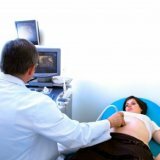
In our time, ultrasound( ultrasound) can give a clearer picture of the existing disease. The presence of stones in the gallbladder is determined by a simple and painless method of diagnosis. Ultrasound determines the condition of the walls of the gallbladder, the presence of stones of any size, their location and mobility. In most cases, the presence of stones is determined without problems.
Ultrasound examination, performed competently and skillfully on modern equipment, provides answers to all questions related to gallstones. Ultrasound is a sufficiently qualitative method of diagnosis and the use of other diagnoses becomes irrelevant.
Gallstone disease is manifested by a number of symptoms that depend on the movement of the stones, symptoms of the infectious inflammatory process joining the attacks of colic.
For the correct diagnosis of the disease, the physician should ask the patient about the earliest, painful manifestations, their course, painful sensations and progression.