Anaphylactic shock: causes, symptoms, emergency care
Everyone should know what anaphylactic shock is, how it can be recognized and what should be done if anaphylaxis occurs.
Since the development of this disease often occurs in a split second, the prognosis for the patient depends primarily on the competent actions of the nearby people.
Content
- What is anaphylaxis?
- Causes of anaphylactic shock
- Risk factors for developing anaphylaxis
- Clinical manifestations of anaphylactic shock
- Stages of development of anaphylaxis and its pathogenesis
- The main options for the course of anaphylactic shock
- Forms of development of anaphylaxis, depending on the prevailing symptoms
- The severity of anaphylactic shock
- Anaphylaxis diagnostic parameters
- Differential diagnosis of anaphylactic shock
- Providing emergency care for anaphylaxis
- Prevention of anaphylactic shock
- Related Videos
What is anaphylaxis?
Anaphylactic shock, or anaphylaxis - This is an acute condition that proceeds as an immediate type of allergic reaction, which occurs when the allergen (foreign substance) is repeatedly exposed to the body.
Can develop in just a few minutes, is a life-threatening condition and requires urgent medical attention.
Mortality is about 10% of all patients and depends on the severity of anaphylaxis and the speed of its development. The incidence is approximately 5-7 cases per 100,000 people annually.
Basically, children and young people are susceptible to this pathology, since most often it is at this age that a second encounter with an allergen occurs.
Causes of anaphylactic shock
The reasons for the development of anaphylaxis can be divided into main groups:
- medications. Of these, anaphylaxis is most often triggered by the use of antibiotics, in particular penicillin. Also, drugs that are unsafe in this regard include aspirin, some muscle relaxants and local anesthetics;
- insect bites. Anaphylactic shock often develops with the bite of hymenoptera (bees and wasps), especially if they are numerous;
- food products. These include nuts, honey, fish, and some seafood. Anaphylaxis in children can develop with the use of cow's milk, foods containing soy protein, eggs;
- vaccines. Anaphylactic reaction during vaccination is rare and may occur on certain components in the composition;
- pollen allergen;
- contact with latex products.
Risk factors for developing anaphylaxis
The main risk factors for the development of anaphylactic shock include:
- having an episode of anaphylaxis in the past;
- burdened history. If the patient suffers bronchial asthma, hay fever, allergic rhinitis or eczema, then the risk of developing anaphylaxis increases significantly. At the same time, the severity of the course of the disease increases, and therefore the treatment of anaphylactic shock is a serious task;
- heredity.
Clinical manifestations of anaphylactic shock

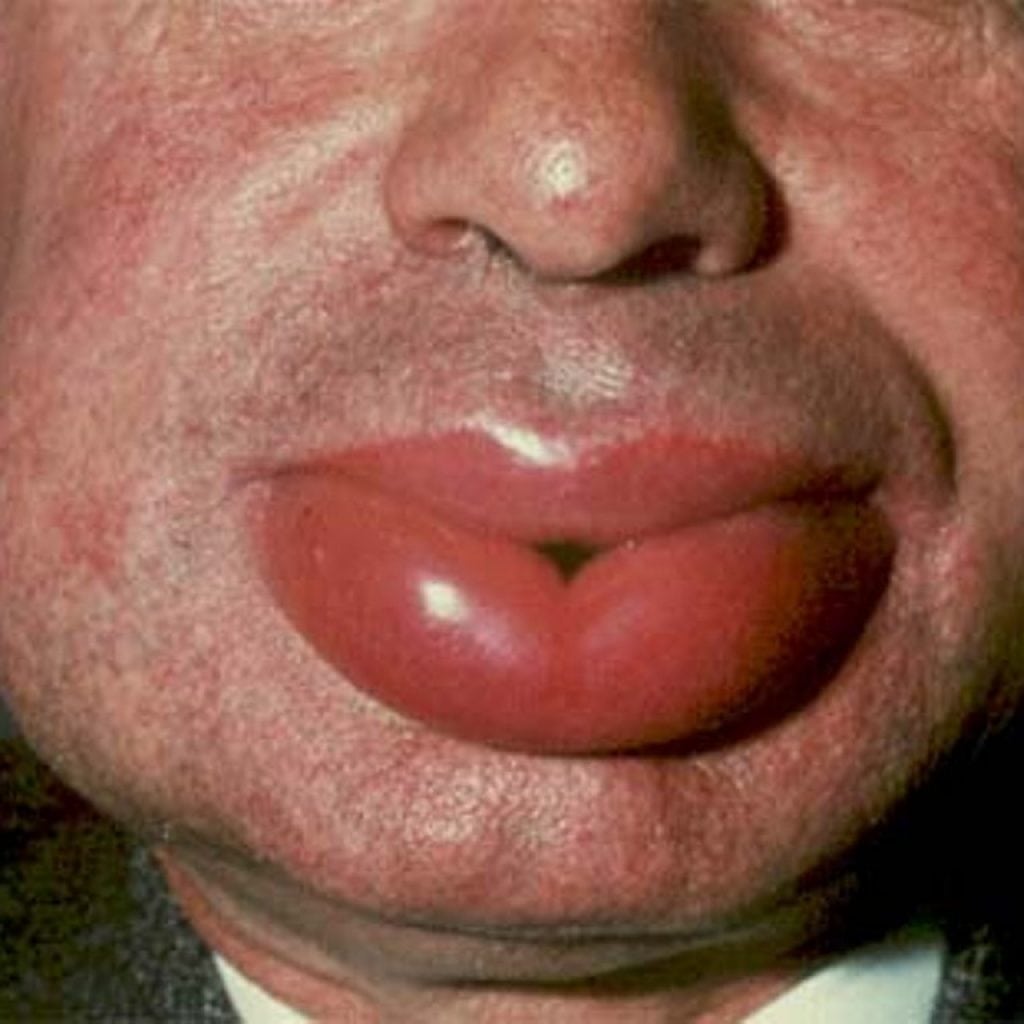
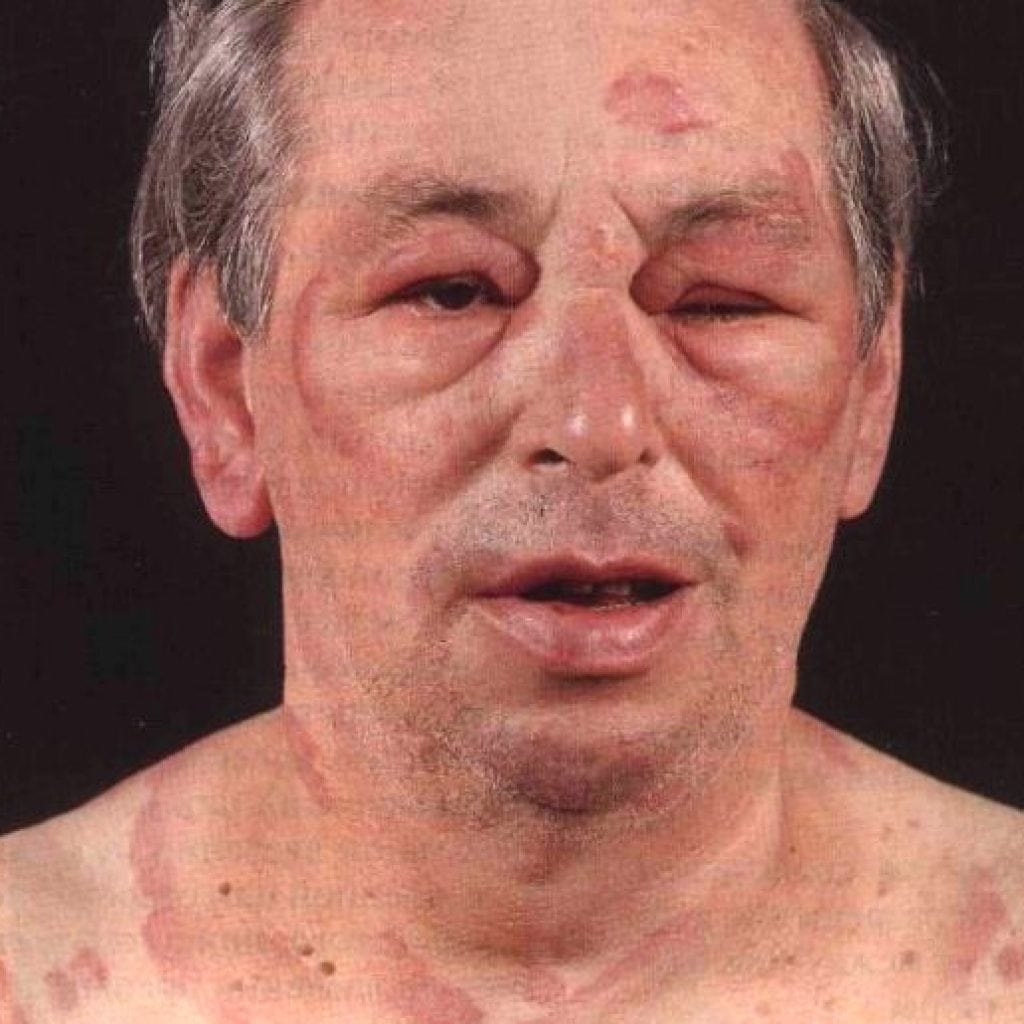
The time of onset of symptoms directly depends on the method of introducing the allergen (inhalation, intravenous, oral, contact, etc.) and individual characteristics.
So, when an allergen is inhaled or consumed with food, the first signs of anaphylactic shock begin to be felt from 3-5 minutes, up to several hours, with intravenous ingestion of an allergen, the development of symptoms occurs almost instantly.
The initial symptoms of shock are usually anxiety, dizziness due to hypotension, headache, and unreasonable fear. In their further development, several groups of manifestations can be distinguished:
- skin manifestations (see. photo above): an increase in temperature with a characteristic redness of the face, itching on the body, rashes like urticaria; local edema. These are the most common signs of anaphylactic shock, however, with the instantaneous development of symptoms, they may occur later than others;
- respiratory: nasal congestion due to swelling of the mucous membrane, hoarseness and difficulty breathing due to laryngeal edema, wheezing, cough;
- cardiovascular: hypotensive syndrome, increased heart rate, chest pain;
- gastrointestinal: difficulty in swallowing, nausea, turning into vomiting, spasms in the intestines;
- manifestations of damage to the central nervous system are expressed from initial changes in the form of lethargy to complete loss of consciousness and the emergence of convulsive readiness.
Read also:Allergy to crustaceans (shrimp, crayfish, crabs, etc.)
Stages of development of anaphylaxis and its pathogenesis
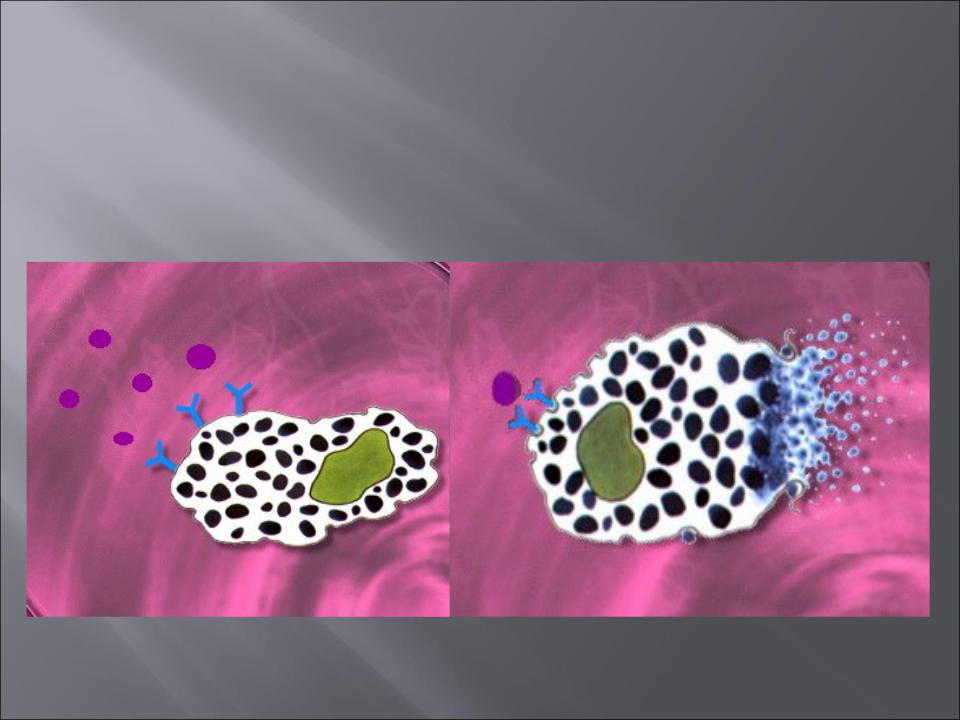
In the development of anaphylaxis, successive stages are distinguished:
- immune (introduction of antigen into the body, further formation of antibodies and their absorption "settling" on the surface of mast cells);
- pathochemical (reaction of newly received allergens with already formed antibodies, release of histamine and heparin (inflammatory mediators) from mast cells);
- pathophysiological (the stage of manifestation of symptoms).
The pathogenesis of the development of anaphylaxis underlies the interaction of the allergen with the immune cells of the body, the consequence of which is the release of specific antibodies.
Under the influence of these antibodies, a powerful release of inflammatory factors (histamine, heparin) occurs, which penetrate into the internal organs, causing their functional insufficiency.
The main options for the course of anaphylactic shock
Depending on how quickly the symptoms develop and how quickly first aid is provided, the outcome of the disease can be assumed.
The main types of anaphylaxis include:
- malignant - differs in the appearance of symptoms immediately after the introduction of the allergen, with access to organ failure. Outcome in 9 cases out of 10 is unfavorable;
- protracted - It is noted when using drugs that are slowly excreted from the body. Requires continuous administration of drugs by titration;
- abortive - this course of anaphylactic shock is the easiest. Under the influence of drugs, it quickly stops;
- recurrent - the main difference is the recurrence of episodes of anaphylaxis due to the constant allergization of the body.
Forms of development of anaphylaxis, depending on the prevailing symptoms

Depending on which symptoms of anaphylactic shock prevail, several forms of the disease are distinguished:
- Typical. The first signs are skin manifestations, especially itching, the appearance of edema at the site of exposure to the allergen. Violation of well-being and the appearance of headaches, causeless weakness, dizziness. The patient may experience severe anxiety and fear of death.
- Hemodynamic. A significant decrease in blood pressure without medication leads to vascular collapse and cardiac arrest.
- Respiratory. It occurs when the allergen is directly inhaled with an air stream. Manifestations begin with nasal congestion, hoarseness of the voice, then there are disturbances in inhalation and exhalation due to laryngeal edema (this is the main cause of death in anaphylaxis).
- Lesions of the central nervous system. The main symptoms are associated with dysfunction of the central nervous system, as a result of which there is a disturbance of consciousness, and in severe cases, generalized convulsions.
The severity of anaphylactic shock
To determine the severity of anaphylaxis, three main indicators are used: consciousness, blood pressure level and the rate of effect of the treatment begun.
By severity, anaphylaxis is classified into 4 degrees:
- First degree. The patient is conscious, restless, fear of death is present. Blood pressure is reduced by 30-40 mm Hg. from the usual (normal - 120/80 mm Hg). The ongoing therapy has a quick positive effect.
- Second degree. A state of stunnedness, the patient is difficult and slow to answer the questions asked, loss of consciousness may occur, not accompanied by respiratory depression. BP is below 90/60 mm Hg. The effect of the treatment is good.
- Third degree. Consciousness is most often absent. Diastolic blood pressure is not determined, systolic is below 60 mm Hg. The effect of the therapy is slow.
- Fourth degree. Unconscious, blood pressure is not determined, there is no effect of treatment, or it is very slow.
Read also:Citrus allergy
Anaphylaxis diagnostic parameters
Diagnosis of anaphylaxis should be carried out as quickly as possible, since the prognosis of the outcome of the pathology mainly depends on how quickly first aid was provided.
In making a diagnosis, the most important indicator is a detailed history taking together with the clinical manifestations of the disease.
However, some laboratory research methods are also used as additional criteria:
- General blood analysis. The main indicator of the allergic component is increased levels of eosinophils (the norm is up to 5%). Along with this, anemia (a decrease in hemoglobin level) and an increase in the number of leukocytes may be present.
- Blood chemistry. There is an excess of normal values of liver enzymes (ALaT, ACaT, alkaline phosphatase), kidney tests.
- Plain chest x-ray. Interstitial pulmonary edema is often seen in the picture.
- ELISA. It is necessary for the detection of specific immunoglobulins, in particular Ig G and Ig E. Their increased level is characteristic of an allergic reaction.
- Determination of the level of histamine in the blood. It should be done shortly after the onset of symptoms, as histamine levels drop dramatically over time.
If the allergen could not be found, then after the final recovery, the patient is advised to consult an allergist and allergy testing, since the risk of recurrence of anaphylaxis is sharply increased and prevention of anaphylactic shock.
Differential diagnosis of anaphylactic shock
Difficulties in making the diagnosis of anaphylaxis almost never arise due to the vivid clinical picture. However, there are situations when differential diagnosis is needed.
Most often, similar symptoms are given by pathology data:
- anaphylactoid reactions. The only difference will be the fact that anaphylactic shock does not develop after the first encounter with an allergen. The clinical course of pathologies is very similar and differential diagnosis cannot be carried out only on it, a thorough analysis of the anamnesis is necessary;
- vegetative-vascular reactions. Characterized decrease in heart rate and a decrease in blood pressure. Unlike anaphylaxis, they are not manifested by bronchospasm, hives or itching;
- collaptoid conditions caused by taking ganglion blockers or other drugs that lower blood pressure;
- pheochromocytoma - the initial manifestations of this disease can also manifest itself as a hypotensive syndrome, however, specific manifestations of the allergic component (itching, bronchospasm, etc.) are not observed with it;
- carcinoid syndrome.
Providing emergency care for anaphylaxis

Emergency care for anaphylactic shock should be based on three principles: the fastest possible delivery, the impact to all links of pathogenesis and continuous monitoring of the activity of the cardiovascular, respiratory and central nervous systems.
Main directions:
- cupping heart failure;
- therapy aimed at relieving symptoms of bronchospasm;
- prevention of complications from the gastrointestinal and excretory systems.
First aid for anaphylactic shock:
- Try to identify the possible allergen as quickly as possible and prevent further exposure. If an insect bite has been noticed, apply a tight gauze bandage 5-7 cm above the bite site. With the development of anaphylaxis during the administration of the drug, it is necessary to urgently end the procedure. If intravenous administration was carried out, then the needle or catheter should never be removed from the vein. This makes it possible to carry out subsequent therapy with venous access and reduces the duration of drug exposure.
- Move the patient to a firm, level surface. Raise your legs above the level of your head;
- Turn your head to one side to avoid asphyxiation with vomit. Be sure to free the oral cavity from foreign objects (for example, dentures);
- Provide oxygen access. To do this, unfasten the squeezing clothing on the patient, open the doors and windows as much as possible to create a flow of fresh air.
- If the victim loses consciousness, determine the presence of a pulse and free breathing. In their absence, immediately begin artificial ventilation of the lungs with chest compressions.
Read also:Allergy in the eyes
Algorithm for providing medication:
First of all, all patients are monitored for hemodynamic parameters, as well as respiratory function. Oxygen application is added by feeding through the mask at a rate 5-8 l per minute.
Anaphylactic shock can lead to respiratory arrest. In this case, intubation is used, and if this is not possible due to laryngospasm (laryngeal edema), then tracheostomy. Drugs used for drug therapy:
-
Adrenalin. The main drug for stopping an attack:
- Epinephrine is applied 0.1% at a dose of 0.01 ml / kg (maximum 0.3–0.5 ml), intramuscularly in the antero-outer part of the thigh every 5 minutes under the control of blood pressure three times. If therapy is ineffective, the drug can be re-administered, but overdose and the development of adverse reactions must be avoided.
- with the progression of anaphylaxis - 0.1 ml of 0.1% solution of epinephrine is dissolved in 9 ml of saline and injected in a dose of 0.1–0.3 ml intravenously slowly. Re-introduction according to indications.
-
Glucocorticosteroids. From this drug groups the most commonly used are prednisolone, methylprednisolone, or dexamethasone.
- Prednisolone at a dose of 150 mg (five ampoules of 30 mg);
- Methylprednisolone at a dose of 500 mg (one large ampoule of 500 mg);
- Dexamethasone at a dose of 20 mg (five ampoules of 4 mg each).
Smaller doses of glucocorticosteroids are ineffective for anaphylaxis.
- Antihistamines. The main condition for their use is the absence of hypotensive and allergenic effects. Most often, 1-2 ml of a 1% solution of diphenhydramine is used, or ranitidine at a dose of 1 mg / kg, diluted in 5% glucose solution up to 20 ml. Administered every five minutes intravenously.
- Euphyllin it is used with the ineffectiveness of bronchodilator drugs at a dosage of 5 mg per kilogram of weight every half hour;
- With bronchospasm, which does not stop with adrenaline, the patient undergoes nebulization with berodual solution.
- Dopamine. It is used for hypotension, not amenable to adrenaline and infusion therapy. It is used in a dose of 400 mg, diluted in 500 ml of 5% glucose. Initially, it is introduced until the systolic pressure rises within 90 mm Hg, after which it is transferred to the introduction by titration.
Anaphylaxis in children is stopped by the same scheme as in adults, the only difference is the calculation of the dose of the drug. It is advisable to treat anaphylactic shock only in stationary conditions, because during 72 hours the development of a repeated reaction is possible.
Prevention of anaphylactic shock
Prevention of anaphylactic shock is based on avoiding contact with potential allergens, as well as substances to which an allergic reaction has already been established by laboratory methods.
For any type of allergy in a patient, the appointment of new drugs should be minimized. If there is such a need, then a preliminary skin test is mandatory to confirm the safety of the appointment.