Urticaria in adults: treatment, drugs, symptoms, causes
Content
- What is urticaria?
- Angioedema
- Causes of urticaria
- Diagnostics
- Warning signs
- When should you see a doctor immediately?
- What does a doctor do when examining a patient?
- Analyzes
- Urticaria treatment
- Medications
- Essentials for Seniors
What is urticaria?
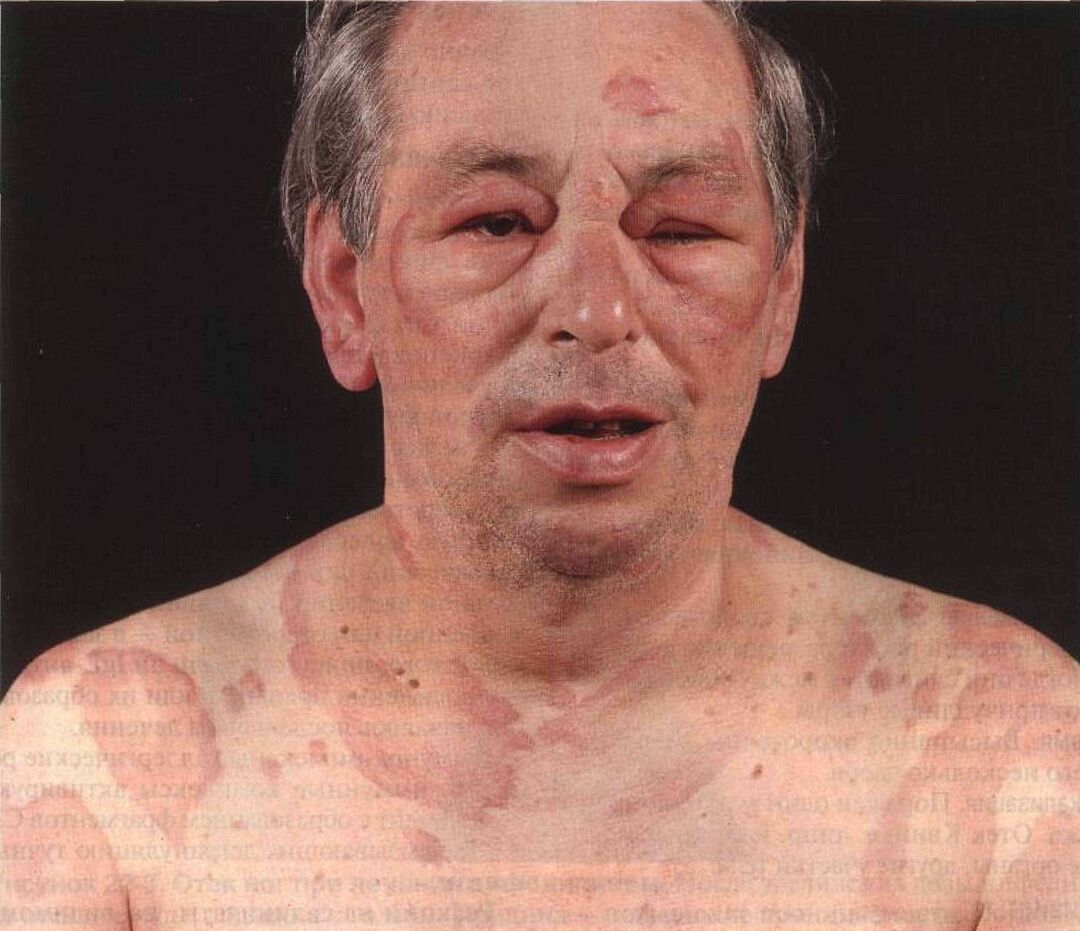
Hives (or urticarial rash) - this is skin disease, dermatitis predominantly of allergic origin. A hives rash is a red, itchy, slightly raised bump. In adults, itching can be particularly severe. A urticarial rash may have well-defined borders and a pale area in the center. Typically, rashes come and go. One nodule of the rash may persist for several hours, then disappear, and later another nodule may appear elsewhere. After the nodule disappears, the skin usually looks completely normal. The swelling is caused by the release of chemicals (such as histamine) from the mast cells in the skin, which cause temporary leakage of fluid from small blood vessels.
Angioedema
Urticaria can develop with angioedema (Quincke's edema), which, like the urticarial rash, is accompanied by swelling. However, the swelling in angioedema is located under the skin, not on its surface. Sometimes angioedema affects the face, lips, throat, tongue, and airways. It can be life threatening if it interferes with breathing.
Causes of urticaria

Urticaria and angioedema are common allergic reactions.
Hives in adults can occur when certain chemicals are inhaled, consumed, injected, or touched. These chemicals can be present in the environment, food, drugs, insects, plants, or other sources. They are harmless to most people. However, if people are sensitive to them, then these chemicals (called provoking factors or allergens) can cause an allergic reaction. This means that the immune system is reacting to chemicals.
However, a urticaria rash is not always part of an allergic reaction. For example, it can result from autoimmune diseases. In these diseases, a dysfunction of the immune system causes an incorrect recognition of the body's own tissues as foreign and their attack. In addition, some drugs directly cause urticaria without causing an allergic reaction. Emotional stress and certain physical stimuli (such as heat or light) can cause skin rashes for reasons that are not fully understood.
A hives rash usually lasts less than 6 weeks and is classified as acute. If the rash lasts more than 6 weeks, then the disease is classified as chronic.
Acute urticaria most commonly caused by:
- allergic reactions;
- non-allergic reactions.
Allergic reactions often caused by foods such as eggs, fish, shellfish, nuts and fruits, or insect bites. Eating even small amounts of certain foods can suddenly trigger an allergic rash. But when consuming other foods (for example, strawberries), an allergic reaction occurs only after consuming large quantities of them. Many medications, especially antibiotics, can cause an allergic rash. Immediate allergic reactions can also occur when the substance comes into direct contact with the skin (such as latex), after an insect bite or as a reaction to a substance that, if inhaled, enters the lungs or through the nose.
Non-allergic reasons hives include infections, certain medications, certain physical irritants (for example, pressure or cold), some emotional stimuli (for example, stress) and some food additives.
Despite the fact that acute urticaria rash usually has specific causes, in half of cases the pathogen cannot be identified.
Chronic urticaria most commonly caused by:
- unspecified conditions (idiopathic);
- autoimmune diseases.
Sometimes the reason is easy to overlook, for example, when people constantly consume food about which it is not known if it is the cause of the reaction (for example, a preservative or coloring agent in foods or penicillin in milk). Often, despite best efforts, the cause remains unknown.
Chronic urticaria in adults can last from several months to several years, sometimes disappearing for no apparent reason.
Diagnostics
Not every rash episode requires an immediate medical examination. The following information can help you decide if you need to see a doctor and what to expect when you see a doctor.
Warning signs
Several symptoms and characteristics are cause for concern:
- Swelling of the face, lips, throat, tongue, or airways (Quincke's edema);
- Difficulty breathing, including wheezing
- An intensely colored allergic rash that produces open sores or lasts more than 48 hours;
- Fever, swollen lymph nodes, jaundice, weight loss and other symptoms of a general (systemic) disease
Read also:Food allergy in adults: causes, symptoms and treatment
When should you see a doctor immediately?
It is necessary to call an ambulance to the house if:
- the person has difficulty breathing or wheezing;
- the person feels like his throat is closing.
You should go to the emergency room or your GP as soon as possible if:
- symptoms are severe;
- the person feels increasing weakness or dizziness, or experiences severe fever or chills;
- vomiting or abdominal pain or diarrhea develops.
You need to see a doctor if:
- a rash appeared on the skin after a bee sting (for advice on treatment if another bee sting);
- other manifestations, such as fever, joint aches, weight loss, swollen lymph nodes, or increased sweating during sleep, are observed;
- the rash is repeated without the influence of a provoking factor;
- symptoms last more than 2 days.
If adults have urticaria, which appears suddenly, quickly disappears and does not recur, then a medical examination is usually not required. The cause is usually a viral infection.
What does a doctor do when examining a patient?
Doctors first ask questions about symptoms and medical history. They then do a physical examination. As a rule, familiarity with the medical history and physical examination can identify the possible cause of the disease and determine what tests are needed.
Doctors ask the person to describe in detail each episode of the rash and any other symptoms that occur (for example, itching, difficulty breathing, or swelling of the face and tongue). They ask about the person's activities before and during the episode and about possible exposure to substances that can cause allergic reactions, including medications taken. The person is also asked about specific symptoms that might point to the cause, previous allergic reactions, and recent travel.
The causative factor of urticaria is not always possible to establish on the basis of medical history (often because the provoking factor is something that may have been transferred earlier).
During a physical exam, doctors first check to see if the patient has swelling of the lips, tongue, throat, or airways. If there is edema, treatment is started immediately. Doctors then look at what the rash looks like, determine which parts of the body are affected, and check for other symptoms that may help confirm the diagnosis. Doctors can use a variety of physical stimuli to see if they might cause skin rashes. For example, they may apply light pressure, heat and cold to the skin, or stroke the skin.
People should not try to provoke hives on their own, as a severe reaction can develop.
Analyzes
Generally, research is not required for a single episode of urticarial rash unless symptoms indicate a specific condition that requires treatment (eg, some infections). However, if the rash is unusual, recurs, or persists, testing is usually done.
Typically, tests include a complete blood count and blood tests to measure levels of electrolytes, sugar (glucose) and thyroid-stimulating hormone and to determine how well the kidneys are functioning and liver.
Dermal allergy testssuch as a skin needle test, are done by an allergist (a doctor who specializes in allergic pathologies) to identify specific allergens. Imaging tests and other blood tests are done based on your medical history and physical examination. If the results suggest that a disease affecting the entire body is the cause, careful evaluation is necessary to identify it.
A skin biopsy is done if the diagnosis is unclear or if the urticaria persists for more than 48 hours.
Some causes and features of urticaria (urticaria).
| Cause | Common signs | Surveys |
| Acute urticaria (lasting less than 6 weeks). | ||
Medicines such as:
|
There is a skin rash that starts within 48 hours after using the drug. | Medical examination. |
Emotional and physical stimuli
|
For most stimuli, a rash that usually begins within seconds or minutes of contact with the stimulus. For pressure on the skin, a rash that starts within 4-6 hours and only affects the area of the skin where the pressure was applied. For sunlight, a rash that affects only the area of skin that has been exposed to sunlight. |
Medical examination. Exposing a suspect to a physical stimulus to see if it is causing symptoms. |
| Foods that cause an allergic reaction (food allergens), such as peanuts, tree nuts, fish, shellfish, wheat, eggs, milk, and soy. | Skin rash that appears within minutes or hours after use. | Medical examination, especially medical history. Sometimes an allergic skin needle test. |
Infections (rare causes):
|
Symptoms:
|
Tests depending on the suspected infection (as suggested by the results of medical history and examination). The diagnosis is confirmed if the rash disappears after the infection has cleared. |
| Insect bites or burns. | A rash that starts within seconds or minutes after an insect bite or burn | Medical examination, especially medical history. |
| Serum sickness. | Rash that starts within 7-10 days after injection. It can also be accompanied by fever, joint pain, inflammation of the lymph nodes, and abdominal pain. |
Medical examination. |
| Substances that cause an allergic reaction by contact (contact allergens) such as latex, animal saliva or dander, dust, pollen or mold. | Skin rash that starts within minutes or hours of contact. | Medical examination, especially medical history. Sometimes allergy tests. |
| Transfusion reactions. | Hives that usually start within minutes of a blood product transfusion | Medical examination, especially medical history. |
| Chronic urticaria (lasts more than 6 weeks). | ||
Autoimmune diseases:
|
Various symptoms depending on the autoimmune disease. In systemic lupus erythematosus, symptoms may include fever, fatigue, headache, joint pain and swelling of the joints, pain while breathing, and mouth ulcers. With Sjogren's syndrome, dry eyes and dry mouth With urticarial vasculitis, an allergic rash that:
|
For all autoimmune diseases, blood tests are done to check for abnormal antibodies. Sometimes skin biopsy. In Sjogren's syndrome, a study is carried out in which the amount of tear fluid produced is assessed. For urticarial vasculitis, a skin biopsy is done. |
| Cancer (usually cancer of the digestive system or lungs, or Hodgkin's lymphoma). | There is weight loss, night sweats, abdominal pain, coughing (sometimes bloody), jaundice, swollen lymph nodes, or a combination of these symptoms. | Various studies are carried out depending on the suspected cancer. |
| Chronic idiopathic urticaria (diagnosed when no specific cause is identified). | It manifests as a rash on the skin that occurs daily (or almost daily) and itching that lasts for at least 6 weeks, for no apparent reason. | Medical examination Blood tests and sometimes other tests such as a skin needle test and exposure to various triggers to rule out other causes. |
| Medicines (same as for acute urticaria). | A urticarial rash that occurs in a person who has been taking prescription, over-the-counter, or herbal medicines for a long time when no other explanation is available. | Medical examination. Sometimes allergy tests. Avoidance study to see if the allergic rash goes away after drug withdrawal. |
| Emotional and physical stimuli (same as for acute rash). | For most stimuli, a rash that usually occurs within seconds or minutes of contact with the stimulus. For pressure on the skin, a rash that starts within 4-6 hours and only affects the area of the skin where the pressure was applied. For sunlight, a rash that affects only the area of skin exposed to sunlight |
Medical examination Exposure to a suspect stimulus to see if it is causing symptoms |
| Endocrine disorders such as thyroid disease or an increased level of progesterone (a female hormone). | Signs of thyroid disease:
Occurs in women who are taking birth control pills (oral contraceptives) or progesterone-based hormone therapy, or who have a rash before starting menstrual cycle and disappears after it ends |
Medical examination. If a thyroid disorder is suspected, a blood test is done to measure thyroid-stimulating hormone levels. |
| Mastocytosis. | Small red bumps. Sometimes abdominal pain, mild hot flashes, and recurrent headaches |
Biopsy of the skin and sometimes bone marrow. Sometimes blood tests to determine the level of substances released when certain immune cells (called mast cells) are activated. |
| Keep in mind: The indicated signs in the tables are typical, but not always present. |
Urticaria treatment

Hives often resolve without intervention after a day or two. If a cause is obvious, or if a doctor identifies a cause, people should avoid it if possible. If the cause is not obvious, people should stop taking all nonessential medications until the rash resolves.
Symptoms can be relieved by taking a bath and shower using only cool water, refraining from scratching, and wearing loose clothing.
Medications
For the treatment of urticaria in adults, use antihistamines for oral administration. These drugs relieve some of the itching and reduce swelling. To be effective, they should be taken regularly, not as needed. Certain antihistamines, including cetirizine, diphenhydramine and loratadineavailable without a prescription. Diphenhydramine is the oldest drug that is more likely to cause drowsiness than the other two. Other antihistamines include:
- desloratidine;
- fexofenadine;
- hydroxyzine;
- levocetirizine.
Creams and lotions containing an antihistamine are usually not used because they can make the skin more sensitive and increase itching.
If symptoms are severe and other treatments are ineffective, use corticosteroids for oral administration (such as prednisone). They are taken for as short a period of time as possible. When taken by mouth for more than 3–4 weeks, corticosteroids have many, sometimes serious, unwanted effects. Corticosteroid creams don't help.
People admitted to hospital with severe reactions or angioedema are administered epinephrine. People with such severe reactions should have a self-injection pen with epinephrine. (epinephrine self-injecting syringe), and if a reaction occurs, they should immediately use his.
In about half of people with a chronic rash, it disappears without treatment within 2 years. In some adults, the antidepressant doxepin, which is also a powerful antihistamine, helps relieve chronic urticaria. For people with a chronic rash that recurs despite other treatments, omalizumab, a monoclonal antibody, can be used.
Essentials for Seniors
Older adults are more likely to develop unwanted effects when they take older antihistamines (such as hydroxyzine and diphenhydramine). In addition to drowsiness, these drugs can lead to confusion and delirium, and can also cause difficulty starting and urinating. Usually, older people should not take these drugs to relieve hives.