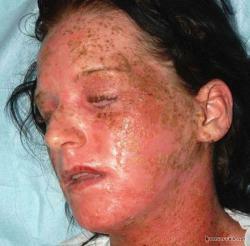
Allergy to latex: what is it, causes, symptoms, treatment
Content
- What is latex allergy?
- Causes and classification
- What materials / substances contain latex?
- Risk factors
- Symptoms
- Diagnostics
- Treatment and remedies
What is latex allergy?
Latex allergy means an abnormal and exaggerated reaction of the immune system after exposure to or inhalation of latex particles, a liquid rubber obtained from some trees that grow in tropical areas planets.
Latex is used as a material in many common household items, including:
- rubber gloves;
- condoms;
- balloons and inflatable balls;
- toys;
- sports equipment for divers such as fins, masks and snorkels;
- various medical devices;
- clothing, such as a raincoat.
Allergy to latex is manifested by various symptoms, among which can be distinguished, for example:
- skin and mucous membranes: hives, redness and itching both on the skin and in an intimate place, swelling and swelling, conjunctivitis;
- respiratory system: runny nose, sneezing, cough, asthma, shortness of breath, respiratory failure;
- anaphylactic shock and death (limited to very rare cases).
To diagnose latex allergy, a history and physical examination of the alleged diagnosis is required, which is then confirmed by the main allergen test, allergy test.
The best possible treatment for latex allergy is obviously to avoid any possible contact with specific particles, but with pharmacological point of view, you can use antihistamines and cortisone drugs, which significantly reduce the manifestation of allergies, relieving symptoms.
Causes and classification
An allergic reaction is defined as when the immune system develops an abnormal and overreaction to a substance called an "allergen." In the case of latex allergy, contact can be through the skin or through inhalation of microparticles.
When it comes to latex allergy, there are 4 different reactions:
- IgE-mediated reaction: this is an immediate reaction that is triggered by contact or inhalation of latex particles due to IgE activation (a group of immunoglobulins) that activate mast cells to release histamine and other mediators inflammation; the latter are responsible for the typical allergy symptoms.
-
Allergic contact dermatitis: This is a delayed type IV hypersensitivity reaction that involves the development of pure skin symptoms a few days after exposure to latex particles. Symptoms of the eczematous type with skin:
- itching;
- redness and flaking;
- blisters (blisters) that turn into crusts.
-
Irritant contact dermatitis: This is the most common reaction to latex; it is not an allergic reaction, but an inflammatory reaction of the skin to the chemical aggression of latex in patients with very sensitive skin. About 12 hours after contact, the following signs are found:
- dry and scaly skin;
- redness and itching;
- small bubbles.
-
Anaphylactic shock: a potentially fatal severe allergic reaction that is a real emergency medical situation and, as such, requiring immediate intervention of the emergency department help. Symptoms of anaphylaxis may appear within minutes or hours after exposure to antigen:
- allergic symptoms of the skin and mucous membranes;
- respiratory disorders up to hypoxia (insufficient concentration of oxygen in the blood);
- a sudden drop in blood pressure;
- loss of consciousness;
- death.
Read also:Allergen test (allergy tests): what is it, how is it done, methods, indications
What materials / substances contain latex?
Below is a short, non-exhaustive list of materials containing latex:
- Medical devices: surgical gloves, bladder catheters, anesthesia masks, abstinence bands, endotracheal tubes, cannulas for intravenous administration, plasters, rubber bands for dental devices, orthodontic appliances made of rubber and etc ..
- Contraception: condoms and vaginal diaphragm.
- Goods for kids: baby pacifiers and pacifiers, balloons, rubber toys.
- Sport equipment: fins, diving masks, sailing accessories, sports balls.
- Clothes and footwear: elastic bandages, rubber shoes, soles, sneakers.
- Furniture and household items: Household gloves, shower curtains, hot water bags, latex mattresses and pillows, stickers.
- Miscellaneous: erasers, stamps, tires, etc.
Risk factors
Currently, the incidence of latex allergy in the general population is low, less than 1% in adults and 2% in children.
The prevalence is markedly higher in certain high-exposure categories defined as "at risk" such as medical personnel, where, due to constant contact with latex instruments and materials, the prevalence reaches 3-5%.
Other risk groups are:
- subjects with atopic diseases: asthma, various allergies or food intolerances;
- workers in the rubber industry;
- children suffering from spina bifida (abnormal development of the spine);
- patients undergoing multiple surgical procedures;
- heredity.
A feature of latex allergy is the possibility of developing cross-reactions with certain food products, since some latex proteins are antigenically very similar to those found in various food products. For this reason, people who are allergic to latex can develop reactions after eating foods such as:
- walnuts and almonds;
- kiwi and bananas;
- mango, passionfruit and pineapple;
- figs, strawberries, chestnuts and so on ...
Read also:Allergy to medications in adults
Symptoms
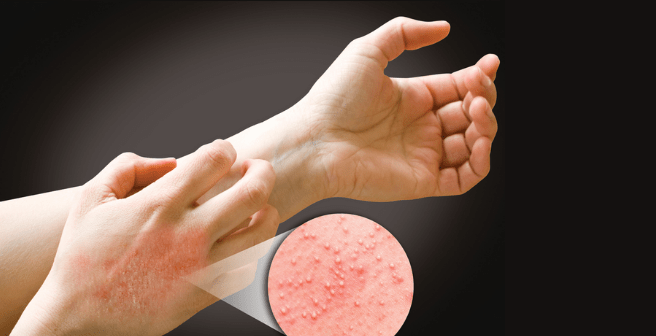
Symptoms of latex allergy vary depending on the sensitivity of the subject and the severity of the reaction.
It is pertinent to recall how each allergy sufferer can subjectively react to contact with a substance between two extremes:
- in some patients, the response will be completely asymptomatic;
- in other cases, the symptoms can be so severe that they require immediate therapeutic intervention.
The main and most common symptoms of latex allergy are:
- Skin and mucous membranes:
- hives (skin rashes);
- swelling of the lips, tongue, eyelids;
- redness of the skin;
- widespread itching;
- conjunctivitis (inflammation of the mucous membrane of the eye).
- Respiratory system, especially after inhalation of latex particles:
- runny nose with sneezing and mucus from the nose;
- dry cough;
- laryngeal edema;
- asthma;
- dyspnea (shortness of breath with oxygen starvation);
- a feeling of heaviness in the chest.
- Other organs or systems:
- gastrointestinal upset and abdominal pain;
- dizziness;
- nausea and vomiting;
- drop in blood pressure;
- tachycardia;
- anaphylactic shock.
Sensitized subjects may undergo a progressive flare-up with each contact with latex, with increasingly complicated symptoms until anaphylactic shock and risk of death develop.
Diagnostics
Diagnosis of latex allergy begins with a history, which allows the doctor to formulate a series of questions addressed to the patient, allowing him to reconstruct the history of the disease. Usually people ask about this:
- If symptoms have appeared in the past.
- If the patient is atopic and suffers from other allergies.
- If you have relatives who are allergic to latex or other substances.
During the examination, the doctor carefully analyzes the symptoms and objective signs identified in the patient.
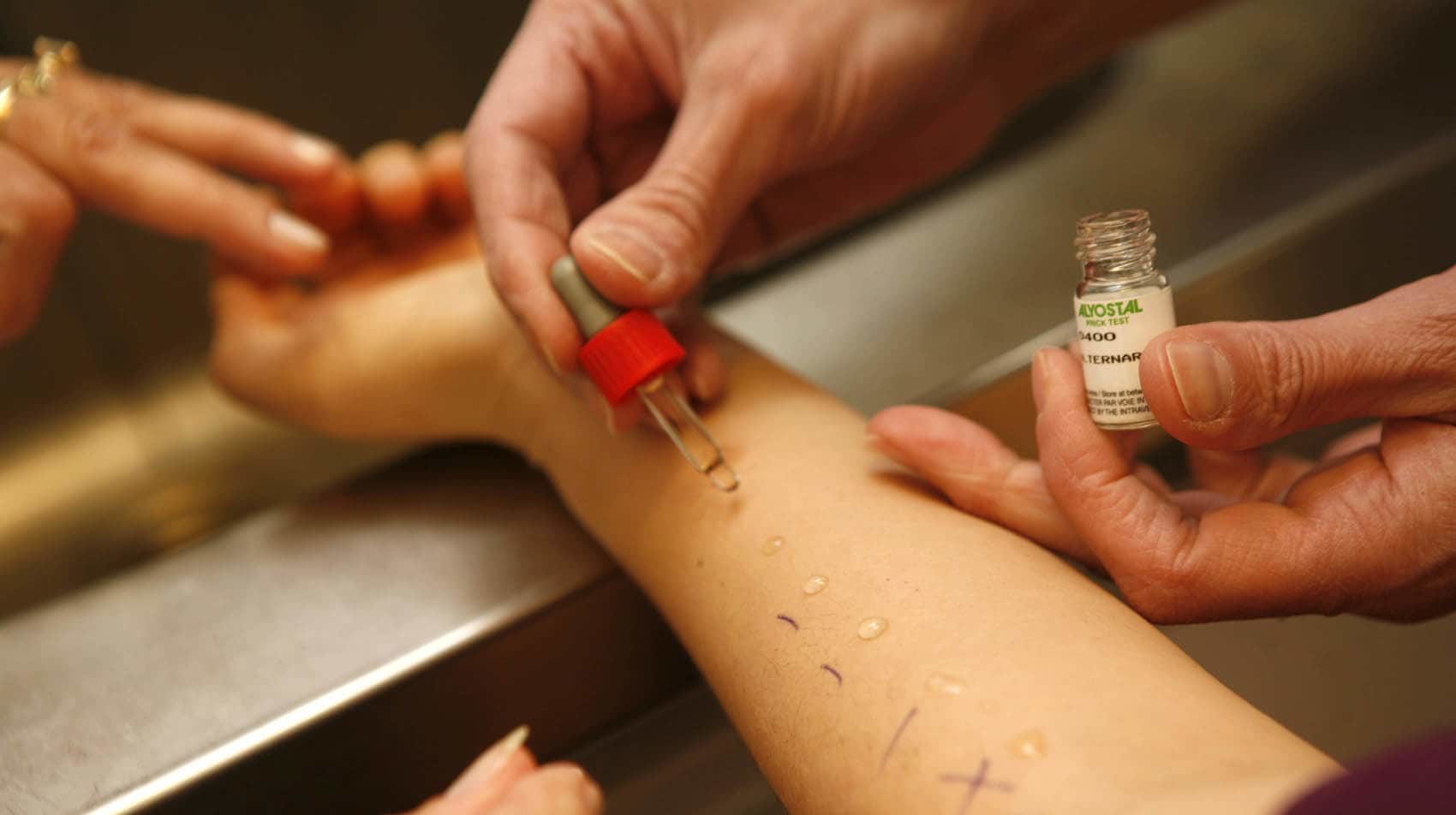
Diagnostic confirmation involves performing cutaneous tests:
- Allergy tests: is the most widely used test for determining the sensitivity and specificity in the diagnosis of many types of allergies. Latex extracts are placed in the solution on the forearm in the form of small drops. Each drop on the skin is pierced with a small needle. If skin reactions such as rashes, erythema, blisters or vesicles occur in these areas, the test will be positive and confirm the presence of an allergy.
- Radioallergosorbent test and other studies conducted less frequently and limited to certain circumstances.
Read also:Anaphylactic shock (anaphylaxis): causes, symptoms, emergency care
Treatment and remedies
There is no cure for latex allergy, so the most an effective therapeutic method is to avoid any possible contact with materials containing latex.
Particular attention should be paid to the patient in case of hospitalization, as there are many hospital and medical devices containing latex. In this case, it is necessary to warn medical personnel about his allergies as soon as possible in order to take all the necessary precautions.
Antihistamines and cortisone medications can be taken to relieve allergic symptoms and improve quality of life.
When anaphylactic shock, a potentially fatal medical situation requires urgent medical attention. The person should be admitted to the intensive care unit as soon as possible with immediate treatment and close observation for 24-48 hours.