Allergies in children
 Allergy in children is a response of the baby's immune defense to some substance coming from the environment that is perceived by the body as potentially harmful, and, therefore, triggering a protective response, manifested by a cough, runny nose and a rash. According to most authoritative scientists in the field of allergology, the allergy is prone to be inherited, and if at least one of the biological parents of allergies, there is a very high probability that the immune system of the child will also fight with the same irritant.
The causes of allergy in children are very diverse, and many of them can persecute a person throughout their lives, such as: various chemicals, animals, poisonous insects( wasps, bees, ants), pollen of various plants, food, dust.
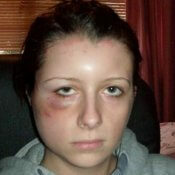
Allergy manifestations become noticeable almost immediately after contact with an allergenically hazardous substance and are manifested by the rash and reddening of the skin, inflammation of the mucous membranes, runny nose, sneezing, coughing, hay fever and cuts in the eyes. Occasionally, an allergy may even at an early age represent a real threat to life, for example, severe inflammation of the airways can lead to suffocation.
Allergy in infants requires special attention, since it is in children of such a small age that food allergy is most often observed, which can manifest until a certain period of life, after which it disappears on its own. Protective reaction organism of the baby can include after the acceptance of various vegetables and fruits, red food, etc. That is why the nursing mother is given a strict diet after the birth of the baby, which consists exclusively of hypoallergenic products.
The main symptoms of allergy in children are various inflammatory processes of the skin: itching, rashes, peeling and redness of the skin. Sometimes the allergy in infants is manifested by intestinal disorders, bloating, and stool disruption.
To date, the pharmaceutical market provides a fairly wide range of antihistamines, whose action is aimed at eliminating allergic reactions in children. Usually they are applied sporadically, i.e. In the case of the appearance of a protective reaction of the body to a certain stimulus. Nevertheless, the best treatment option is to exclude a baby from contact with a provoking allergen. Medicamental treatment of allergies in children( immunotherapy) consists in the constant introduction of gradually increasing doses of the detected antigens. This treatment is very long and can take several years, but in almost 100 percent of cases it helps to get rid of the allergy to a particular irritant.
Food allergy in children
 Due to a wide range of food allergens, food allergy in children is widespread enough, and various clinical manifestations only complicate the processIdentify a specific allergen. Almost any food product can cause a response allergic reaction.
Symptoms of food allergies in newborns are often enough, as food allergens in the baby's body fall into the mother's milk, in case of violation of her hypoallergenic diet. Often, food allergy in children in the first few years of life develops after their transfer to various substitutes for mother's milk, and the earlier the baby is weaned and transferred to the mixture, the higher the chances of developing an allergic reaction. In more than 90% of children of the first year of life, intolerance to cow's milk protein is observed.
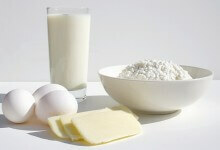
The list of foods most often causing food allergy in children: fish, citrus, honey, mushrooms, nuts, eggs. Rarely allergic reactions are observed in apricots, various berries, legumes, tomatoes, pomegranates, peaches, beets, carrots and all kinds of seasonings. Even more rarely there is an allergy to cheeses, zucchini, plums, buckwheat, pumpkin and potatoes.
Symptoms of food allergies in children are usually manifested by severe itchy skin, abundant sweating, the appearance of blisters on the reddened skin and rash. In everyday life, these manifestations are called allergic diathesis. Fortunately, such a severe manifestation of an allergic reaction as Quincke's edema can rarely develop, which manifests itself as a strong swelling of the subcutaneous tissue, mucous membranes and skin and may fail to provide timely honey. Help to lead to a lethal outcome. In case of involvement of the gastrointestinal tract, the allergy is accompanied by pains in the abdomen, constipation or loose stool, colic and vomiting. Occasionally, respiratory disorders can occur in the form of bronchospasm and runny nose.
The most reliable way to exclude a child from the above symptoms, is the complete elimination of allergen products from the food ration. Due to the fact that it is usually difficult to identify the cause of allergies immediately, the most likely allergenic products should be excluded from food first. Children of the first year of life in this case should be transferred to a special hypoallergenic mixture
Allergy on the face of the child
 Very often, the allergic reaction in children is manifested on the face in the form of roughness, rash and redness. Usually, this symptomatology does not pose any danger to health, however, one should pay special attention to possible inflammatory defeat of the respiratory tract and larynx, which can disrupt the respiratory function of the baby. Typically, the cause of this allergic reaction in children are different foods( often vegetables and fruits), which in its composition contain flavors, dyes and chemical additives, as well as direct contact with animals or pollen-producing plants.
Symptoms most often begin to appear already within half an hour from the moment of contact with an allergen, or after the use of a certain food product. Often, while on the face of the child allergy symptoms are present, while the overall well-being of the baby remains the same, without noticeable deterioration.
The modern pharmaceutical industry has developed many medicines, including various creams and ointments, whose action is aimed at softening the skin and ridding the child of roughness of the skin and rash. However, the true treatment of allergy should not be limited to getting rid of the symptoms. The primary action is to get rid of the child from the cause provoking allergic manifestations, and only after that it is necessary to get rid of the consequences. To eliminate the painful and intrusive allergic symptoms on the face, the child is recommended to use a variety of moisturizing and softening creams. In addition, do not forget the simple rules of personal hygiene, which consist in the periodic washing of the face throughout the day and greatly ease the discomfort of the baby's inflamed skin.
Allergy to the skin in children
 Usually, the skin allergy in a child manifests itself as atopic dermatitis, Eczema or diathesis, which are characterized by their own symptoms and individual treatment.
Allergic diathesis - the reaction of the baby's body to certain foods, manifested by a rash, redness and itching on the buttocks and cheeks of the child. This symptomatology indicates the onset of the development of an allergic reaction.
Children's eczema is the second stage of allergy development. At this stage, skin redness and blisters are formed on the skin, on the site of which there are subsequently causing uncomfortable pruritic crusts.
Atopic dermatitis is the last stage of an allergic reaction, in which itching becomes intolerable, especially at night and in the evening, which often leads to disruption of the child's sleep. Usually atopic dermatitis is located on the elbow and knee folds, and in children of adolescence, in addition to these places, the face and neck are often affected. Sometimes dermatitis can accompany allergic diseases of the respiratory tract. Beginning in infancy, atopic dermatitis is most often manifested before the puberty of the child, but in isolated cases can remain for life.
There are a lot of reasons for the development of skin allergy in children, from a completely incompletely digestive system, an irrational regime of the day and an unbalanced diet, to a wrong way of life for the future mother and an inherited factor during pregnancy. That is why, before the final diagnosis is made, the doctor should carefully study the living conditions of the child, learn all about his diet and get to know especially his intrauterine development.
Treatment of this type of allergic reaction is prescribed both internal and external, the former reducing the allergic reaction, and the second facilitating annoying symptoms. In addition, it is necessary to completely eliminate from the daily ration of the baby causing skin manifestations. In order to prevent allergies, the expectant mother during pregnancy should eat right, and after the birth of the child during the entire period of breastfeeding should keep a strict diet.
Allergy to cats in children.
 . An allergic reaction in children is quite common in various animals, An allergy to cats, which is due to the presence of specific proteins in the secretions of these animals, which the very sensitive children's immune system recognizes as aggressors, Which is the reason for the onset of a protective allergic reaction.
Allergies to cats in children are mistaken for many as an allergic reaction to animal hair and if you buy a cat with a complete lack of hair( lemon, sphinx, etc.), then the negative reaction of the Danish organism will completely disappear. So this is a delusion.
This type of allergy symptoms are as follows: respiratory failure, nasal congestion, runny nose, sneezing, wheezing. An itchy red bittern appears on the skin. If the cat scratches any part of the body, at this point the skin is swollen and noticeably reddens. Symptomatics can manifest as a couple of minutes after talking to the animal, and after a few hours. In case of repeated contact with the cat, the symptoms usually worsen.
To get rid of allergies to a cat, you should first of all get rid of the source of allergenic substances. However, sometimes getting rid of the animal does not lead to the child getting rid of allergies to cats, becauseAllergens of these animals can be brought from the street on shoes, clothes and by air. In this case, the treatment of allergies is the use of a number of standard medications used to treat allergic reactions to the main allergens. These are antihistamines and decongestants and anti-allergy agents
Cold allergy in children
 Some children after prolonged exposure to low temperatures, the skin may turn red, itching and edema occur. Most likely - it's an allergy to cold, which occurs in the event of a violation of heat exchange between the environment and the body of the baby.
Allergy to cold in children, without attention should not remain, tk. In addition to minor symptoms, severe frost can lead to the development of such serious complications as hypertension and tachycardia. This type of allergy is most often manifested in children with diseases of the cardiovascular or endocrine systems. These babies are usually characterized by a low body temperature, even in warm weather they can freeze their legs and / or hands.
Allergy to cold is not a seasonal disease, it affects people all year round. Not only low temperature can provoke an allergic reaction, but also such factors as a strong cold wind, the use of ice cream and chilled drinks, drafts, dampness, etc.
Symptoms of cold allergy in a child: the onset of itching blisters on the skin( cold urticaria);All the time the child is in the cold, he has a so-called pseudoallergic rhinitis;Also at low temperatures there is a so-called pseudoallergic conjunctivitis, which manifests itself as a runny nose, lachrymation and a cut in the eyes, which passes after the baby enters the warm room;Cold dermatitis, manifested by peeling and reddening of the skin, sometimes up to swelling. Usually cutaneous manifestations of cold allergy are observed around the eyes and lips.
In case of detection of cold allergy in a child, the effect on his organism of irritating factors should be minimized. In the case of going outside, dressing the baby is necessary so that to leave as little as possible uncovered areas of the body. The remaining open areas of skin should be carefully lubricated with a small protective layer of baby cream. The child's clothing must be waterproof. Also it is necessary to eliminate cold food and drinks
Allergy to milk in children
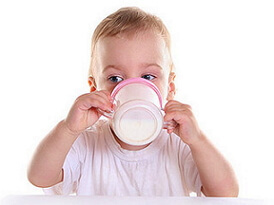 Up to two years, in children the most common food allergy is milk allergy. Among all other substances, proteins that are found in milk in large quantities are considered to be the most allergenic. Usually, increased sensitivity to milk is detected in children who are being fed up. It is widely known that the risk of developing allergies to milk is higher the earlier the baby was weaned.
However, children often have an allergic reaction not only to cow's milk, but also to mother's milk. The most likely cause of this type of allergy is milk, which the mother used during the course of pregnancy. In addition, the reaction to breast milk may develop if a special hypoallergenic diet is not followed by the mother feeding her.
Symptoms of milk allergy in a child: bloating and abdominal cramps, nausea, vomiting, occasionally skin symptoms, there may be a loose stool with bloody or green impurities. However, talking about allergies immediately is not necessary, since this symptomatology is often observed in most gastrointestinal diseases, so after the appearance of the above symptoms should always consult with a doctor who confirms the diagnosis will appoint the necessary tests and studies.
Allergy to milk in children usually goes by itself to two or three years, but sometimes it can persist for a lifetime. If a child has signs of milk allergy while breastfeeding, the primary task is to adjust the mother's diet, by completely eliminating all potentially harmful food products. If improvement is not observed after this, you must first consult with your doctor and switch to artificial feeding. If it was found that the mixture is the cause of the allergy, it is necessary to switch to the use of its hypoallergenic analogue. Older children are advised to avoid eating products containing cow's milk
Allergy to dust in children
 Today, an allergy to dust in children is a common phenomenon that, however, can not be left without due attention, as various complications may develop, Bronchial asthma of which is the most serious.
Symptoms of dust allergy in a child: pain in the eyes, wheezing, runny nose, sneezing, coughing, shortness of breath, sometimes attacks of asthma. Often there is conjunctivitis, eczema and urticaria. It was noted that if for a few days to remove the baby from the problem apartment, his health will improve noticeably. It should be remembered that such symptoms are often observed in other diseases, so the final diagnosis must be preceded by a thorough examination.
Allergic reaction to dust in the child is caused not by the dust itself, but by the microscopic ticks and the products of their vital functions that live in it. These mites are so microscopic in size that they can not be seen with the naked eye, while they are everywhere: in soft furniture, feather beds, pillows, carpets, soft toys, etc. It follows that if a baby has symptoms of an allergy to dust, Postponing the general cleaning of all the soft objects and things in the apartment. If the child has a pillow with natural feather filling, it should immediately be replaced with an artificial pillow. Daily in the apartment should be an abundant wet cleaning, while carefully making sure that the increased humidity in the room was not.
Allergy to dust in a child is not eliminated by daily cleaning alone in a dwelling - the baby must undergo special medication, including the use of antiallergic sprays and antihistamines.
Allergy in newborns
 In recent years, a very common allergy in newborns. One of the main reasons for the development of this reaction is considered to be high intestinal permeability, so that allergy-causing allergens penetrate quickly enough into the bloodstream. That is why babies are trying their best to protect from contact with any possible sources of allergies, the food items in the list of which are in the first place.
The most likely cause of allergy in newborns is a hereditary factor, especially if both biological parents suffer from any kind of allergy. In addition, the cause of allergies in infants may be failure to comply with the mother during the pregnancy hypoallergenic diet, this applies to the entire period of breastfeeding. Also, the cause of the development of allergies in infants may be various infectious diseases transferred by the mother during pregnancy.
Allergy in newborns is usually manifested by inflammation and reddening of the skin, itchy skin peeling in any areas of the baby's body. Slight inflammation of the mucous membranes, cough and runny nose are less common. It is very important not to confuse the inflammatory skin processes that occurred under the influence of antigens with similar intertrigo and dermatitis appearance. In the case of severe inflammatory manifestations of mucous membranes, and in particular of the larynx, the child should be immediately hospitalized, as. In this case, the risk of respiratory failure and subsequent suffocation increases significantly.
Food allergies in newborns are eliminated by the complete elimination from the diet of the most dangerous allergenic food: juices, citrus fruits and vegetables with the final transition to artificial, or alternatively, breastfeeding, but without supplementation. With the purpose of preventing infectious diseases and improving the work of the intestine, various zubiotics and sorbents are indicated, in the most severe cases, antihistamines are indicated.
Prevention of allergies in newborns provides for strict adherence to the mother hypoallergenic diet, both during pregnancy and during breastfeeding. From the diet in this period, it is necessary to exclude all possibly dangerous components and ingredients, including dyes, food additives, preservatives, etc.