Fatty acids and leukocytes in feces in an adult: transcript of analyzes
Normally, the feces of an adult contain a number of substances that must be in certain quantities. When the consistency, color or odor of feces changes, its scatological analysis is performed. Often, an increased content of fatty acids or leukocytes is found in feces, which indicates problems in the gastrointestinal tract.

General analysis of feces
Content
-
1 Fatty acid
- 1.0.1 Types of steatorrhea and the main reasons for its appearance
- 1.0.2 Causes of the disease
- 1.1 Diagnostics and treatment
-
2 Leukocytes
- 2.1 Video - General analysis of feces
Fatty acid
With proper functioning of the gastrointestinal tract, fats should be absorbed by 96-98%. The presence of fatty acids in the feces indicates steatorrhea disease. Feces in this case are usually oily, have a grayish or yellowish unnatural color, they contain particles of fat. This condition is often accompanied by diarrhea.

Steatorrhea (fatty stool)
Doctors talk about steatorrhea if the daily intake of fat excreted in the feces exceeds 5 g.

Fatty acids under the microscope
Types of steatorrhea and the main reasons for its appearance
| View | Causes |
|---|---|
 Food |
It occurs when a person consumes too much fats, which do not have time to be processed and are excreted unchanged. Also, such a pathology can occur with triglyceride poisoning. |
 Intestinal |
Fats are not digested or absorbed by the small intestine, and as a result, they are not processed. |
 Pancreatic |
The pancreas does not produce enough enzymes, as a result of which the breakdown of fats does not occur. |
Causes of the disease
- Pancreas pathology.
- Liver disease.
- Biliary tract disease.
- Stagnation of bile.
- Intestinal diseases (Crohn's disease, enteritis).
- Improper functioning of the small intestine.
- Hereditary or congenital defects of the digestive tract.
- Alcohol abuse.
- Frequent and irrational use of laxatives.

Improper diet and alcohol can cause steatorrhea

The abuse of laxatives can also provoke a disease in adults, due to which there is a rapid release of feces.
The most rare cause is cardiospasm - a reflex contraction of the esophagus at the place of its transition to the stomach, which causes this condition to disrupt the work of the parasympathetic nervous system.

Stages of cardiospasm
There are 3 forms of the course of the disease:
- when only neutral fats are found in the feces;
- when fatty acids are present in it;
- when a combination of the first and second substances is found in the feces.
Symptoms of steatorrhea from the gastrointestinal tract:
- frequent urge to defecate (sometimes false);
- high content of oily substances in feces, due to which feces do not even sink in water;
- the daily rate of feces increases significantly;
- the color of feces is often yellowish, and the consistency is mushy or in the form of lumps;
- bloating, flatulence.

Frequent urge to defecate may be false
Common symptoms:
- tiredness and lethargy;
- dizziness, nausea;
- weight loss;
- drowsiness;
- joint pain;
- changes in the skin, its peeling;
- the appearance of cracks in the corners of the mouth (seizures);
- dry mouth, feeling thirsty;
- coloring of the tongue in bright red.

Nausea and weakness with steatorrhea
For reference! With this disease, inflammation of the gums, stomatitis, periodontitis can develop, the enamel of the teeth also suffers, starting to gradually collapse.
Diagnostics and treatment
When the first symptoms of the disease appear, you should consult a doctor. A person independently may suspect a similar condition in himself by the presence of oily traces on the surface of the toilet bowl.
Diagnosis begins with abdominal palpation. Then, an X-ray and radioisotope study may be required, thanks to which the work of the intestines and neighboring internal organs is studied.

Palpation of the abdomen
Microscopic and macroscopic examination of feces is carried out to determine the amount of triglycerides, fatty acids and soaps contained in it.

Stool examination

Methodology for conducting a macroscopic examination of feces
Steatorrhea must be started to be treated until it has passed into a neglected form, otherwise a person may develop additional diseases such as:
- protein deficiency;
- violation of the water-salt balance of the body;
- oxaluria - excessive excretion of oxalic acid from the body and an increase in oxalates, which form stones, and these, in turn, clog the kidneys and urinary tract;
- leukopenia - a decrease in the number of leukocytes in the blood;
- hypochromia - a violation of the production of hemoglobin;
- hypovitaminosis.
Therapeutic measures include, first of all, the establishment of proper nutrition. All fatty, fried, as well as vegetable proteins are excluded from food. The number of animal proteins, fish and seafood is increasing.

The diet is selected individually by the attending physician and is aimed at restoring the patient's normal stool
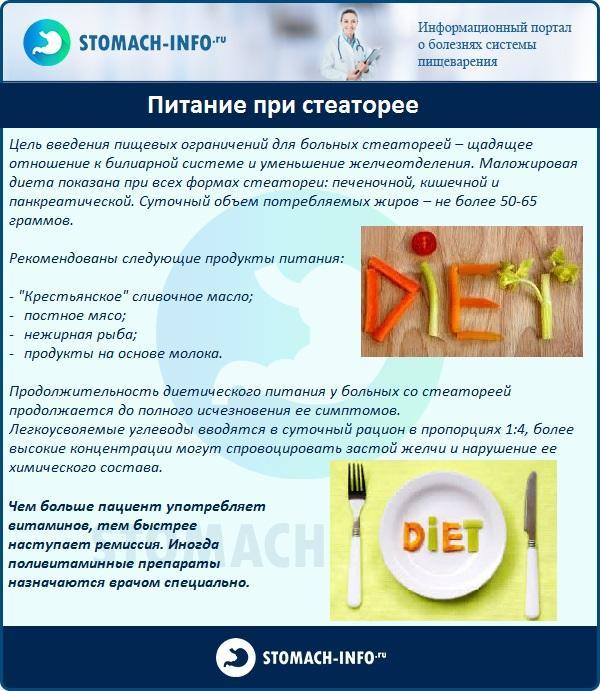
Nutrition with steatorrhea
It is necessary to take vitamin and mineral complexes, which include:
- thiamine;
- folic acid;
- B vitamins.
Depending on the cause that caused the accumulation of fatty acids in the feces, the following medications may be prescribed:
- Enzymatic ("Creon", "Pancreatin", "Mezim").
- Antacids ("Almagel", "Phosphalugel").
- Cortisone to regulate protein and carbohydrate synthesis.
- Hydrochloric acid.
- Adrenocorticotropic hormone.

"Creon"

"Almagel"

Antacids are necessary to neutralize stomach acid, they increase the therapeutic effectiveness of enzymes
Leukocytes
The study of feces using a coprogram allows you to establish the number of leukocytes in feces. This is one of the most important indicators of the analysis, since their increased level is always identified with the inflammatory process. However, they are usually found in the blood rather than in the feces.

Coprogram: decryption
In feces, they get into various inflammatory bowel diseases, during which the mucous membrane, or rather its vessels, become permeable to blood elements. White blood cells, entering the inflammation focus, perform their protective function and are then excreted along with the feces. Thus, they are present in diseases such as:
- colitis;
- enteritis;
- ulcer;
- erosion of the mucous membrane;
- malignant tumors.
The reasons for the increase in white blood cells can also be:
- dysbiosis;
- infectious diseases;
- toxins;
- allergens.
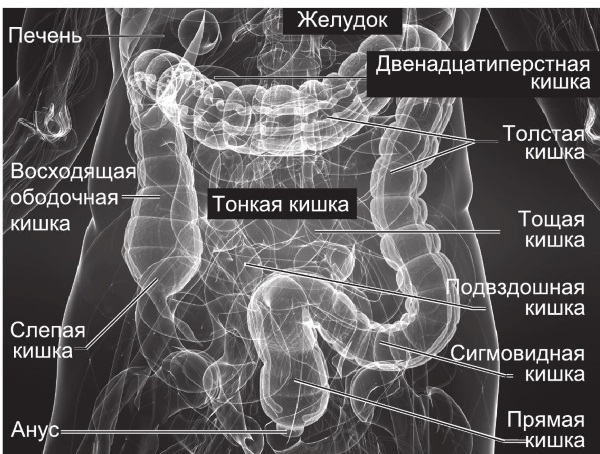
When studying leukocytes in the analysis, attention is also paid to their condition: whether they have undergone changes or not. In the first case, this means that the inflammation occurs in the upper parts of the intestine (small), in the second case - this means that the inflammation is localized in the lower parts of the intestine (sigmoid, straight, thick intestine).

Analysis
To more accurately determine the localization of the pathological process with an increased number of leukocytes, the doctor examines some additional coprogram data.
- The number of neutrophils. Exceeding their norm means that bacteria have entered the body.
- The number of eosinophils. Their increase indicates the development of allergies. The same indicator rises with helminthic invasion.
- Mucus in feces. With an abundance of mucus in the feces, one can assume such a disease as follicular enteritis.
- The presence of muscle fibers and fatty acids in the analysis indicates a digestive disorder, a lack of enzymes.
- The presence of red blood cells. Simultaneously with white blood cells, red blood cells can also be present in feces. This happens with prolonged and persistent constipation, when the walls of the colon are damaged or with internal bleeding.
In adults, according to the analysis of the coprogram, the number of leukocytes should be within the range of values from 0 to 2.
For reference! Sometimes the analysis gives a false result. This happens if a woman gave it during menstruation and menstrual blood got into the feces.
The analysis may be unreliable even if the person took iron supplements the day before.

If the analysis is unreliable, the doctor will ask you to retake it
There is a home method for determining the level of leukocytes in the feces. To do this, use express strips sold in pharmacies.
The stool should be placed in a clean plastic or glass container, diluted with saline to an emulsion, and then applied a small amount to the test strip. Within a short period of time, it will change its color, it must be compared with the scale suggested in the instructions.
Such devices are very useful for people who often need to monitor the level of leukocytes in the stool and there is no way to be tested in the laboratory every time.
In advanced cases, with a strong inflammatory process, feces have a putrid odor and impurities of pus.

The shape and smell of feces
After the doctor determines the cause of the increase in white blood cells, treatment should be started.
It may include, according to indications, drug therapy, nutrition, elimination of foci of inflammation.
The analysis of feces should normally not contain many substances. Fatty acids and leukocytes are almost always signs of disorders in the body, therefore, if they are detected, it is necessary to undergo a thorough diagnosis and eliminate the disease.
Proper nutrition and a healthy lifestyle are the basis for the prevention of gastrointestinal diseases. How to do an enema at home, study the link.