Mucus in feces in an adult: causes, treatment, possible diseases
The feces released during the act of defecation, in the norm of things, are not identical. How many times a day you visit the toilet, the same number of times they will look slightly or completely different. The desired variety is completely normal and physiological, since the consistency, color, shape and other parameters of feces are influenced by many different factors, for example, the amount of water drunk or eaten food. However, sometimes you can find disturbing inclusions of any foreign substances in the stool. For example, mucus in the feces of an adult: the reasons, the treatment of which we will consider in the presented article.

Mucus in feces in an adult: causes, treatment
Content
-
1 What is mucus, and is it normal in feces?
- 1.1 Video - White mucus in feces (stools) in an adult: causes
-
2 Causes of mucous discharge in feces
- 2.1 Haemorrhoids
- 2.2 Intestinal polyps
- 2.3 Membranous colitis
- 2.4 Intestinal infections
- 2.5 Colon neoplasms
- 2.6 Diverticulitis
- 2.7 Irritable bowel syndrome
- 2.8 Individual food intolerance
- 2.9 Dysbiosis
- 2.10 Cystic fibrosis
- 2.11 Helminthiasis
- 2.12 Improper nutrition
- 3 How to diagnose the disease
- 4 Treatment used to eliminate the causes of mucus
- 5 Treatment precautions and nuances
- 6 Let's summarize
What is mucus, and is it normal in feces?
As you know, our body has many mechanisms of self-support. So, one of them is the excretory function. Unfortunately, in the situation with feces, it is in direct relationship with the digestive processes in the body, since feces, in fact, are a product of the processing of food that we swallowed up. This means that any problems with excretion automatically signal us about probable diseases of the gastrointestinal tract.

Is it normal to say that the presence of mucus in the stool is normal?
Let's take a look at what normal feces of a healthy person consist of:
- from the final product of food processing;
- fiber;
- microbes that inhabit the intestines, in 95% of them come out dead;
- insoluble salts;
- intestinal wall cells;
- mucus.
It turns out that having a moderate amount of mucus in your stool is completely normal. It is always present in the stool, as it performs a very important function: it helps the feces pass through the intestines painlessly, without causing you discomfort or pain.
Provided that the mucus suddenly turns out to be less than necessary, during emptying, you may experience:
- various scratches;
- cracks;
- damage of a different nature.

Mucus has a protective function
So, mucus is, in fact, a kind of jelly-like substance. Its secretion is produced by glands located in the intestinal tissues. Mucus is responsible for maintaining the protective function of the intestines by:
- enveloping the mucous surface of the intestine;
- preventing the penetration of pathogenic microflora into tissues.
The sought pathogenic representatives of the flora include:
- bacteria;
- various protozoa;
- mushrooms;
- viruses and the like.
To protect the body and intestinal walls from destruction, it is necessary to protect them with something. That's what mucus is for.
The desired substance looks like a transparent discharge of a mucous consistency. In fact, it consists of:
- intestinal mucosa cells;
- leukocytes - white blood cells.
If your body is healthy, mucus should be mixed with feces so that it is not visible. The desired impurity becomes noticeable if it is released in excess, which is a deviation, and signals a person's health problems. In this case, you need to go to the doctor to conduct examinations and identify which segment of the digestive tract is working with disorders.
Video - White mucus in feces (stools) in an adult: causes
Causes of mucous discharge in feces
The reasons for the manifestation of a large amount of mucus in feces can be covered in a variety of diseases, and also be caused by non-pathological processes. They can be divided into five main groups. Which ones, we will consider in the following table.
Table 1. The main groups of diseases that cause the appearance of mucus in the feces
| Diseases of an infectious and inflammatory etiology | Diseases of the oncological category | Hereditary diseases | Eating problems | Infestation by parasites |
|---|---|---|---|---|
| 1. Haemorrhoids. 2. Various infections. 3. Diverticulitis 4. Dysbiosis. |
1. Bowel cancer. 2. Polyp formation. |
1. Cystic fibrosis. 2. Irritable Bowel Syndrome. |
1. Not eating enough fiber. 2. Non-compliance with the water regime. 3. Other violations related to the diet and diet. |
1. Helminthic invasion of the intestine. |
Let's move on to a detailed consideration of the phenomena-representatives of each of the sought groups.
Haemorrhoids
Under the concept of "hemorrhoids" lies a very unpleasant disease, in which there is an increase in the size of hemorrhoids. The sought nodes are represented by formations of the vascular type, which are located in the following areas:
- in the rectum, in its lower part;
- outside the anus;
- at the anal passage inside, slightly higher than the border of the anal canal.

Stages of development of hemorrhoids
Most often, hemorrhoids manifest themselves not with mucous, but with bloody discharge, however, quite often patients who are struck by the desired disease notice it is mucous discharge.
With the desired disease, mucus looks like:
- colorless impurity;
- transparent;
- in a volume of about 5-10 milliliters per act of defecation.
The inflammatory process that develops with hemorrhoids provokes irritation of the goblet cells responsible for:
- release of mucous grease;
- its quantity.
In view of the desired process, the amount of secreted mucus increases, it begins to be released from the anus not only during bowel movements, but also at normal time, while remaining on the laundry.
The sought-after reaction of the body also belongs to the category of protective ones. Mucus can also be secreted at the same time as:
- blood;
- pus.
At the same time, it is not at all necessary that the release of this mixture will take place during the act of defecation, since with hemorrhoids the sphincter muscles become more relaxed due to the development of inflammation, therefore, they retain the contents worse intestines.
So, the shade and composition of mucus with hemorrhoids can change as follows:
- clouding of mucus indicates the development of complications of hemorrhoids;
- provided that the secreted mucus mixes with the blood, this means that the inflamed hemorrhoidal node has ruptured, which requires an immediate visit to the proctologist;
- green-yellow discharge, mixed with mucus, indicates the development of the process of suppuration in inflamed areas, which increases the risk of the consequences of the disease.

What does acute hemorrhoids look like?
The following pathological and other conditions of the human body provoke the development of hemorrhoids:
- too heavy physical exercise, performed regularly, as a result of which the pressure inside the peritoneum increases, which causes further prolapse of hemorrhoids;
- provided that you have difficulty with persistent constipation, and are straining too much to expelling feces, the nodes receive a serious blood flow, as a result of which they increase in sizes and fall out;
- drinking alcohol in large quantities leads to the expansion of blood vessels, which are also located in the anal region, therefore, provokes the formation of bleeding;
- carrying a child is another particular cause of hemorrhoids, since with an increase in the uterus, an increase in pressure inside the abdomen occurs;
- a sedentary lifestyle also becomes the cause of the development of the desired disease.
Which doctor to go to for hemorrhoids? What are the mosteffective drugsin the fight against this ailment? Are there anynutritional advice for hemorrhoids. You will find answers to these questions on our portal.
Intestinal polyps
In the intestine, benign neoplasms can grow, the so-called polyps, which are attached to the inner mucous walls of the organ. The desired formations consist of glandular epithelium. They can form:
- on a broad basis;
- grow on a leg.
In fact, the formation of polyps is considered a pathological process that precedes the development of a cancerous diseases, since the degeneration of the desired benign tumor is quite often performed in malignant.

Pedunculated intestinal polyps
Unfortunately, it is not so easy to diagnose the presence of polyps in the intestine, since they do not have serious symptoms. For more information about the origin of polyps and symptoms, read special article.
Since the desired formations are formed by the glandular epithelium, they secrete a huge amount of mucus that comes out through the anal passage along with feces. The more abundant the desired impurity, the more likely you are suffering from polyposis.
Simultaneously with the release of mucus with polyposis, the following symptoms may appear:
- profuse diarrhea;
- intestinal obstruction;
- blood in the stool;
- constipation.
Membranous colitis
The disease in question is also called mucous colic, and is one of the most common pathologies of the gastrointestinal tract. The disease is accompanied by the following clinical manifestations:
- loose stools;
- constipation;
- pain in the abdominal cavity;
- mucous secretions of an unusual shape.

What does mucous colitis look like?
This disease often accompanies mental disorders, however, it is not treated by eliminating the mental trauma. Usually, pain and discomfort is accompanied by:
- the release of a small amount of pellet-shaped feces;
- the release of a large, even excessive amount of mucous impurities and gases accumulated in the intestines.
All attempts to calm the pain and finally go to the toilet normally when using laxatives and antispasmodics can have dangerous consequences for the patient, since the reaction will potentially exaggerated.
Another reason on the basis of which mucous colic often develops is an allergic reaction of the colon. In such cases, the pain comes unexpectedly, and overpowers the body in a cramping manner, after you have experienced any strong emotion. An attack can last for hours and days, but at the end of it, the following manifestations occur:
- profuse diarrhea;
- discharge of mucus of an unusual shape, in the form of threads, plates or bundles, due to which patients often think that their intestines have rejected part of the mucous membrane, or worms have been released from it.
Intestinal infections
Intestinal infections are inflammatory processes provoked by various types of pathogens that have entered the gastrointestinal tract. We are talking about such microorganisms:
- enteroviruses;
- rotaviruses;
- shigella;
- salmonella;
- cholera and similar pathogenic microbes.
If you do not follow preventive measures, you can get an infection, which is not easy to cure and transfer, especially if you let the process take its course at the initial stage of its development.

Intestinal infections can be triggered by a wide variety of pathogens
To prevent the infection from developing, you need to:
- eat only quality food;
- do not gnaw or lick dirty hands;
- drink boiled or bottled water;
- do not communicate with sick people until they recover;
- try not to kiss your animals, or do it with extreme caution.
The causative agents of infections are found almost everywhere in the world around. The desired pathology develops rather quickly, and is accompanied by the following clinical manifestations:
- vomiting;
- an increase in body temperature;
- spasms in the intestinal area;
- aches;
- fever;
- mucous discharge in the stool.

Adults tolerate intestinal infections as hard as children
Colon neoplasms
The disease in question is less common than those listed above, however, it still takes place. Unfortunately, the desired pathology is often found already at later stages.

Colon cancer stage four
Mucus in the presence of a neoplasm in the intestine in the adult population is usually secreted:
- abundantly;
- with blood impurities.
In children, the process does not occur so clearly, however, it can still be tracked. Provided that the mucous discharge is accompanied by pain, diarrhea or constipation, blood, fever, you need to go to the hospital as soon as possible.
Treatment in the event of the development of oncological processes will consist of:
- in the removal of the tumor;
- undergoing specific chemotherapy;
- radiation therapy.
Diverticulitis
Diverticulitis is an intestinal pathology in which the protruding parts of the target organ, the so-called diverticula, become inflamed. The desired condition is accompanied by the following manifestations:
- mucous impurity in the feces;
- various dyspeptic disorders of the stool;
- bleeding;
- increased body temperature;
- weakness;
- painful sensations in the lower abdominal cavity that occur periodically;
- sometimes vomiting also occurs.

Intestinal diverticula
Diagnosis of diverticulitis requires the use of various instrumental research methods, such as:
- ultrasound procedure;
- endoscopy;
- laparoscopy, etc.
In addition, laboratory tests are also taken to clarify the disease.
The disease is always localized in the place where the diverticulum was located - the blind protrusion of the intestine. The desired protrusions are not present in all people, but in a large number, at the same time, they rarely become inflamed. Inflammation can be triggered by various reasons, but most often it develops due to constant inappropriate nutrition, for example:
- non-compliance with the water regime;
- consumption of less than 30 grams of fiber per day.
Due to the factors listed above, the intestinal musculature does not work at full strength, as well as the feces inside it insufficiently moisturized, and hardened, therefore pathogenic microflora is retained inside the organ and provokes inflammation diverticulum.
Irritable bowel syndrome
The term irritable bowel syndrome refers to a condition of the intestine known to many people, in which there is a violation of the contractile activity of its muscles.

In a person with IBS, the intestinal wall is almost always irritated.
Until now, doctors have not been able to accurately explain the cause of intestinal hypersensitivity, since in itself in this case it is not a disease.
Instant irritation of the intestine can occur in this condition under the influence of many different factors, among which there are psychological problems. Any stress instantly impairs the digestion processes of the target organ of food, as a result of which various symptoms appear, such as:
- secretion of mucus in the feces;
- unexpected urge to defecate;
- frequent desire to defecate the intestines;
- diarrhea;
- constipation;
- flatulence and similar manifestations.

A cup of strong coffee in a person with IBS can cause severe diarrhea, or vice versa, constipation.
You can aggravate the situation and provoke additional mucus production by eating one of the following foods:
- coffee;
- strong tea, black or green;
- semi-finished products;
- store food, etc.
Individual food intolerance
Sometimes the cause of the manifestation of mucous impurities in the feces can be intolerance to specific foods that other people can eat at least every day. So, the most common situation in this case is the situation when the human body cannot assimilate lactose - milk sugar contained in all products made from cow's milk.

The most common intolerance is the inability to metabolize milk sugar.
Even a small consumption of dairy products in this case can provoke various disorders, for example:
- vomiting;
- nausea;
- constipation;
- diarrhea;
- bowel movements with a lot of mucus, etc.
In case of intolerance, there is only one treatment - the exclusion of foods that are contraindicated to you from the diet.
Dysbiosis
The term dysbiosis implies a violation of the ratio of beneficial intestinal bacteria and harmful, pathogenic microorganisms. Since we have already said that mucus protects the intestines from the penetration of harmful microflora into its tissues, when the desired balance is disturbed, it is produced many times more actively.

In case of microflora disorders, it is important to transfer the body to proper nutrition.
Fortunately, the desired condition is not dangerous, and temporarily, since beneficial bacterial colonies multiply and regenerate quickly by themselves. As soon as the balance of microflora comes to a normal state, the secretion of mucus also decreases.
Cystic fibrosis
The disease in question is very serious, and, unfortunately, has the character of a congenital pathology. A person who is unlucky enough to suffer from it from birth experiences constant discomfort associated with:
- damage to tissues and structures of the body consisting of them;
- violation of the activity of the glands;
- other functional disorders, usually of the respiratory system and gastrointestinal tract.
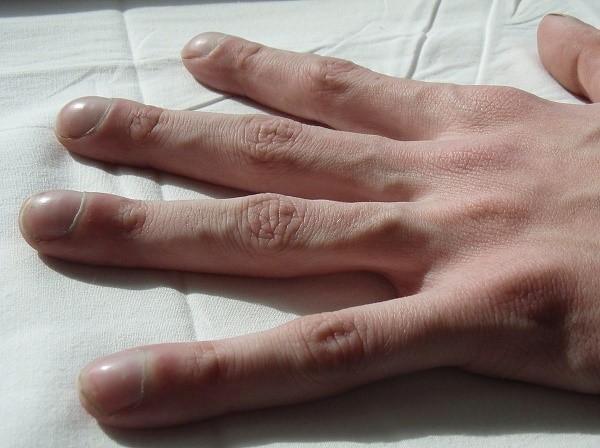
Hand of a person suffering from cystic fibrosis
So, the pathological process can affect:
- liver;
- intestines;
- pancreas;
- salivary glands;
- bronchial and lung system;
- sweat glands.
The disease in question is inherited from parents with a mutant component in the genome. All disorders associated with it begin to develop directly inside the mother's womb, while after birth and as a person grows up, they manifest themselves only more strongly.
The sooner the consequences of the disease made themselves felt, the more likely its course will be, and the increase in various side effects is faster.
With cystic fibrosis, the secretory function of the goblet cells of the intestine is also affected, various putrefactive processes that provoke the production of an excess amount of mucus, which is clearly visualized in the feces during emptying intestines.
Helminthiasis
Unfortunately, if simple hygiene rules are not followed, the human body can be inhabited by parasites - helminths, better known as worms. Such worms can live inside our organs for years, undermining the health of the body.

Helminths often enter the body due to poor hygiene
The danger of intestinal parasites is the following: during the course of their vital activity, they damage the walls of the organs, inflaming them through mechanical action.
An irritated bowel activates a protective function that provokes an abundant secretion of mucus, which will be easily noticed in the feces that come out of the intestine. In addition, the desired disease is accompanied by the following symptoms:
- vomiting;
- sudden weight loss;
- nausea, etc.
For more information on the symptoms and treatment of helminthiasis, see here.
Improper nutrition
We have already mentioned many times that a huge number of different factors that form a person's quality of life, including his physical health, really depend on nutrition.

Improper diet - the reason for the appearance of mucus in the stool
Mucus in the feces can cause, which is not surprising, also improper nutrition, that is, the desired impurity will not characterize any health problems.
For example, a large amount of mucus is caused by the following nutritional causes.
We are talking about the wrong diet, exhausting you:
- psychologically;
- and physically.
So, suffering from insufficient food intake, not only your sides are depleted, but also the intestinal mucosa, which is forced to secrete a large amount of mucus in order to somehow maintain its performance and protect yourself.
In addition, the use of the following foods can also lead to the appearance of mucus in the stool, which will pose absolutely no danger:
- oatmeal porridge;
- rice porridge;
- bananas;
- cottage cheese;
- watermelon.
How to diagnose the disease
If mucus is detected in the feces, and its manifestation is associated with any pathological processes, you need to seek help from a qualified medical specialist, who will clarify the following questions:
- what foods do you eat;
- how many times a day;
- how you drink water, etc.
Next, you will need to transfer your feces for research in a laboratory in order to identify the presence of any pathogenic microflora in them. When a pathogen is found, it will be easier for the doctor to understand what is wrong with you and what additional research is needed. conduct to determine the components of conservative therapy, and whether there is a need for surgical intervention.
In addition, blood tests may be required:
- biochemical;
- clinical.

To identify the disease, it is necessary to pass laboratory tests
Thanks to the study of the desired biological fluid, the doctor will be able to detect the inflammatory process, based on the quantitative indicator of white blood cells.
In addition, tests help to find out if there is bleeding in the body if you occasionally notice thin red threads in the mucus.
As for instrumental diagnostics, it means the passage of the following examinations by the patient:
- gastroscopy;
- ultrasound examination;
- laparoscopy;
- sigmoidoscopy;
- colonoscopy etc.
Treatment used to eliminate the causes of mucus
Since mucus itself is not a disease, it is necessary to act directly on the cause of its appearance. In the previous section, we described the most common diseases, which are accompanied by the desired jelly-like mucous discharge, and in this we list conservative therapy point by point for each of them, and also indicate if there is a need for an operative intervention.

Only a doctor can prescribe an adequate therapy.
Treatment in each case will be individual, since in reality there are too many factors that determine its manifestation. In addition, medication may be required to eliminate additional manifestations of the disease.
So, hemorrhoids are treated with the following drugs:
- anticoagulants, which are used to dissolve blood clots, reduce and completely eliminate edema, relieve inflammation, restore the tissue that connects the structures of the organ;
- hemostatics, which are used to increase the level of blood clotting;
- venoprotective agents that increase the tone of the muscle tissue of the veins, restore circulation in it, strengthen and relieve swelling;
- in addition, antispasmodics and analgesics are prescribed to eliminate pain in hemorrhoids.
When growing benign neoplasms in the intestine, that is, when polyps appear of various types, it will not be possible to cure the disease with a drug, since today there are no funds that can act on this epithelial tissue in a targeted manner. An obligatory operation of one of the following types is required:
- transrectal - through the anus using a scalpel or scissors;
- endoscopic - using an endoscope;
- electroexcision - removal using a loop through which a current is passed;
- colotomy - removal of the affected part of the intestine, and its suturing;
- enterotomy - removal of a pedunculated polyp by dissecting the intestines.

Treatment of some diseases will take you a long time.
With development membranous (mucous) colitis, in order to eliminate mucous inclusions and get rid of the disease, it is necessary to apply drugs of the following groups:
- enzymes necessary to restore sufficient levels of digestive juices;
- remedies that correct the production of gastric juice to reduce acidity;
- in addition, laxatives from vegetable oils, for example, sea buckthorn, olives, flax, are often prescribed for membranous colitis.
At intestinal infection carry out conservative therapy using the following groups of drugs:
- antidiarrheal;
- helping to restore water and electrolyte balance inside the body;
- enterosorbents, which absorb and naturally remove from the body toxic substances released after the formation of infection;
- antibacterial agents, provided that the infection was caused by bacteria.
Eliminate malignant neoplasms overgrown in the intestine it won't be easy. Treatment in the event of the development of oncological processes will consist of:
- in the removal of the tumor;
- undergoing specific chemotherapy;
- radiation therapy.
It must be said that the desired therapy is an extremely depleting event for the body, and unpleasant, it is necessary to be prepared for it morally.

The defeat of the intestine can be accompanied not only by mucous membranes, but also by blood secretions, in which the main task is to stop bleeding
In the early stages of development diverticulitis treatment proceeds with the help of:
- taking antibiotics;
- transition to a diet.
The second point implies avoiding the use of foods that are difficult to digest, also potentially causing fermentation, for example from:
- of bread;
- legumes;
- milk;
- rice;
- grapes, etc.
In addition, regular physical activity is shown to improve the functioning of intestinal motility.
To get rid of the consequences irritable bowel syndrome, the following types of drugs are used:
- antispasmodics for pain;
- antidiarrheal drugs;
- prokinetics for constipation;
- defoamers are used against flatulence and swelling.
In addition, it is important for IBS to switch to a proper diet that calms the gut rather than irritates it, and also to start getting regular exercise.
Unfortunately, the desired condition cannot be cured, since it is not a disease in itself, you can only stop its symptoms.
Intolerance any products that have caused an increased secretion of mucus by the intestines can be eliminated in only one way: by rejecting foods that the body is not able to assimilate.

If any food elements of the diet are intolerant, it is necessary to abandon them and remove them from the usual menu.
Concerning dysbiosis, it itself does not require any additional treatment, therefore, the best thing that you can do for your intestines with this pathology is to switch to proper nutrition at least temporarily.
Treatment cystic fibrosis, unfortunately, it can only be symptomatic. In other words, which system of your body was the first to suffer losses and made itself felt, that one should be treated, moreover, with an emphasis on the effect, not the cause.
In addition, with cystic fibrosis, a diet with a high protein content and a reduced intake of fats and carbohydrates is prescribed. Moreover, it is very important that the diet does not include:
- dairy products, if there is a reaction to them;
- coarse fiber (anyway).
Provided that your body inhabited by helminths, you need to react quickly in order to prevent parasites from causing irreparable damage to your body. Getting rid of worms involves taking:
- anthelmintic drugs;
- enterosorbents designed to remove from the body toxic products of the activity of worms, as well as the decay products of their dead bodies.
Treatment precautions and nuances
Pay attention to the important nuances and precautions to consider when treating mucus in your stool.

What precautions should be taken when treating mucous inclusions in feces
Nuance number 1. So, provided that blood is found in the mucus in large quantities, from which the transparent viscous mass becomes pink, crimson or red, first of all, it is necessary to start hemostatic therapy, however, drugs should be selected taking into account the pathology that caused the bleeding and contributed to the abundant discharge mucus.
By the way, these two manifestations do not have to be triggered by the same disease, it can happen, for example, like this:
- blood is released due to intestinal ulcer;
- Mucus is produced in large quantities during an infectious disease.
Nuance number 2. Provided that the patient is in pain, it is necessary to give him pain relievers, since, despite the fact that the symptoms are in some sense will be lubricated, the terrible stress due to constantly experienced pain leads to the fact that any pathology is aggravated in a short amount time.
However, if you are not a doctor, but a family member or friend has a stomach ache, you need to stop using analgesics or antispasmodics, and temporarily replace them with applying a cold compress in the form of:
- ice pack;
- cold water bottles;
- convolution with snow, etc.
Nuance number 3. When mucus is found in the feces, the patient must remember other characteristics of the stool, that is:
- their consistency;
- admixture of foam;
- the presence of undigested food.
The same applies to vomit, if you have expelled the contents of the stomach outward. You should also monitor your urine. All these characteristics must be recorded in memory and described to the doctor who came to your aid without fail.
Nuance number 4. Provided that the mucus in the stool was caused by an improper diet, it is necessary to exclude all heavy and harmful foods from the diet, and start eating according to the rules, preserving the health of the intestines and other organs body.
Let's summarize
Mucus in the feces does not necessarily have to indicate the development of any serious illness in your body. Sometimes it stands out only a few times for completely natural reasons. It is important not to be afraid, and not to postpone the problem if the desired discharge continues to bother you constantly, but to consult a doctor.

The main thing is not to self-medicate