Vegeto-vascular dystonia in women: symptoms and treatment, signs

Content:
- Signs
- Treatment
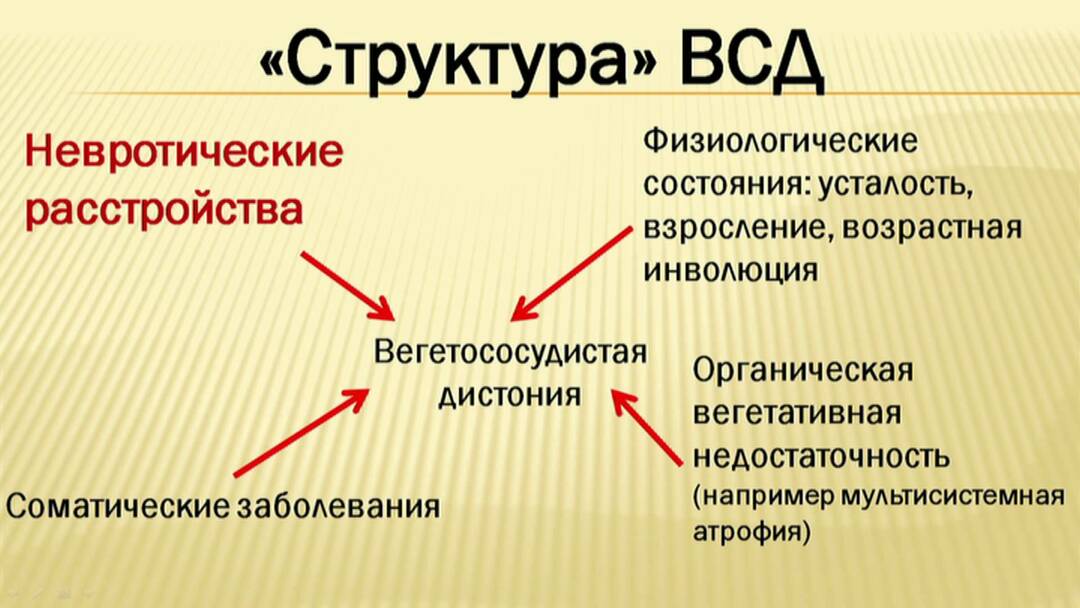
Vegeto-vascular dystonia or VSD is a symptomatic complex consisting of many clinical manifestations.
They occur when the function of the autonomic nervous system of various internal organs is impaired.
The disease can proceed paroxysmally or permanently, so you need to consider in detail what vegetative-vascular dystonia is, symptoms and treatment in women of different ages.
Women are more susceptible to the development of the disease. This is due to the peculiarities of endocrine function and emotional instability.
A woman's body experiences a lot of stress, among which pregnancy can be distinguished as a separate item.
Based on this, doctors identify the following provoking factors:
- increased tendency to depression, stress instability, suspiciousness and sluggishness;
- genetic predisposition and the presence of pathologies of the autonomic centers of the nervous system;
- high probability of hormonal imbalance (age-related changes in the body, pregnancy, menopause);
- the presence of bad habits;
- progression of infectious diseases;
- trauma to the brain and cervical spine.
Symptoms and treatment of vegetative-vascular dystonia in women largely depends on the type of disease.
VSD of hypertensive and hypotonic type.
In almost every case diagnosed, the disease leads to the development of hypertension. Against this background, a woman automatically falls into the risk group for strokes. The main symptom of vegetative-vascular dystonia of this type is increased systolic pressure (upper). If dysfunction of the sympathetic nervous system is observed, breathing is disturbed and muscle tone is lost, which can lead to the appearance of vegetative-vascular dystonia of the hypotonic type.
VSD of the mixed type.
This type of pathology is diagnosed in young patients. The disease is mainly found in girls from seven years old. The main reason for its appearance is genetics or underdevelopment of organs during intrauterine development. For a long time, the disease may not manifest itself, and strong stress or overload of the body becomes the impetus for its onset.
VSD of the cardiac type.
The disease is similar to the symptoms of mixed vegetative-vascular dystonia, due to which requires careful differential diagnosis in a hospital setting, which can be carried out by an experienced doctor. A characteristic symptom is pressure surges (up or down), the patient feels weak, slight pain in the region of the heart, his fear and panic begins to envelop, against this background, breathing begins to go astray, clouding in the eyes, a headache arises, the state is on the verge fainting.
Important
If any symptoms of vegetative-vascular dystonia in women are found, it is better to entrust the treatment and diagnosis to a specialist.
With regard to related symptoms, regardless of the type of progressive disease in patients observed: headaches, discomfort and tingling in the heart, dizziness, irregular breath.
Knowing about the symptoms of vegetative-vascular dystonia in women, treatment should be carried out only after a thorough examination.
 Due to the versatility of symptoms and conditions that women suffering from VSD may have, diagnosis is complicated. Darkening in the eyes (in particular after sudden movements), a tendency to sharp redness are considered alarming signals or paleness, irregular heartbeat and increased sweating, numbness or coldness of the extremities, rapid fatigue.
Modern medicine has a wide range of diagnostic devices in its arsenal, thanks to which it is possible to accurately determine the type of VSD.
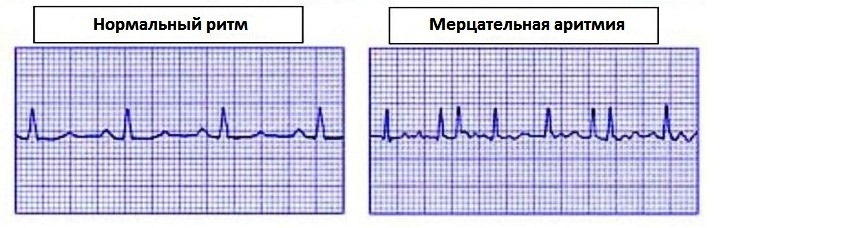
The most common is considered electrocardiography, while the examination should be daily (during
It is very important in diagnostics to check the state of the nervous system, which helps to do electroencephalography. This method is a graphical recording of brain bioimpulses. Also, doctors can prescribe a computed tomography of the brain (X-ray examination), which allows you to get a picture of any part of the body in a certain plane and section.
If you do not consider diagnostics using X-ray radiation, then it is worth mentioning the method magnetic resonance imaging, which also visualizes different parts of the body layer by layer, in the specified plane. Modern diagnostics allows you to build a three-dimensional image, and compare healthy and pathological areas, and according to the results pictures, it is possible to set the correct diagnosis and develop the most appropriate treatment regimen for the patient, taking into account all the features pathology.
Now you know what vegetative-vascular dystonia is, symptoms and treatment in women, and methods for diagnosing this condition.
Signs of vegetative-vascular dystonia in women: VSD in women of different ages and actions during an attack
The syndrome is rarely diagnosed in children, more often adults in the age group from 30 to 50 suffer from it, while women are more susceptible to the disease than men. It is worth noting that if the VSD was not diagnosed before the age of 50, then the likelihood of its appearance in old age is extremely low.
The primary signs of vegetative-vascular dystonia in women at the age of 30 do not depend on the type of disease. Often, the pathology manifests itself for the first time during the bearing of a child, while the type of disease is either hypertensive or mixed, less often hypotonic VSD (occurs mainly in children and pregnant women).
Doctors distinguish the following common signs of VSD in women:
- headache of the passing type (localized in the area of the temples, crown or occiput);
- rapid heartbeat, alternating with a violation of the frequency of contractions;
- a feeling of pulsation in the vessels (large and small);
- increase or decrease in blood pressure at different times of the day;
- tremors in muscles during exercise;
- a constant feeling of excitement and anxiety;
- increased appetite;
- decrease in performance;
- a constant desire to sleep with the persistence of a feeling of fatigue;
- mild stabbing pain in the heart.
It is also worth noting that the presented symptomatic complex of dysfunction of the autonomic system does not appear together. In some cases, patients suffer from individual symptoms (heart pain, irregular rhythm of contractions, pulsation, pressure disturbance). At this age, VSD is diagnosed mainly in those who have undergone a high load during childbirth.
At the age of 40, the symptoms intensify, and a number of conditions are added to the primary signs of vegetative-vascular dystonia in women.
 With an established diagnosis in this period, there is a cardiac syndrome (occurs in 90 patients out of 100). Women suffer from irregular heartbeats, sometimes with complete sinking. Because of this, the general condition suffers, you have to limit yourself in performing physical exercises, and fatigue quickly appears. A feature of heart pains is their variety: burning, pinching, tingling (short-term or long-term attacks). At the same time, during the examination of the heart, doctors do not detect changes in its structures.
In the case of progression of the hypertensive type of VSD in women at the age of 40, it can be seen that blood pressure rises, but still remains within acceptable limits. Hypertensive crises practically do not happen, but weakness, headache and heart palpitations are present.
With the development of hypotonic vegetative-vascular dystonia, the tone of the parasympathetic nervous system increases. Against this background, women experience bouts of apathy, drowsiness and fatigue are pronounced, fainting occurs (more often in thin girls), and the systolic pressure is within 100.
Regardless of the form and age, a sign of VSD in women is considered a headache, a constant feeling fatigue, gastrointestinal upset (diarrhea, dysbiosis, constipation), noises in the head with cerebral dystonia.
At the age after 50 years, if there have already been attacks of VSD, women often experience changes in body temperature, it can be for no reason rise and fall, excessive sweating and hot flashes appear, characterized by facial flushing, fever, trembling or feeling heat. These signs lead to the fact that it becomes difficult for women to perform physical labor, they react to weather changes and it is difficult to rebuild when the climate changes. Due to changes in hormonal levels, symptoms worsen during menopause.
In women, the signs of vegetative-vascular dystonia are diverse, spread to many organs, due to which the patient begins to worry strongly and suspects the development of diseases. This state provokes instability of the emotional background: tearfulness appears, pity for to himself, each symptom gives an impetus to the search for a new pathology, which shakes the social adaptation. Because of this, the lifestyle becomes withdrawn, there is no communication with friends and loved ones, which in turn only exacerbates the situation.
At the age after 50 years in women, signs of VSD appear against the background of menopause, and the following conditions join irritability:
- tendency to tearfulness due to increased sensitivity;
- constant feeling and rapid onset of fatigue;
- mental and physical activity decreases;
- memory is impaired;
- I always want to sleep.
Under the influence of pathological signs, the condition worsens with menopause, neuroendocrine regulation is disrupted: frequent "hot flashes" (fever throughout the body), pain in the head and cervical spine, heart palpitations, dizziness occur, there are surges in blood pressure and pulse.
It is very important to know how to act in a situation when an attack of VSD has begun.
Doctors advise adhering to the following algorithm:
- first of all, it is necessary to cope with a panic attack and stabilize the emotional state, you do not need to be nervous, because an attack does not pose a danger;
- you should not listen to all the changes that occur during this period, it is better to try to distract yourself;
- ideally, if a woman can go outside and not stay in this state at home herself, she needs to be among people, which also helps to distract herself;
- you can help your body overcome an attack and eat something sweet;
- in no case should you take alcoholic beverages;
- you can take a pill or valerian tincture to calm you down.
 With special attention to the VSD, girls should be treated during pregnancy, because an attack can provoke the development of complications. If there is a tendency to vegetative-vascular dystonia of a hypotonic type, then it can contribute to anemia and placental insufficiency, due to metabolic disorders, there is a lack of vitamins and oxygen, which the fetus does not receive, and the general condition worsens pregnant. With hypertensive VSD, late toxicosis may develop.
If a woman was able to identify the characteristic signs of VSD, it is recommended to go on maternity leave ahead of schedule. If this is not possible, then more breaks should be taken during work.
Therapy for pregnant women is quite complicated, but the expectant mother should direct all her efforts to restore the weakened areas.
Therefore, when diagnosing VSD, the following is recommended:
- Rationally distribute rest and stress throughout the day.
- Conduct aromatherapy or meditation sessions, drink soothing teas.
- Draw up a program for hardening the body.
- Lead an active lifestyle and do not neglect walks in the fresh air.
- Exercise.
- Perform self-massage.
During the period of bearing a child, each mother should take care of her body, because this is the guarantee of the health of her baby.
Quite often you can find girls who complain of bouts of vegetative-vascular dystonia during menstrual bleeding. This is due to the fact that the body is rebuilt from one cycle to another, which affects both the nervous and endocrine systems.
In some cases, PMS can be confused with an attack of VSD, however, in women with an established diagnosis, the symptoms are always more pronounced.
Most often, signs of pathology are:
- severe and frequent headache;
- decreased physiological activity;
- depressed emotional state;
- apathy, depression, sleep disturbance.
If symptoms are found, it is impossible to remain idle. It is very important to know the correct scheme for dealing with them. For this, long walks in the fresh air are recommended, avoidance of stressful and conflict situations, more rest, if necessary, sedatives are allowed.
Treatment of vegetative-vascular dystonia in women: medication, non-medication and folk methods
 Treatment of vegetative-vascular dystonia in women is always complex, including drug therapy, non-drug and alternative therapy. If you take only medications, then they will not be able to return the necessary activity to the patient on their own.
Sedative medications have a relaxing effect and soothe an anxious body. In most cases, those that contain plant components are considered effective: Herbion, Persen, Novopassit. If necessary, synthetic drugs can be prescribed, for example: Corvalol or Valocordin.
The therapy also includes drugs that can normalize the work of the heart: they stabilize blood pressure, eliminate pain, and restore microcirculation in the brain. It is very important that the correct daily regimen is observed during such treatment. Of the drugs, Asparkam, Panangin, Vinpocetine are prescribed.
You also need funds that normalize the work of the central nervous system. Taking them improves appetite and helps to cope with the state of depression and apathy.
If vegetative-vascular dystonia is diagnosed, vitamin complexes are prescribed for women to replenish the missing elements in the body. Patients definitely need calcium and magnesium, and in order to avoid fainting and loss of mind, myotropic antispasmodics can be prescribed: No-shpa, Drotaverin and Papaverin.
In women, the treatment of vegetative-vascular dystonia is carried out and not medication. The essence of the method is to rationally plan your day, adjust work, rest, physical activity and nutrition. Light gymnastics should be done daily, including breathing exercises, but this approach is effective only in the initial stage of the development of pathology.
If vegetative-vascular dystonia is detected in women, treatment can be carried out using methods and recipes of traditional medicine. If the patient feels nervous tension, it is recommended to take a warm bath with lemon balm infusion, or to have an aromatherapy session for relaxation.
For those with hypertensive vegetative dystonia, there is one proven recipe that helps to quickly cope with high blood pressure. A decoction of herbs (sweet clover and caraway seeds) should be prepared, which are taken in equal quantities (half a tablespoon is enough), 5 teaspoons of black currant (berries), oats and rose hips (fruits) are added to them. Also here comes 2 incomplete spoons of rue, three spoons of hawthorn (fruits and leaves), lemon balm and immortelle. The composition also includes calendula and motherwort. The mass is poured with boiling water (half a liter), insisted until it cools completely and consumed 30 grams no more than 6 times a day.
 If a reduced neurocirculatory function is traced in conjunction with hypotension, then in the treatment of vegetative-vascular dystonia in women it is used the next broth: a few tablespoons of mint, the same amount of elecampane, wild rose, nettle, strawberries and knotweed, prickly tartar (3 tablespoons) and the same amount of leaves birch. Next, take about 3 tablespoons of a mixture of herbs and pour boiling water (half a liter), leave for 9 hours, filter, and then take 50 grams three times a day.
If depletion of the body is observed on a nervous basis, then the letter will help with this condition. Take 6 tablespoons of herbs and pour a liter of boiling water, add sugar if desired and drink during the day.
Quite often, the disease occurs in conjunction with chronic fatigue. In this case, in women, the treatment of vegetative-vascular dystonia is carried out with the use of tincture. It is made on the basis of nettle, which must be poured with half a liter of vodka, placed in a bottle with a strong lid and left to infuse for at least 14 days in room conditions (in a dark place). After preparation, the medicine is filtered and taken twice a day for a tablespoon, 3 minutes before eating. They are treated for 2 weeks, then a break and repeat the therapy.
As for the prognosis for recovery, it all depends on the stage at which the disease was detected. If the VSD is diagnosed as early as possible, then there are great chances to minimize the severity of symptoms. Correct therapy helps to restore the emotional background, sleep is normalized, the body retains its adaptive capacity. There is also no severe headache and dizziness.
In the absence of therapy, complications may develop in the form of stable functional deformities, the appearance of hypertensive ulcers, and so on.
That is why it is very important to be attentive to your health, because any disease is easier to cure at the beginning of its inception.
Partial use of site materials (no more than 30% of the content of the article) is allowed only with a hyperlink on www.med88.ru, full use of the article (more than 30% of the article content) is possible only with written permission edition.