Legs swell: the reason for women, for men, how to treat, what to do
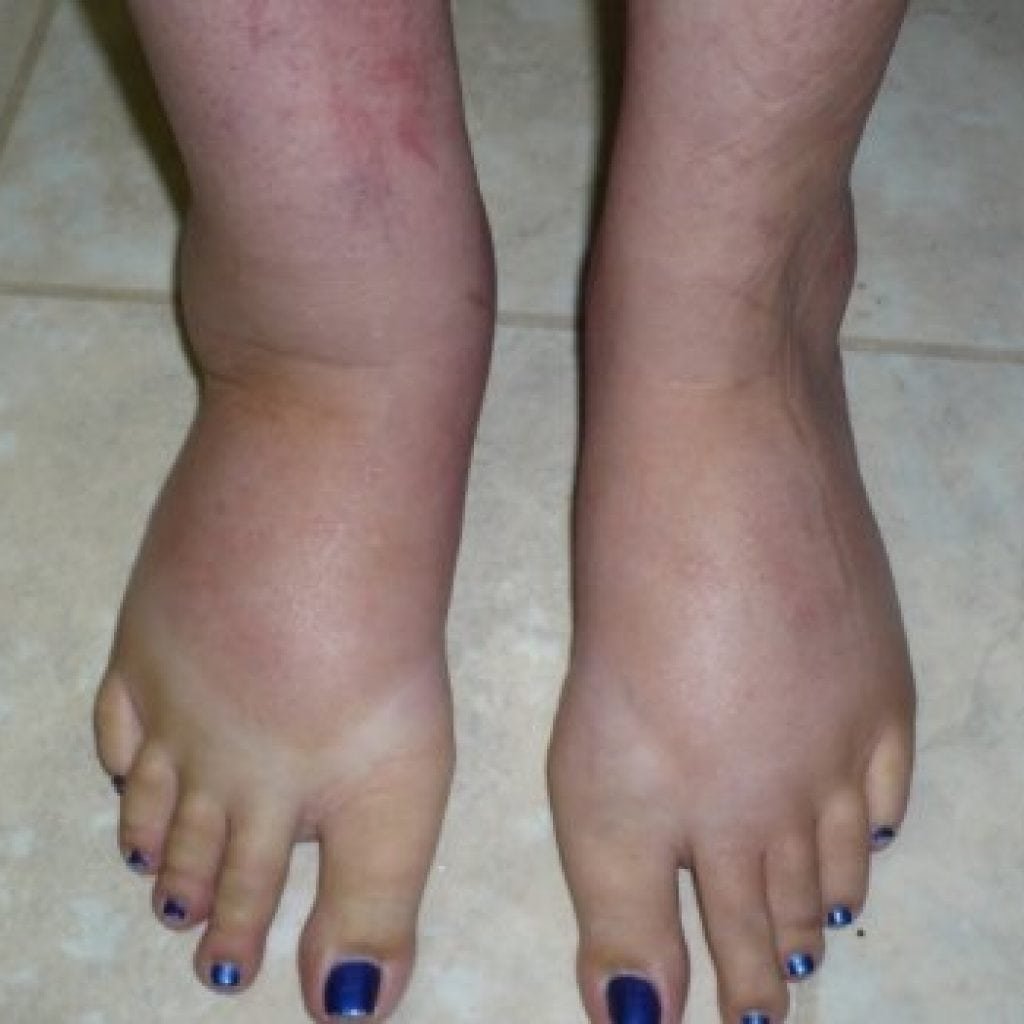
Swelling of the feet (swelling) is a common cause of complaints in many people, both men and women. The increased fluid content accumulates in the body, the tissues become looser, as a result of which one or another part of the body increases in volume. Swelling of the legs in women occurs much more often and this causes considerable discomfort, especially for lovers of heels (see. photo below).



Content
- Causes and symptoms
- Other reasons concealing diseases of the internal organs
- Swelling in women
- Premenstrual cycle
- Climax
- Apnea
- Pregnancy
- Swelling in men
- Prolonged immobilization
- Sleep apnea
- Liver problems
- Arthritis
- Diabetes
- Diseases associated most often with edema of the extremities.
- Congestive heart failure
- Chronic venous insufficiency
- Diagnostics and treatment
- Home treatment
- In custody
- What to do to prevent edema?
- Disease Videos
Causes and symptoms
The first question that arises in this situation is the causes of the edema. First, you need to check if there are any violations in the venous bed, since there is a possibility of developing or already progressive thrombosis, impaired renal function.
progressive thrombosisSwelling with poor circulation and venous insufficiency are different.
- In the first case, the swelling is dense and does not cause pain; on the back of the foot under the second toe, it is not possible to fold the skin into a fold, and a liquid with a high protein content accumulates.
- In the second case, the intercellular fluid accumulates in the tissues and is not excreted as it should.
There are acute edema of the legs, which are formed in two or three days, while the patency in the deep veins is impaired, there is a swollen cyanosis, muscle soreness. Often the cause of this complication is:
- varicose veins of the lower extremities;
- long bed rest;
- chemotherapy;
- injury.
Swelling in acute venous insufficiency can be triggered by:
- flights in an airplane;
- pregnancy;
- motionless lifestyle;
- hard physical labor.
Timely diagnosis of this disease will help avoid future amputation and, as a result, disability.
Despite the fact that, we will share how to treat edema, it will be correct to see a doctor.
Other reasons concealing diseases of the internal organs
However, excessive accumulation of fluid in the legs is a symptom of not only venous disorders, but many diseases can manifest in this way. Also, it is possible:
- the presence of obstructions to venous outflow,
- high capillary permeability,
- low oncotic blood pressure,
- vascular or musculoskeletal damage
- and many other diseases of internal organs.
If, after a respiratory infection, the patient has severe swelling, then it can be assumed that the kidneys are impaired. Their disease can be regarded as a complication after infection.
With "elephantiasis" in the body, lymph flow, water and protein metabolism are disturbed, as a result stagnation is formed. At the same time, the lower limbs swell strongly.

Disorders in the thyroid gland can also contribute to the formation of excess fluid accumulation in the organs. Under the lower leg, the skin becomes elastic, if you press on it, then the pits do not remain. Also, swelling can be observed on the tongue, shoulders. All this is accompanied by constipation, drowsiness and chilliness.
Omitting the aforementioned diseases, the problem may be facilitated by taking certain medications that cause fluid retention in the body. In this case, itching and redness may be added to the swelling.
As you can see, there are many reasons. You can continue and make out even more in more detail some of the points why women's legs swell?
Swelling in women

Premenstrual cycle
Swelling in the legs can be associated with the hormonal state of the woman's body. For example, in the premenstrual period, along with edema, there is an increase in body weight. This is because the amount of blood plasma increases. The problem goes away with the onset of the menstrual cycle.
Read also:Cardiomyopathy
Climax
During menopause in women or postmenopausal people, water can linger on the face, hands, and feet. Often, women gain weight during this period and are depressed.
Apnea
Also, swelling can be the result of sleep apnea, which often occurs during this period. The hydrostatic pressure of the plasma increases and leads to obstruction of the outflow of the liquid. Polysomnography will help diagnose pathology.
Pregnancy
Swollen legs in pregnant women are not uncommon and are normal if they appear in the late afternoon, while the protein content in the urine and blood pressure do not exceed the norm. Otherwise, we can talk about a serious complication of pregnancy, which requires immediate treatment.
During pregnancy, excess water accumulation in organs can be caused by an increase in plasma volume. During this period, peripheral vascular resistance decreases, the uterus increases in volume. Previously, swelling of the legs in the last trimester was considered a sign of toxicosis.
Pregnancy can lead to the development of venous insufficiency, leading to swelling of the legs after childbirth.
Swelling in men

Why do men's legs swell? Mainly due to chronic venous insufficiency, which is often inherited. Many men are engaged in hard physical labor, while the body loses a lot of water with sweat, but gets little.
It also happens during the heat, if a person does not drink enough water, and while wearing tight shoes. Inactivity, and even more so the immobility of the limbs leads to the fact that the fluid flows down according to the principle of gravity. This is especially true for wheelchair users, men with a sedentary job.
There are also several main causes of edema in men:
Prolonged immobilization
Immobility of the body, lasting more than three days, contributes to the development deep vein thrombosis. The disease develops rapidly, the leg acquires a red tint, at the site of the edema, the body temperature is elevated, painful sensations appear, which intensify with palpation. The patient's condition may worsen, leading to the development of pulmonary embolism.
For this reason, one should not neglect his health after an injury, but a long bed rest should be observed.
Sleep apnea
Men suffer from this disease much more often than women and can manifest itself in middle age, despite the fact that in women the pathology is more common in the postmenopausal period.
Liver problems
With cirrhosis, water and sodium are retained in the body, in combination with hypoproteinemia, edema occurs. The main reason for development cirrhosis of the liver is alcohol abuse, and men suffer from it three times more often than the female half of the population.
Arthritis
Swelling appears in the morning, there is increased stiffness in the joints.
Diabetes

At diabetes mellitus swelling can be all over the body, as well as on the face and hands. An infection in the vessels of the legs can help develop edema.
And yet, the question remains unanswered: "Why do the legs swell in men much less often than in women?" The whole point is also in the body of a man, or rather, in its features, it is better to circulate blood, and plus to everything, muscle tissue predominates over adipose tissue.
Read also:Bradycardia
Most often, the problem is caused due to violations of the outflow of water in the body, and it accumulates. The modern world and the working conditions of most men have contributed to the fact that swelling of the legs develops into a chronic disease.
At an early stage, many men simply do not notice the problem or do not attach importance to it. It usually begins in the ankle area. Even with a slight swelling in the place of the elastic of the socks, a trace remains, which persists for a long time if the leg is not massaged.
If you do not start taking action, the swelling will spread to the calves, then move to the feet. Then the symptoms will be so obvious that the person will not be able to put on shoes.
Swelling is also common in the knees. The leg becomes unnatural, i.e. the lower part of the lower leg is very thin, and the skin above the knee is swollen, resembling a wen. This form of edema indicates a circulatory and lymphatic disease.

Surely everyone wondered why the legs often swell in the late afternoon. The thing is that the heart pumps blood from the center to the periphery and back. In case of problems with veins, the blood does not completely return, the plasma appears in the intercellular space and is retained in the tissues. So in the evening, swelling of the legs appears.
It is not uncommon for older people to take a variety of medications that have side effects such as swelling. Some drugs contribute to fluid retention in the body, in which case you should immediately consult a doctor and replace the drug
Venous edema Is the most common cause in older women. The liquid has a low viscosity and a high protein content, characterized by an excessive flow of liquid from the capillaries. Edema can be affected by structural changes in the veins, inflammation, decreased venous tone, valve failure, and heart failure.
Lymphatic edema characterized by the outflow of high-viscosity fluid, which hardly flows through the vessels of the lymph system. Such swelling can also be caused by congenital diseases, and the skin of the legs can become thicker, rougher and even brown. This problem occurs due to the accumulation of lymph fluid in the tissues or after surgery to remove the lymph node. Also, with prolonged lymphatic edema, there is:
- induction,
- hyperkeratosis,
- papillomatosis.
Rare causes of leg swelling include:
- starvation,
- congenital malformations of the veins,
- restrictive cardiomyopathy,
- restrictive pericarditis,
- hypothyroidism.
Swelling of the legs, the cause in older women and treatment requires special attention. Older people more often than others complain of pain, since physical activity decreases, somatic pathologies accumulate.
Diseases associated most often with edema of the extremities.

Congestive heart failure
The disease develops against the background of systemic venous hypertension, which increases capillary permeability. Dyspnea and asthenic syndrome are also added here.
A tumor due to the accumulation of water in the tissues is observed on two limbs, the jugular veins expand, and the heartbeat increases. The doctor prescribes diuretics, digoxin, angiotensin receptor blockers. After the swelling subsides, the doctor prescribes beta blockers, ivabradine.
Chronic venous insufficiency
With CVI, swelling of one or even two legs is characteristic, the skin becomes brown. This pathology is often associated with overweight, varicose veins. On running stages trophic ulcers appear.
Diagnostics and treatment

The doctor will prescribe Doppler sonography to clarify the diagnosis and identify the stage of the pathology. After that, the patient is recommended to wear compression hosiery, and medications containing horse chestnut are prescribed. Moisturizers can also be used for treatment.
Read also:Spasm of cerebral vessels: causes, symptoms and treatment
Invasive treatments are popular, such as:
- sclerotherapy,
- endovascular therapy,
- radioablation,
- phlebotomy.
The doctor should diagnose the problem and prescribe treatment, since self-medication can only worsen the situation. The specialist will prescribe the collection of anamnesis, which clarifies the picture about the duration of edema, pain syndromes, and taking medications.
Physical, instrumental and laboratory studies are also possible. To identify the cause of edema, the following may be prescribed:
- computed tomography of the pelvic organs,
- Ultrasound of the lower extremities,
- electrocardiography,
- echocardiogram,
- lymphoscintigraphy
For moderate to high swelling, both medical and compression treatment is necessary. The latter option implies wearing a special anti-varicose jersey. In rare cases, it is necessary to use surgical intervention.
Home treatment

There is also a third option, how to treat edema - a folk method, but it can only be used as an addition to the prescribed treatment. Chestnut tincture is very popular for swelling, it helps to strengthen the vascular wall. It should be taken in courses of three months, between which it is imperative to take a break.
A decoction of black radish also helps (400 grams of radish per 1 liter of water), it can even be used instead of water. You can try decoctions with flax seeds, to be taken every 6 hours. The treatment process takes three weeks.
In custody
Severe, rapid swelling may indicate deep vein thrombosis of the lower extremities, which is characterized by pain in the area of edema. In chronic venous insufficiency, the pain is insignificant; problems with the functioning of the liver, kidneys and heart can also contribute to the development of this disease.
Pathologies can also include neoplasms in the pelvic region. They contribute to the squeezing of the lymphatic vessels, which makes it difficult for lymph to drain into the body.
The area of swelling indicates the presence of systemic disorders. For example, swelling in one leg indicates venous thrombosis or chronic venous insufficiency. If both limbs are swollen, then this is typical for renal and heart failure.
If the swelling is not a consequence of any pathology, but is of a physiological nature, you can use the following tips to relieve them:
- wear compression underwear,
- reduce the amount of salt consumed (maximum 1.5 mg per day),
- apply moderate physical activity,
- you can lie down on the bed and raise your legs up,
- massage the limbs.
What to do to prevent edema?

Correct physical activity on the muscles of the lower leg and thigh will not be superfluous, they contribute to improving venous outflow. The most effective will be:
- flexion,
- extension and rotation of the ankle,
- bicycle riding,
- walking,
- rise on toes.
But it is worth paying attention to the fact that heavy physical activity cannot be used if the problems are caused by heart disease.
In general, the prevention of edema in men and women is the same:
- monitor your weight;
- balanced diet;
- monitor the amount of sweet and flour products;
- consume enough iodine per day;
- minimize alcohol consumption;
- exclude prolonged immobility of the legs;
- use anti-varicose jersey;
- do not sit leg by leg;
- do lymphomassage daily;
- wear only the right footwear.