Heart attack: causes, symptoms, treatment, prevention
Heart attack is one of the leading causes of death in women and men. Unfortunately, no one is immune from him.
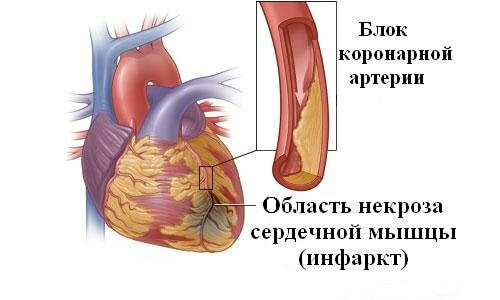
A heart attack is a blockage of one artery in the heart, accompanied by severe pain and other unpleasant symptoms. Such a sharp violation of blood circulation has a negative effect on the entire human body. It is necessary to call an ambulance in time and provide the patient with first aid.
You need to act quickly and correctly, otherwise the consequences of an attack can be fatal.
The main risk group is made up of people with coronary heart disease and atherosclerosis. As well as other diseases that are associated with the work of the cardiovascular system.
The ages of people prone to seizures are from 45 years old in men, and from 55 years old in women.
Content
- Causes of occurrence
- How to recognize a heart attack
- Heart Attack Symptoms
- Heart attack in men
- Heart attack in women
- First aid for a heart attack
- Treatment
- Consequences of a heart attack
- Prevention
- Related Videos
Causes of occurrence
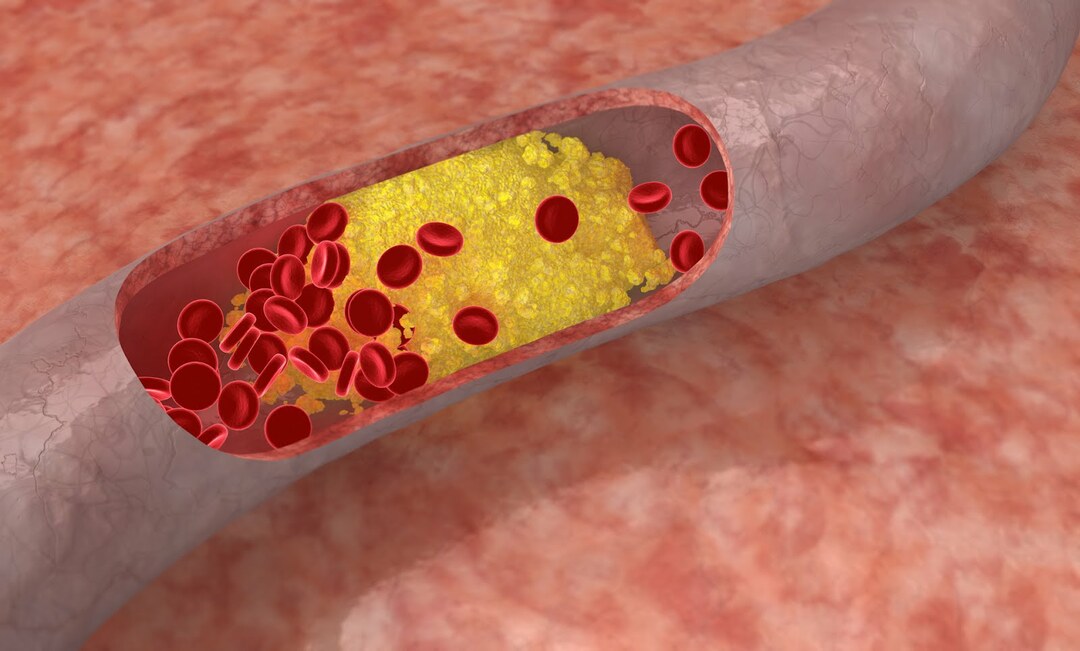
Blockage of the heart artery and the occurrence of pain occurs due to cardiac problems and diseases. And also because of the deposition of fat on the walls of blood vessels, or because of the blood clots formed there.
Older people are usually most susceptible to heart attacks. They tend to have heart problems more often. This disease is most often manifested in males.
Also, a fairly common cause of a heart attack is angina. Respiratory functions are impaired and the effect of suffocation occurs. All this is accompanied by irregular heartbeats and severe chest pain.
The manifestation of angina pectoris can be caused by frequent smoking or too heavy physical exertion.
But there are a number of other factors that are also provocateurs of a heart attack:
- diabetes;
- alcohol and tobacco abuse;
- overweight;
- fatigue, signs of constant fatigue;
- cardiopalmus, high rates when measuring the pulse;
- anxiety, unreasonable feeling of fear;
- hypertension;
- vasospasm (their walls shrink and interfere with normal blood circulation);
- doing too hard physical exercise;
- complete absence of sports;
- metabolic problems;
- genetic predisposition;
- high levels of cholesterol;
- high blood pressure;
- stressful periods in life;
- violation of the daily routine;
- thrombophilia (a tendency to form blood clots in blood vessels).
How to recognize a heart attack
One of the main symptoms of a heart attack in both men and women is chest pain. But this symptom can refer to any other disease, for example, to intercostal neuralgia.
Read also:High pulse: reasons how to reduce the pulse at home with drugs and folk remedies
There are several signs that can accurately identify a heart attack.
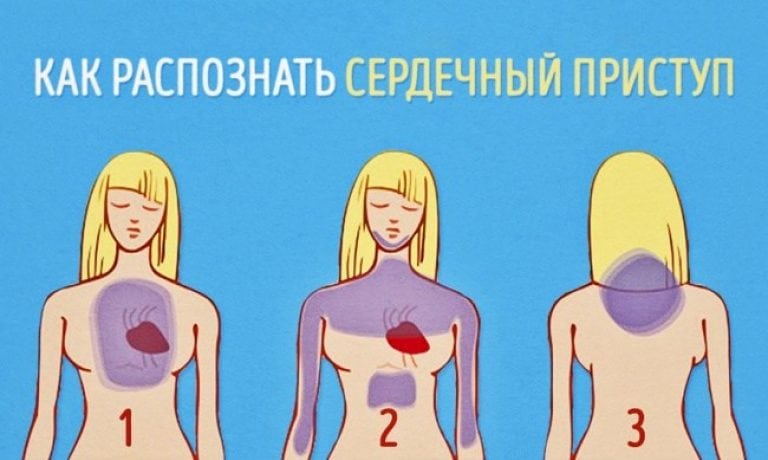
During an attack, pain from the thoracic region gradually spreads throughout the body. First on the face and neck, then on the arms, and gradually moving to the back and abdomen.
This process can happen in a few minutes. But sometimes, such a movement of pain throughout the body lasts for hours.
To be able to determine as accurately as possible a heart attack, you need to pay attention to the following conditions:
- The onset of pain
With a heart attack, pain arises from severe emotional overload. And when intercostal neuralgia, the pain appears either from sudden movements, or absolutely for no reason.
- Under what circumstances does pain disappear?
During a heart attack, pain can be relieved with nitroglycerin medications. A few minutes after taking the pill, the pain disappears. And with neuralgia, drugs of this type do not have the desired effect, and the pain does not go away.
- The nature of pain
Neuralgia is characterized by girdle pain, which can be aggravated by sudden movement, coughing, or breathing too vigorously. And during a heart attack, a person feels a stabbing or pressing pain.
Heart Attack Symptoms
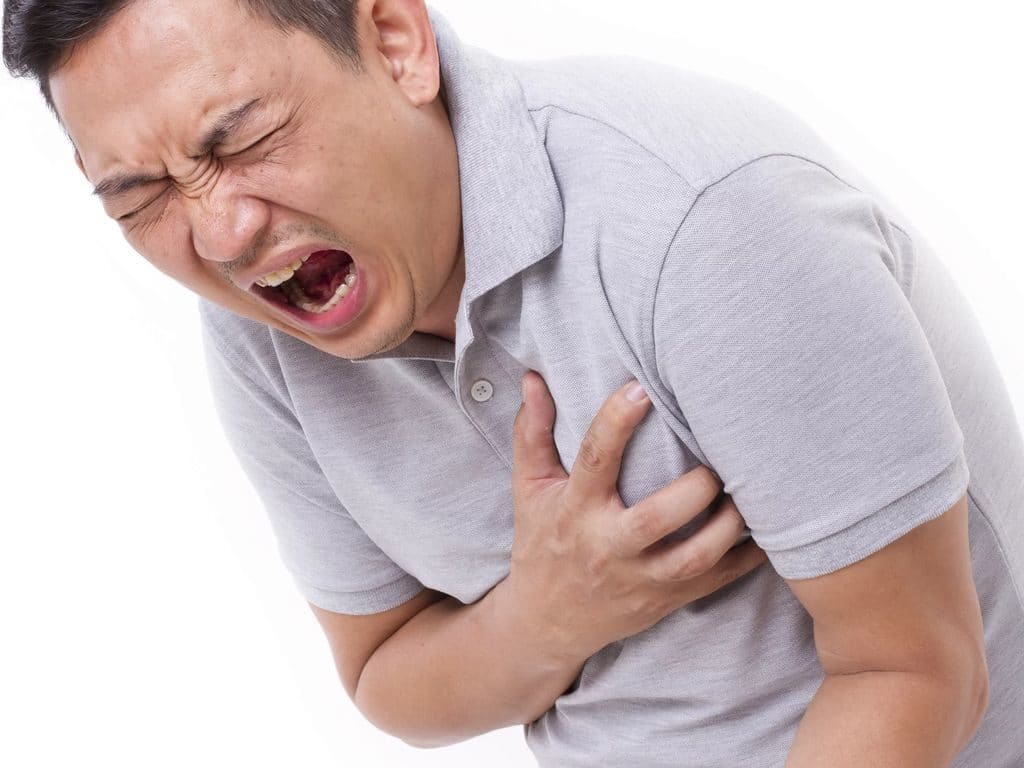
Symptoms in women and men are slightly different.
But all the same, the main signs of almost everyone are the same. These include:
- sudden onset of shortness of breath;
- chest pain;
- severe dizziness, lightheadedness;
- discoloration of the skin (takes on a pale gray tint);
- nausea;
- excessive sweating;
- vomiting;
- coughing fits.
Heart attack in men
As you know, the male part of the population is most susceptible to various problems with the cardiovascular system. They also include a high likelihood of a heart attack. Such statistics were obtained based on the characteristics of physiology and psychologists.
Men are much more likely to be overweight than women. And also, many of them abuse smoking and alcohol.
The blood circulation in the male body is different from that of the female. Heart rate in one minute slightly less.
In addition, most men experience stress not only at work, but also at home. From all these factors, the conclusion is that men are indeed most at risk of having a heart attack.
Read also:Sinus tachycardia of the heart: causes, symptoms, treatment
There is a few primary signsto look out for to prevent serious heart problems. For example, a decrease in male potency at a too early age for such a problem.
Heart attack in women
Female representatives by nature have a more resilient cardiovascular system. This is due to the fact that women have a biological function of bearing and giving birth to offspring.
This is why heart attacks in women are not as common as in men. But in more mature age, with the onset of menopause, the chances of developing heart problems increase.
During a heart attack, symptoms in women may appear slightly different from those in men. Since in the female body, mainly small cardiac vessels are clogged. Pain in the chest area often manifests itself as burning rather than pressing.
First aid for a heart attack
When this situation arises, it is very important to know what to do. And to act not only quickly, but also correctly. In many ways, the future fate of a person depends on the quality of the first aid provided.
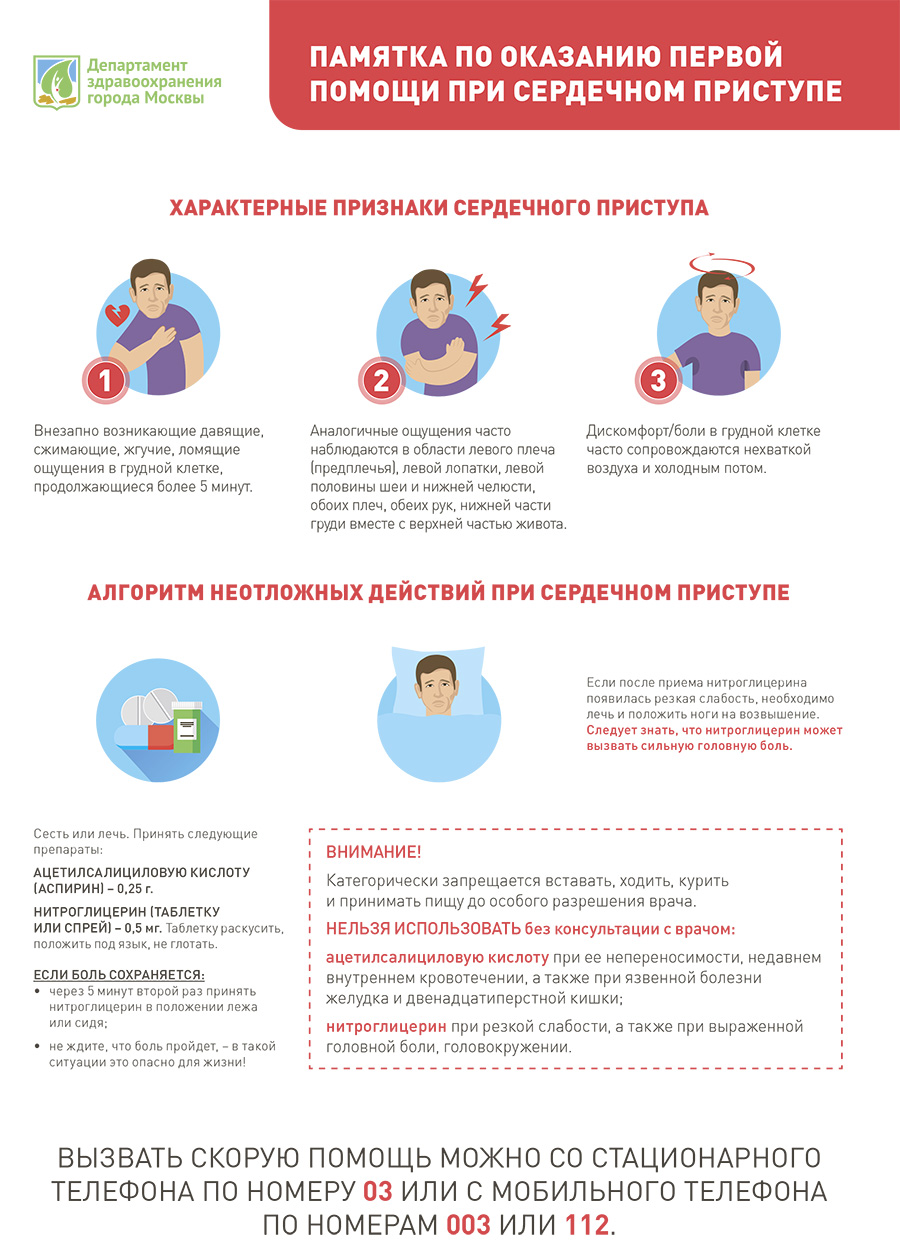
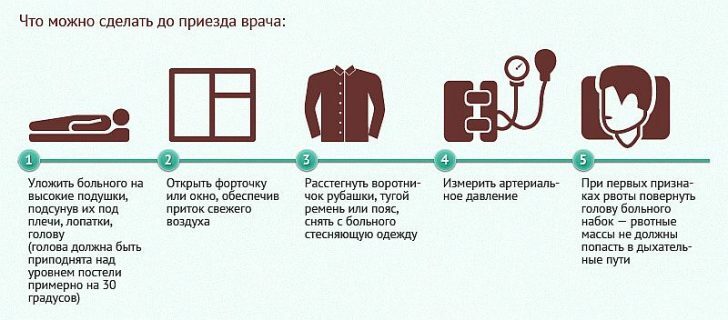
In order for first aid for a heart attack at home to be as effective and useful as possible, you must adhere to several rules:
- To begin with, it is important to understand that it was a heart attack that occurred. How to do this was described above;
- then you need to call the ambulance team, and describe all the signs and symptoms to the dispatcher in as much detail as possible. While the medics are traveling, further first aid steps should be taken;
- you need to put the patient on a soft surface and fix it so that the head is slightly raised. A person should feel as comfortable as possible, his breathing should not be hampered by anything;
- must be given to the patient nitroglycerin tablet (put under the tongue). It will relieve pain. And also, in this situation, Aspirin will help a lot. Since this drug prevents the formation of blood clots in the vessels and thins the bloodthereby providing improved blood circulation;
- it is very important that there is good air circulation in the room and the patient can breathe easily and freely. If necessary, you can open a window;
- if the pain persists a few minutes after taking nitroglycerin, you need to take another pill. It is advisable to measure the patient's pressure. It is not recommended to take nitroglycerin again if it is lowered.
It is possible that after repeated administration of the drug, signs of weakness, nausea and sweating will appear. In this case, you need to put the patient so that his legs are on a hill. And also, give him a glass of water.
When the ambulance team arrives, it is necessary to clearly describe to the doctor all the signs of a heart attack, as well as the general condition of the patient. And show all the drugs he was taking.
Read also:Angina pectoris (angina pectoris): causes, symptoms and treatment, first aid
There is a breathing practice that can be used when a heart attack occurs. It can be used in cases where the necessary drugs are not at hand.
It is especially useful to know these actions for an elderly person who lives alone more often than others. The first step, of course, is to call an ambulance, and then act independently:
- to begin with, you need to exhale as deeply as possible;
- then start coughing violently. Desirable, many times;
- such exercises should be done with maximum intensity every 2-3 seconds.
Such actions help to restore the rhythm of the heart, and also provide it with oxygen.
Treatment
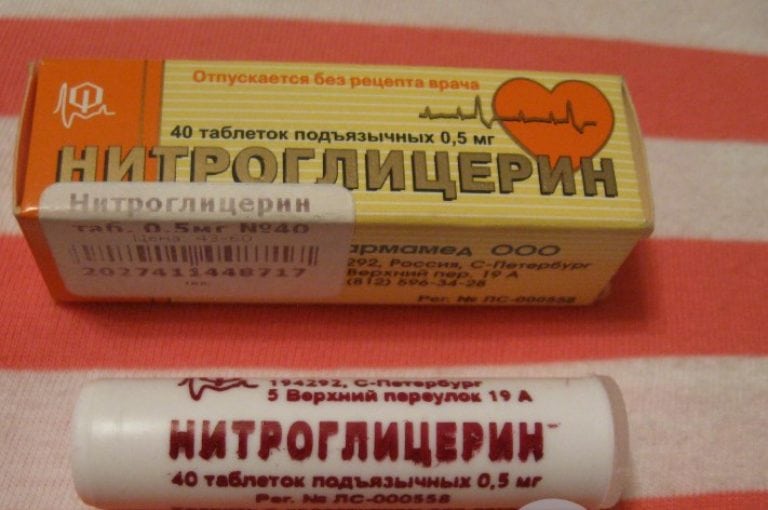
As a first aid, the following drugs are shown to the patient:
- Nitroglycerine;
- Aspirin and other antiplatelet agents;
- Beta blockers.
The rest of the patient's treatment is aimed only at reducing the risk of a recurrence of a heart attack.
Consequences of a heart attack
Many people who have had a heart attack experience a variety of problems:
- heart rhythm disruptions;
- decreased productivity at work;
- deterioration in mood, apathy.
Against the background of a postponed heart attack, there is a risk of various complications:
- heart failure;
- cardiac ischemia;
- vascular thrombosis;
- swelling of the respiratory system.
Prevention
The most important preventive action is giving up all bad habits and leading a healthy lifestyle.
It is necessary to engage in active activities, spend as much time as possible in the fresh air. Do not overload the body with too heavy physical activity. And also, it is worth reconsidering your diet.
It is necessary to exclude from the main diet too fatty foods, where the content of cholesterol is high. Healthy sleep is an important factor.
You need to establish a daily routine and sleep for 7-8 hours. And, of course, you should avoid constant stress and nervous situations.