
Keratoconjunctivitis: symptoms, treatment in adults, children, photos
Content
- What is Keratoconjunctivitis?
- Keratoconjunctivitis dry
- Symptoms
- Causes
- Treatment
- Epidemic keratoconjunctivitis
- Causes
- Symptoms
- Treatment
- Spring keratoconjunctivitis
- Causes
- Symptoms
- Treatment
- Other types of keratoconjunctivitis
What is Keratoconjunctivitis?
Keratoconjunctivitis is a pathological condition characterized by simultaneous inflammation of the cornea (keratitis) and conjunctiva (conjunctivitis).
There are different subcategories of keratoconjunctivitis, which differ significantly based on the causative agent and the symptoms with which they occur.
The most common forms of corneal and conjunctival inflammation are:
- keratoconjunctivitis dry (or dry eye syndrome);
- epidemic keratoconjunctivitis (due to adenovirus);
- spring keratoconjunctivitis (or spring catarrh).
Keratoconjunctivitis dry
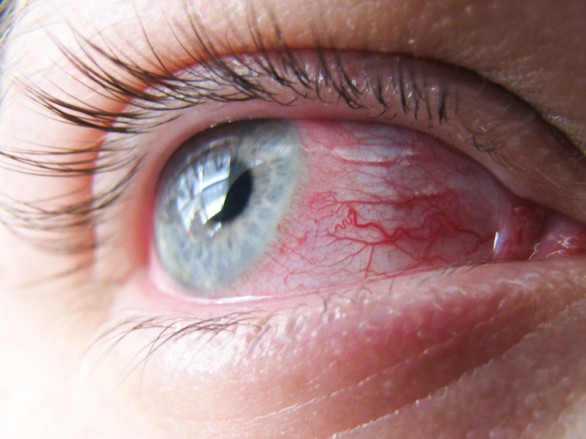
Keratoconjunctivitis dry, typical of older and middle-aged women, is a common cause eye irritation, which occurs in all conditions characterized by a change in lacrimal secretory processes.
Symptoms
Also known as
dry eye syndromekeratoconjunctivitis dry, causes pain and burning sensation in the eyes, often associated with ocular hyperemia (redness eyes), photophobia (light intolerance), blurred vision and difficulty wearing contact lenses (cm. Photo).Some people also have viscous mucus in or around the eye. In severe cases keratoconjunctivitis dry can degenerate with the formation of corneal ulcers: in such situations, the patient is at risk of corneal perforation and extensive eye infections.
Causes
The typical dry eye that accompanies this form of keratoconjunctivitis can be associated with serious medical conditions such as Sjogren's syndrome*, or may represent a complication allergic conjunctivitis* and blepharitis*.
Even some inappropriate behavioral habits can represent possible risk factors for keratoconjunctivitis dry: in fact, in some patients, the typical symptoms of dry eye syndrome arise precisely from the low humidity of the environment Wednesday. For this reason, it is necessary to use air conditioners and air convectors with moderation and care.
*Glossary
- Sjogren's Syndrome: A complex autoimmune disorder characterized by destruction of the lacrimal glands and other exocrine glands.
- Allergic conjunctivitis: inflammation of the conjunctiva caused by an allergen (e.g. pollen, contact lenses, etc.).
- Blepharitis: general inflammation century.
Treatment
Treatment for keratoconjunctivitis dry depends on the nature of the inflammation. When the cause lies in bacterial infections (as a result of infection, for example, streptococcus), the most commonly indicated drugs are topical antibioticsto be instilled into the eyes in the form of eye drops.
Read also:Nystagmus: what is it, causes, signs, diagnosis, treatment and prognosis
In case of keratoconjunctivitis dry due to allergies, antihistamine eye drops can relieve symptoms such as burning eyes and itching.
When dry eyes are simply caused by a low humidity environment, artificial tears (lubricating eye drops) can certainly improve symptoms.
Also in this case, it is recommended to install a humidifier in the apartment.
Epidemic keratoconjunctivitis
Causes
This form of inflammation of the cornea and conjunctiva is mainly caused by adenovirus infection, it is a viral infection as well is the causative agent of most viral and infectious diseases of the respiratory tract (for example, tonsillitis, colds, pneumonia and pharyngitis).
Symptoms
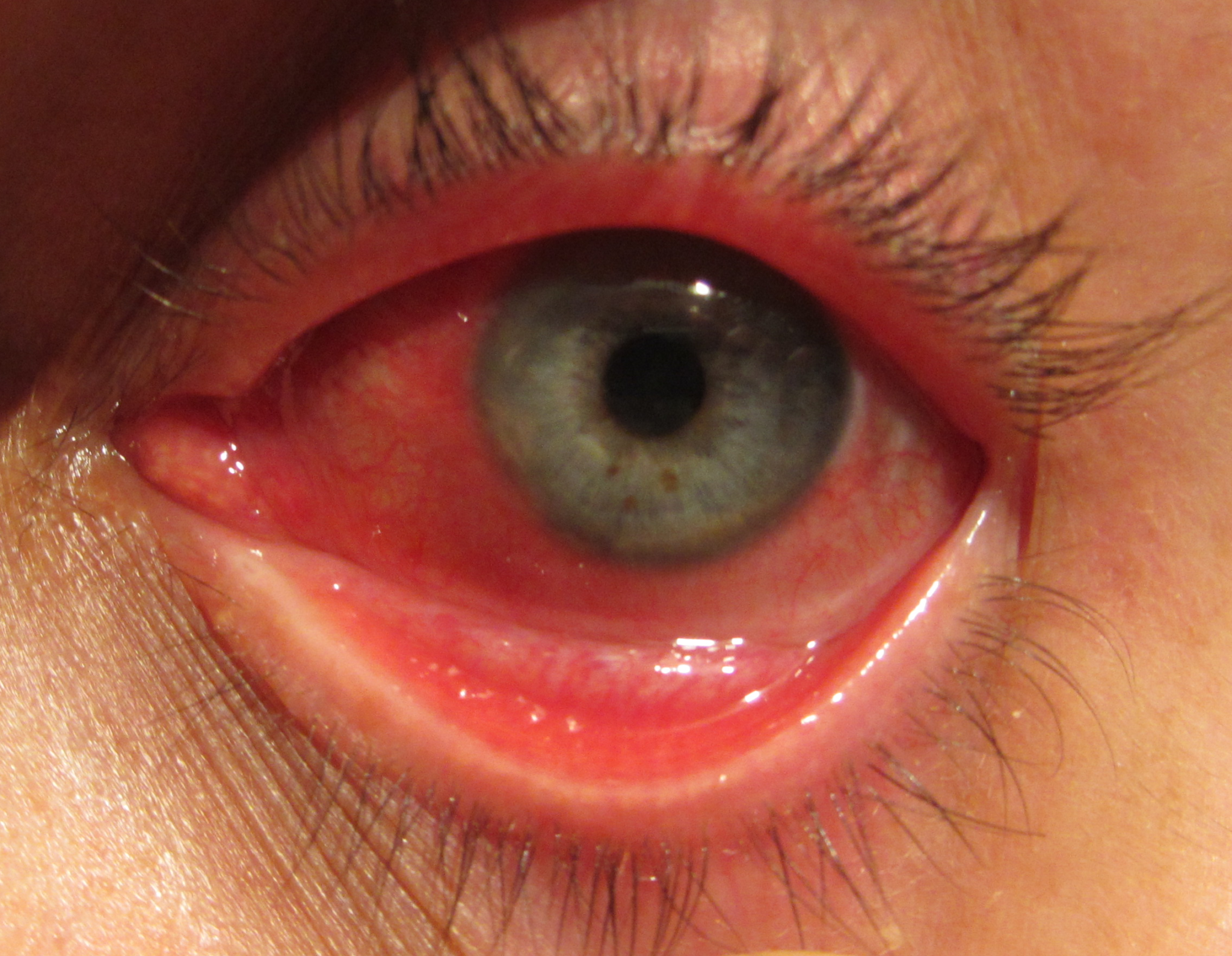
Adenoviral keratoconjunctivitis begins suddenly with characteristic symptoms such as:
- acute follicular conjunctivitis;
- severe redness of the eyes (see. Photo);
- an increase in preauricular lymph nodes;
- inflammation of the cornea (keratitis);
- chemosis (conjunctival edema).
Viral keratoconjunctivitis may be preceded by usually flu-like symptoms such as fever, malaise, nausea, vomiting, and diarrhea.
Although the characteristic symptoms are quite annoying, sometimes debilitating, epidemic keratoconjunctivitis tends to regress spontaneously after 2–3 weeks.
Treatment
The cure for epidemic keratoconjunctivitis is usually symptomatic, i.e. is aimed solely at treating symptoms. Artificial tears and pain relieving eye drops especially indicated for the relief of symptoms; even cold compressesapplied directly to the eyelids can provide immediate relief and help resolve puffy eyes.
In severe cases, the doctor may prescribe antiviral eye drops or eye ointments. Corticosteroids have proven to be a topical remedy for cases of extreme severity; it is advised to avoid self-medication and always seek medical attention before taking any medication.
Spring keratoconjunctivitis
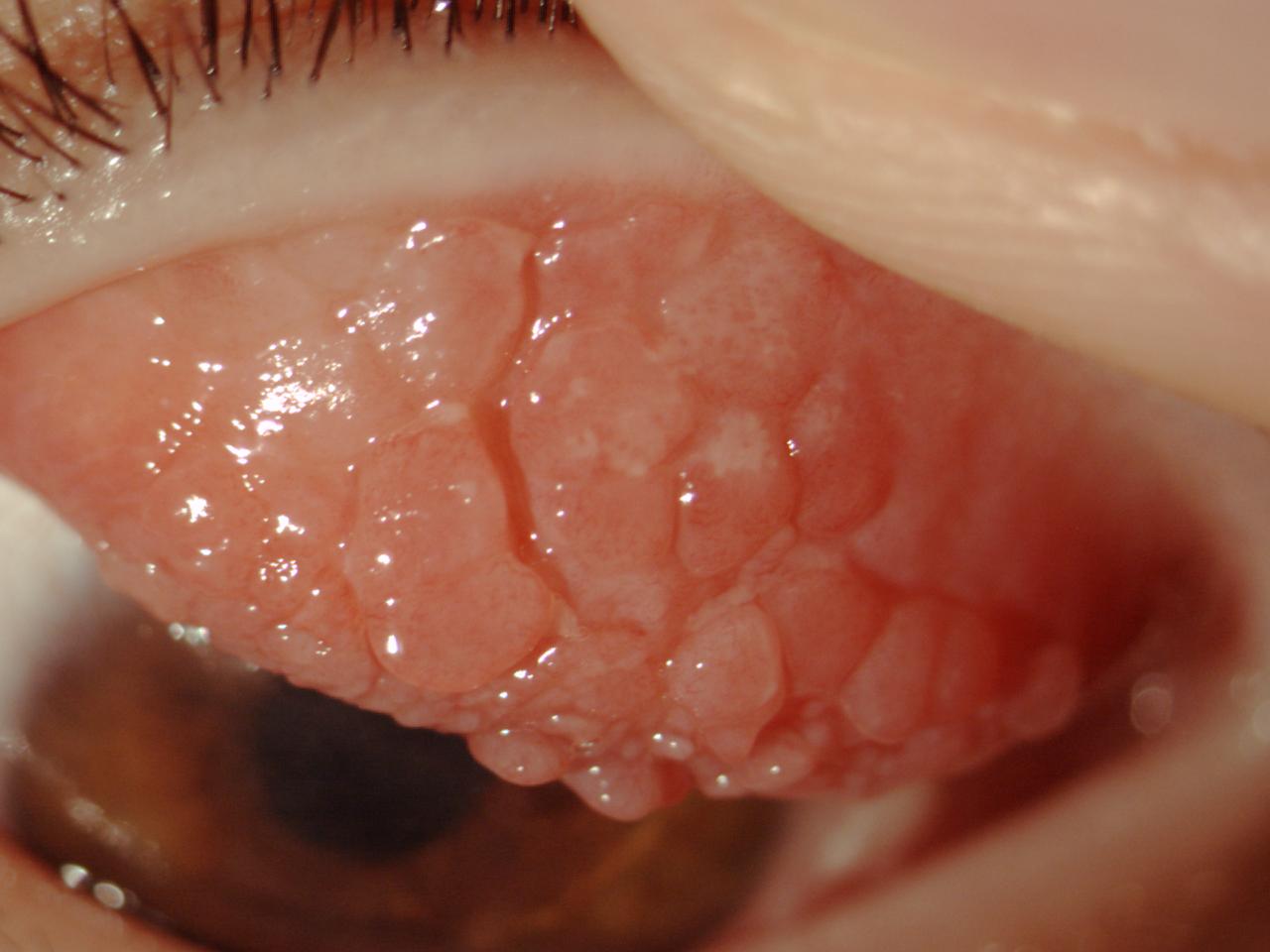
The so-called "spring" keratoconjunctivitis is a type of inflammation of the cornea and conjunctiva that recurs seasonally. The word "spring" literally means "spring," a term used to refer to the onset of symptoms (unsurprisingly, this type of inflammation is also known as spring qatar).
Read also:Abrasions and scratches on the cornea of the eye
Causes
Keratoconjunctivitis in spring is an allergic disorder that often occurs in patients with atopic diseases such as asthma, hay fever and eczema.
Symptoms
Having an allergic nature, vernal keratoconjunctivitis manifests itself with typical symptoms such as lacrimation, burning, sensation of a foreign body in the eye, photophobia, itching and redness of the eyes (see. Photo). In some cases, this disorder can contribute to painful corneal ulcers.
Symptoms begin before spring and get worse during the summer and then gradually decrease during the fall and winter months.
Eye inflammation is aggravated by dust, smoke, smog and wind.
Treatment
Treatment with antihistamines for vernal keratoconjunctivitis is essential to control symptoms and prevent flare-ups of the disorder. Some patients resort to topical application cortisone eye drops, which can have a powerful anti-inflammatory effect at the level of the cornea and conjunctiva.
Analgesic eye drops are sometimes sufficient to soothe discomfort and burning sensation in mild to moderate eyes.
Other types of keratoconjunctivitis
In addition to the types of keratoconjunctivitis described above, there are other forms of inflammation of the cornea and conjunctiva, which, however, tend to occur less frequently:
- Atopic keratoconjunctivitis: Fortunately, this type of inflammation of the conjunctiva and cornea tends to occur mainly in young adults. Although the reason is still a mystery to doctors, between atopic keratoconjunctivitis and certain disorders there is a certain correlation, in particular, eczema, asthma and atopic dermatitis. The clinical picture of atopic conjunctivitis is characterized by the appearance of symptoms such as inflammation of the cornea and conjunctiva, itching, profuse lacrimation, increased painful sensitivity to light, changes in vision, burning, mucous discharge and puffiness of the eyes. As you can see, the symptoms with which this form of keratoconjunctivitis manifests itself are common to many other forms of eye inflammation: for this reason, the diagnostic assessment is rather difficult and is mandatory. The most indicated drugs for reducing overt inflammation are corticosteroids, which, however, should be used with moderation and common sense. In the presence of corneal lesions, it is recommended to use ophthalmic ointments with a skin regenerating effect (for example, based on hyaluronic acid).
- Giant papillary keratoconjunctivitis: This is a common contact lens wearer disorder. In sensitive people, frequent use or misuse of contact lenses can cause eye inflammation, resulting in keratoconjunctivitis. Even asthmatic patients suffering from hay fever or have a certain sensitivity to allergens of animal origin, have a rather high risk of developing giant keratoconjunctivitis. The disorder manifests itself as redness of the eyes, irritation of the conjunctiva and cornea, itching and blurred vision. In some cases, this condition can cause corneal ulcers. The first thought to consider in the presence of giganopapillary keratoconjunctivitis is to replace contact lenses with prescription glasses, to avoid further damage to the conjunctiva and cornea.