
Scleroderma: what it is, symptoms and treatment in adults
Content
- Fast facts
- What is scleroderma?
- Scleroderma symptoms by type
- Scleroderma causes
- How is scleroderma diagnosed?
- How is scleroderma treated?
- Wider impact of scleroderma on human health
- Prognosis and life with scleroderma
- Related Videos
Fast facts
- Scleroderma manifests itself differently in every person, but it can be very dangerous.
- There are medications and steps people can take for scleroderma to relieve symptoms Raynaud's disease, skin problems and heartburn.
- For people with severe medical conditions, including acute kidney disease, pulmonary hypertension, pneumonia and gastrointestinal problems, effective treatments are available.
- It is important to recognize and treat organ damage early to prevent irreversible damage.
- Patients should consult a physician specializing in the treatment of this complex diseases (rheumatologist).
Scleroderma - This autoimmune disease, affecting the skin and other organs of the body. This means that the body's immune system causes inflammation and other disturbances in these tissues.
The main finding in scleroderma is thickening and thickening of the skin, as well as inflammation and scarring of many parts of the body, which leads to problems in the lungs, kidneys, heart, intestinal system and other areas. There is no cure for scleroderma yet, but there are effective treatments for some forms of the disease.
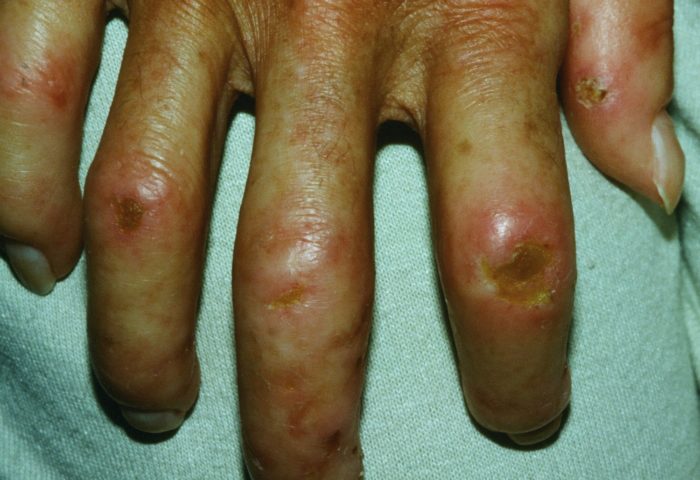
Scleroderma is relatively rare. Approximately from 75,000 to 100,000 people in Russia they have this disease; most of the patients are women between the ages of 30 and 50. Twins and family members with scleroderma or other autoimmune connective tissue disorders such as lupus erythematosusmay have a slightly higher risk of developing scleroderma. Children can also develop scleroderma, but the disease is different in children than in adults.
Although the root cause is unknown, promising studies are shedding light on the link between the immune system and scleroderma. There is also a lot of research going on to find the best treatment for scleroderma.
What is scleroderma?
Scleroderma (also known as systemic sclerosis) Is a chronic disease in which the skin becomes thick and hard, scarring tissue and damage to internal organs such as the heart and blood vessels, lungs, stomach and kidneys. Manifestations of signs of scleroderma range widely from minor to life-threatening, depending on how widespread the disease is and which parts of the body are affected.
Scleroderma symptoms by type
There are two main types of scleroderma:
Localized scleroderma usually only affects the skin, although it can involve muscles, joints, and bones. Does not affect internal organs.
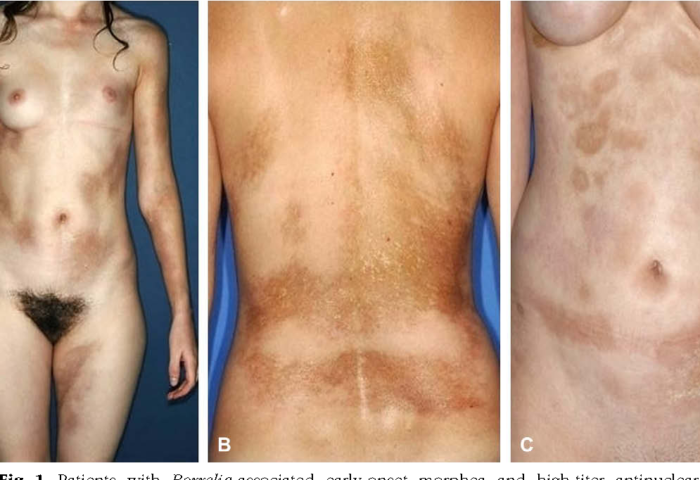
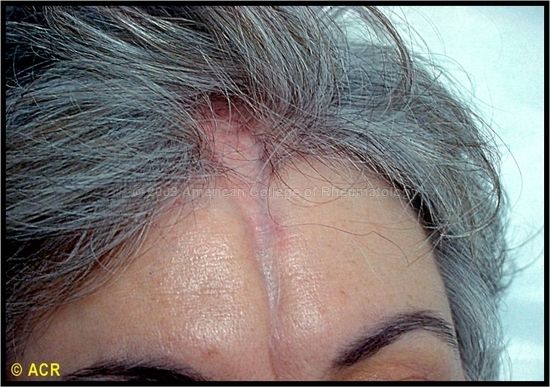
Symptoms are discolored spots on the skin (a condition called morphine); or stripes of thick, hard skin on the arms and legs (called linear scleroderma). When linear scleroderma occurs on the face and forehead, it resembles a scar from a saber strike (see. photo below).
Read also:Psoriatic arthritis (PA)
Systemic scleroderma is the most serious form of the disease and can affect the skin, muscles, joints, blood vessels, lungs, kidneys, heart and other organs.
There are two main forms of systemic scleroderma: localized cutaneous systemic sclerosis (also called CREST syndrome) and diffuse cutaneous systemic scleroderma.
- At limited cutaneous systemic sclerosis (CREST syndrome) thickening and tightness of the skin is usually limited to the fingers and toes. This form of scleroderma is also associated with the formation of calcified nodules under the skin, Raynaud's disease, problems with the digestive tract and dilated blood vessels in the skin, called telangiectasias. This form is also associated with pulmonary hypertension. A blood test, called centromere antibodies, is often done for this form of scleroderma.
- At diffuse cutaneous systemic scleroderma thickening and tightness of the skin usually also extends from the hands to the wrists. This form of scleroderma often affects internal organs such as the lungs, kidneys, or gastrointestinal tract. A number of new antibodies have been discovered to classify this form of scleroderma, but the most common antibody is Scl-70.
Scleroderma causes
The cause of scleroderma is not known. Genetic factors (different genes) seem to play an important role in the disease. Although exposure to certain chemicals may play a role in some people with scleroderma, the vast majority of patients with a history of scleroderma were not exposed to any suspicious toxins. It is quite difficult to identify the cause of scleroderma.
How is scleroderma diagnosed?
Making a diagnosis can be challenging because the symptoms can be similar to those of other diseases. There is no blood test that can tell you for sure that you have scleroderma, although numerous antibodies are associated with the condition.
To make a diagnosis, the doctor will ask about the patient's medical history, perform a physical examination, and possibly order laboratory tests and x-rays.
Thorough clinical evaluation is the primary method for monitoring scleroderma.
X-ray and computed tomography (CT) are used to detect bone abnormalities. Thermography can detect differences in skin temperature between lesion and normal tissue. Ultrasonic and magnetic resonance imaging (MRI) can help with soft tissue examination. Some of the symptoms a doctor will look for include:
-
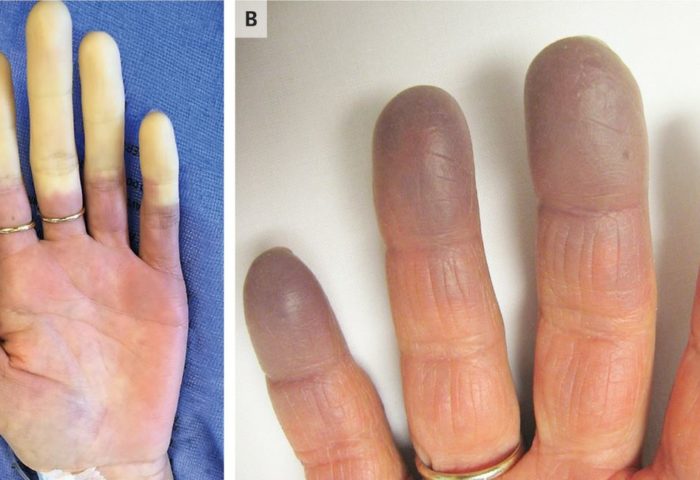
Phenomenon (disease/ syndrome) Raynaud: This term is characterized by color changes (blue, white and red) of the fingers (and sometimes the toes), often after exposure to cold temperatures. It occurs when blood flow to the hands and fingers is temporarily reduced. This is one of the earliest signs of illness; more than 90 percent patients with scleroderma have Raynaud's syndrome. Raynaud's can lead to swollen fingers, discoloration, numbness, pain, skin ulcers, and gangrene in the fingers and toes. People with other medical conditions may also have Raynaud's syndrome, and some people may not have any other medical conditions besides Raynaud's.
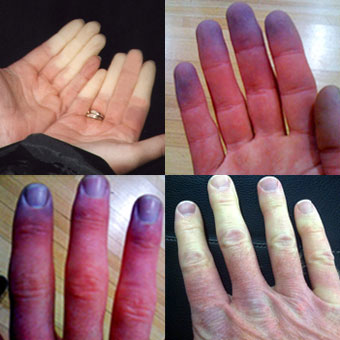
- Thickening, swelling and tightness skin: This problem leads to the name "scleroderma" ("sclera" means "hard" and "dermis" means "skin"). The skin may also become glossy or unusually dark or light in some areas. The disease can sometimes lead to changes in appearance, especially on the face. When the skin becomes very tight, the function of the affected area may be reduced (eg, fingers).
- Enlarged red blood vessels on the hands, face, and around the nail bed (called telangiectasias).
- Calcium deposits under the skin or other areas.
- High blood pressure (arterial hypertension) due to kidney problems.
- Heartburn; this is a very common problem in scleroderma.
- Other digestive problems such as difficulty swallowing food (achalasia of the cardia), bloating and constipation, or problems with food absorption leading to weight loss.
- Shortness of breath.
- Joint pain.
Read also:Osteoarthritis (arthrosis)
How is scleroderma treated?
While some therapies are effective in treating some aspects of the disease, there is no single drug available. which have been shown to stop or reverse the underlying symptoms of thickening and hardening of the skin.
Medicines that have been shown to be helpful in treating other autoimmune diseases such as rheumatoid arthritis and systemic lupus erythematosusare usually useless for people with scleroderma. Doctors aim to curb individual symptoms and prevent further complications with a combination of medications and patient care. For example:
- Raynaud's disease can be treated with medications such as calcium channel blockers or drugs called andwith PDE-5 inhibitors - sildenafil (Viagra®), tadalafil (Cialis®) - which open narrowed blood vessels and improve blood circulation. To prevent further damage, it is important to keep your entire body warm, especially your fingers and toes. It is also important to protect your fingertips and other areas of your skin from injury that can occur even during normal daily activities.
- Heartburn (acid reflux) can be treated antacids, especially proton pump inhibitors (Omeprazole and etc.). These medications relieve gastroesophageal reflux disease (known as GERD).
- Kidney disease associated with scleroderma can be treated with blood pressure medications called angiotensin-converting enzyme inhibitors (ACE inhibitors). They can often effectively control kidney damage if started early. The use of these drugs has become a major advance in the treatment of scleroderma.
- Muscle pain and weakness can be treated with anti-inflammatory drugssuch as glucocorticoids (Prednisone), intravenous immunoglobin (IVIg) and / or immunosuppressants. Physical and occupational therapy can be helpful in maintaining flexibility in joints and skin. Early initiation of therapy should help prevent loss of joint motion and function.
There are two types of lung diseases, which can develop in patients with scleroderma. First type called interstitial lung disease, which causes scarring of the lung tissue. There is evidence that drugs such as Cyclophosphamide and Mycophenolateare to some extent effective in the treatment of interstitial lung disease associated with scleroderma.
Clinical trials are ongoing, testing the effectiveness of several other drugs for this problem.
Second type lung disease seen in scleroderma is pulmonary arterial hypertension (high blood pressure in the arteries of the lungs). There are also a number of medications available to treat this condition that work by opening up the blood vessels in the lungs, improving blood flow. Medicines used to treat pulmonary hypertension are usually monitored by doctors and include drugs like Prostaclin (epiprostenol, treprostinol, iloprost), endothelin receptor antagonists (bosentan, ambrisentan), phosphodiesterase type 5 inhibitors (sildenafil, vardenafil, tadalafil).,
Numerous studies are underway on new treatments for scleroderma. Patients and their families should be aware that experts are optimistic that work to find treatment will continue.
Wider impact of scleroderma on human health
Scleroderma can affect almost every organ system in the body. Although symptoms and signs vary greatly from patient to patient, illness can significantly affect the patient's life.
Read also:Sharpe syndrome: what it is, causes, symptoms, diagnosis and treatment
Patients should consult a rheumatologist or specialist teamwho have experience in the treatment of this complex disease. Several other conditions affecting the skin are sometimes confused with scleroderma.
Prognosis and life with scleroderma
Living with scleroderma is quite difficult and the prognosis is not encouraging. Daily activities can sometimes be difficult due to physical limitations and pain. Digestive problems may require changes in nutrition; patients often need to eat several small meals.
Patients should also keep their skin hydrated to reduce stiffness and be careful when activities such as gardening, cooking - even opening envelopes - to avoid injury fingers.
To keep the body warm patients should dress in layers; wear socks, boots and gloves; and avoid very cold rooms. Unfortunately, moving to warmer climates will not necessarily translate into significant improvements. Exercise and / or physical therapy can ease joint stiffness.
Patients also have to deal with mental disorders caused by a chronic, unusual and currently incurable disease.
Since scleroderma can cause significant changes in appearance, it is almost always the patient's self-esteem and self-esteem suffer. The support of family and friends is vital to maintaining the patient's well-being and quality of life.