Osteoporosis symptoms and treatment at home in women and men
According to data provided by the World Health Organization, about 35% fractures in women and 20% in men it occurs due to osteoporosis. In old age, it is the leading cause of these injuries.
Among all diseases leading to disability and death, osteoporosis ranks fourth (after cancer, cardiovascular diseases and diabetes mellitus). Statistical data show its social significance:
- osteoporosis affects 10% of the total population;
- characteristic fractures were found in 6% of people;
- 3 million compression fractures of the vertebral bodies are registered annually, including 2 million in women and 1 in men;
- among people over 50, the incidence of osteoporosis is 28%;
- every minute in Russia 17 fractures of the bones of the lower extremities, 5 fractures of the vertebral bodies, every 5 minutes - of the femoral neck are recorded.
Read on for more details on what it is and how to treat osteoporosis.
Content
- What is osteoporosis?
- Classification
- Development stages
- Causes of osteoporosis
- Risk factors provoking the development of osteoporosis
- Osteoporosis symptoms
- Signs of osteoporosis of the upper and lower extremities
- Symptoms of osteoporosis of the femoral neck
- Spine osteoporosis symptoms
- Signs of joint osteoporosis
- Diagnostics
- Instrumental research methods
- Laboratory research
- Treatment
- Drug therapy
- Physiotherapy
- Traditional medicine methods
- Diet
- Forecast
- Prophylaxis
- Related Videos
What is osteoporosis?
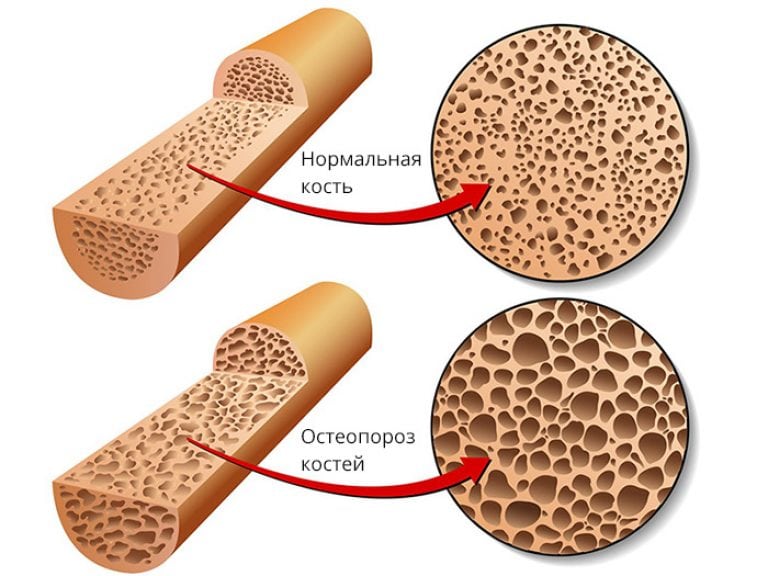
Osteoporosis (lat. osteoporosis) - a disease that manifests itself in reduced plasticity and strength of bones.
It is based on the predominance of destruction processes over the formation of bone tissue.
Osteochondrosis develops as a result of a violation of mineral metabolism: calcium, phosphorus and vitamin D.
The mechanism depends on the factor that caused the pathology, but all forms of the disease are characterized by a consistent course of the following processes:
- due to imbalance between formation and destruction, the formation of bone tissue slows down during the period of growth and its renewal;
- reduced bone mass;
- reduced bone strength.
Classification
According to the causal factor, osteochondrosis is divided into two types:
Primary osteochondrosis:
- Type 1 (also called postmenopausal) is the most common. Mostly women suffer from this type of osteochondrosis 15-20 years after menopause. Its development is based on a lack of estrogen; in men, this pathology is provoked by a testosterone deficiency.
- Type 2 (senile) develops equally in men and women, more often after 70 years.
- Type 3 (idiopathic). Its reasons are unknown, young people are suffering.
Secondary osteochondrosis (occurs as a symptom of another pathology):
- endocrine system diseases (increased activity parathyroid, insufficient production of thyroid hormones, diabetes, adrenal hyperfunction);
- autoimmune diseases (rheumatoid arthritis);
- blood diseases (leukemia, multiple myeloma);
- bone neoplasms;
- kidney pathology (renal failure);
- diseases of the digestive system, leading to a decrease in the absorption of calcium.
Development stages
There are 4 stages of osteoporosis development:
- first (I) stage has no symptoms, there is a gradual decrease in bone density;
- second (II) stage: the bone tissue becomes thinner, but the integrity is not yet broken;
- third (III) stage: the disease affects several parts of the spinal column, bone density is further reduced, the shape of the vertebrae is changed;
- fourth (IV) stage: the shape of the bones changes, the foci of enlightenment are detected radiographically.
Causes of osteoporosis
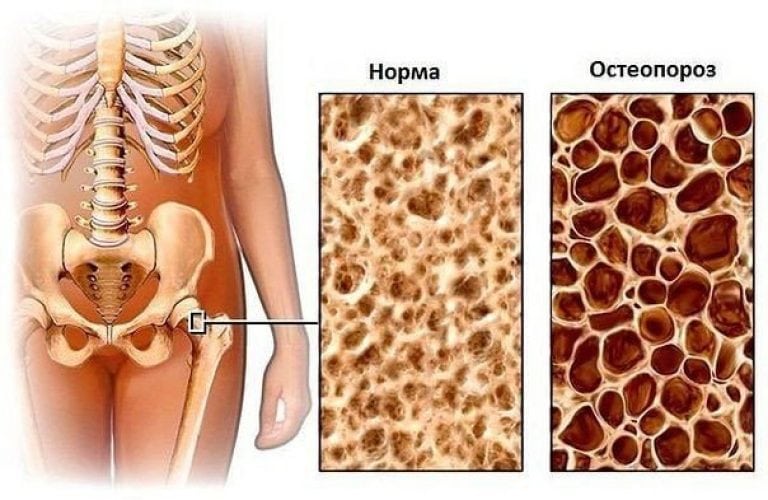
Osteoporosis is a polyetiological pathology. There are many reasons for the onset and development of this disease.
Read also:Vasculitis (angiitis): what is it, causes, symptoms (photo), types of angiitis, treatment
Among them are the following:
- calcium deficiency in the food consumed;
- violation of the absorption of minerals in the intestine;
- low physical activity;
- hormonal imbalance;
- blood pathology;
- autoimmune diseases (lupus, autoimmune thyroiditis);
- impaired renal function;
- diabetes;
- lesions of the digestive tract;
- abuse of coffee, alcoholic and carbonated drinks;
- tobacco smoking;
- long-term use of medications:
- glucocorticosteroids;
- thyroid hormones;
- drugs that reduce blood clotting;
- remedies for seizures;
- lithium;
- cytostatic drugs;
- tetracyclines;
- gonadotropin agonists and antagonists.
Risk factors provoking the development of osteoporosis
Risk factors increase the possibility of osteoporosis formation, among them:
- belonging to the Caucasian and Mongoloid race;
- heredity - the presence of a similar pathology in the next of kin;
- age over 50;
- female;
- low weight (up to 56 kilograms of a woman, up to 70 kg of a man, subject to an average height);
- high growth (women are taller than 172 centimeters, men are taller than 183 centimeters);
Osteoporosis symptoms
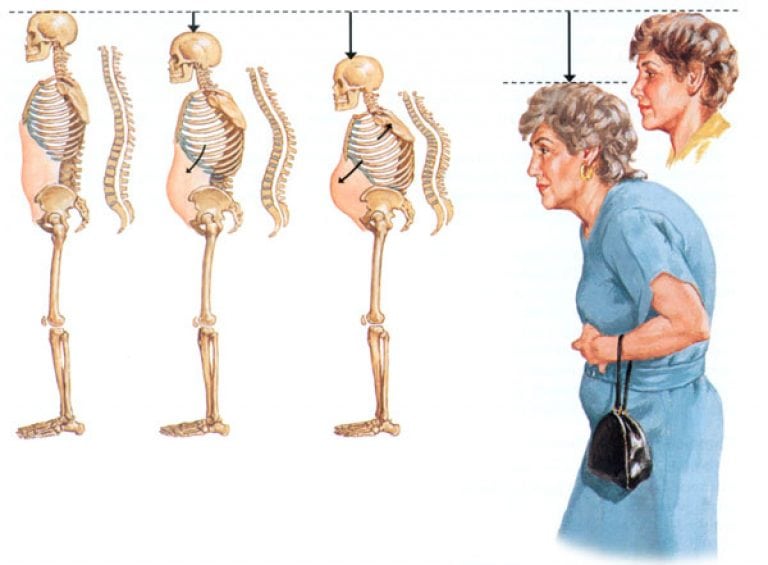
Due to the gradual decrease in bone density, osteoporosis remains unnoticed for many years. The main signs of osteoporosis appear when the bone tissue is already significantly thinned.
Common signs of osteoporosis:
- pain localized in the bones;
- fast fatiguability;
- early gray hair;
- the formation of plaque on the teeth;
- periodontal disease;
- tachycardia of the heart;
- pathological fractures (the main symptom of osteochondrosis).
A pathological fracture is possible with minimal or normal stress, arises from awkward movement, weak impact, while walking, when coughing or sneezing.
Signs of osteoporosis of the upper and lower extremities
- dull bone pain;
- muscle cramps;
- stratification of nails;
- the bones of the lower extremities are deformed;
- pathological fractures.
A hip fracture is a common symptom of osteoporosis. As a rule, women 65-80 years old are exposed to it.
Symptoms of osteoporosis of the femoral neck
- prolonged pain in the groin area;
- shortening the leg up to 4 centimeters;
- the foot on the affected side is turned outward (noticeable when the patient lies on his back).
Spine osteoporosis symptoms
- pain in the lumbar and thoracic spine. The pain subsides after sleeping or resting in a horizontal position. Symptoms subside after 9 months of injury. The time intervals between fractures range from a few days to several years.
- dorsal muscle tension;
- asymmetrical folds on the sides of the abdomen;
- stoop due to changes in the shape of the vertebral bodies;
- decrease in growth (more than 1 centimeter per year);
- limitation of mobility of the spinal column.
Signs of joint osteoporosis
The most common osteoporosis is the shoulder, wrist, intervertebral, hip and knee joints:
- soreness in the joints;
- swelling;
- shape change;
- crunch;
- limitation of mobility.
Diagnostics
Before prescribing instrumental studies and analyzes, the doctor interviews and examines the patient. The survey reveals the presence of risk factors for the development of pathology, the presence of trauma in the anamnesis. During the examination, the condition of the spine is assessed, growth is measured, and deformity of the limbs is noted in the presence of.
To clarify the diagnosis, instrumental and laboratory tests are used.
Instrumental research methods
Usually, the patient turns to a specialist with a fracture, but the disease can be detected even before the integrity of the bone is compromised.
- X-ray allows you to detect a fracture, signs of osteoporosis are detected only when the bone density has decreased by 20%. Using this method, you can diagnose damage to the bones of the limbs, vertebral bodies, pelvis and skull.
- Osteodensitometry evaluates bone density.
- X-ray absorptiometry allows you to determine not only the density, but also the saturation with minerals by irradiation with lower doses than with X-ray. It is performed for persons at risk of osteoporosis.
- Peripheral densitometry shows the state of small bones. This method is used to identify the disease and assess the effectiveness of the treatment.
- Computed and magnetic resonance imaging displays the state of the bone.
Read also:Amyloidosis
Instrumental research methods can confirm the presence of osteoporosis and the severity of the course, but laboratory methods are used to establish the cause.
Laboratory research
- Determination of the level of total calcium in the blood (normal values are 2.2-2.65 mmol / l).
- Inorganic phosphorus (values of 0.85-1.45 μmol / l are considered normal).
- Parathyroid hormone regulates mineral metabolism (normal values are 0.7-5.6 pmol / ml).
- Deoxypyridinoline reflects the processes of bone tissue destruction, is found in urine (normal values for men are 2.3-5.4 nmol / ml, for women 3.0-7.4 nmol / ml).
Treatment
Osteoporosis treatment is a complex process involving immunologists, endocrinologists, rheumatologists, neurologists and other specialists. When making a diagnosis "Osteoporosis" treatment is aimed at reducing bone loss and activating the process of its recovery.
Drug therapy

For the treatment of this disease, drugs of several drug groups are used:
- Having an effect on metabolism:
- main therapy - calcium preparations and vitamin D;
- flavone compounds (Osteosin);
- osseino-hydroxyapatite complex inhibits bone degeneration and activates the formation of new;
- Oppressive destruction of bone tissue:
- estrogens are used as replacement therapy (ralooxifene);
- Calcitonin preparations stimulate the absorption of calcium from the blood;
- biophosphonates inhibit bone resorption (destruction) (Etidronate, Pamidronate, Alendronate);
- strontium preparations act in the same way as calcium preparations;
- Stimulating bone formation:
- parathyroid hormone (Teriparatid);
- fluoride salts (recommended for senile osteoporosis);
- growth hormone.
Physiotherapy
Walking or exercising that exerts stress helps to strengthen bone tissue. Performing them regularly, along with other methods of treating osteochondrosis, can stop the progression of the disease. Gradually, the body gets used to the stress, therefore, the exercise complexes must be periodically changed.
Traditional medicine methods

Several types of medicinal plants have been used to treat bone osteoporosis since ancient times. When using decoctions and infusions, the hormonal balance is restored and the absorption of minerals is improved.
- Shilajit should be taken one ball 15 minutes before meals, the course of treatment is 20 days.
- Bake the eggshells in the oven for 30 minutes, grind to a state, mix 150 grams of powder with 150 grams of propolis and 75 grams of honey. Take 2 months, 2 teaspoons three times a day.
- Pour one tablespoon of chopped licorice root with 2 cups of boiling water, leave for an hour and a half, strain, take half a glass 4 times a day before meals.
- Rinse 2 onions, chop, fry in vegetable oil, add 1 liter of boiling water, simmer for 15 minutes over low heat, leave for 30 minutes. It should be taken before meals three times a day for a month.
- Pour 20 grams of dill and parsley greens with 500 milliliters of boiling water, leave for half an hour, squeeze, drink 100 milliliters 3 times a day for 6 months.
- Insist 1 tablespoon of dandelion herb in 200 milliliters of boiling water for 30 minutes. Divide the glass into three doses, the duration of treatment is 3-6 months.
Read also:Temporal arteritis
Diet

Patients with an established diagnosis, or those at risk, should adhere to a special diet.
The main task of therapeutic and prophylactic nutrition in this bone disease is to ensure the supply of the required amount of minerals and vitamin D.
It is recommended to exclude the following foods from the daily diet: coffee, tea, chocolate, sweets, fatty foods such as butter, margarine, mayonnaise, alcoholic beverages, rye bread, potatoes, consumption is limited meat.
The use of the following products is mandatory:
- sources of calcium: dairy products, eggs, nuts, green vegetables;
- vitamin D: sour cream, eggs, vegetable oils, fish;
- vitamin A: lettuce, pumpkin, liver, fruits;
- folate: green vegetables;
- zinc: seafood, liver;
- manganese: beets, garlic;
- magnesium: grain products, prunes;
- phosphorus: seafood, veal.
Forecast
With the timely detection of a pathological process, its correction and the exclusion of a risk factor, the prognosis is favorable.
However, the ability to work in some cases decreases, if necessary, such patients are recommended to work that does not require physical labor.
The main complication of osteoporosis is fractures and their consequences. Sometimes they cannot be avoided.
This is especially true for diseases in the elderly. For example, with a hip fracture, there is a high risk of disability and death. That is why it is very important to pay special attention to the prevention of this serious disease.
Prophylaxis
To prevent the development of osteoporosis of bones, especially in persons with one or several risk factors, it is recommended to pay special attention to their lifestyle.
Activities aimed at preventing the development of osteoporosis should begin in childhood, then the bones will accumulate the required amount of minerals.
- Healthy lifestyle: Avoiding alcohol, smoking, limiting the amount of coffee and tea prevent the development of osteoporosis. Even small doses of alcohol inhibit the renewal of bone tissue, smoking provokes capillary spasm, as a result of which calcium is absorbed from the blood more slowly. Excessive consumption of coffee removes calcium from the bones.
- Physical Education: Exercise is beneficial for preventing the development of osteoporosis. Prolonged inactivity of muscles provokes the release of minerals from the bone tissue, bone density decreases. The load should be moderate: yoga, fitness, walking. It is very important that you train regularly.
- Nutrition: Adequate intake of calcium, phosphorus and magnesium with food serves as the prevention of osteoporosis, and excessive use of salt, alcohol, adherence to a strict diet contributes to the leaching of minerals from bone tissue.
- Sunbathing: Ultraviolet rays, natural or artificial (quartz lamps), contribute to the saturation of the body with vitamin D. It promotes bone mineralization.
- Timely treatment of chronic diseases: Many diseases of the digestive system, kidneys, hormonal disorders cause impaired absorption of calcium. Treating these diseases will reduce the risk of developing osteoporosis. If it is impossible to eliminate the pathology, it is necessary to correct the resulting deficiency of minerals. Medicinal prophylaxis of osteoporosis is possible only in people at risk, the drugs are prescribed by the attending physician.
Prevention of osteoporosis is necessary for everyone, without exception, especially for people at risk. In addition to prophylaxis, they need constant medical supervision, which will allow them to identify the disease at the initial stage and prevent its progression.