Cryptorchidism: what is it, causes, symptoms, treatment, prognosis
Content
- Description of the disease
- Scrotum and testicles
- Testicular development
- How common is cryptorchidism?
- Symptoms of cryptorchidism
- Palpable undescended testes
- Non-palpable undescended testicles
- Abdominal or intra-abdominal
- Inguinal
- Atrophic or absent
- Causes of cryptorchidism
- Genital development
- Risk factors
- Testicular dysgenesis syndrome
- Endocrine disruptors
- Diagnostics
- Physical examination
- Diagnostic laparoscopy
- Cryptorchidism treatment
- Orchypexy
- Rehabilitation
- Operation results
- Surgery alternatives
- Hormone therapy
- Complications
- Testicular atrophy
- Damage to the vas deferens
- Forecast
Description of the disease
Undescended testicle is a common childhood condition where a boy is born without one or both testicles in the scrotum. Medical term - cryptorchidism.
Scrotum and testicles
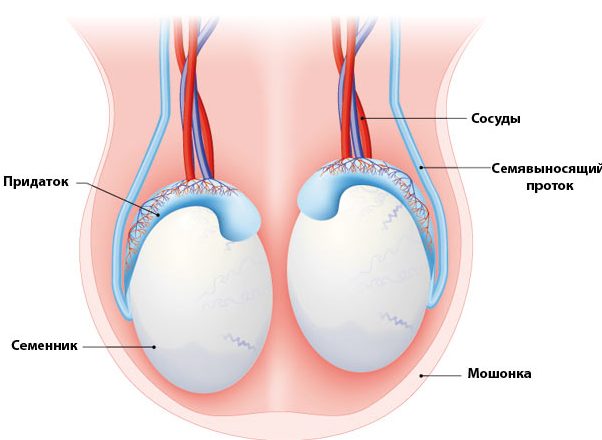
The scrotum is a small sac of skin that hangs under the penis. It keeps the testicles in place.
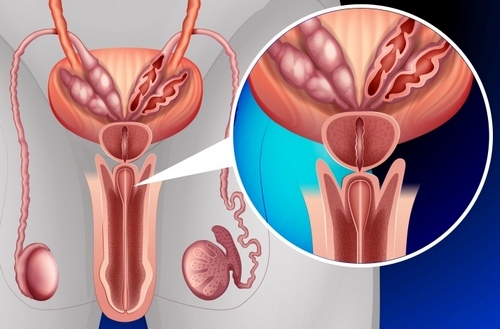
The testicles are two oval-shaped male genital organs located inside the scrotum on either side of the penis. The testes are an important part of the male reproductive system as they produce sperm and the hormone testosterone, which plays an important role in male sexual development.
Testicular development
During pregnancy, testicles form inside the baby's abdomen (the area of the body that contains the stomach) and then slowly descend into the scrotum as the baby develops. The testicles are usually in place by the eighth month of pregnancy.
For unclear reasons, one or both testicles sometimes do not descend into the scrotum by the time the baby is born.
How common is cryptorchidism?
Cryptorchidism is one of the most common congenital conditions affecting boys. Congenital means the condition is present at birth. It is estimated that 3-5% of newborn boys have undescended testicles.
In about 80% of cases, only one of the testicles is affected. Most cases resolve without the need for treatment, although a small number of boys (0.7-1%) have testicles that remain immature until adulthood if not treated.
Symptoms of cryptorchidism
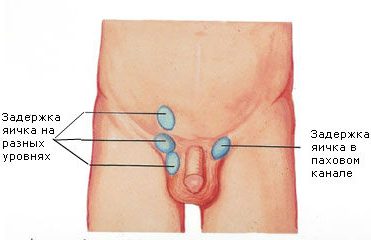
Cryptorchidism generally falls into two categories:
- Palpable cryptorchidism: the testicle (s) can be felt during a physical examination.
- Unpalpable cryptorchidism: testicle (s) not felt during physical examination.
An object is tangible if it can be touched or felt. Non-palpable means that the object cannot be touched or felt.
Palpable undescended testes
Palpable undescended testes are the most common type of cryptorchidism, accounting for 80% of all cases.
In most cases, palpable cryptorchidism is located just above the scrotum. They are located at the end of the inguinal canal (the canal that runs from the lower abdomen down to the penis and scrotum).
Non-palpable undescended testicles
There are three main types of non-palpable cryptorchidism:
- Abdominal or intra-abdominal, which accounts for about 40% of cases of cryptorchidism.
- Inguinal, which accounts for about 40% of cases.
- Atrophic or absent which is about 20% of cases.
All three types are described in more detail below.
Abdominal or intra-abdominal
The abdominal or intra-abdominal type occurs when the testicle is inside the abdominal cavity, usually close to the superior opening of the inguinal canal.
Inguinal
An inguinal testicle is a testicle that has moved into the inguinal canal but has not moved far enough down towards the scrotum to be detected during physical examination.
Atrophic or absent
An atrophic testicle is an abnormally small testicle. Missing testicle - when one testicle, for some reason, was not formed during the development of the baby in the uterus.
Both atrophic and missing testicles can have various causes.
Causes of cryptorchidism
Cryptorchidism is caused by something that interferes with the normal development of the testicles.
Genital development
At an early stage of development, all unborn babies have the same genitals, regardless of whether they are male or female.
Read also:Inflammation of the prostate (prostatitis) in men
The development of the genitals into male or female depends on a pair of sex chromosomes that the child receives from his parents. Sex chromosomes are a pair of deoxyribonucleic acid (DNA) molecules that are either X- or Y-shaped. They play a vital role in a child's sexual development.
In normal development, after the testicles have formed, they remain in the baby's abdomen until the 7th month of pregnancy. The hormones are then thought to "activate" the descent of the testicles. They move slowly downward from the abdomen, through the inguinal canal and into the scrotum. In most cases, the testicles should be in place shortly before or shortly after birth.
In men, around the ninth week of pregnancy, the male sex chromosomes trigger the production of a hormone called testosterone. Testosterone triggers the development of the male genital organs. At this stage, problems associated with missing or atrophic testicles may arise. For example, the penis may develop normally, but for unknown reasons, the testicles may not.
In addition, abnormal development of the genitals can occur due to a rare condition such as androgen insensitivity syndrome. It is with her that the body is partially insensitive to hormones such as testosterone, which leads to the birth of a child with ambiguous genitals (genitals have male and female characteristics).
In most cases of cryptorchidism, something seems to interrupt the descent of one or both testicles, and it (or they) remain inside the abdominal cavity or inguinal canal.
It is not known exactly why this is happening, although a number of risk factors have been identified.
Risk factors
Known risk factors for cryptorchidism:
- Low birth weight: Boys weighing less than 2.5 kg (5.5 lb) at birth are 2-3 times more likely to be born with undescended testes than the general population.
- Born prematurely: the earlier a boy is born, the more likely he is to be born with undescended testicles.
- Having a family history of cryptorchidism: having an older sibling with undescended testicles means a boy is 3 times more likely to be born with the condition compared to the general population.
- Diabetes mother: Women with type 1 and type 2 diabetes are 2 times more likely to have a boy with undescended testicles than women who do not have diabetes.
- Smoking mothers during pregnancy.
- Alcohol consumption mother during pregnancy.
The Ministry of Health recommends that women avoid alcohol during pregnancy.
Testicular dysgenesis syndrome
Over the past 30 years, there has been a marked increase in the incidence of undescended testes in Western countries. The rates of the following three other conditions affecting the male genital organs have also increased:
- low sperm count;
- testicular cancer;
- hypospadias is a condition in which the urethra (the tube in the penis through which urine passes) is not in the correct position.
Some researchers believe that all of these conditions, along with cryptorchidism, are interrelated. Rather than being separate conditions, they are different forms of a single underlying syndrome known as testicular dysgenesis syndrome.
If testicular dysgenesis syndrome exists, it may be caused by exposure to chemicals during pregnancy that disrupt the normal balance of hormones. This can interfere with the normal development of the male genital organs.
Chemicals that are known to disrupt hormonal balance are called endocrine disruptors (endocrine disruptors).
Endocrine disruptors
Examples of endocrine disruptors include:
- some types of pesticides;
- polychlorinated biphenyls (PCBs) - a chemical compound used as a coolant;
- dibutyl phthalate is a chemical used to make cosmetics such as nail polish.
Read also:Symptoms and treatment of cystitis in women
In most countries, including Russia, many endocrine disruptors such as PCBs have been removed due to health concerns. But there are still concerns that people may still be exposed to endocrine disruptors due to contamination of the food chain.
The World Health Organization (WHO) has conducted extensive research to find out if exposure to endocrine disruptors is the cause of diseases that affect male fertility.
The researchers concluded that direct exposure to high levels of endocrine disruptors can adversely affect human health and male fertility.
But there is still insufficient evidence to prove a definite link between health problems and the indirect effects of low levels of endocrine disruptors. Indirect exposure is a type of exposure that occurs when the food chain is contaminated.
Diagnostics
Physical examination
The first step in diagnosing cryptorchidism is a physical examination to determine if the testicles are felt near the scrotum (can they be felt).
This is usually done by placing the baby in a warm bath. This helps them relax and expands the skin around the scrotum, making it easier for them to physically examine them.
If the study shows that both testicles are not descended and are not perceptible (not felt), you can use a series of blood tests to check if hormonal problems are interfering with normal testicular development.
Diagnostic laparoscopy
A procedure called diagnostic laparoscopy is usually needed to find non-palpable cryptorchidism. Diagnostic laparoscopy is a type of "keyhole surgery" into which an instrument called a laparoscope is inserted.
A laparoscope is a small flexible tube that contains a light source and a camera. The camera transmits images from the inside of the abdomen or pelvis to a monitor.
Depending on where the testicle is, it may be possible to immediately perform surgery to move the testicle into the scrotum.
Cryptorchidism treatment
Orchypexy
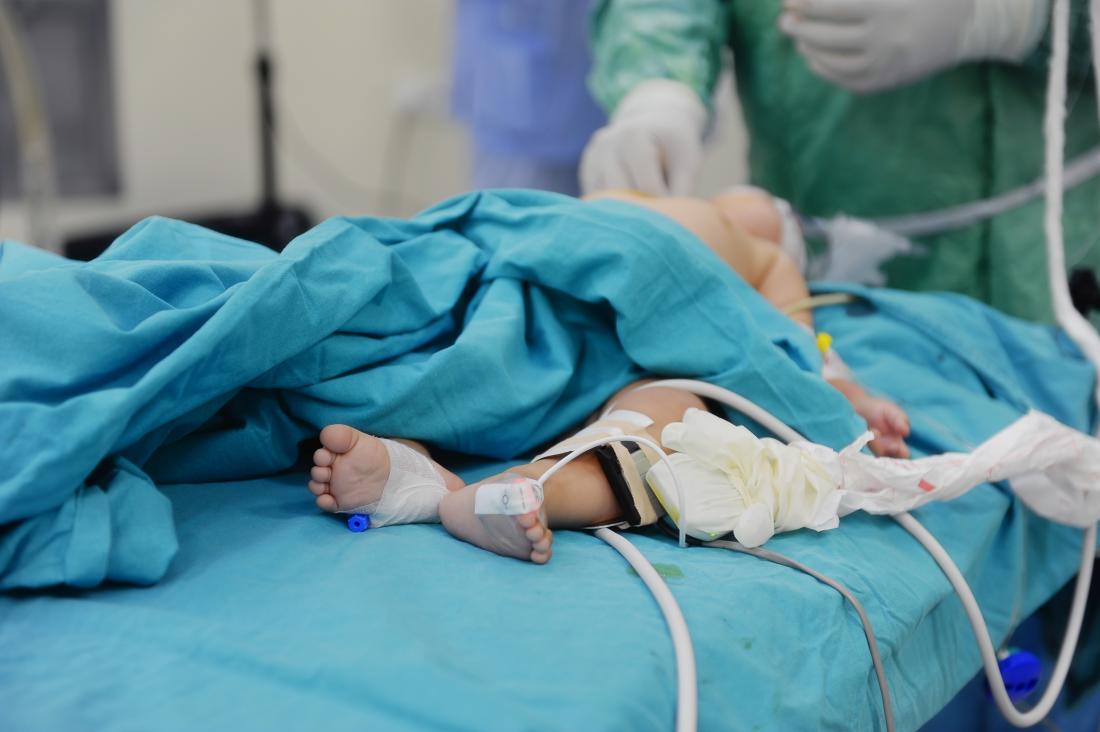
In most cases of undescended testis (s), surgery to transplant a testicle into the scrotum is usually recommended. This type of surgery is known as orchipexy (also referred to as orchiopexy and orchiopexy).
Exactly when the surgery is performed will depend on the health of the child. Ideally, surgery should be performed between 6 months and 2 years of age. This is because waiting more than 2 years increases the boy's risk of developing fertility problems and / or testicular cancer.
Increasingly, orchidopexy is performed using laparoscopic surgery. This type of surgery causes less postoperative pain and has a faster recovery time than open surgery.
During the procedure, the surgeon makes a small incision in the baby's abdomen before passing small surgical instruments through the incision to free the testicle from surrounding tissue.
The testicle is then moved down the inguinal canal into the scrotum with a second incision. The inguinal canal is usually sealed to prevent the testicle from returning from the scrotum.
Orchidopexy is performed under general anesthesia, which means that the child will not feel pain during the operation. In most cases, the operation can be performed in an outpatient clinic, so the child can return home the same day.
Rehabilitation
A child may feel unwell for the first 24 hours after surgery. Feeling nauseous is a common side effect of general anesthetic. There is usually nothing to worry about.
The following tips should help speed up your child's recovery and reduce the risk of postoperative complications.
- The child will need to relieve pain regularly for three days after surgery. Activities such as playing games, watching cartoons, and reading together can help distract his attention from pain.
- Encourage (but do not force) your child to drink plenty of fluids.
- Your child's groin area may hurt for a while after surgery. Wearing loose clothing will help.
- Keep the surgical site clean and dry and do not let water spill into the area while showering or bathing.
- A child should not ride a bicycle or play sedentary games for one month after surgery. This is to prevent the testicles from moving back into the abdomen.
Read also:Symptoms and treatment of epididymitis in men
Be alert for any signs of infection at the surgical site. These signs include:
- The child is in severe pain and the pain relief prescribed above does not help.
- The child has a high temperature (fever) of 38ºC (100.4ºF) or higher.
- The surgical site is red, inflamed, and / or feels hotter than the surrounding area.
- Discharge of fluid or pus from the site of surgery.
If you notice any of these signs and symptoms, see your doctor as soon as possible.
Operation results
Generally, the closer the testicle is to the scrotum, the more likely the operation will be successful.
Treatment success rates for palpable cryptorchidism, testicles located near the scrotum, are estimated at 80-90%.
The success rate for treatment of non-palpable cryptorchidism is 75-90%, depending on where the testicle is located. If surgery is unsuccessful, additional surgery may be required to reposition the testicle in the scrotum.
Surgery alternatives
Hormone therapy
An alternative to surgery is the use of synthetic hormones to stimulate the movement of the testicle from the abdomen down to the scrotum.
Hormone therapy is usually only recommended if the baby's testicle is close to the scrotum. This is because treatment is usually ineffective in treating non-palpable testicles located in the groin or abdomen.
Hormone therapy may also be recommended if both testicles are not prolapsed and blood tests have shown that this is due to underlying hormone problems.
Complications

As with any type of surgery, orchidopexy carries the risk of complications.
Testicular atrophy
The most serious complication of the operation is testicular atrophy. The blood supply cannot keep the testicle in its new position, which leads to the death of the testicle. This is known as testicular atrophy and it occurs in about 5% of cases.
If testicular atrophy occurs, the child's fertility should not be affected as long as he still has one healthy testicle.
Cosmetic surgery may be performed to remove the affected testicle and place an artificial implant in the baby's scrotum.
Damage to the vas deferens
Another possible complication of orchidopexy is that the vas deferens can be accidentally damaged.
The vas deferens is the tube that connects the testicle to the urethra. The urethra is the tube through which the sperm when a man ejaculates. Damage to the vas deferens occurs in about 1% of cases.
If the vas deferens is damaged during surgery, additional surgery is usually required to repair it. If left untreated, it can cause fertility problems later in life.
Forecast
The outlook for boys born with persistent cryptorchidism is usually very good. In most cases, orchidopexy is a relatively simple type of surgery with a good success rate. If the disease is treated at an early age, the boy's fertility should not change.
Boys born with undescended testes have an increased risk of developing testicular cancer later in life, although this risk is very small (estimated at 1 in 1000-2500).