Diseases of the joints of the legs and their treatment, causes of development and characteristic symptoms
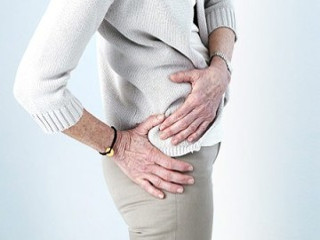 A huge physical load is exerted on the joints of a person's legs every day. Under the influence of provoking factors, which can be bad habits, poor nutrition, hormonal failures, injuries, etc., diseases of the leg joint are often detected in people, even in a fairly young age.
According to statistics, diseases of the joints of the legs today are observed in more than 40% of adults. At the same time, it is known that older people are several times more susceptible to various pathologies of the musculoskeletal system. This is justified by purely physiological disturbances in the body, disruptions in metabolism, as well as typical wear of cartilage tissue.
Hip joint pathology
The hip joint is the largest joint in the body that holds the hip and femur together. It is on this joint that the greatest load is exerted when a person walks, as a result of which he is often exposed to various diseases.
Most often, the following diseases of the hip joint are detected:
- Arthrosis or osteoarthritis. This degenerative disease, which occurs in a chronic form, leads to the gradual destruction of the elements of the joint. The cartilage tissue is particularly affected. In the absence of timely diagnosis and treatment, arthrosis progresses rapidly and ultimately leads to a complete loss of joint function. A characteristic sign of arthrosis is pain when walking, however, in this state, an active inflammatory process is not observed in the patient.
- Coxarthrosis. Most often, this disease is detected in elderly people, however, the disease can begin to progress in young patients due to exposure to severe diseases such as rheumatism, gout, dysplasia or sugar diabetes. In turn, coxarthrosis can be unilateral or bilateral. This disease is treated both medically and surgically.
- Arthritis. This disease is characterized by an acute inflammatory process and is accompanied by severe pain, joint swelling, redness, high fever and impaired motor functions of the joint. Arthritis can develop after injury or due to exposure to severe infectious foci in the body.
Knee ailments
Due to the complex structure and frequent loads, the knee joints are often exposed to all kinds of pathologies.
Most often, the following diseases are detected in patients:
- Arthritis, which can be allergic, autoimmune, or infectious. Also, a purulent form of arthritis is often detected. It should be noted that this disease can affect many human joints, including the phalanges of the fingers.
- Periarthritis is a group of diseases that affect the joint capsule, tendon, muscles and ligaments of the knee.
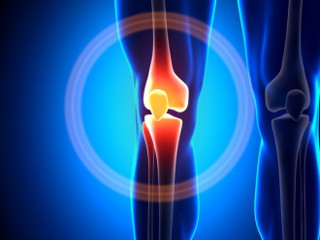
- Deforming gonarthrosis or osteoarthritis. This pathology is characterized by the destruction of the joint cartilage and its subsequent deformation.
Also, the knee joint is susceptible to Baker's cyst, which forms under the knee. Treat this condition with ointments. Sometimes surgery is required. Therapy with folk remedies or gymnastics will not be effective.
Diseases
- Knee bursitis
- Heel bursitis
- Achilles bursitis
- Bumps on the legs
Ankle diseases
The ankle joint is formed by three bones. Even despite the limited movement of this joint, it has to withstand the entire weight of a person's body, which can easily cause his diseases.
Most often, the ankle suffers from injuries, which can be dislocation, ligament rupture or hemarthrosis. Rheumatoid arthritis of the ankle, reactive arthritis or deforming osteoarthritis are less commonly diagnosed.
Diseases of the joints of the foot
The joint of the foot is most often affected by the development of rheumatoid arthritis. In this condition, the disease usually affects both legs at once. Rheumatoid arthritis is accompanied by an acute inflammatory process, chronic pain, swelling and redness of the affected joints. With prolonged progression of the disease, the functions of the joints are severely impaired and the person loses the ability to move without additional support.
Gouty arthritis usually comes on suddenly and is accompanied by intense pain. In this case, as a rule, the phalanx of the big toe is affected. It is also characteristic that gouty arthritis disappears on its own after a few days or with the use of anti-inflammatory drugs. Less commonly, the foot joint undergoes deforming osteoarthritis or reactive arthritis. It is important to remember that diseases of the joints of the legs can progress rather quickly and provoke extremely dangerous complications in a person.
In order to prevent this, even when the first signs of the disease appear, you should immediately consult a doctor and carry out medical therapy under the supervision of a specialist. It is dangerous to self-medicate in this state.
Diseases of the joints of the legs and their treatment: drug therapy, features of surgery, physiotherapy and prevention
 When various diseases of the joints of the legs are identified, a person is immediately prescribed a course of drug therapy. Only the attending physician should be engaged in its selection, who will take into account the severity of the pathology, the patient's age, the presence of concomitant diseases, as well as the cause and symptoms of the disease.
It should be noted that diseases of the joints of the legs and their treatment are directly related to the nature of the lesion of the limb. Thus, in an acute inflammatory process, the patient is prescribed NSAIDs. They relieve pain and relieve inflammation, contribute to the elimination of edema.
The best drugs in this group are Diclofenac, Nimesulide, Aspirin and Ibuprofen. NSAIDs work especially well for severe arthritis of the knee or feet. It should be noted that NSAIDs can be taken only after medical permission, since such drugs can cause dangerous consequences in the form of side effects. That is why, if there is a deterioration in your well-being, you need to consult a doctor in time. To improve blood circulation, patients are prescribed vasodilators.
It is best to use the drugs Actovegin and Lipoic acid for this. Diseases of the joints of the legs and their treatment can be quite different. With severe stiffness in the limbs and compression of nerve endings, muscle relaxants are usually prescribed to patients. It is best to use the drugs Baclofen and Tolperisol for this purpose.
Neglected diseases of the joints of the legs and their treatment with hormonal drugs (Hydrocortisone) is used when other drugs have the expected therapeutic effect.
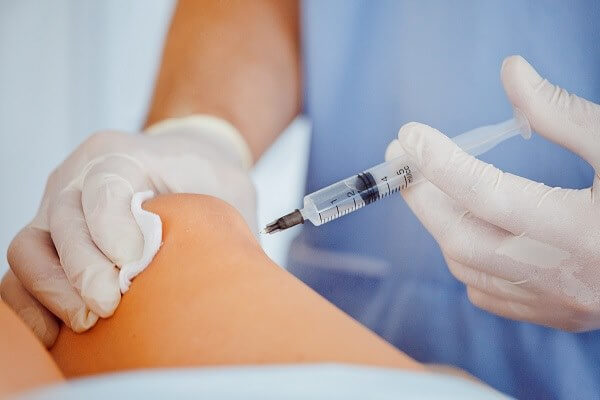
In a similar state, steroid hormones are injected directly into the joint cavity as an injection. The result of this treatment is the elimination of pain and swelling, as well as the promotion of the restoration of joint tissues.
With degenerative lesions of cartilage (arthrosis), chondroprotectors are prescribed to a person to restore it. They contribute to the synthesis of cartilage tissue and the general renewal of joint functions. For this, the drugs Chondroitin, Structum, Artra and their derivatives can be used.
Operative treatment
Joint diseases require surgical treatment when conventional medication therapy is not can cope with inflammatory or degenerative processes and the pathology continues progress.
Periarticular osteotomy can be used to treat joints. The essence of such an operation consists in filing the affected bones and fusing them at a new angle. This will improve the mobility of the joint. To remove non-viable joint tissues, as well as to wash out its elements, the patient can undergo arthroscopic debridement. In this case, the intervention will be carried out with endoscopes through small holes.
In the event that the joint is completely affected, a person may need a total replacement. This operation is called arthroplasty. Its essence lies in removing the diseased joint and installing an artificial analogue in its place. The results of endoprosthetics are more than positive, because after such a procedure a person can move normally again. He will no longer suffer from inflammation and pain.
Unfortunately, arthroplasty has many contraindications, as well as a high risk of side effects, so it should be done very carefully. Most often, after such an intervention, patients develop joint swelling and pain. There may also be infection, necrosis and tissue sensory impairment due to damage to nerve endings.
People's
Alternative therapy can be practiced in conjunction with drug treatment. It will help reduce inflammation and pain in the joint.
It is best to use the following recipes for this purpose:
- Mix equal amounts of nettle, dill and violet. Pour 400 ml of boiling water over two tablespoons of the mixture. Insist and take one tablespoon three times a day.
- Mix aloe juice, honey and mustard powder. Use for rubbing the joint.
- Take a spoonful of mint, the same amount of St. John's wort and violets. Pour all 0.5 liters of vodka. Insist for a week and apply to rubbing a sore joint.
- Apply honey to a fresh cabbage leaf. Apply to the affected joint at night.
- Steam the burdock leaf and apply to the joint.
You may also be interested in
- Knee swelling
- Knee crunch
- Heel pain
- How to treat heel spikes
Physiotherapy
Physiotherapy treatment can be used to diagnose diseases of the joints of the legs, however, it can be carried out only after the permission of the doctor and then only during periods of remission pathology.
 The best physiotherapy for joint diseases are UHF therapy, magnetotherapy, phonophoresis, myostimulation and ozone therapy. The effectiveness of physiotherapy in this state lies in the fact that with their help the patient's pain and swelling of the joint is reduced, and the inflammatory process is eliminated.
Also, with the passage of the full course of treatment, it is possible to achieve an improvement in metabolism and normalization of the motor functions of the joint. Physiotherapy improves the effect of medication. You should know that physiotherapy is contraindicated during pregnancy and lactation, open wounds, vascular and heart diseases.
Prophylaxis
To protect yourself from the development of pathologies of the joints of the legs, it is important to adhere to the following doctor's advice:
- Lead a healthy lifestyle. This, first of all, means a complete rejection of bad habits and control of your weight. Obesity should not be allowed, and if this problem already exists, then it is advisable for a person to consult an experienced nutritionist.
- Timely treat those diseases that in the future can cause vascular disease.
- Adhere to a balanced diet, the menu of which will be rich in calcium, vitamins and polyunsaturated fatty acids. Thus, the basis of the diet should be vegetables and fruits, cereals, fermented milk products, nuts, meat and fish.
- Avoid excessive stress on the joints.
- Perform preventive gymnastics regularly, as well as exercise. This can be running, yoga, cycling, dancing and other useful types of joint stress.
- Undergo preventive treatment with chondroprotectors.
Partial use of site materials (no more than 30% of the content of the article) is allowed only with a hyperlink on www.med88.ru, full use of the article (more than 30% of the article content) is possible only with written permission edition.