Duodenitis of the stomach: description and classification of the disease, symptoms of chronic and acute forms, treatment
Content:
- Acute and chronic form
- Treatment, diet, complications
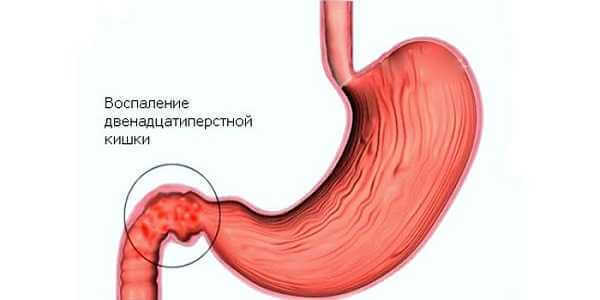
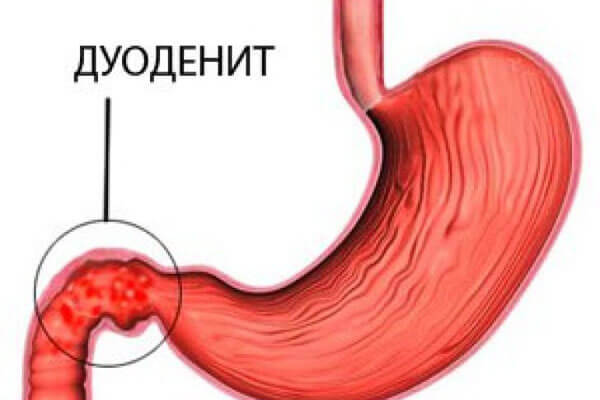
Diseases of the digestive tract are quite diverse and can be triggered by a variety of reasons. However, in the overwhelming majority of cases, the pathological process develops in the mucous membrane lining the walls of the esophagus, stomach and various parts of the intestine. Duodenitis is an inflammation that develops in the epithelium of the mucous membrane of the inner wall of the duodenum. It rarely proceeds in isolation and in most cases is combined with gastritis. This "combination" is called gastroduodenitis.
Pathology is quite common. According to statistics, every fifth person visiting a gastroenterologist suffers from duodenitis. Pathology is characterized by dystrophic, inflammatory and degenerative changes in the mucous membrane of the duodenum. Such processes cause disorders of the functional activity of the glandular apparatus, which is accompanied by a violation of the structure of epithelial cells.
As a rule, as a result of duodenitis, not the entire duodenum is affected, but its sections.
Therefore, depending on the localization, duodenitis is:
- distal, in which the upper part of this part of the digestive tract is not affected;
- bulbit with damage to the bulb (top), often combined with gastritis;
- diffuse (total);
- focal or local.
According to the course and characteristics of etiology, acute and chronic duodenitis are distinguished. In the first case, only the surface structures of the mucous membrane are involved in the pathological process. Such changes are reversible, and the integrity of the epithelium is fully restored after appropriate therapy.
The causes of acute duodenitis are usually:
- passion for foods that can cause irritation and inflammation of the intestinal mucosa, including include coffee, dishes seasoned with hot spices, spices, alcoholic beverages, fatty and fried food;
- foodborne infections caused by both pathogenic and opportunistic bacterial flora, relatively recently, it was proved that duodenitis is associated with peptic ulcer disease Helicobacter pylori;
- pathology of the digestive tract and hepato-biliary system (cirrhosis, inflammation of the pancreas, gallbladder, etc.);
- reflux (reflux) from the underlying intestinal tract, which also leads to inflammation;
- accidental or deliberate ingestion of toxic substances that can cause burns to the duodenal mucosa;
- ingestion of foreign bodies into the digestive tract, which cause damage to the epithelium of the mucous membrane.
The development of chronic duodenitis mainly occurs against the background of long-term lesions of the digestive system, acidity disorders, and enzyme secretion.
In addition, pathology can be caused by:
- a tendency to constipation as a result of the peculiarities of the diet, atony of intestinal smooth muscles, disorders of innervation;
- adhesions after surgery.
Against the background of sluggish current pathological processes in various parts of the gastrointestinal tract, the development of symptoms of chronic duodenitis is due to:
- frequent stress;
- inaccuracies in diet;
- being overweight;
- sedentary lifestyle;
- consumption of alcohol and drugs, smoking;
- hormonal disorders;
- long-term intake of certain medications that affect the state of the duodenal epithelium.
It is important
A repeated episode of acute duodenitis in 90% of cases leads to the development of an acute form of the disease.
Distinguish between primary and secondary chronic inflammation of the duodenal mucosa. The primary form of pathology is extremely rare. It usually results from:
- long-term food intake that increases acidity and irritates the epithelium;
- poor chewing of food;
- stagnation in the stomach and the underlying parts of the digestive tract;
- long-term use of coffee and strong alcohol in large quantities;
- transferred acute duodenitis.
It is important
Experts have proven the role of hereditary predisposition in the development of primary chronic inflammation.
As a result of gastritis, provoked by Helicobacter pylori flora, the structure of the mucous membrane changes and its inflammation begins, which progresses under the influence of increased acidity of the environment.
Therefore, the main causes of chronic secondary duodenitis are:
- chronic gastritis;
- stomach ulcer and duodenum;
- chronic pancreatitis;
- parasitic invasions (in particular, opisthorchiasis and giardiasis);
- food allergies.
Pathogenetic changes are assessed as follows:
- the first degree, the structure of the epithelium is predominantly preserved, they show only signs of infiltration and an increase in the number of lymphocytes;
- second degree, superficial damage to the epithelium progresses, the structure of the villi changes;
- third degree, depressions are formed in the mucous membrane of the duodenum (they are also called crypts), erosive lesions often appear.
According to the depth and quality of structural changes in the mucosa, several forms of chronic duodenitis are distinguished:
- atrophic;
- diffuse (also called interstitial);
- surface;
- hyperplastic, etc.
There are also special forms of the disease. Allocate tuberculous duodenitis, provoked by mycobacteria, an autoimmune form of pathology, disorders that developed against the background of amyloidosis, Crohn's disease and other relatively rare disorders.
In accordance with the data obtained during the endoscopic examination, diseases are classified into:
- erythematous (with severe redness of the mucous membrane);
- hemorrhagic (with hemorrhage);
- atrophic (with characteristic changes in the epithelium);
- erosive (with the appearance of ulceration of the epithelium);
- nodular (in the presence of follicular formations).

The clinical manifestations of acute duodenitis are characterized by:
- pain in the abdomen;
- nausea;
- vomit;
- general weakness;
- flatulence;
- bloating;
- belching;
- fever.
The signs of chronic duodenitis largely depend on the form of the disease. But as a rule, patients complain about:
- "Hungry" pain, often occurring at night, it can be dull or intense, localized in the projection of the duodenum, passes after eating, the use of antacids or antisecretory drugs;
- stool disorders, usually a tendency to prolonged constipation;
- belching with a sour or bitter taste in the mouth;
- heaviness after eating;
- nausea;
- neurological disorders (irritability, aggression, unmotivated emotional outbursts);
- dumping syndrome, accompanied by shortness of breath, weakness, hot flashes, appears a few hours after eating.
However, this symptomatology is nonspecific. The course of chronic duodenitis is characterized by periods of exacerbation after a violation of diet, stress, or taking certain medications.
In some cases, acute inflammation of the duodenal mucosa passes on its own, and the structure of the epithelium is restored. However, sometimes a transition to a chronic form is possible. Therefore, one should not neglect the deterioration of well-being and a certain kind of symptomatology. You need to see a doctor, carry out the necessary diagnostic tests and follow the recommendations of a specialist.
Additional Information
- Catarrhal
- Bulboduodenitis
- Gastroduodenitis
Acute and chronic duodenitis: varieties and features of the course, diagnostic methods
The role of the duodenum in digestion is enormous. The ducts of the gallbladder and pancreas open into its lumen. Under the influence of secreted digestive enzymes, proteins, fats and carbohydrates, a number of essential vitamins are broken down. Under their influence, the acidic environment of the gastric contents is neutralized.
Therefore, pathologies of the mucous membrane of the duodenum, where the processes of parietal digestion take place, generally affect the state of human organs and tissues.
Acute duodenitis is accompanied by quite pronounced symptoms. In addition to acute pain localized in the epigastric region, the patient's general well-being worsens. Often, this condition is accompanied by an increase in temperature to febrile values, nausea, and vomiting. As a result of a violation of parietal intestinal digestion, the processes of decay and fermentation develop, which is accompanied by symptoms of general intoxication.
As a rule, acute non-recurrent duodenitis occurs when there is a violation of the diet, eating foods that irritate the surface of the duodenal mucosa. Often, the symptomatology characteristic of this disease develops after poisoning as a result of pathogenic microorganisms entering the digestive tract.
A particular danger is phlegmonous duodenitis, which occurs against the background of bacterial lesions of the mucous epithelium. Usually, the process also involves the lymph nodes located near the stomach and intestines. The disease develops rapidly. Simultaneously with an increase in temperature, symptoms of peritonitis and intestinal obstruction appear. This condition requires immediate medical attention.
Chronic duodenitis usually manifests itself against the background of various lesions of the stomach, liver, gallbladder and pancreas.
As a rule, the etiology of the disease is closely related to:
- gastritis;
- hepatitis;
- cirrhosis;
- dyskinesia;
- cholecystitis;
- peptic ulcer;
- pancreatitis, etc.
Clinical manifestations, the course, as well as the further prognosis of the disease depends on its type and the degree of damage to the mucous membrane.
Superficial form of pathology
Pathology is accompanied by relatively minor damage to the surface layers of the epithelial cover of the duodenum. It is characterized by a change in the shape and size of plasma cells, infiltration. This is the most common type of chronic duodenitis and is accompanied by severe pain (usually in the navel), fever, and weakness. Similar signs occur during an exacerbation and subside during remission.
Young men are often diagnosed with chronic catarrhal duodenitis. It is also characterized by superficial lesions that are located at the junction of the duodenum with the stomach.
Atrophic recurrent duodenitis
As a result of the pathological process, the mucous membrane of the duodenum becomes thinner, the number of villi that produce mucus of the cells decreases. At the same time, connective tissue is actively growing, which leads to irreversible changes in the functions of the duodenum.
In the acute period, the disease makes itself felt with "classic" symptoms for duodenitis. The patient complains of nausea, vomiting, flatulence, belching, pain syndrome. Stool disorders, sudden loss, or vice versa, weight gain are also often noted. Emotional disturbances are also characteristic.
Interstitial (diffuse) duodenitis
In addition to dystrophic changes in the epithelium, pathology is accompanied by a change in its structure. Swelling increases, the concentration of lymphocytes increases. A distinctive feature of the pathology is the rapid progression, high frequency of exacerbations.
Erosive and ulcerative duodenitis
Pathology develops as a result of exposure to poisons or toxins, Helicobacter pylori infection, increased acidity of the environment. A similar form of chronic duodenitis is accompanied by a permanent pain syndrome, and the pain is intense and does not depend on food intake. During an exacerbation, vomiting occurs, often with an admixture of blood. The patient is worried about chronic constipation, a feeling of fullness in the stomach without overeating.
Hyperplastic duodenitis
This form of the disease serves as a kind of opposite to atrophic duodenitis. The hyperplastic type of inflammation is accompanied by massive growth and infiltration of the mucous epithelium, which causes a pronounced violation of its functions. Disorders of the stool, belching, bloating, flatulence, and recurrent pain indicate a similar pathology.
Diagnostic methods
The preliminary diagnosis of duodenitis is made on the basis of the collected history, patient complaints. Particular attention is paid to the accompanying characteristic symptoms of diseases of the digestive tract. Mandatory research methods include:
- general clinical tests of blood, urine and feces;
- biochemical blood test;
- duodenal intubation;
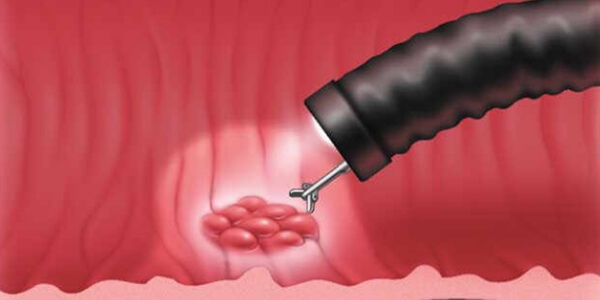
- EGD with biopsy duodenal mucosa;
- tests for the detection of Helicobacter pylori infection;
- fluoroscopy of the duodenum;
- ultrasound examination of the abdominal organs.
In some cases, additional tests are required. Patients can be prescribed:
- tests to assess the secretory function of the digestive glands;
- studies to assess the motility of the digestive tract;
- colonoscopy;
- tests to identify parasitic infestation.
When symptoms of duodenitis appear, it is necessary to consult a therapist who will conduct an initial examination. In the future, the patient is referred to a gastroenterologist. Consultations of other specialists are prescribed according to indications.
Duodenitis of the stomach: methods of conservative and alternative treatment, diet and indicative menu, possible complications
Disease therapy is selected individually for each patient. The list of prescribed drugs depends on concomitant pathologies and the results of diagnostic tests. As a rule, they are used:
- Drugs to reduce secretion and normalize the acidity of the stomach. These are medicines from the group of proton pump inhibitors (Omez, Controlok, Losek), blockers of H2-histamine receptors (Famotidine, Ranitidine), antacids (Almagel, Fosfalugel).
- Antibiotics and antimicrobial agents. Prescribed only upon confirmation of the presence of Helicobacter pylori or other pathogenic bacterial microflora. These are Amoscillin, Clarithromycin, Metronidazole, etc.
- Enzymes. Necessary in case of insufficient secretory activity of the pancreas and gallbladder. Apply Creon, Pancreatin, Festal.
- Digestive tract motility stimulants. They accelerate the evacuation of food from the stomach and its movement through the intestines. This group of medicines includes Cerucal, Motilium.
- Antispasmodics. It is used to relieve pain, eliminate spasm of smooth muscles of the excretory ducts of the pancreas and gallbladder.
The dosage and duration of therapy is selected by the doctor. For relief of symptoms of acute duodenitis or exacerbation of chronic, 7 - 10 days are enough.
In the future, the patient is prescribed strict adherence to the diet. In the acute period, a gentle menu is shown, consisting of:
- liquid cereals prepared using ground cereals;
- steam soufflé from lean meats and fish (chicken fillet, turkey, cod, hake, etc.);
- slimy soups with finely chopped vegetables;
- scrambled eggs;
- steam omelet;
- milk, curd soufflé (with good tolerance);
- jelly;
- jelly.
As the condition improves, the diet is expanded, however, the following are subject to a complete ban:
- coffee;
- alcohol;
- spicy dishes, spices and spices;
- carbonated drinks;
- vegetables and fruits containing coarse vegetable fiber, radishes, onions, garlic;
- strong meat and fish broths;
- fried foods;
- mushrooms.
During the period of an acute state, the menu for the day may look like this:
- first breakfast: steam omelet with a small amount of butter, a glass of milk;
- second breakfast: fruit jelly or baked fruit;
- lunch: rice slimy soup, steamed meat soufflé or steamed cutlet, fruit jelly or milk;
- afternoon snack: soft-boiled egg, rosehip broth;
- dinner: milk semolina or oatmeal, jelly;
- before going to bed: a glass of milk or alkaline water without gas.

After the relief of an acute condition, the diet is expanded. The menu may include:
- breakfast: steamed omelet or steamed cutlets with milk sauce, rice or buckwheat porridge, tea with milk;
- second breakfast: crackers or biscuit biscuits with milk;
- lunch: vegetable soup with meatballs, meat or fish soufflé, compote or jelly;
- afternoon snack: fruit jelly, rosehip broth;
- dinner: steam fish or meat cutlets, porridge, jelly;
- at night: a glass of milk.
Dudenitis of the intestines and stomach will help to overcome and folk recipes. So, they recommend:
- Chop 5 - 6 walnuts and pour into a champagne bottle. Pour half a liter of vodka and leave for 2 weeks. Take a tablespoon half an hour before meals three times a day.
- Mix in 2 tablespoons. celandine, bear's ear and bearberry. Transfer the mixture to a thermos and pour 2 liters of boiling water, insist overnight. Drink the infusion throughout the day.
- Mix half a liter of vodka and liquid may honey. Bring to a boil and take a tablespoon three times a day half an hour before meals.
Duodenitis of the stomach requires compulsory treatment. Otherwise, the disease is fraught with various complications. The risk of gastric and proximal duodenal ulcers, bile outflow disorders, pancreatitis, and intestinal obstruction increases. Pronounced changes in the structure of the mucous membrane are fraught with disorders of the digestive function, vitamin deficiency, anemia.
Partial use of site materials (no more than 30% of the content of the article) is allowed only with a hyperlink on www.med88.ru, full use of the article (more than 30% of the article content) is possible only with written permission edition.