Fetid, strong stool odor in an adult
Feces (feces) is a formalized mass consisting of human waste, undigested particles, enzymes, components of bile and various bacteria that live on the epithelial membrane of the intestine and take part in the formation immunity. Normally, the feces should have a light brown color, the shape of a dense sausage and a mild characteristic odor. If the feces in an adult becomes fetid, in some cases this is due to dietary habits. Correction of the diet should help solve the problem, but if this does not happen, it is necessary to consult a doctor and exclude pathologies of the digestive and excretory systems.

Fetid odor of feces in an adult
Content
- 1 What foods can cause strong odors?
-
2 The smell of feces has changed: possible causes
- 2.1 Violation of microflora
- 2.2
- 2.3 Food allergy
- 2.4 Lack of enzymes
- 2.5 Video: What makes feces smell?
- 3 Fetid feces with fever
-
4 A pungent smell of feces in case of intestinal diseases
- 4.1 Bowel inflammation (colitis and enteritis)
- 4.2 Intestinal candidiasis
- 4.3 Video: Candidiasis. Fungal infection of the intestine
- 4.4 Helminthic invasion
What foods can cause strong odors?
A sharp, putrid smell of feces can sometimes be associated with the peculiarities of the diet and the decay processes that some foods provoke. The "champions" among them are vegetables rich in phytoncides - all varieties of onions and garlic. If a person consumes them in an increased amount, feces can acquire a fetid odor associated with destruction of pathogenic flora, which may be present in small quantities in mucous membranes intestines. An increase in odor can be observed with frequent consumption of cabbage, legumes, foods with a large amount of fat.

Onions and garlic provoke rotting processes in the body
Almost always, a fetid odor appears if a person's diet often contains foods that:
- contain a large amount of chemical additives (stabilizers, flavor enhancers, flavorings, preservatives);
- were stored in unsuitable temperature or sanitary and hygienic conditions;
- contain traces of packaging damage (swollen and crumpled cans, leaky bags, etc.).
Note! If, at the same time as the pungent smell of feces, the patient develops other symptoms, for example, vomiting, fever or cramping pain in the lower abdomen, most likely due to foodborne illness (poisoning).

Signs of food poisoning
The smell of feces has changed: possible causes
If a person eats properly, but the feces have become fetid, the cause may be disturbances in the functioning of the body, arising against the background of internal pathologies or the influence of external factors.
Violation of microflora
A condition in which the balance of beneficial and opportunistic microorganisms is disturbed in the intestine is called dysbiosis. Conditionally pathogenic bacteria are bacteria that are normally present in the human body in small quantities, but are in a latent state and do not cause harm to the body. When unfavorable conditions are created, the rapid growth of opportunistic colonies begins, which leads to intestinal infections, gastroenteritis and infectious colitis of the intestine. Beneficial bacteria support normal digestion, take part in the formation of systemic and local immunity and increase the body's resistance to pathogens.

The main symptoms of intestinal dysbiosis in an adult
In almost 70% of cases, intestinal dysbiosis develops against the background of antibacterial or antimicrobial therapy, because the drugs of this group destroy not only disease-causing, but also useful bacteria. The pathology can be recognized by the following symptoms:
- changes in stool odor and consistency;
- flatulence, a feeling of bloating and distention in the intestines;
- rumbling in the stomach between meals;
- bad breath;
- frequent false urge to defecate.
In some cases, against the background of severe dysbiosis, a person may develop a skin rash, acne, and acne. The smell of feces becomes fetid due to the prevailing pathogenic flora and their waste products.

Additional signs of dysbiosis
For the treatment of dysbiosis, a diet is prescribed that contains a large amount of fermented milk products (they contain lactobacilli necessary for the immune system) and plant fiber (cereals, vegetables, fruits). Medical treatment consists in taking bifidopreparations ("Bifidumbacterin», «Narine», «Normobact», «Lactofiltrum»).

Fermented milk bio product Narine
Food allergy
Allergies to certain foods can also cause a sudden onset of a pungent odor from human feces. The most popular food allergens are:
- honey and beekeeping products;
- cow's milk (allergies are mainly caused by milk proteins - lactoglobulins);
- Fish and seafood;
- citrus fruits;
- chocolate and products with the addition of butter or cocoa beans.

Food Allergy Symptoms
Food allergies can manifest themselves in different ways. The most common are skin manifestations: itching, rashes, dryness and flaking. Symptoms from the gastrointestinal tract are also possible: dyspepsia, pain in the abdominal area, diarrhea, flatulence. In clinically severe forms of food allergy, systemic signs of allergy are added: lacrimation, nasal flow, sneezing, laryngospasm.

Fecal changes for food allergies
Allergy treatment is a lengthy process. The initial stage is complex diagnostics, which includes immunological tests and tests to identify the allergen. Symptomatic therapy is carried out using histamine blockers ("Claritin», «Suprastin», «Tavegil», «Loratadin»). Full recovery requires cleansing the intestines from toxins and toxins, as well as special therapy, which consists in the introduction of micro doses of the allergen under the skin. This method allows you to develop a stable immunity, as a result of which the body ceases to recognize the allergen as a foreign agent.

Claritin drug
Lack of enzymes
Fermentopathy is a pathology in which the production of digestive enzymes necessary for the assimilation and breakdown of certain foods is partially or completely stopped. It can be congenital or occur as a result of various disorders in the functioning of internal organs. One of the forms of fermentopathy in adults is lactase deficiency - a lack of an enzyme responsible for the absorption of milk sugar. Symptoms of lactase deficiency in patients over 18 years of age may be abdominal pain, frothy or watery stools with a pungent, offensive odor, weight loss associated with poor milk absorption squirrel.

Fermentopathy in adults
All signs of pathology appear mainly after the use of fermented milk products or products based on whole cow's milk. It should be noted that true lactase deficiency is rarely diagnosed - such patients are forced to adhere to a special diet during their life that excludes dairy products. Temporary lactase deficiency is treated with enzyme preparations ("Lactazar», «Lactase»).

Lactazar drug
Video: What makes feces smell?
Fetid feces with fever
If the fecal masses have become liquid, they have a pungent putrid odor, the general health has worsened, this may be a sign of an intestinal infection. They can be bacterial (salmonellosis, dysentery) or viral (rotavirus and enterovirus infection). The symptomatology is almost the same in all cases: first, the patient has profuse vomiting containing particles undigested food, after which the temperature rises (up to 39 ° -40 °), fetid diarrhea occurs, and symptoms increase dehydration. General signs of intoxication, which include lack of appetite, nausea, drowsiness and weakness, persist with intestinal infections for 3-5 days, after which there is improvement.
Treatment of any intestinal infections and poisoning is always complex. The basis is detoxification and rehydration therapy. One of the dangers of dehydration is the rapid washout of potassium and magnesium ions, which can lead to acute heart failure, therefore, an important task in the treatment of acute intestinal infections is the restoration of water-electrolyte balance. For this purpose, the patient is prescribed specialized salt mixtures, for example, “Hydrovit" or "Regidron». To remove bacteria and their toxins, enterosorbents are used ("Polyphepan», «Activated carbon», «Neosmectin»).
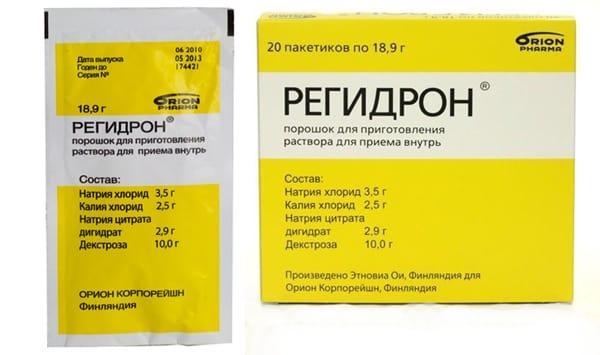
Powder for solution preparation Regidron
Further treatment is carried out using the following drugs:
- antidiarrheal drugs ("Lopedium», «Diara», «Loperamide»);
- centrally acting drugs to stop vomiting ("Cerucal»);
- broad-spectrum antimicrobial drugs ("Nifuroxazide», «Enterofuril»);
- probiotics and prebiotics to colonize the intestines with beneficial bacteria and restore the normal balance of microflora ("Linex», «Bifiform»);
- antiviral drugs for viral infections ("Ergoferon», «Arbidol»);
- antispasmodics to eliminate paroxysmal intestinal spasms ("Drotaverin», «Spazmol»).

The drug Enterofuril in the form of a suspension
For the entire period of treatment, the patient is shown a sparing diet that excludes dairy products, chips and crackers with flavors, fatty, spicy and fried foods.
Note! With the right therapy, stool normalization should occur on the fifth day of treatment.

Signs of gastrointestinal infections
A pungent smell of feces in case of intestinal diseases
If a person feels satisfactory, but periodically notices that the excrement has a fetid odor, it is necessary to examine the intestines to exclude his diseases. To begin with, you should pass an analysis of feces for helminths (including scraping for enterobiasis) and a coprogram. These studies will make it possible to find out the chemical composition of feces, detect signs of an inflammatory process and identify possible disturbances in the digestive processes (for example, in inflammatory processes, an increased amount of detritus).
After receiving the results of laboratory diagnostics, the doctor will make a preliminary diagnosis and prescribe an additional examination, if there are indications for this. Secondary diagnostics can include hardware and instrumental methods, for example, colonoscopy, sigmoidoscopy, ultrasound or irrigoscopy. In some cases, a consultation and examination by a proctologist may be required to make an accurate diagnosis.

What does the color of feces mean?
Bowel inflammation (colitis and enteritis)
The human intestine consists of two sections: the colon and the small intestine. The small intestine is located just after the stomach, and its inflammation is called enteritis. Inflammation of the epithelial lining of the large intestine is called colitis and occurs in one in four patients with diseases of the digestive system. Fetid feces in an adult is characteristic mainly of chronic colitis, since acute forms pathologies occur with severe symptoms, and their clinical picture is similar to the symptoms of intestinal infections.

Enteritis from the inside
Chronic inflammation of the small or large intestine can occur for several reasons, including food and drug allergies, nutritional errors, alcohol abuse, smoking. Tumors in the intestine can also provoke an inflammatory process, therefore, preventive endoscopic diagnostics is indicated for all people, regardless of their health, at least once a year.
Signs of chronic colitis or enteritis are:
- painful intestinal cramps with bloating and flatulence;
- bloating and pressure in the central or lower abdomen;
- nausea (rarely vomiting);
- unpleasant, pungent smell from excrement;
- stool disorders.

Intestinal condition with colitis
Treatment of both pathologies involves a therapeutic diet (table number 4 according to Pevzner), physiotherapy, massage. Medical correction may consist of symptomatic drugs (carminative drugs based on simethicone, antispasmodics, antidiarrheal or laxative drugs), antibiotics. Also, patients are necessarily prescribed drugs that accelerate the healing of damaged mucous membranes (tablets "Methyluracil»).

Methyluracil tablets
Important! If the inflammation has arisen as a result of impaired blood circulation in the intestinal vessels, the patient is additionally selected drugs for the prevention of thrombosis (antiplatelet agents and anticoagulants).
Intestinal candidiasis
Fungi of the genus Candida are conditionally pathogenic microorganisms, that is, they are normally present in the composition of the human microflora, but in an insignificant amount, which does not allow the development of fungal infections. If the protective functions of the body weaken, Candida begins to actively multiply and release toxins that cause acute intoxication and poison the intestines.

Intestinal candidiasis symptoms
Intestinal candidiasis is practically impossible to detect without laboratory diagnosis, since specific symptoms are usually absent in this disease. The main manifestations of intestinal thrush are associated with changes in bowel movements and the appearance of feces. The patient may be disturbed by frequent false urges to empty the intestines, pain of varying intensity in the lower abdomen, and upset stools. Feces with candidiasis becomes fetid, white particles similar to cottage cheese may be present in it, as well as a small amount of grayish mucus. Other symptoms of the disease include:
- lack of appetite, which occurs against a background of moderate nausea (in rare cases, a single vomiting is possible as signs of intoxication of the body);
- itching in the anal ring during bowel movements;
- rumbling in the stomach;
- intestinal cramps;
- flatulence;
- flatulence syndrome ("explosive" discharge of a large amount of odorous gases).

Development of intestinal candidiasis
Treatment of candidiasis is carried out with antifungal drugs (in oral dosage form). They are listed in the table below.
Antimycotics for the treatment of intestinal thrush in adults
| Name of the medicine | Image | Scheme of application and dosage |
|---|---|---|
| "Pimafucin" |  |
1 tablet 4 times a day for 7 days. Additionally, apply "Pimafucin" in the form of a cream to the anal area 1-2 times a day |
| "Fluconazole" |  |
400-800 mg daily for 1-2 weeks |
| "Primafungin" |  |
1 tablet 3-4 times a day for 7-10 days |
To accelerate the colonization of the intestinal mucous membranes with beneficial microflora and restore digestion, the use of prebiotics is shown. For the period of treatment, you should limit the consumption of sugar, fatty foods, foods that promote fermentation and decay.
Video: Candidiasis. Fungal infection of the intestine
Helminthic invasion
Some people consider helminthiasis a "childhood" disease, but the frequency of diagnosis of the disease in adults is about the same as in patients under 14 years of age. Helminthiasis can be caused by various worms (science has more than 400 helminths that can parasitize in the human body), but in humans, invasions of roundworms, nematodes, whipworms, bovine and pork are more often detected chain. Signs of chronic helminthiasis may not appear for a long period of time, but they become more pronounced over time.

Signs of worms
It can be:
- fetid odor from stool;
- stool disorders (constipation can often be observed, suddenly replaced by diarrhea);
- pallor of the skin;
- flatulence, bloating, rumbling in the stomach;
- cramping pains in the lower abdomen;
- headache;
- decrease in the general resistance of the body (allergies, colds, etc.).
Treatment is carried out with the use of anthelmintic drugs ("Nemozole», «Vermox», «Levamisole», «Decaris"), Which must be taken strictly in the calculated dosage, which is determined based on the patient's age and weight. In some cases, treatment may include iron supplements, since the worms in the intestines feed on blood, which can lead to the development of systemic anemia. The most popular drug for anemia caused by chronic helminthiasis is “Ferrum Lek». You can increase the hemoglobin content by including meat products, fresh apples, pomegranate juice and buckwheat in the menu.

The drug Nemozol in the form of a suspension
If the offensive odor does not go away for a long time, you must go to the hospital, as the consequence incorrect or untimely treatment of some intestinal pathologies may become the need for partial removal of a thin or colon.