Pain to the left of the navel
Abdominal pain (abdominal pain syndrome) is the most common complaint in many diseases of the digestive, urinary and reproductive systems. Any factors can provoke its appearance, including taking certain medications and eating disorders. If the pain does not go away within 1-2 days, is of high intensity, increases with movement or force exertion, you should contact medical help, since the causes of such pain can be dangerous conditions: malignant tumors, volvulus, rupture of a cyst ovary. If the patient is worried about pain to the left of the navel, it is required to carry out differential diagnostics and exclude pathologies of the ureters, kidneys, inner lining of the intestines and spleen.

Pain to the left of the navel
Content
-
1 Causes in women
- 1.1 Ovarian disease
- 1.2 Diseases of the uterus
- 2 Spleen disease as a source of abdominal pain
-
3 The main causes of pain
- 3.1 Enteritis
- 3.2 Small bowel ischemia
- 3.3 Gluten enteropathy
- 3.4 Other pathologies of the small intestine
- 3.5 Video - Possible Causes of Stomach Pain
Causes in women
In women, the incidence of pain in the umbilical line area is several times higher than in men, since with many diseases of the female reproductive system, the pain syndrome radiates to the central part of the abdominal space.
Ovarian disease
The ovaries are a paired organ consisting of glandular tissue and located in the pelvic cavity. The ovaries perform an endocrine function: the follicles, which make up the follicular apparatus, synthesize estrogens (the main hormones of the female reproductive system), and the corpus luteum - progesterone, which is necessary for the implantation of the zygote into the uterine endometrium in case of pregnancy. The most important function of the ovaries is also the generation of female germ cells (eggs), which grow and ripen in follicles - structural components of the ovary, surrounded by epithelial and connective tissue.

Ovaries
Moderate pain in the left side of the abdomen, localized below and to the side of the navel, may be physiological and associated with rupture of the dominant follicle. The dominant follicle (graaf vesicle) bursts, and the mature oocyte enters the cavity of the fallopian tube, where it fuses with the sperm in case of unprotected sexual intercourse. Rupture of the connective membrane may be accompanied by tingling or pulling pain of moderate intensity, a slight increase in temperature (no more than 2 days), as well as vaginal discharge by type blood smears.
A hallmark of physiological pain associated with the period of ovulation is that it occurs strictly in the period from 13 to 16 days of the menstrual cycle. If the pain appeared on other days, or the pain syndrome is of high intensity, and is also accompanied by others pathological symptoms, it is necessary to consult a local gynecologist and exclude diseases of the left ovary.

Ovulation
Diseases and pathologies of the ovaries in women
| Disease | Image | What it is? | Possible Symptoms |
|---|---|---|---|
| Oophoritis |  |
This is an inflammation of the parenchymal tissue of the ovary (mainly of bacterial etiology). Often combined with inflammation of the fallopian tube - salpingitis | The main symptom is intense pain in the lower abdomen, localized on the side of the affected organ and radiating to the central part of the peritoneum (umbilical line region). The temperature usually rises to 38.5 °. Bleeding may occur between periods (aggravated after intimacy, heavy lifting and with sudden movements). During the examination, the gynecologist discovers edematous, hyperemic appendages, painful on palpation. Intoxication syndrome is manifested by muscle and joint pain, chills, sweating, general weakness and a depressed psycho-emotional state |
| Cyst | 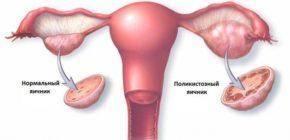 |
The formation of a pathological growth in the form of an elongated cavity filled with exudate or pus | Severe symptoms usually do not occur. A woman may complain of a dull or aching pain in the part of the abdomen where the cyst is located. Pathological signs (intense pain syndrome, febrile temperature, change in the number and the nature of vaginal discharge) are characteristic of purulent inflammation, fraught with rupture of cystic education |
| Polycystic disease (Stein-Leventhal syndrome) |  |
Violation of the secretory function of the ovaries, adrenal cortex, pituitary gland and hypothalamus | Symptoms are nonspecific and require a thorough comprehensive diagnosis (including differential diagnosis). The main signs are: prolonged absence of pregnancy; problems with skin (acne) and hair; failure of the menstrual cycle or complete absence of menstruation; male obesity; depression; thickening of the endometrium and ovarian capsular membrane |
| Apoplexy |  |
Rupture of the ovarian parenchyma, accompanied by hemorrhage into the peritoneal space | Pain with rupture of the left ovary is localized not only to the left of the umbilical ring, but also in the lower abdomen, as well as in the lumbar region. Additional signs may be vaginal bleeding, sharp pain during sexual intercourse, fever, increased sweating, pathological pallor of the skin. Urination is usually impaired |
Treatment of ovarian diseases in most cases takes place in a hospital setting. Traditional therapy includes the use of broad-spectrum antibiotics ("Amoxicillin», «Azithromycin», «Ciprofloxacin», «Clarithromycin"), Anti-tuberculosis drugs (for inflammation of the appendages caused by tuberculosis infection), non-steroidal anti-inflammatory drugs ("Ibuprofen», «Ketorolac»). For surgical pathologies (cysts, tumors, apoplexy), surgical treatment is indicated. A diagnosed polycystic ovary syndrome is treated with hormonal drugs ("Janine», «Lindineth»).

Chronic form of adnexitis
Diseases of the uterus
The likelihood of pain syndrome irradiation to the central part of the abdomen with diseases of the uterus is sufficient low, but they can be excluded as possible causes only after a comprehensive diagnostics. Almost all pathologies of the uterus have similar symptoms, which can be manifested by the following symptoms:
- violations associated with the menstrual cycle (irregular or complete absence of menstruation, menorrhagia);
- headache;
- soreness and discomfort during intercourse;
- intermenstrual bleeding (from bleeding to profuse bleeding with a lot of blood clots);
- instability of body weight;
- pain in the lumbar region.
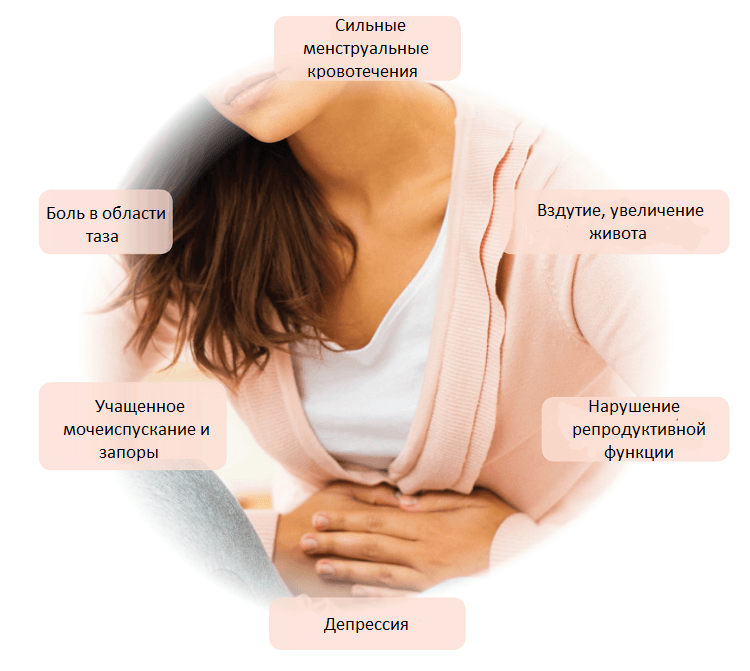
Symptoms of uterine fibroids
The most common pathologies of the uterus (fibroids, endometriosis, endometritis, erosion, endometrial hyperplasia) have hormonal nature, therefore, for treatment, the doctor selects hormonal drugs from the group of oral contraceptives. In inflammatory processes, the use of antibiotics is indicated. Treatment should be accompanied by a correction of the diet and a change in lifestyle (rejection of bad habits, increased physical activity, normalization of work and rest).
Important! With heavy bleeding that threatens a woman's life, surgical methods of treatment are used (vacuum aspiration or curettage of the uterus). After the procedure, a course of metronidazole or tetracycline is prescribed for a duration of 10 days to prevent infection of the uterus.
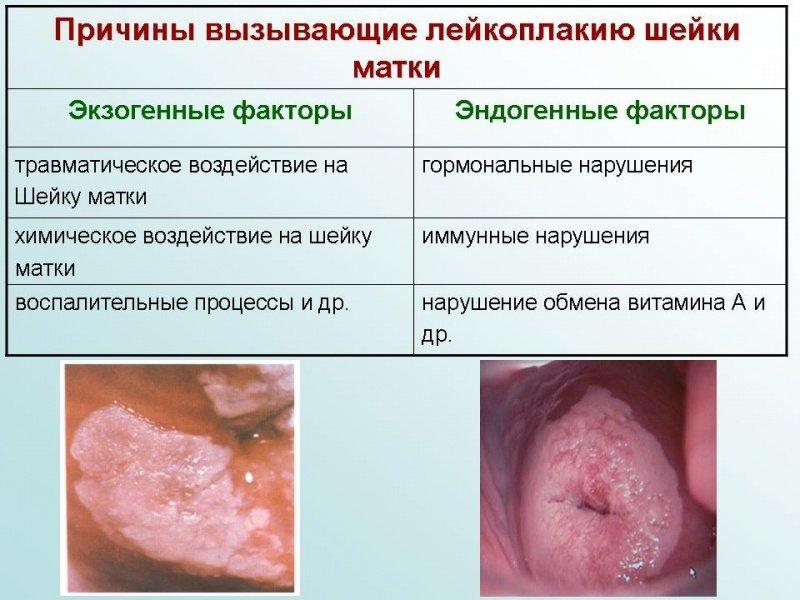
Causes of cervical leukoplakia
Spleen disease as a source of abdominal pain
The spleen is a flattened and elongated abdominal organ located behind the stomach and has a lymphoid structure. The spleen is the main source of circulating lymphocytes, participates in the formation of immunity and hematopoiesis, forms antibodies to protect against various pathogens. The spleen also destroys overripe and damaged platelets and red blood cells, from where they travel to the liver and become components of bile. The spleen is located on the left side, therefore, if abdominal pain occurs, localized to the left of the navel, it is necessary to exclude possible diseases of this organ.
- Kinks and displacements of the spleen. When the spleen is bent, its infringement occurs, which leads to squeezing of blood vessels and the development of stagnation. The branches of the vagus nerve pass through the splenic plexus, so when they are infringed, a person feels a sharp, sharp or stabbing pain near the navel on the left side.
-
Spleen ischemia (heart attack). The disease can be the result of stagnation in the parenchyma of the organ or develop against the background of hematological disorders (blood diseases). Ischemia is characterized by occlusion of blood vessels of the spleen and segmented or localized necrosis of its tissues.
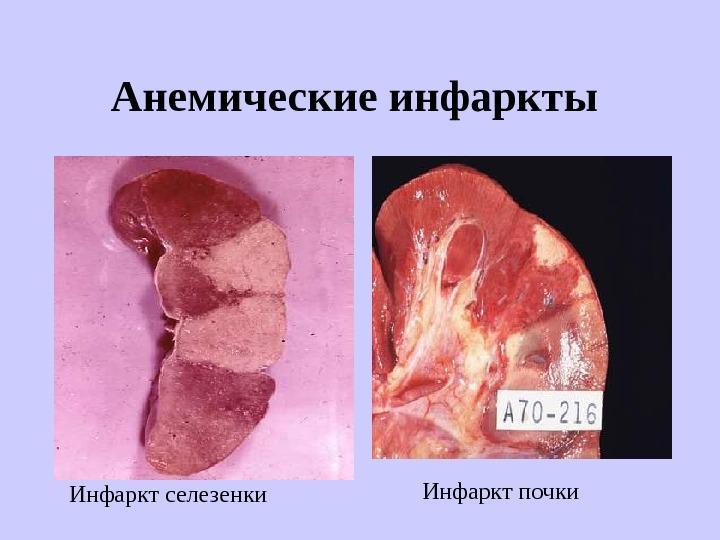
Anemic spleen infarction
- Inflammation of the spleen. In the vast majority of patients, inflammatory processes in the spleen proceed with the formation a large amount of exudative fluid, which is manifested by dull pain and enlargement of the organ (splenomegaly). With purulent inflammation, emergency surgical treatment may be required to prevent rupture of the organ and acute inflammation of the peritoneum (peritonitis).
Most spleen pathologies are treated with broad-spectrum antibacterial and antimicrobial drugs. In critical situations, when there is a high risk of death, splenectomy is indicated - removal of an organ.
note! An indication for splenectomy may be not only a high risk of intraperitoneal bleeding or purulent lesion of the spleen, but and cytopenia - a pathology in which the concentration of circulating components (mainly leukocytes or platelets).

Causes of pain in the left side
The main causes of pain
Almost the entire central part of the peritoneal space is occupied by the small intestine, so the pain to the left of the navel can be a signal of diseases of the ileum or jejunum, which are located in this projection.
Enteritis
Enteritis is the most common disease of the small intestine, characterized by inflammation of the inner (mucous) membrane. Acute enteritis in most cases develops against the background of infectious intestinal pathologies (salmonellosis, typhoid fever, etc.), helminthiasis, as well as drug and food poisoning. With these pathologies, the mucous membrane swells, takes on a hyperemic appearance, and erosive and ulcerative bleeding defects may appear on its surface.

Enteritis is the most common disease of the small intestine
Depending on which part of the small intestine is inflamed, several types of enteritis are distinguished.
Varieties of enteritis
| Pathology name | Image | Localization of the inflammatory process |
|---|---|---|
| Duodenitis |  |
The proximal small intestine, located behind the muscular valve of the pyloric stomach (duodenum) |
| Yunit |  |
Middle part of the small intestine (jejunum) |
| Ileitis |  |
Distal segment of the small intestine (ileum) |
| Enterocolitis |  |
Various parts of the small and large intestine |
| Gastroenterocolitis |  |
Intestine and pyloric part of the stomach |
Pain with enteritis is characterized by a sudden onset, has a stabbing or cutting (less often - cramping) character, and localization is determined mainly in the central parts of the abdomen near the umbilical ring and may slightly shift to the right or left side, depending on which part of the inflammatory process. Symptoms can also be supplemented with the following symptoms:
- profuse diarrhea;
- profuse vomiting that does not bring relief;
- temperature increase;
- respiratory failure (shortness of breath);
- increased heart rate;
- lowering blood pressure;
- convulsions (rare).

Sample dishes table number 1
Treatment includes a special diet (table number 1), taking antibacterial or antiparasitic drugs to combat the source of inflammation. To accelerate the regeneration of the mucous membranes, the reception is shown "Methyluracil»And therapy with astringents (cinquefoil root, bismuth nitrate). With severe pain and spasms - oral "Drotaverin" or "No-shpu"At a dosage of 120-240 mg per day (divided into three doses).
Small bowel ischemia
This is a pathology in which blood stagnates in the vessels of the small intestine, which leads to a violation of it functioning and can become a provoking factor of necrotic, dystrophic and diffuse changes in its walls. The causes of stagnation and the associated hypoxia (oxygen starvation) of tissues can be improper nutrition, pathology of the pelvic organs, conditions after surgical treatment on the organs of the gastrointestinal tract, sedentary image life.
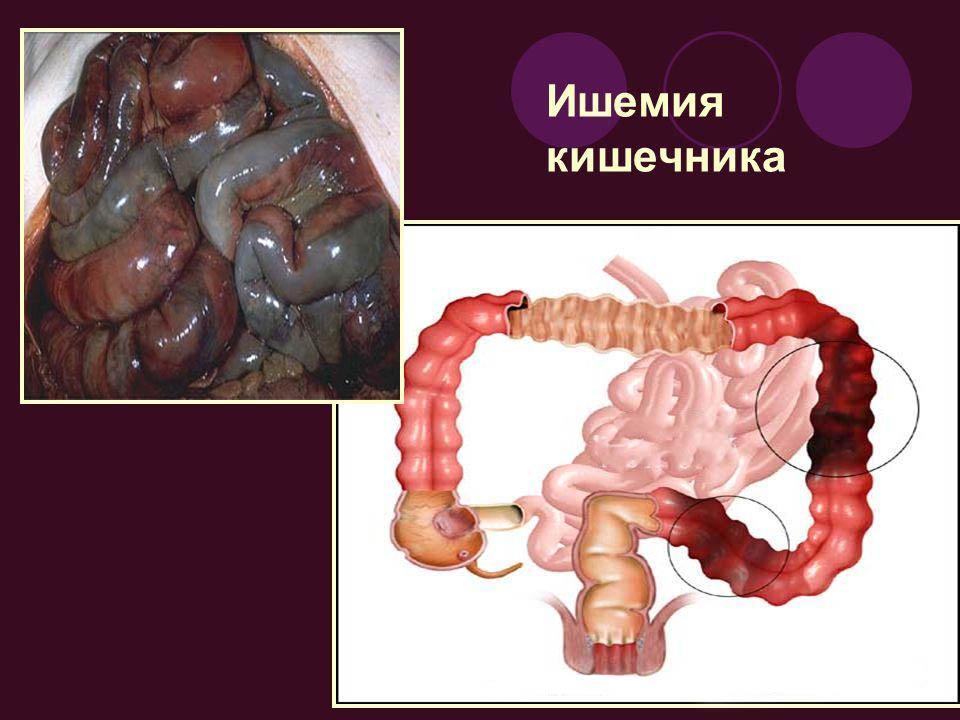
Intestinal ischemia
Pain in ischemic lesions of the small intestine has a vague localization and can be concentrated in the central part of the abdomen near the umbilical line or on the side of the navel. Other relative symptoms of pathology are usually:
- upset stool (mainly recurrent diarrhea);
- severe cramping pains in the center of the abdomen;
- swelling and hyperemia of the mucous membrane (detected during endoscopic examination of the intestine);
- nausea and lack of appetite.
For treatment, physiotherapy exercises, balanced nutrition, physiotherapy procedures are prescribed. (acupuncture, electrophoresis, magnetotherapy), taking multivitamin and mineral supplements, as well as drugs that stimulate blood circulation ("Ascorutin»). Correction of lifestyle and giving up bad habits is of great importance.
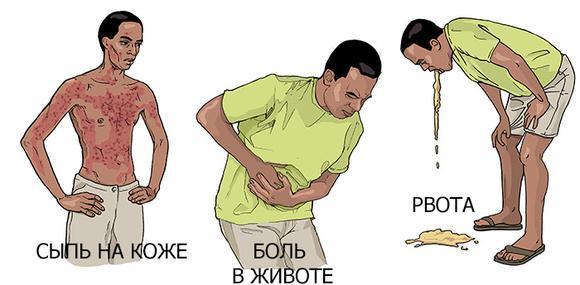
Small bowel ischemia symptoms
Gluten enteropathy
With this pathology, the human intestine cannot assimilate and break down some proteins that are contained in the gluten of cereals: hordein, gluten and avenin. When entering the small intestine, these proteins damage the villi of the epithelium, which are responsible for the absorption of nutrients. and water, which leads to a strong loosening of the stool and the appearance of characteristic symptoms: diarrhea, nausea, spastic pain. Painful sensations are concentrated in the middle of the abdomen and on the left side of the navel, are of high intensity, and may be accompanied by vomiting and nausea.
Since gluten enteropathy refers to multifactorial diseases (diseases that have hereditary predisposition), treatment, first of all, includes a special diet that excludes the consumption of foods that can contain gluten.

Intestinal walls for celiac disease
These products include:
- some types of cereals (oats, rye, wheat, barley);
- pasta;
- biscuits, crackers, drying;
- confectionery.
The basis of the diet of patients with celiac disease (gluten enteropathy) should be dairy products, rice, legumes, fish, meat, vegetables and fruits. Buckwheat is considered the safest of cereals.
Important! You will have to stick to a gluten-free diet for life. Histologically alarming manifestations of celiac disease disappear within 2-3 years of adherence to the prescribed diet.
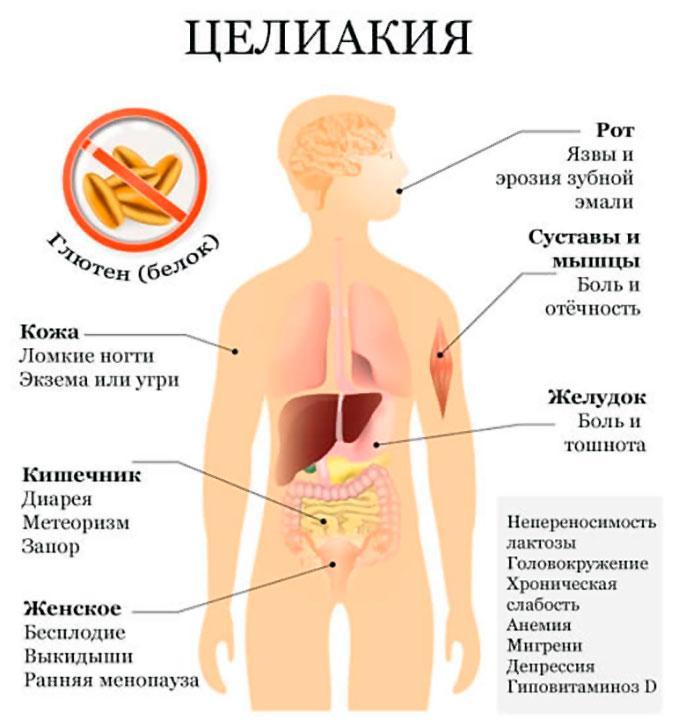
Celiac Disease Symptoms
Other pathologies of the small intestine
Other diseases of the small intestine can also cause pain of varying intensity. Some of them are listed below.
-
Crohn's disease. This is a systemic lesion of the digestive tract, in which any of its segments can be involved in the inflammatory process, from the oral cavity and pharynx to the rectum. Treatment in most cases is surgical. Medication and diet are prescribed for life.

Crohn's disease
-
Whipple's disease. It is a rare genetic disorder of the small intestine in which metabolism and lipid absorption are impaired. Pathology can manifest itself as dyspeptic disorders and extraintestinal symptoms (fever, inflammation of the lining of the heart, etc.). Treatment includes taking glucocorticosteroids, antibacterial drugs, and sulfonamides.
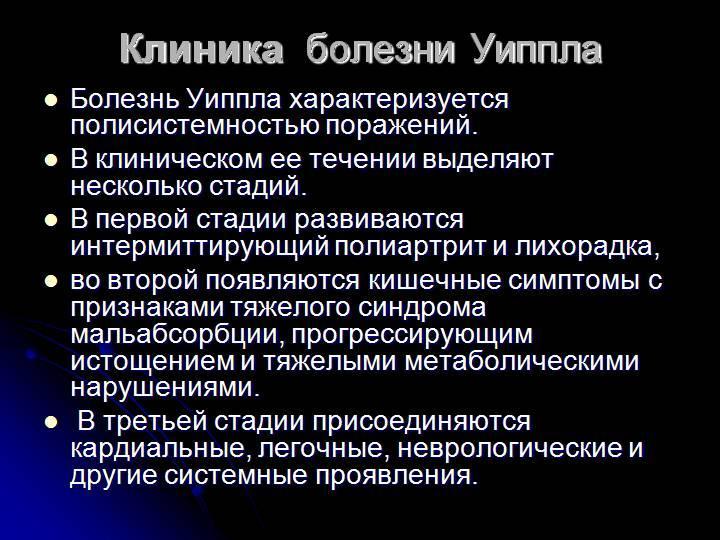
Whipple Disease Clinic
- Intestinal tumors. They are almost always treated surgically. Pain in tumor processes refers to late symptoms characteristic of the progressive stage.
Any pain is a reason to see a doctor. If pain appears to the left of the navel, it is necessary to begin the examination with a gastroenterologist. Women are recommended to additionally undergo a preventive examination by a gynecologist in order to exclude diseases of the reproductive organs.