Antacid: what is it, rules of use
Antacids (antacids) are a group of drugs, the action of which is aimed at suppressing the manifestations of dyspeptic disorders provoked by increased stomach acidity. Antacids neutralize excess hydrochloric acid, reducing the intensity of symptoms and relieving the patient's condition.

Antacids
Content
- 1 The principle of action of drugs
- 2 Indications for use
- 3 Varieties of antacids
- 4 Dosage forms
- 5 Admission rules and validity period
- 6 Contraindications and side effects
-
7 Review of popular antacids
- 7.1 Video - Antacid: what is it
The principle of action of drugs
For normal digestion, hydrochloric acid is produced in the stomach - it helps to activate a number of enzymes and destroy pathogenic bacteria that enter the digestive tract with food. The organ itself, to protect itself from the aggressive effects of hydrochloric acid, is covered from the inside with a thick mucous membrane. If its integrity is violated, erosion begins to appear on the inner surface of the stomach, which over time can lead to peptic ulcer disease. In some cases, a weakening of the lower esophageal sphincter is possible, which leads to the ingress of enzymes into the esophagus, causing irritation and inflammation.
The active components of antacids in an aqueous solution have alkaline properties, and therefore neutralize excess hydrochloric acid. This reduces the aggressive effects of gastric juice, which is manifested by a decrease in heartburn. Modern drugs not only neutralize the stomach environment, but also envelop the walls of the organ, which contributes to a faster recovery of the mucous membrane.

Mechanisms of action of antacids
Indications for use
Antacids are prescribed in the following cases:
- gastroesophageal reflux disease (GERD);
- ulcerative lesion of the stomach;

Stomach ulcer is one of the indications for taking antacids
- acidity gastritis;
- heartburn treatment during pregnancy;
- lesions of the stomach, provoked by prolonged use of non-steroidal anti-inflammatory drugs;
- stomach upset;
- pathologies of the gallbladder and duodenum, which are accompanied by the throwing of the duodenal contents from the duodenum into the stomach cavity;
- a one-time reception for overeating, nausea and heartburn.

Heartburn is an indication for a single use of antacids
Attention! Antacids can be used both once and as a course. Long-term use of such drugs must be coordinated with a doctor in order to avoid side effects.
Varieties of antacids
All drugs in the antacid group fall into two broad categories.
-
Absorbable. This group of drugs contains substances that are able to be absorbed into the systemic circulation through the gastric wall. They are characterized by a rapid onset of a therapeutic effect. At the same time, during neutralization, a large amount of carbon dioxide is released in the patient's stomach. This leads to belching, flatulence, reflux. The total proportion of absorbed active substances can be up to ⅕ of the total amount of active substance. Therefore, it is better to take absorbable antacids once in order to avoid severe electrolyte imbalance.
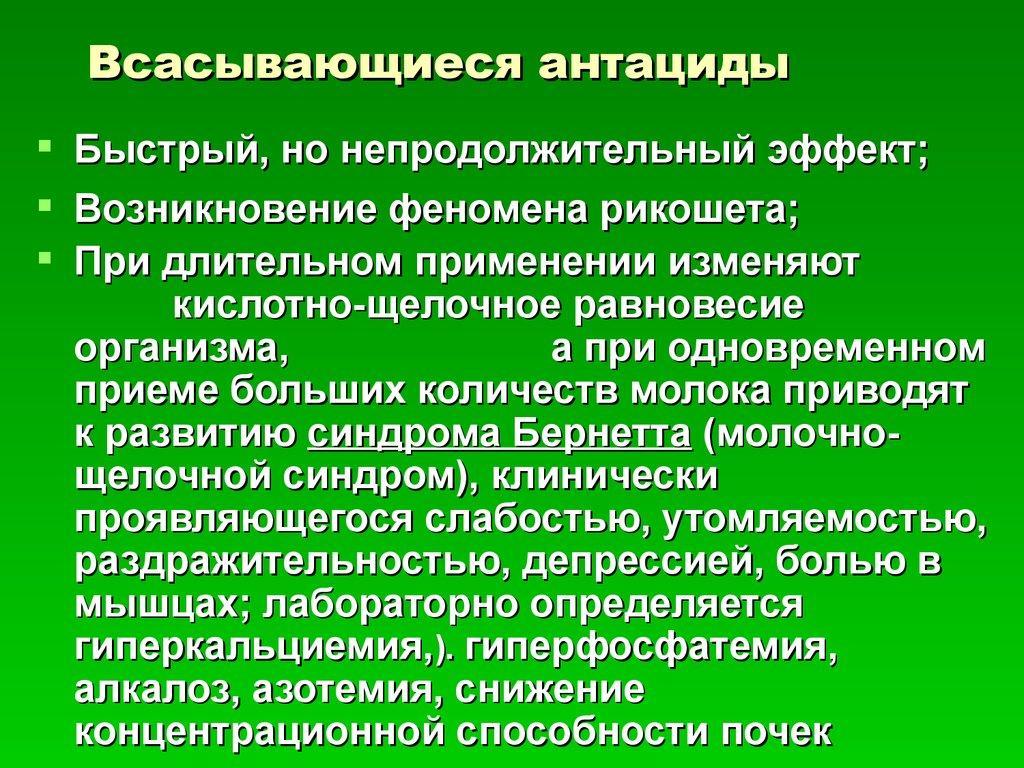
Absorbable antacids
-
Non-absorbable. A more popular group of drugs. They differ in prolonged action, but the effect of their use comes later than from the intake of absorbed funds. They help not only to neutralize the acidic environment of the stomach, but also envelop its walls, protecting them and promoting faster recovery. It is nonabsorbable antacids that are prescribed for long-term use, since they affect the work of other organs and systems to a lesser extent. The exception is patients with renal insufficiency, since part of the aluminum is excreted through the kidneys, which enters the bloodstream.
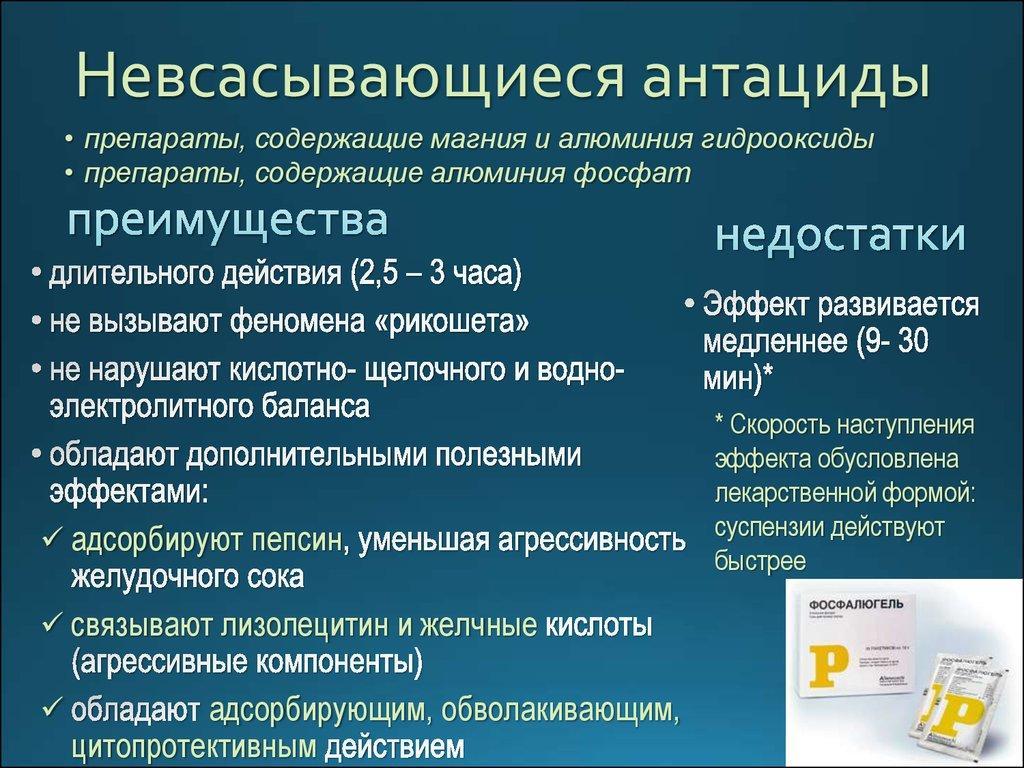
Non-absorbable antacids
Attention! Reception of absorbed antacids can lead to the effect of "acid rebound" - when, at the end of the drug's action, the stomach begins to synthesize hydrochloric acid more intensively. This effect occurs as a result of too rapid alkalization of the stomach environment, which causes a compensatory effect. For this reason, absorbable antacids are not recommended at night when food will not be able to mitigate the effects of hydrochloric acid on the stomach.
According to the active ingredients, the following groups of antacids are distinguished:
- products based on magnesium salts;
- products based on aluminum salts;
- calcium carbonate;
- sodium bicarbonate;
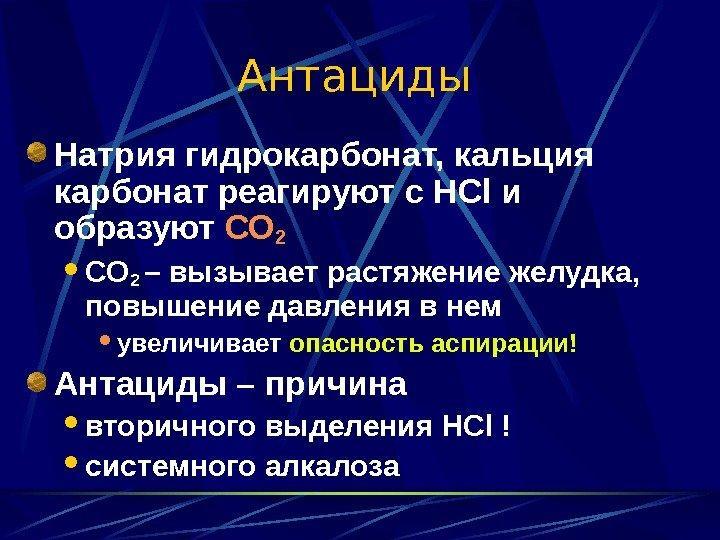
Mechanism of action of carbonate antacids
- combined means.
Dosage forms
Antacids are available in several dosage forms:
- oral tablets;
- lozenges;

Lozenges
- ready-made suspension for oral administration;
- powder for preparation of suspensions in bags for single use.

Suspension powder
Such dosage forms begin to act immediately - they are not protected by a membrane, and therefore their dissolution begins after entering the stomach environment. Suspensions are more convenient for home use, while tablets are more convenient for use outside the home. When the tablets are chewed and resorbed, the onset time is shortened and the heartburn is relieved more quickly.
Admission rules and validity period
Antacids are taken one-time to eliminate heartburn and dyspeptic symptoms. For the prevention of such violations, drugs are taken in a course, the duration of which is set individually.
The effect of the intake of absorbable agents appears immediately, and non-absorbable ones - after 10-15 minutes. The duration of the action of non-absorbable drugs lasts up to 4-5 hours. The effect of the use of absorbable products lasts 1.5-2 hours.
Contraindications and side effects
There are practically no special contraindications to the use of antacids. You can not take the funds of this group with increased sensitivity to active ingredients and with renal failure. A number of drugs are prohibited for use in children under 3 years of age, during pregnancy and lactation.
The main side effects of the application include:
- diarrhea when using magnesium-based products;
- constipation when treated with calcium-based drugs;
- nausea;
- vomiting;
- the appearance of an allergic rash;
- drowsiness when using large doses of the medicine.

Sleepiness is one of the possible side effects of taking large doses of antacids
The above side effects occur quite rarely and, in most cases, in violation of the instructions for use.
Review of popular antacids
Non-absorbable antacids are now more commonly prescribed. The reason for this is the softer action and the absence of the "acid rebound" effect after application.
| Name | Active substance | Release form | Application scheme | List of contraindications | Most common side effects |
|---|---|---|---|---|---|
 "Maalox" |
Magnesium hydroxide, aluminum hydroxide. | Chewable tablets, suspension, powder for solution preparation. | One-time for 1-2 tablets, a measuring spoon of suspension or 1 sachet of powder. | Severe kidney dysfunction. | Nausea, vomiting, stool disturbances with prolonged use. |
 "Almagel" and "Almagel A" |
Aluminum hydroxide, magnesium hydroxide, D-sorbitol. Almagel-A contains anesthesin, which has an analgesic effect. | Viscous suspension. | 2-3 times a day, 1-2 scoops. | Treatment with sulfonamides, kidney pathology. | Decrease in the intensity of intestinal motility, drowsiness and increased fatigue when the dosage is exceeded. |
 "Phosphalugel" |
Aluminum phosphate, agar-agar, pectin gel. | Plastic bags with suspension inside. | 1-2 packages per reception. Can be diluted in 100 ml of water. | Treatment with sulfonamides, kidney pathology. | Constipation, drowsiness and fatigue if the dosage is exceeded. |
 "Gastal" |
Aluminum hydroxide, magnesium carbonate, magnesium hydroxide. | Lozenges. | 1-2 tablets per dose. Apply no more than 4 times a day. | Severe kidney disease, hypersensitivity. | Nausea, stool disorders. |
 "Gelusil" |
Aluminum magnesium silicate hydrate. | Lozenges, suspension powder. | 1 tablet or 1 sachet of powder per dose. | Severe renal failure, hypersensitivity. | Nausea, stool disorders. |
 "Rennie" |
Calcium carbonate, magnesium carbonate. | Lozenges. | 1-2 tablets per dose. Apply no more than once every two hours. | Renal failure in severe form, hypersensitivity, hypercalcemia. | Belching, bloating, flatulence, increased blood pressure with prolonged treatment. |
 "Gaviscon" |
Calcium carbonate, sodium bicarbonate, sodium alginate. | Oral suspension, lozenges. | 2-3 tablets or 10-20 ml of suspension at a time. | Hypersensitivity. | Allergic reaction with prolonged use. |
 "Talcid" |
Aluminum-magnesium hydroxycarbonate. | Tablets for oral use. | 1-2 tablets for a single use. | Children under 6 years of age, increased susceptibility to active ingredients, acute renal failure. | Diarrhea, watery stools. |
Taking antacid drugs is not recommended to be combined with other drugs, since the combination active ingredients can adversely affect the condition of the liver and kidneys, provoke an allergic reaction.
If therapy with antacids does not bring the desired effect, and the patient's condition continues to deteriorate, you need to contact a gastroenterologist. The manifestation of such symptoms deserves special attention:
- vomiting blood or masses that look like coffee grounds;
- blood in the stool - can be either scarlet or black;
- weight loss, despite the absence of any diet;
- difficulty swallowing food;
- epigastric pain, nausea and frequent vomiting.

Abdominal zones
Antacids are taken three times a day, after eating, and before bedtime. When combining this group of funds with other drugs, it is recommended to pause between doses not less than 2 hours, so as not to affect the intensity of absorption of the active components of other medicinal drugs.