The functions of the pancreas in the human body: detailed information
The pancreas is one of the largest in the human body. Its feature is the ability to synthesize hormones and enzymes (enzymes) necessary for the digestion of food. Therefore, it belongs to the group of mixed secretion glands.

Pancreas
The role of the pancreas in the human body can hardly be overestimated. The enzymes produced in it are directly involved in the exchange of the main source of energy - carbohydrates. And hormones, which are produced by special cells in the body of the organ, help control metabolic processes.
Content
- 1 Features of the location of the pancreas
- 2 Organ structure
-
3 Main functions
- 3.1 Participation in the digestion process
- 3.2 Participation in hormonal metabolism
- 4 Symptoms to watch out for
-
5 Which doctor should I go to?
- 5.1 Video - Functions of the pancreas in the human body
Features of the location of the pancreas
Iron got its name due to localization. When a person lies, its bulk is located just under the stomach. The body of the organ is divided into three parts - the "tail", for example, extends to the very gate of the spleen, going to the left and up. But the bulk is encircled by the duodenum (duodenum), which is located under the stomach.
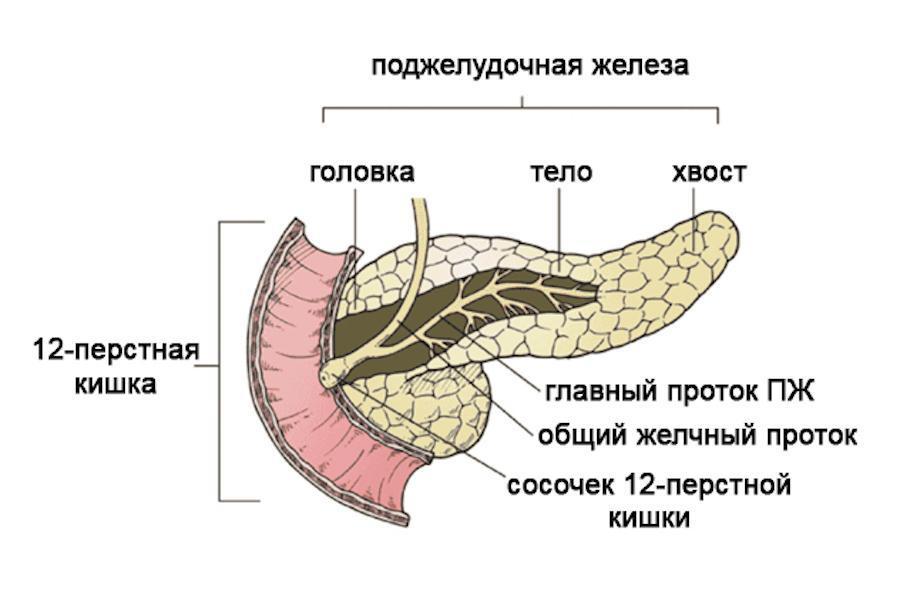
Pancreatic segments
The body of the organ itself is located in the central part of the epigastrium and continues to the left, towards the spleen. It is located at the level of 1-2 vertebrae of the lumbar spine. The posterior part of the gland is in contact with large vessels - the inferior vena cava and the aorta.
Organ structure
The gland of an adult healthy person has a weight of about 80-90 g. Its structure can be conditionally divided in two ways - macroscopic and microscopic. Macroscopic structure - features of the morphology of the organ, its functional parts. The microscopic structure implies an overview of the tissues of the gland and specific cells.

General understanding of the human pancreas
Macroscopic elements include the following components:
- head. It is the largest part of the organ. It is in close contact with the duodenum, which encircles its bend. The head and the rest of the organ are separated by a special groove in which the portal vein is located. An additional duct originates in the head, which combines with the main one and opens into the duodenum through the large duodenal papilla. If fusion does not occur, then it enters the intestinal cavity through the small papilla;
- body. Differs in a triangular elongated shape, where the front, back and bottom surfaces are indicated;
-
tail. Has a pronounced conical shape. Pointed up and to the left, reaching for the spleen. It is in the tail that a large Wirsung duct originates, along which pancreatic juice containing enzymes moves.

Pancreatic ducts
The organ tissue is covered from the outside with a dense capsule of connective tissue. This helps protect the gland from possible damage and prevents enzymes from entering the abdominal cavity.
The main glandular tissue consists of lobules, which are separated by bands of connective tissue. In these strands are the vessels that feed the glandular tissue and nerves.
Pancreatic juice moves along several types of ducts:
- intercalary;
- interlobular;
- intralobular;
- common duct.

The structure of the exocrine pancreas
The latter combines the first three types of ducts. Pancreatic juice is transported along them. It is produced in the so-called acini - rounded formations of glandular cells.
The islets of Langerhans are located between the acini. They do not contain ducts, and the structure of their cells differs from the glandular ones. The islets of Langerhans are made up of specialized cells - insulocytes, in which certain hormones are produced. These substances enter the general bloodstream through the capillaries, where they affect the entire body.

The structure of the islet of Langerhans
There are two main types of cells that synthesize specific hormones:
- α cells produce glucagon;
- β-cells produce insulin - the most important component involved in energy metabolism.
There are also delta cells and PP cells, the main function of which is the synthesis of hormones that regulate hunger and pancreatic polypeptide.
Attention! The glandular tissue synthesizes aggressive enzymes, the action of which is aimed at breaking down nutrients. Therefore, during invasive diagnostic procedures, such as puncture, it is recommended to exercise the utmost care.

Pancreatic cyst puncture
Main functions
The pancreas is called a mixed secretion gland because it synthesizes hormones that go directly into the bloodstream and common enzymes involved in the digestive process.

Blood-purifying function of the pancreas
Participation in the digestion process
This type of function is also called exocrine, since the synthesized substance enters other organs, bypassing the bloodstream. The product of this activity is pancreatic juice. It contains a number of enzymes that are directly involved in the breakdown of complex compounds in food into simpler ones.

Pancreatic juice is a product of exosecretion of the pancreas
The main enzymes produced in the pancreas are trypsi, lipase, and alpha-amylase.
-
Trypsin. An enzyme that breaks down protein molecules into easily digestible amino acids. Initially, it is produced in an inactive form - trypsinogen. Under the influence of the enterokinase enzyme, which is contained in the parietal mucus of the duodenum, trypsinogen changes to its active form. It is on the basis of the level of trypsin that the doctor can determine whether there is an inflammatory lesion of the gland - pancreatitis.

Spatial model of trypsin
-
Lipase. A special enzyme that breaks down fats into simpler fatty acids. In the organ, it is initially synthesized in an inactive form - prolipase. Under the influence of bile and other enzymes, it changes to lipase. This enzyme is essential in the metabolism of fats, regulation of the level of fat-soluble vitamins. It is synthesized not only by the pancreas, but also by the liver and intestines. Each organ synthesizes its own type of lipase, which breaks down a specific group of fats.

Pancreatic lipase
-
Amylase. The pancreatic juice contains α-amylase. She takes part in the breakdown of complex carbohydrates into easily digestible glucose. The main amount of amylase is synthesized by the pancreas, but part of this enzyme is still produced by the salivary glands.
Interesting fact! The action of amylase can be checked visually by chewing a piece of bread for a while. The starch in the composition begins to break down to glucose, which gives the bread a sweetish taste.
Molecular structure of alpha-amylase
Table. Detailed description of human pancreatic enzymes.
| Enzyme | Synthesis site | Cleavable substances | Signs of level violations |
|---|---|---|---|
 Trypsin |
Exocrine cells of the pancreas. It is formed in the form of trypsinogen, but under the action of enterokinase it turns into an active form. Synthesized in acinar cells. | Protein molecules. It also activates the enzymes produced by the gland to their active state - enzymes. | The activation of enzymes begins in the tissues of the pancreas, which leads to edema and gradual necrosis of the tissues of the gland. |
 Lipase |
Prolipase is synthesized in the glandular cells of the pancreas. It turns into an active form under the action of bile and colipase enzymes. | Triglycerides, fat-soluble vitamins (A, E, D, K), polyunsaturated fatty acids. | Increase in the volume and fat content of feces. The appearance of a putrid odor and discoloration of the stool to a dirty gray. |
 Alpha amylase |
Acinar cells of the pancreas. | Breaks down polysaccharides (starch) to oligosaccharides and monosaccharides. Its activity is directly dependent on calcium ions. | Feeling of heaviness in the stomach, the appearance of flatulence, heterogeneity of feces. The stool may have a foamy consistency. |
Pancreatic juice is involved not only in the breakdown of food. It neutralizes acidic food masses that move from the stomach to the intestines. For the normal functioning of enzymes in the intestine, a neutral environment is maintained. The release of juice does not occur constantly, it directly depends on the food intake. To activate the synthesis of pancreatic juice, the effect of such factors is required:
- conditioned reflex irritation with food - its taste, smell;

The smell of food is a conditioned reflex stimulus for the production of pancreatic juice
- unconditioned reflex irritation of the digestive tract - the process of chewing and swallowing food masses;
- stretching the walls of the stomach with food;
- hormonal effects of secretin and pancreozymin, which begin to be actively produced in response to the intake of hydrochloric acid from the stomach into the duodenum.

Hormone secretin
Participation in hormonal metabolism
The endocrine role of the pancreas is due to hormones that are synthesized by the cells of the so-called islets of Langerhans. Below is a list of these hormones.
-
Insulin. The most important hormone that regulates glucose metabolism in the body. It depends on its action whether glucose will be absorbed by the cells of muscle and adipose tissue. This monosaccharide is converted to glycogen, which is stored in muscle and liver cells. Glycogen is an “energy reserve” that is consumed when needed. When insulin levels are low, glycogen storage is impaired, which can lead to high blood sugar levels and the development of type I or type II diabetes.

Insulin structure
-
Glucagon. This hormone is characterized by the inverse action of insulin - with its participation, glycogen molecules are broken down into glucose. It is glucagon that activates the rapid rise in blood sugar levels in stressful situations, triggering a response called "fight or flight." Together with insulin, these two substances regulate the carbohydrate balance of the entire body.

Glucagon structure
-
Somatostatin. A hormone that neutralizes the action of the growth hormone produced by the hypothalamus. It is often used to suppress the growth of neoplasms. Neutralizes the action of peptide hormones and serotonin.

Structural formula of somatostatin
Some pathologies, for example, diabetes mellitus, can occur not only against the background of a decrease in the level of pancreatic hormones, but also as a result of a violation of the assimilation of these substances. For example, type I diabetes mellitus is characterized by a violation of the activity of the immune system, when the body begins to synthesize antibodies that attack the tissue of the gland. In this case, the destruction of the cells of the islets of Langerhans occurs, which is accompanied by a decrease in insulin levels. Treatment is aimed at replenishing hormone levels.
Type II diabetes occurs when cells lose their insulin sensitivity. The cells are oversaturated with nutrients, and therefore cease to respond to it. In this case, the islets of Langerhans begin to synthesize more and more insulin, which leads to an increase in blood sugar levels. Treatment for type II diabetes involves taking medications to lower blood sugar levels.
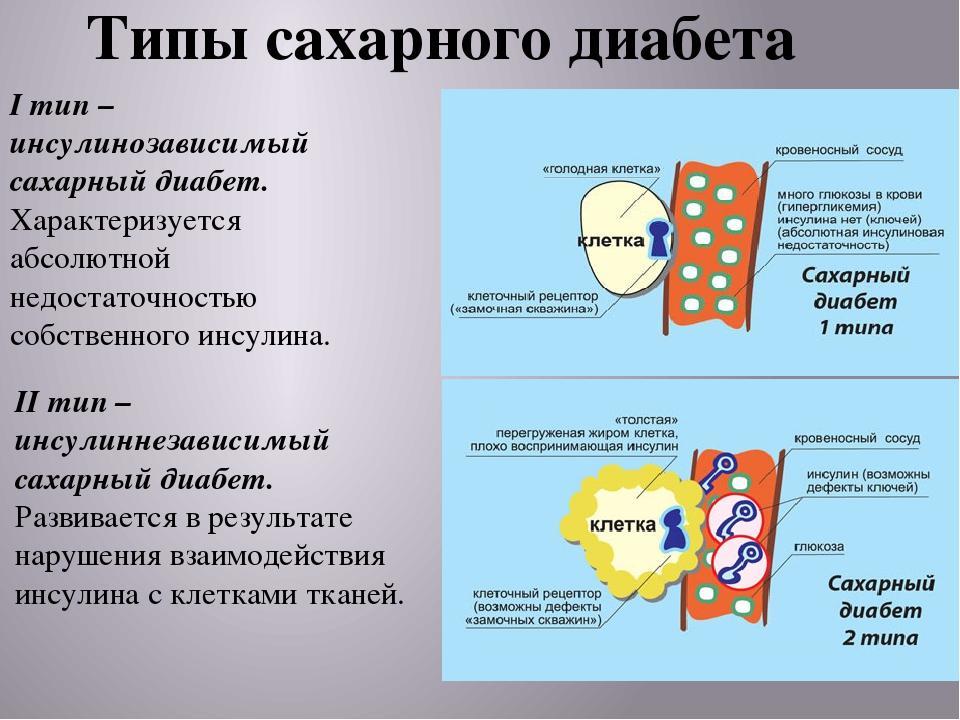
Types of diabetes
Symptoms to watch out for
The most common cause of pancreatic dysfunction is non-compliance with dietary recommendations. The result of organ pathologies can be a change in the amount of enzymes or a violation of the hormonal background. The main symptoms that accompany disturbances in the activity of the pancreas are the following:
- discomfort and pain in the left hypochondrium, which radiate towards the back;
- pain in the stomach, which is accompanied by nausea and vomiting (while vomit may have a bitter or sour taste);
- reducing the intensity of discomfort and pain during contraction of the abdominal muscles;
- lack of response to pain medications.

Pain medications
Most often, there are such violations of the organ:
- pancreatitis - inflammation of the pancreas;
- type I and II diabetes mellitus - change in the balance and the process of assimilation of hormones of the gland;
- cysts - benign neoplasms in organ tissue;
- fistulas - damage to the glandular tissue, through which pancreatic juice and enzymes can enter the abdominal cavity;
-
malignant neoplasms.

Human pancreas tumor on ultrasound
Note! Only the attending physician can accurately determine the diagnosis. To do this, he needs to collect anamnesis, examine the patient, and conduct the necessary tests.
Which doctor should I go to?
The gastroenterologist deals with the treatment of diseases of the pancreas, if the pathology affects the digestive function. In case of hormonal imbalance, an endocrinologist is involved in treatment.
To maintain the normal activity of the pancreas, it is enough to adhere to the principles of good nutrition and not abuse alcohol. Since this small organ regulates an important part of the metabolism, it is much easier to prevent disturbances of its activity than to cure.