Strong breath - causes and treatment, preventive measures
Halitosis (or bad breath) can greatly ruin life, adding difficulties in communication (especially in intimate life), affecting mood and well-being. But the smell can be quickly eliminated with simple methods if you determine what is the cause of this symptom. Due to the fact that the independent manifestation of halitosis is infrequent (after some food products), and is a symptom of a particular disease, elimination of the problem without establishing the true cause does not seem to be possible. So, today you will learn everything about strong breath - the causes and treatment, available means and methods.

Strong breath - causes and treatment
Content
- 1 Why is there a smell from the mouth?
-
2 Varieties of halitosis
- 2.1 Putrid smell
- 2.2 The smell of feces
- 2.3 Diabetes
- 2.4 Acetone
- 2.5 Hyperthyroidism
- 2.6 Kidney disease
- 2.7 Sweetish smell
- 2.8 Sour smell
- 2.9 Ammonia
- 2.10 Rotten eggs
-
3 Diseases of the stomach
- 3.1 Treatment features
- 4 How to tell if your breath smells?
- 5 Which doctor should I go to?
-
6 Key principles of therapy
- 6.1 Video - The main causes of bad breath
Why is there a smell from the mouth?
Halitosis can appear for both physiological and pathological reasons. In the first case, an unpleasant odor occurs due to:
- non-compliance with hygiene rules;
- taking certain medications;
- strict diet, fasting;
- bad habits (especially smoking and drinking).

If bad breath bothers you with proper care, you should pay attention to your health. An unpleasant smell can be a manifestation of many pathologies of internal organs and systems.
In such cases, odor elimination is not a big deal. You just need to use camouflage means and pay more attention to hygiene procedures (more on this later).
Important! Halitosis is not always so harmless - there are diseases of the gastrointestinal tract, oral cavity, endocrine / respiratory system, one of the symptoms of which is just bad breath.

Bad breath
Depending on the specific pathology, the nature of the smell may vary slightly. So, it can be:
- putrid;
- sweet;
- feces;
- ammonia;
- acetone;
- sour;
- rotten (rotten egg smell).

Bad breath is the cause of many problems
Based on the specific nature of the unpleasant odor, the doctor will be able to choose the direction in which to look for the cause of the problem.
Varieties of halitosis
Let's begin with that occasionally there are cases when the smell is only in the patient's mind. Before you start looking for a suitable treatment option, you should make sure that an unpleasant symptom really does occur. To date, the following types of halitosis are distinguished:
- pseudohalytosis - an unpleasant odor is insignificant, others can feel it only with close contact;
- true halitosis - there really is a problem, and others know about it;
- halitophobia - this is when a person is convinced that his breathing is stale, but the surrounding problems do not notice.

Halitophobia - what is it
In the first case, the problem can be solved by more thorough cleaning of the oral cavity or by additional use of rinse aid.

Halitosis is a serious symptom that needs to be quickly corrected.
Putrid smell
It can be a sign of such pathological processes occurring in the oral cavity:
- stomatitis;
- periodontal disease;
- caries;
- plaque;
- diseases of the salivary glands.

Plaque
In addition, it can be diseases of the respiratory system:
- bronchitis;
- sinusitis;
- allergic rhinitis;
- angina;
- pneumonia.

Pneumonia
Another common cause of halitosis is diseases of the gastrointestinal tract, as well as the body's reactions to alcohol or smoking.
The smell of feces
Appears with intestinal pathologies such as impaired motility, intestinal obstruction, constipation. In such conditions, fermentation / decay processes take place, which is why the smell of feces occurs. In infectious diseases of the respiratory system, the smell of feces is rarely observed.
Diabetes
If the blood sugar level rises significantly, at the same time, a lot of ketone bodies appear, the smell of which vaguely resembles acetone. Due to the fact that the kidneys are unable to completely remove the decomposition products of sugars from the body, the lungs come to their aid. In short, halitosis is explained by the fact that ketone bodies are excreted through the respiratory system.

Ketone bodies
Important information! If you notice the smell of acetone in the breath of someone close to you, the person should be hospitalized as early as possible! The fact is that such a symptom can be a harbinger of a diabetic coma.
Acetone
There are many reasons for the smell of acetone, but the most harmless of them is commonplace indigestion. In other cases, the smell of acetone is an extremely alarming signal, usually indicating a lesion of the pancreas (we are talking about diabetes). In addition, the acetone odor appears when the kidneys or liver are damaged.

The smell of acetone from the mouth
Hyperthyroidism
In a severe form of this condition, which is accompanied by an excess of thyroid hormones, it is often observed crisis - a rather serious complication. Its symptoms include the smell of acetone in the urine or from the mouth, high body temperature, general weakness, vomiting, a sudden drop in blood pressure, tachycardia. In the presence of all these symptoms, the patient requires urgent hospitalization. There can be no talk of any self-medication!

An excess of thyroid hormones leads to a disease - hyperthyroidism, the symptoms of which are varied and have vivid clinical manifestations
Kidney disease
Problems with renal excretory function (dystrophy, acute renal failure, nephrosis) are often accompanied by acetone breath.
On a note! In general, the smell of acetone, in any case, should be the reason for the occasional visit to the doctor. After all, this symptom, as we have already found out, is often not harmless and is a precursor to severe conditions.
Sweetish smell
This is a frequent "companion" of those who suffer from a lack of vitamins / nutrients or from the same diabetes mellitus. Tellingly, the symptom does not disappear even with the highest quality oral hygiene. The problem can be solved with only complete treatment.

Masking bad breath does not solve the problem in case of serious pathology, the use of odor-eliminating agents has a short-term effect
Sour smell
It is a sign of increased stomach acidity - a pathology in which there is an excess of hydrochloric acid (occurs with pancreatitis, gastritis, esophageal diverticulitis, peptic ulcer disease). In addition to the unpleasant odor, the patient also often suffers from nausea and heartburn.

Development of pancreatitis. Stones in the pancreatic ducts
Ammonia
The smell of ammonia is a sign of kidney problems.
Rotten eggs
Usually, this smell is associated with stomach diseases - gastritis, accompanied by low acidity, and food poisoning.
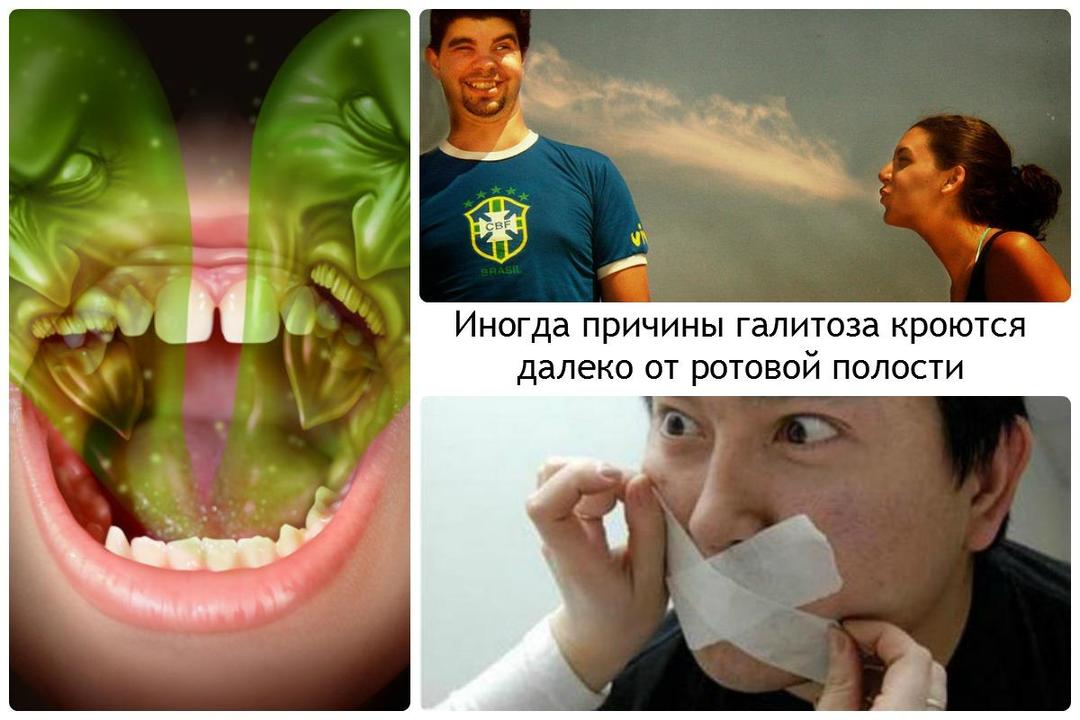
Sometimes the causes of halitosis lie far from the mouth.
Diseases of the stomach
Almost all diseases of this type, if accompanied by bad breath, are infectious in nature. The main cause of the phenomenon is the bacterium Helicobacter pylori.

Diseases of the stomach - a common cause of unpleasant amber
Note! If one family member becomes infected, then the infection will quickly spread to the rest of the residents of the house. Although not everyone suffers from the disease - sometimes the carrier of Helicobacter does not do any harm, if everything is in order with immunity. When the defenses weaken, Helicobacter multiplies and produces toxins, due to which, in turn, ulcers, gastritis, polyps and tumors appear. With all these diseases, an unpleasant odor often appears.
Treatment features
When the doctor makes an accurate diagnosis (that is, confirms that the unpleasant odor appeared precisely because of the stomach) and determines the accompanying diseases, he will select the required amount of therapeutic measures, which may include taking medications, folk remedies, as well as the correct nutrition. Among all the medicines used, the following are worth highlighting.
-
"Almagel". It is intended for the treatment of ulcers, gastritis, has a protective and analgesic effect on the stomach.

"Almagel"
- "Festal", "Creon". Enzymatic agents with which you can speed up the process of food breakdown and, as a result, get rid of halitosis. The drugs improve digestion, activate intestinal motility, and eliminate pain in the digestive tract.
-
"Omez". Improves the breakdown of food so that it does not rot. Therefore, it eliminates unpleasant odors.

"Omez"
- Antibacterial agents. Used if inflammatory processes have been confirmed. When choosing a specific drug, the type of disease, its stage, and also the form of inflammation are taken into account.
Important! Medication should be prescribed exclusively by a qualified doctor after reviewing the test results! Refrain from self-medication, because even if the problem reappears, the drugs that helped earlier may no longer be effective.
How to tell if your breath smells?
This test can be easily done at home using one of the methods described below.
- Exhale sharply into your folded palms. If there is no freshness of breath, you will immediately know about it.

Fold your palms in a boat so that the air exhaled through the mouth enters the nose.
- Lick your wrist, wait a few seconds and sniff. It is worth noting that this method will detect the presence of odor at the front tip of the tongue, although the aroma is much stronger in the root area.

When the saliva is dry, sniff the inside of your wrist.
- Take a spoon and run it over your tongue several times to determine what your breath smells like.
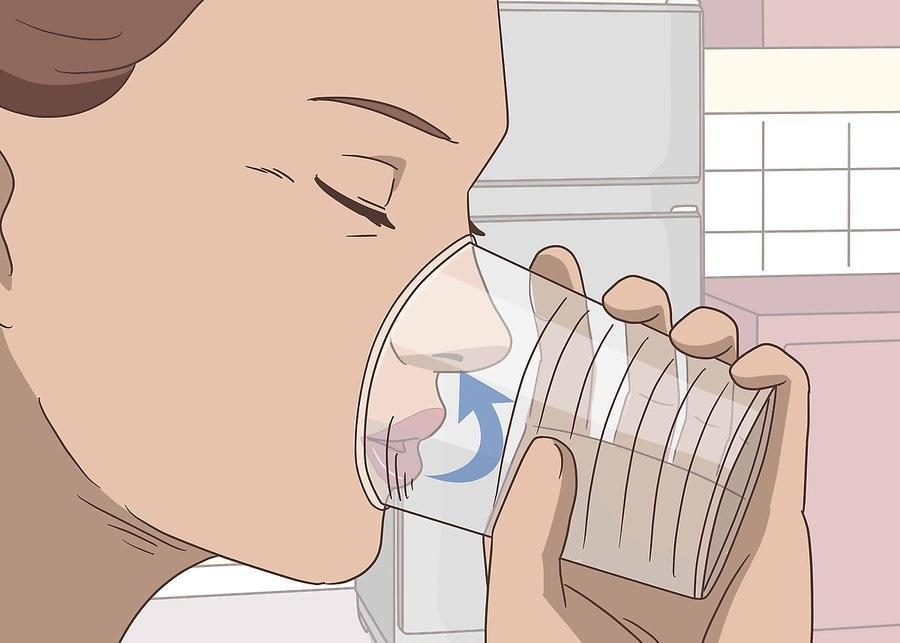
There is one more way. Exhale into a clean plastic cup or other container. Taking a deep breath, bring the cup to your face so that it covers your mouth and nose as tightly as possible at the same time. Then slowly breathe out the air through your mouth, filling the cup with your warm breath. And immediately inhale deeply through your nose - this way you can smell your breath.
Signs of bad breath can also include unpleasant sensations in the mouth (for example, taste, dryness, pain, burning, etc.).

Very often people with a very bad breath are not aware of this problem, since those around them are too polite and well-mannered to inform them about it.
Which doctor should I go to?
To determine the cause, you should visit narrowly specialized specialists:
- surgeon;
- dentist;
- gastroenterologist;
- otolaryngologist;
- pulmonologist.

Halitosis due to diseases of the oral cavity carries more weight among other reasons, the first thing to do is visit the dentist
Often, the problem lies in the oral cavity, and therefore, in 80% of it, dentists or ENT doctors detect and eliminate it. If there are no pathologies in the mouth, the search should be continued, and for this period hygiene procedures should be strengthened to improve the state of breathing. If proper care is absent, the smell will only intensify.
Key principles of therapy
So, to get rid of halitosis, it is necessary to eliminate the cause. Each disease requires a special approach, but control over the state of the oral cavity in any case should be strengthened (thorough cleaning of teeth, use of high-quality rinses, etc.). The step-by-step instructions below will help you with this.

There are many ways to combat bad breath
Table. Get rid of bad breath.
| Steps, photo | Description of actions |
|---|---|
 Step 1 |
You should thoroughly brush your teeth at least twice a day. |
 Step 2 |
An excellent but relatively cheap toothpaste is Mentadent. This paste is really effective, not only in whitening teeth, but also in eliminating unpleasant odors. |
 Step 3 |
Use a mouthwash after every brushing of your teeth. |
 Step 4 |
Alternatively, you can additionally use a tooth rinse to prevent tooth decay. |
 Step 5 |
Finally, it will not be superfluous to use dental floss (floss), with which you can remove plaque, which provokes the appearance of an unpleasant odor. |
In more serious cases, the way to eliminate halitosis depends on the specific disease:
- taking antibiotics, anti-inflammatory drugs (for inflammation);
- drinking plenty of fluids (for problems with salivation, dryness of the mucous membrane);
- removal of tonsils (with tonsillitis in chronic form);
- hormonal therapy (with hyperthyroidism);
- washing the sinuses (with sinusitis);
- dental treatment, sanitation (for caries).
On a note! With the right approach, halitosis can be easily eliminated. The ineffectiveness of self-medication is due only to the wrong approach. Halitosis is always a sign of any pathology, and without proper diagnosis and certain knowledge, it will be impossible to find out the cause, alas.

The best prevention of halitosis is complete oral hygiene