Intestinal peristalsis: what is it and how to keep it in good shape?
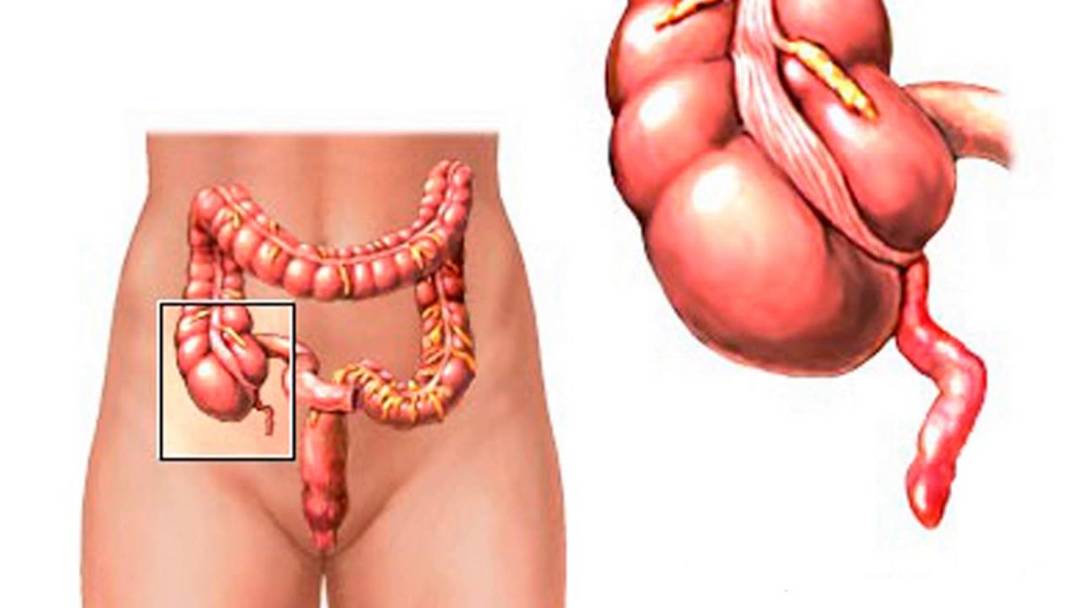
Peristalsis is an enveloping and compressive, undulating contraction of organs in the form of a tube (hollow): stomach, intestines, esophagus, ureters. Under the influence of such contractions, the contents (food lumps, feces) of the organs move to the exit openings. The condition of the digestive tract depends on the intestinal motility in the first place. If it is disturbed (this condition is called dyskinesia), troubles begin. Failure in the functioning of the intestine entails a decrease in immunity, a deterioration in the quality of life, the development of diseases and pathologies in other organs. Below we will consider what it is - intestinal peristalsis, how to maintain it normal and what to do to restore this function in case of weakening.
Intestinal peristalsis: what is it?
Content
-
1 Intestinal peristalsis: what is it
- 1.1 Video - How intestinal peristalsis occurs
- 2 Why is intestinal motility disturbed?
-
3 Symptoms of the weakening of intestinal motility
- 3.1 Diagnosis of poor intestinal motility
-
4 Intestinal dyskinesia therapy
- 4.1 Diet to improve bowel contractions
- 4.2 Folk remedies to stimulate peristalsis
- 4.3 Exercises to normalize bowel function
- 4.4 Summing up
Intestinal peristalsis: what is it
The motor function of all parts of the intestine or peristalsis is the undulating compression of the walls of the organs, at the moment of which the contents move to the anus. In another way, peristalsis is also called "food contraction", because it provides exactly the correct digestive process, absorption and assimilation of necessary and beneficial substances and the removal of indigestible and unnecessary the body.

Intestinal peristalsis is responsible for the entire process of digestion
Peristalsis in the intestine allows the food bolus to move from the upper sections downward. This happens with the help of the smooth muscles of the organ, which is located in its walls in two layers. The first layer has longitudinal muscles, the second - perpendicular, and their coordinated wave-like movements are "food contractions". For each part of the intestine, these contractions are specific.

Intestinal walls
The small intestine is endowed with muscles that work to contract at different speeds: very fast, fast, leisurely, and very slow. At the same time, several types of such contractions are launched here at once, depending on the state of the body, time of day, and the characteristics of passing food.

The principle of intestinal motility
The large intestine is characterized by very slow peristalsis, but one to three times a day (it happens once in two to three days, this is individual) for a while there are contractions of great force, which push the contents into the back passage. It is at this moment that a person feels the urge to defecate. These accelerated "waves" occur when the stomach is completely filled with food, and are necessary as a signal for a person that it is necessary to visit the toilet and free up space.
Medicine has measured and identified the rates of peristaltic contractions in a healthy person. Let's consider this information in the form of a table.
Table 1. Peristalsis rates
| Intestine department | Reductions in one minute |
|---|---|
| Small intestine | Nine - twelve |
| Duodenum | Ten - twelve |
| Colon | Three - four (at moments of acceleration - six - twelve) |
| Rectum | Three |
Compression of the intestinal walls within normal limits allows the digestion process to take place in the right time frame, so that all the nutrients can be absorbed. If, for a number of reasons, these norms have gone astray, then a violation of peristalsis develops. In this situation, the passage of food through the gastrointestinal tract is inhibited or, on the contrary, accelerated so that the absorption of nutrients becomes impossible. The accumulated food becomes a source of bacteria and toxins, in this mass parasites and pathogenic microbes feel great and multiply.

Accumulated food becomes a source of bacteria and toxins
If at this stage the violation is not corrected, serious problems will certainly begin - inflammatory and pathological processes, defecation disorders, tumor formation, growth polyps, the appearance of ulcers, cracks in the digestive tract. Consider the reasons for the violation of intestinal motility, so as not to overlook risk factors.
Video - How intestinal peristalsis occurs
Why is intestinal motility disturbed?
Weakening or even complete cessation of "digestive waves" can be the product of one or more factors, external and internal character. These include:
- Genetic predisposition.
- Age factor (infancy, or, on the contrary, old age).
- An unbalanced diet, one where foods with a large number of calories predominate with a small serving size.
- Physical inactivity, sedentary lifestyle.
- Stress, severe mental fatigue, depression.
- Bulimia, anorexia.
- Tumors of malignant or benign genesis.
- Diseases of the gastrointestinal tract in a chronic form.
- Taking pharmaceuticals that inhibit intestinal motility and the like.
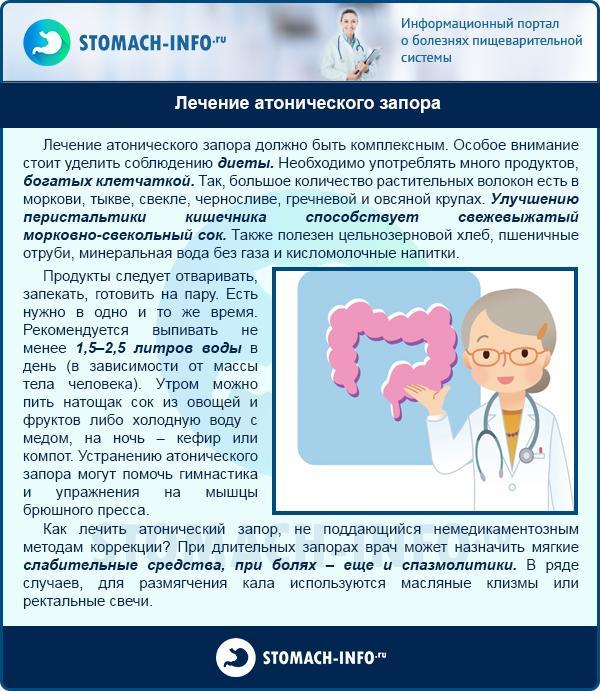
For example, in older people, peristalsis is disturbed due to muscle atrophy, a decrease in the general tone of the body, hormonal "failure", and the progression of a mass of diseases. At an older age, people often suffer from atonic constipation due to poor gastrointestinal motility, impaired innervation of nerve connections, hypoxia of the tissues of the digestive system.
Treatment of atonic constipation
Also, constipation in people of any age can occur due to the wrong diet. Someone prefers fast food, someone eats "on the run" and dry food, someone eats little during the day and gorges in the evening to the dump. Modern people consume a lot of flour and sweets, washing down this food with soda, strong tea, cocoa, coffee. The intestine reacts negatively, food lumps are poorly digested, begin to ferment, rot. These processes are inevitable with frequent eating of fatty, starchy foods.

Improper Diet - Possible Cause of Constipation
Toxins and slags, poisonous substances enter the peritoneum, the liver and kidneys receive their dose of poison. By the age of forty, a person who does not pay attention to proper nutrition, the intestines are heavily slagged, fecal stones are formed, damaging the mucous membrane when moving. Peristalsis weakens, as a result, blood stagnates in the small pelvis, chronic constipation begins, and hemorrhoids develop. Often, tumors and polyps are added to this condition.
Symptoms of the weakening of intestinal motility
Intestinal dyskinesia (violation of "food contractions") is manifested by a number of different symptoms. The body will suffer and will certainly signal its poor health. What should you pay attention to?
Table 2. Symptoms of decreased intestinal contractions
| How does it manifest | Extended information |
|---|---|
| Frequent abdominal pain | The pain has different localization, in strength it ranges from mild discomfort to quite acute spasms. As a rule, the pain returns after eating, drinking alcohol or alcohol. After defecation, on the contrary, the pain syndrome dulls or subsides altogether. |
| Bloating, gas | Flatulence, feeling of a balloon in the stomach - signs of poor digestion. Most often, these symptoms occur before bedtime. |
| Stool disorders | At the first stage, constipation alternates with diarrhea, later constipation becomes regular, chronic, up to the impossibility of emptying the intestines without a laxative drug or Esmarch's mug. |
| Weight gain | Extra pounds appear due to a disturbed digestive process, a lack of high-quality healthy food and poor absorption of vitamins, trace elements, carbohydrates, proteins, fats. |
| Intoxication | Headaches, unpleasant odor from the mouth, allergies, skin problems (acne, purulent acne, rashes). |
| General deterioration | Sleep disturbances, frequent mood swings, susceptibility to colds, decreased immunity, irritability, a rapid feeling of fatigue against the background of inactivity. |
Discuss the symptoms with your doctor and go through the prescribed examinations to identify the problem and begin to fix it.

A combination of two or more symptoms is a reason to visit a gastroenterologist or therapist
Diagnosis of poor intestinal motility
As you can see, the symptoms of insufficient intestinal motor function are differentiated with a host of other pathologies of the gastrointestinal tract. Therefore, the doctor cannot be content with oral history taking and examination of the patient. Diagnostics need complex, thorough, consisting of a number of studies.
In addition, it is important to rule out more serious illnesses such as colitis, gastritis, tumors, polyps, oncology. Therefore, one should not be surprised when a number of tests are prescribed in the hospital: coprogram, donation of blood and urine, instrumental studies of the rectum (irrigoscopy, coproscopy), ultrasound of the pelvic organs and peritoneum. Thus, it will be possible for certain to determine the ailment that torments a person, and to prescribe adequate therapy.

Pass all tests to establish an accurate diagnosis
Note that the treatment of insufficient intestinal peristalsis is conservative, that is, with the help of pharmaceuticals. Also, the healing process necessarily includes adjusting the nutritional plan, using folk recipes and exercises adapted to neutralize this ailment. Let's see how this happens.
Intestinal dyskinesia therapy
As a rule, in the treatment of intestinal motility disorders, a number of drugs are prescribed that promote the awakening of motility, have a stimulating effect that increases the tone of the intestinal muscles. To normalize this function, laxatives are prescribed that increase peristalsis and force the process of defecation to occur at the right time. Conventionally, these drugs are divided according to the localization of action.
The drugs that work in the thin section include Castor oil. It improves, softens the process of movement of intestinal contents, stimulates motor skills, causes the urge to defecate, and reduces mucosal injury. Works for two to three hours and may cause mild abdominal cramps. The colon works well with drugs like "Regulax". They contain herbal ingredients, strengthen the tone of the rectum, relieve atony caused by improper diet, stress. Fight constipation. They can be addictive, therefore they are not recommended for permanent use.

"Regulax"
For stimulation, they often use Epsom salt. The remedy acts very quickly, it helps well with acute constipation - the effect is achieved within one hour. This is a budget tool that can be found in any pharmacy. There is a significant minus one - the saline solution tastes unpleasant, so not everyone can drink it.
Diet to improve bowel contractions
A healthy and competent diet is an important point in violation of intestinal motility. The main rule is to exclude from the diet as much as possible products that inhibit peristalsis, and replace them with those that stimulate the work of "food cuts". These two groups include a lot of products, we will consider this list using the most common examples.
Table 3. How to eat to normalize intestinal motility?
| We include in the menu | We limit |
|---|---|
| Cool mineral water, kvass, juices from vegetables, berries, fruits | Red wines, sangria-type wine drinks |
| White wines | Hot drink containing caffeine |
| One-day dairy products (yoghurts, kefir, sour cream, yogurt) | White muffins, muffins, breads, buns, cakes |
| Ice cream, popsicles | Milk chocolate, sweets |
| Watermelons, melons | Kissel, mousses, jelly |
| Beets, tomatoes, radishes, carrots, onions | Rice porridge, semolina, pearl barley, decoctions of these cereals |
| Dried fruits and dried fruits, ripe soft persimmons, apricots, apples of any kind | Puréed dishes (potatoes, vegetables, soups) |
| Gooseberries, strawberries, raspberries, grapes | Butter |
| Porridge from yachka, oatmeal, buckwheat, pastries with these cereals | Eggs |
| Vegetable oils | Pear, quince |
| Nuts | Bird cherry, chokeberry |
It is recommended to include in the diet as much as possible raw, fresh fruits and vegetables, berries, fresh juices, salads with vegetable oil: sunflower, olive, walnut, linseed. You need to eat five to six times a day, choosing a portion the size of a fist. An hour before going to bed, it is useful to drink a glass of kefir, and in the morning, before breakfast - a glass of water, you can add half a spoonful of honey there. This method enhances peristalsis. You need to drink at least one and a half liters of clean cool water per day.

Drink more water
Folk remedies to stimulate peristalsis
To restore intestinal motility, you can resort to folk, time-tested recipes. There is nothing difficult in their preparation or use, and the composition does not include dubious or components that could harm the body.
One of the effective methods of increasing peristalsis is the use of bran. You can choose wheat or oatmeal, taking one to two tablespoons before meals with water. You can also eat bran as a separate dish by soaking them in a glass of yogurt or kefir. The bran will help cleanse the intestines by forming feces, preventing constipation and loose stools.

Bran is used to prevent constipation
Dry plantain seeds are used according to the same principle, which help easy bowel movements and stimulate the intestines. Seeds need to be chopped and eaten on a spoon before meals or added to various salads, cereals, main courses.

Plantain seeds
Another safe and recommended remedy is a mixture of dried fruits. In a container, you need to mix dried apricots and prunes in half, then pass them through a blender or meat grinder. Add a tablespoon of propolis, honey, nuts to the resulting mass, pour into a glass jar. The mixture is eaten before bedtime with water.

Dried fruits, ground for bowel cleansing
Exercises to normalize bowel function
Physical activity is needed to keep the gastrointestinal tract motility from “falling asleep”. You need to move every day, walk at least a couple of kilometers, visit the pool, master equestrian sports. The increase of peristalsis is also promoted by tennis, dancing (especially oriental), exercise. Here are some exercises to stimulate bowel movements:
- Pumping the press. It is permissible to perform in the morning right in bed, lifting the body 15-20 times.
- Slow deep squats.
- Jumping, you can use a rope to perform.
- "Bicycle" - a person lies on his back, raises his legs bent at the knees, imitates pedaling.
- "Boat" - a person lies on his back and presses his bent legs to his chest, wraps his arms around them and sways slightly on his back.

Exercise to Improve GI Function
Summing up
Weak intestinal motility is a nuisance for the whole organism, but, fortunately, it is easily eliminated. At the initial stages of deceleration of motor skills, you can cope with the disease in a matter of days by building a diet and drinking a course of the necessary medications prescribed by your doctor. The main thing is not to wait for complications, and in time to show attention and care for your own health!