Exercises for hemorrhoids: how to do it right
Hemorrhoids are the most common pathology of the anus, which in different clinical forms occurs in every third patient over 40 years of age. The main pathogenetic factor that determines the symptomatology of hemorrhoids is the expansion of the cavernous bodies of the rectum - vascular formations associated with the branches of the rectal artery. The disease is more common in men. In women, pregnancy and childbirth are the main catalysts for inflammatory processes in hemorrhoidal veins. Conservative treatment of hemorrhoids includes cool washes and compresses, taking analgesics, anticoagulants and lotions with heparin ointment. Outside the stage of exacerbation, massage, a gentle diet, physiotherapy and physiotherapy exercises are shown. What exercises can be done for hemorrhoids, how to perform them correctly, and what are the benefits of regular moderate exertion, will be discussed below.

Exercises for hemorrhoids
Content
- 1 The benefits of physiotherapy exercises for hemorrhoids
- 2 Recreational and therapeutic exercises for hemorrhoids
- 3 Yoga for pathologies of hemorrhoids
- 4 Does exercise help cure hemorrhoids?
- 5 How to do it correctly?
-
6 To whom are classes contraindicated?
- 6.1 Video - Exercises for hemorrhoids
The benefits of physiotherapy exercises for hemorrhoids
Remedial gymnastics is an indispensable element of the complex therapy of chronic hemorrhoids. Regular exercise aimed at strengthening the muscle tissue of the rectum can reduce the risk of complications and prolong the period of remission. It has been proven that in patients who exercise at least 3 times a week, the risk of hemorrhoids transition to complicated forms, in which there is a periodic prolapse of hemorrhoids, several times less compared to patients with pronounced forms of hypodynamic disorders.

The risk of prolapse of hemorrhoids and the development of complications of the disease is significantly reduced with regular physical activity
The benefits of gymnastics in the expansion of the cavernous veins of the anus are manifested by the following therapeutic effects:
- increased muscle tone. Regular training helps to strengthen the anal sphincter muscles and rectal smooth muscles, which reduces the risk of inflamed nodes falling out of the anus;
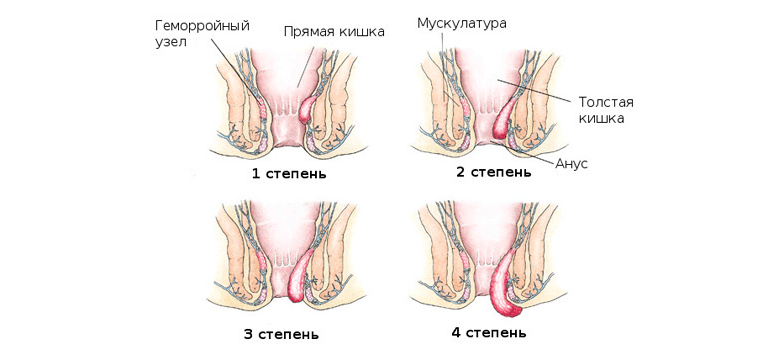
Without regular exercise, smooth muscles weaken and hemorrhoids fall out
- improved circulation in blood and lymph vessels. Accumulation of exudative fluid released from inflamed vessels due to venous and capillary stagnation, is one of the reasons for the appearance of pathological symptoms of hemorrhoids - anorectal itching and anal discharge. Gymnastic exercises help to normalize venous return and increase the elasticity of the vascular walls. Clinically, this is manifested by a decrease in the frequency and intensity of bleeding from the anus;

Exercise helps to improve the circulation of blood and lymph vessels in the rectum
- stimulation of intestinal motor function. Chronic and acute constipation is one of the leading factors in the development of hemorrhoids, therefore, the regulation of intestinal peristalsis is an important stage in the treatment and prevention of this disease. Physical therapy activates intestinal motility and contraction of the intestinal walls and facilitates the movement of chyme (digested food) to the rectum.

Physiotherapy exercises stimulate intestinal peristalsis
An important task in the treatment of chronic hemorrhoids is also to increase the general immune status and resistance of the body to the effects of pathogens. Regular exercise allows you to increase the functionality of the body, normalize respiratory function by eliminating congestion in the lungs. Free breathing is necessary to supply tissues with oxygen and nutrients, the lack of which can also provoke the development or exacerbation of hemorrhoids.

Regular exercise increases immunity, normalizes respiratory functions and improves the general condition of the body.
The health-improving effect of special gymnastics is also manifested by the stabilization of the psychoemotional state, the prevention of muscular dystrophy, and the regulation of the digestive function.
Important! One of the complications of chronic hemorrhoids is anorectal thrombosis, manifested by soreness of hemorrhoids, their cyanosis and blackening. In the absence of timely therapy, necrosis of the cavernous veins and surrounding tissues may occur. Therapeutic gymnastics during a period of stable remission significantly reduces the risk of thrombosis in hemorrhoidal veins, therefore, the exercises recommended by the doctor should be performed even in the absence of severe clinical symptoms hemorrhoids.
Recreational and therapeutic exercises for hemorrhoids
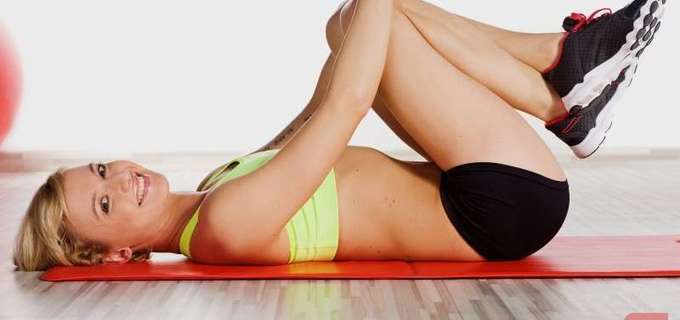
Therapeutic exercises for hemorrhoids
The main goal of these exercises in the treatment of hemorrhoids is to strengthen and increase the tone of the longitudinal muscle. rectum, which is a continuation of the muscular layer of the sigmoid colon and raises the posterior passage. You need to perform the complex below only 5-10 minutes a day - this is enough to achieve a stable therapeutic result, prevent hemorrhoids and its complications. Some trainers and sports medicine representatives believe that by performing these exercises daily, you can completely get rid of hemorrhoids in just a few months.
Exercises for the treatment of chronic hemorrhoids
| An exercise | How to do | Number of repetitions |
|---|---|---|
 Raising the pelvis while rounding the chest |
Lie on a gymnastic mat, spread your legs shoulder-width apart, stretch your arms along your torso and completely relax. Inhale and lift the pelvis off the floor. At the maximum point, linger for a few seconds, while simultaneously rounding and stretching the chest (try to pull it up to the chin). As you exhale, go down. Result: outflow of venous blood to the chest, elimination of congestion in the cavernous veins, prevention of thrombosis. |
20 times. |
 Pulling the knees to the chest while lying down |
The starting position is the same. Grasp your knees with your hands and lift them off the floor. Take a deep breath. As you exhale, gently pull your knees to your chest, linger in this position for a few seconds. On inhalation, lower it to the bottom. Result: stimulation of the motor function of the large intestine, elimination of constipation, facilitation of bowel movements. |
20 times. |
 Vertical leg swings |
Get on all fours, hands and feet firmly against the floor. Raise the body up with support on the feet and palms so that the legs and body form a straight line. In this position, perform swinging legs, lifting them alternately up and lingering at the maximum point for a few seconds. Result: outflow of venous blood to the heart area, prevention of thrombosis. |
5 times with each leg. |
At the initial stage, these exercises can take up to 10 minutes, but after a few sessions, the duration of the workout will be no more than 5-7 minutes. It is necessary to perform these exercises daily for several months (the duration of the classes depends from the stage of hemorrhoids, individual physical fitness and other factors and can range from 1 to 5-6 months).
Yoga for pathologies of hemorrhoids

Yoga is one of the most effective ways to improve the body, including hemorrhoids
Yoga is not just a fitness area aimed at improving the physical capabilities of the human body. This is a set of moral (spiritual), mental and physical techniques, the purpose of which is to achieve harmony and a balanced state. Exercises (asanas), which are used in yoga therapy, have a general strengthening and healing effect on the entire body. The benefit of this technique for hemorrhoids is to normalize the microcirculation of fluids in the vessels and capillaries. anus, increasing the tone of muscle sphincters, improving evacuation and peristaltic function intestines. The achievement of spiritual harmony, which allows you to eliminate one of the leading factors of pathological expansion of the cavernous bodies - chronic stress.
Yoga for hemorrhoids
| Exercise (asana) | How to do |
|---|---|
 Exercise 1 |
Sit on the floor, relax (it is important that all muscles, especially the muscles of the anus, are relaxed). Inhale and exhale in such a way that during the inhalation phase the breath is directed from the back of the head to the anal opening, and during the exhalation phase - from the anus along the coccyx and the entire spine upward. |
 Exercise 2 |
In the same position, lower the chin down and squeeze the muscles of the anus (at the final phase of exhalation). Repeat several times. Exercise strengthens the anal sphincter muscles. On inhalation - relaxation (you can raise your head a little). |
 Exercise # 3 |
Lie on your back, straighten your shoulders and shoulder blades. Grab the lower part of the lower leg with your hands and lift the pelvis up, trying to press the chest against the chin. Continue to breathe consciously - while inhaling, the energy should be concentrated in the area of the anus and muscles of the perineum. |
 Exercise 4 |
This exercise is a continuation of the previous one. Move your hands from your shins under the lower back and raise your straightened legs up (“birch” pose). The muscles of the anus should be in a state of tension during breathing. Breathing - belly, through the nose. The anal sphincter and perineal muscles must be squeezed with maximum force. |
 Exercise 5 |
From the "birch" position, alternately lower your legs behind your head, trying to touch the floor or other surface. Then lower both legs behind the head, trying to stretch the muscles of the back, neck and shoulders as much as possible. On exhalation - constriction of the anal sphincter. On inhalation - the relaxation phase. |
 Exercise # 6 |
Lower your knees to the floor closer to your shoulders and stretch your arms back, clasped in the lock. On exhalation, squeeze the muscles of the anus and perineum. As you exhale, try to completely relax. |
 Exercise 7 |
Move your arms up, stretch your legs, stretch your arms to your legs. Imagine a round ball in the abdomen area and try to squeeze it from all sides. At the same time, reach with your fingertips to your toes. |
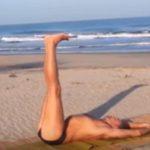 Exercise 8 |
Slowly unwind your back without lifting the back of your head off the floor. During the exercise, it is important to feel the vertebrae, trying to feel each of them. Put your feet on the floor, relax. |
 Exercise 9 |
Spread your arms and legs to the sides, slowly relax your pelvic muscles. |
All yoga exercises are a continuation of each other and are performed in a strict order. It is very important to control breathing during exercise, since not only the therapeutic effect depends on this, but also the psychoemotional state of a person after exercise. It is recommended to do yoga for hemorrhoids 2-3 times a week.

Classes should be regular, about 2-3 times a week
Important! These exercises can be performed only outside the exacerbation stage. Yoga experts recommend using hirudotherapy (leech therapy) to relieve inflammation. Cold compresses, cool baths and washes, medications, for example, suppositories with lidocaine or phenylephrine ("Relief"), also help to stop bleeding and relieve pain.
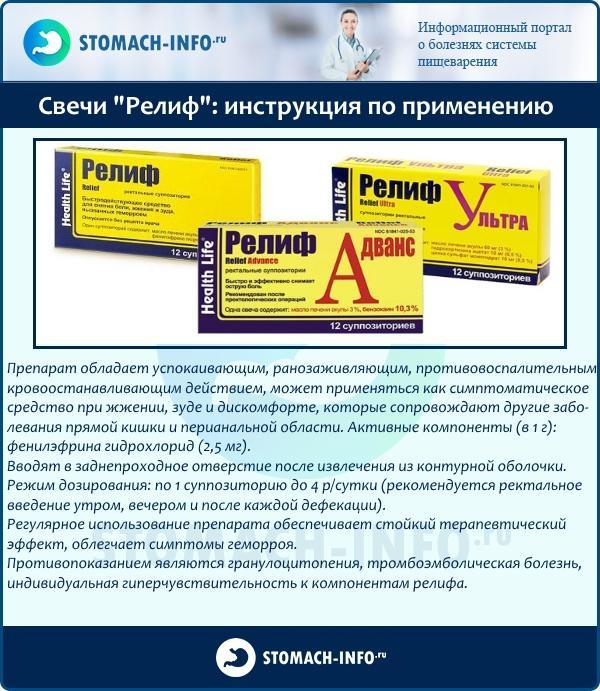
Candles "Relief": instructions for use
Does exercise help cure hemorrhoids?
It is a mistake to believe that exercise can completely rid a person of hemorrhoids. By itself, therapeutic and recreational gymnastics is not a means for the treatment of anorectal thrombosis and pathological enlargement. cavernous veins, but it belongs to the most important elements of the complex therapy of these pathologies and ensures the prevention of recurrence and exacerbations. For hemorrhoid exercise to be effective, it must be combined with the other combination therapies listed below.
- Diet. The patient needs to refuse any products that can irritate the walls of the intestines and anus. Such products include dishes with a high content of fat, spices, seasonings, brine with vinegar, marinades. Carbonated drinks should also be avoided, as they can provoke bloating and increase the intensity of the clinical symptoms of hemorrhoids. The diet of patients should contain a sufficient amount of vegetable fiber to maintain normal intestinal motility and prevent constipation.
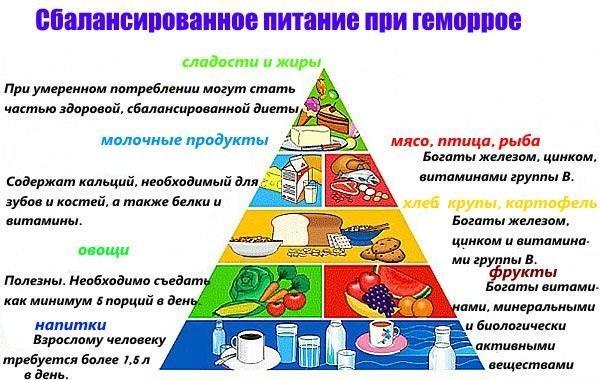
With hemorrhoids, the patient's diet plays an important role: nutrition should be correct and balanced
- Compliance with hygiene. Compliance with the norms of intimate hygiene will help reduce the intensity of itching and prevent the introduction of a bacterial infection into the rectum. You need to wash yourself after each bowel movement and after waking up in the morning, using the products intended for this with a suitable level of acidity. It is better to wipe the skin not with a towel, but with a soft cotton napkin, so as not to injure the inflamed nodes.

Personal hygiene is of great importance: first of all, it prevents infection of the rectum through wounds and cracks in the anal area
- Emotional state control. Outdoor walks, herbal preparations (motherwort, hops, valerian), aromatherapy, audiotherapy, salt baths will help cope with stress. In advanced cases, sedatives are shown (after consulting a doctor).

Fragrant herbal tea and walks in the fresh air are the best cure for stress and nervous tension
- Cold compresses. Cold helps to relieve pain and itching, relieve swelling, and reduce the intensity of inflammation. You need to make cold compresses 3-4 times a day (during an exacerbation).

Cold compresses effectively eliminate swelling, pain and discomfort during periods of exacerbation of hemorrhoids
Traditional therapy also includes physiotherapy, medication and alternative medicine recipes (sea buckthorn oil compresses, garlic potato candles, saline lotions).

Sea buckthorn oil is one of the traditional folk remedies for hemorrhoids
How to do it correctly?
In order for the classes to be beneficial, it is important not only to observe the technique of performing the exercises, but also to properly organize the training itself. You should do it 1.5-2 hours after eating. It is advisable to do this after bowel movement - this has a positive effect on the effectiveness of exercise and allows you to quickly work out the intestinal muscles responsible for defecation. To stimulate the natural flow of stool, you can add vegetable fiber or vegetable oil (oil envelops feces and facilitates their excretion, and fiber activates intestinal motor skills).

The addition of plant fiber to food helps to improve intestinal motility
You should also adhere to the following recommendations:
- you need to do it regularly, at least 3-4 times a week;
- the minimum duration of one workout should be 10-15 minutes (including warm-up);
- regardless of the physical fitness of the patient, it is necessary to start the lesson with a warm-up, which will warm up the muscles and reduce the likelihood of sprains;
- after training, it is not recommended to lie down for 30 minutes so that the blood can circulate freely through the blood vessels;
- to maximize the benefits of exercise, you should also refrain from eating for 40-60 minutes after training.
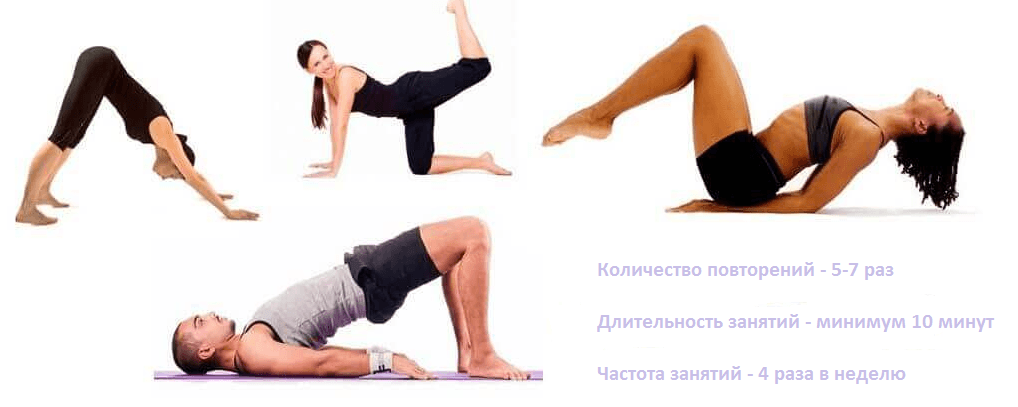
To get the result, you should do it regularly, following all the recommendations.
When choosing a training complex, you should abandon exercises that require holding your breath, as they can increase intra-abdominal pressure and provoke anal bleeding.
To whom are classes contraindicated?
In some sources, you can see information about the benefits of exercise for acute hemorrhoids. This is a serious misconception, since any form of acute hemorrhoids is a contraindication for exercise. It is also necessary to give up training for persons with proctological pain syndrome: the use of anesthetic ointments and suppositories before exercise only temporarily relieves pain, while the causes of such a pathology can increase during physical exertion on the muscles of the anus and perineum.

With severe pain syndrome and exacerbation of the disease, therapeutic exercises are contraindicated
Sports activities (including therapeutic and recreational gymnastics) are also contraindicated in the following pathologies:
- arterial hypertension (especially in malignant course, when, even in the absence of a stimulating load, blood pressure indicators are at around 180/110 mm Hg. Art.);

Arterial hypertension is one of the main contraindications to exercise therapy
- any bleeding (including possible symptoms of latent gastrointestinal bleeding, such as tarry, sticky black stools and bloody vomit);
- inflammatory diseases of the rectum (proctitis and paraproctitis);

You can not engage in physiotherapy exercises for proctitis, paraproctitis and other inflammatory diseases
- increased risk of thrombosis and thromboembolism;
- cardiac ischemia.

People with coronary heart disease should also refrain from exercise.
Any form of hemorrhoids should avoid exercise that puts an increased strain on the abdominal muscles, as well as jerks, kicks, and squats.
Hemorrhoids is a chronic, progressive proctological disease, which must be treated comprehensively. Exercise is one of the elements of the complex treatment of pathology, but they cannot replace traditional drug and surgical (if necessary) therapy. Exercises for the treatment of hemorrhoids are effective only if they are combined with diet, rejection of bad habits, taking prescribed medications and other methods prescribed by the attending physician.