Allergy diagnostics: basic methods of carrying out
Content
- Diagnostic methods
- Diagnosis of drug allergies
- Diagnosing food allergies
- Diagnosing pet allergies
- Diagnosis of allergies in children, infants
- Diagnostics in pregnant women
- Preparing for diagnosis
- How long to wait for results?
- Diagnostic reliability
- Do I need to re-diagnose?
- Diagnostics in "Invitro"
- Allergy diagnostics in Moscow
- Diagnostics in other cities of Russia
- Diagnostics in Minsk
- Diagnostics of allergies in Ukraine
- Is it possible to carry out diagnostics at home?
Treatment of individual intolerance to certain substances or factors should begin with such an important stage as the diagnosis of allergies.

Its main purpose is to determine the causes of the disease. A timely and accurate diagnosis helps not only to choose the optimal therapy, but also to avoid the complications that this pathology leads to. We suggest that you find out from our article what methods for diagnosing allergies exist.
Diagnostic methods
It is important to start the study of the factors provoking an allergic reaction from the moment the first signs of the disease appear. What symptoms require an indispensable visit to a specialist? The following points can be cause for alarm:
- itchy skin and rashes;
- prolonged runny nose, frequent sneezing and a feeling of irritation in the nasal cavity;
- lacrimation, discomfort in the eyes, redness of the eyelids;
- swelling;
- breathing problems.
Directly at the reception, the allergist conducts an initial examination, which includes:
- collection of anamnesis;
- physical examination, if necessary supplemented by palpation and percussion methods;
- functional diagnostics using a spirometer to measure lung volume and detect signs of bronchospasm.
After carrying out the initial manipulations and dialogue with the patient, the doctor prescribes specific tests that are relevant in a particular clinical case, laboratory and instrumental diagnostics. All allergen studies known today are divided into two large groups:
- In vitro - assessment of biomaterials with specific reagents.
- In vivo - tests carried out on human mucous membranes and skin.
Let's consider the main methods for determining allergies.
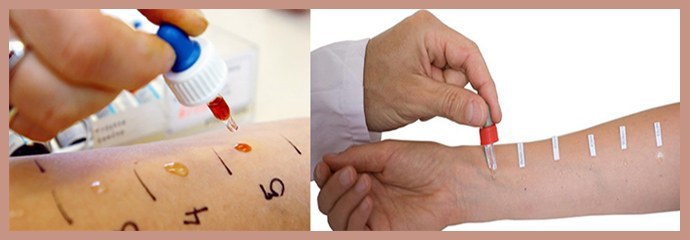
Skin tests. A common diagnostic method, characterized by simplicity and clarity, is approved for use in children from 5 years old. The research is carried out by the methods described in the table.
| Types of skin tests | Description |
|---|---|
| Scarification test | It is carried out with the help of scratches - notches on the skin. To do this, use a scarifier, having previously applied a small amount of solutions with allergens. After 20 minutes, the first result is evaluated, after 36 hours - the final one. One scarification test measures an increased susceptibility to 10 potential allergens. |
| Prik test | Easy to use, highly sensitive method. It is based on the use of a needle with a limiter, the punctures of which are made to a depth of no more than 1 mm. The skin is pre-treated with an allergen solution. The result is checked after 10 minutes. |
| Application test | Appliques made from cotton swabs soaked in a specific solution are applied to the skin. |
| Intradermal method | Solutions with potential allergens are injected under the skin if the previous methods did not give the expected results or turned out to be questionable. The result is evaluated after 30 minutes and 36 hours. |
What are allergenic solutions? This is a whole set of preparations containing the most popular allergy-provoking ingredients. For example, made from animal hair, plant pollen, dust and food ingredients.
It is recommended to do the test on a highly sensitive area of the skin - usually the middle area of the inner side of the forearm is selected for this purpose. If it already has characteristic rashes, it is recommended to perform manipulations on the back. A positive response is the occurrence of hyperemia and swelling, itching in the area of application of the drug. The reaction can be strong, mild, questionable or negative.
Skin tests are prohibited in the following cases:
- Children under 4 years of age. The child's immunity is not sufficiently developed, and direct contact with the allergen can cause an unexpected reaction and various complications. At the same time, dermal methods are quite sensitive, which means stress for the baby.
- Exacerbation of allergies or concomitant chronic diseases.
- Taking hormonal drugs.
- A history of tuberculosis infection.
- Pregnancy, breastfeeding.
- Relapse of mental pathologies.
Provocative tests. Quite often, allergy in adults occurs against the background of excessive resistance of small blood vessels to any damaging factors. In this case, the appointment of provocative tests, which are characterized by increased accuracy, is recommended. Consider them in the following table.
| Types of provocative tests | Description |
|---|---|
| Nasal test | An effective method for detecting seasonal pollinosis and year-round dust allergies. It is based on instilling a few drops of a control drug into the human nasal cavity, then the state of the mucous membrane is assessed after 15 minutes. As a rule, substances are used - potential allergens, to which skin tests showed a dubious result. |
| Inhalation test | It is prescribed for asthma and intolerance to certain factors, for example, dust. The method consists in carrying out inhalation with the suspected allergens. The result is assessed immediately. |
| Sublingual test | It is used for suspected food and drug intolerance. Potential allergens are applied to the sublingual mucosa. The test is positive if there is swelling and hyperemia under the tongue, as well as general reactions in the form of shortness of breath, coughing, sneezing and tachycardia. |
| Conjunctival test | Aimed at determining the causes of allergic conjunctivitis. To carry out the manipulation, up to 2 drops of the control solution are instilled into the human conjunctival sac. With a positive reaction, immediately or after 20 minutes, signs of lacrimation, redness and itching of the eyes appear. |
Provocative tests are associated with a high risk of developing complications such as Quincke's edema and anaphylaxis, therefore, their performance possible only in stationary conditions by medical personnel who are ready at any moment to provide qualified help.
Laboratory research. These diagnostic techniques belong to the in vitro group. As a rule, human serum or blood is used for testing for the presence of allergens. Laboratory studies are devoid of restrictions and contraindications, they can be performed even in infants, during a relapse of the disease and with vivid symptoms of individual intolerance on the skin. Consider them in the following table.
| Types of laboratory research | Description |
|---|---|
| Paustnitz-Küstner method | Serum enriched with immunoglobulins E (IgE) is injected into the patient's forearm intradermally. After 24 hours, a solution containing potential allergens is injected into the same part of the body. The result is evaluated in 20 minutes. |
| Determination of specific immunoglobulins | Consists of several methods: Radioallergosorbent test, or RAST. It is used to determine several groups of antibodies - IgE, IgM and IgG, carried out using blood serum. Enzyme immunoassay, or ELISA method. It checks the increased activity of immunoglobulins E, G and M, and blood serum of an allergic person is also used. Passive hemagglutination, or RPHA. |
Laboratory diagnostics is relevant under the following conditions:
- intense rashes - eczema, atopic dermatitis, etc.;
- severe hypersensitivity of the dermis, provoking erroneous skin reactions;
- examination of children and the elderly;
- anaphylaxis and Quincke's edema in history.
Laboratory methods are safe as the allergen does not come into contact with the human body. Testing can be done at any stage of allergy, and a single blood draw is sufficient to check for a significant number of irritants.
Computer diagnostics, or the Voll method. It has been used recently, developed in the clinic Eliseeva O.I. - the author of this technique. The study is carried out using a computer assessment of the frequency of electromagnetic oscillations. The method allows you to accurately assess the general condition of the body, determine the nature of allergenic factors and adjust the tactics of allergy therapy, taking into account individual characteristics. The data obtained are 99% informative. But how does this method work?
Each person has his own electromagnetic field. If he is healthy, the device displays the usual frequency fluctuations. When there are infectious factors in the body, parasitic microbes, etc., the human electromagnetic field is complemented by wave oscillations that are unusual for the norm. In this case, the Voll method indicates specific lesions - an organ or system "captured" by viruses or pathogenic bacteria, allergy zones, etc.
Elimination tests. They are used in the diagnosis of food allergies. If it is assumed that a certain product provokes an individual intolerance, its elimination, or complete removal from the diet, is prescribed. If after a certain period of time the signs of allergic reactions have disappeared, it is safe to say that the irritant has been identified and known.
Molecular diagnostics of allergies. One of the most promising trends in allergology today. Molecular diagnosis of allergy is based on the development of recombinant stimuli for accurate testing and conducting effective allergy vaccination by the ASIT method - allergen-specific immunotherapy.

Each allergen has a complex molecular structure, which includes several antigenic determinants - proteins that provoke hypersensitivity in the body in different ways. Modern technologies based on immunochemiluminescence reveal even insignificant concentrations of IgE to 112 stimuli. In this regard, it is possible to diagnose with high accuracy the real source of sensitization in accordance with the laws microbiology, to exclude cross factors, to predict the effectiveness of ASIT and to assess the risk of complications in the future.
Diagnosis of drug allergies
After interviewing the patient and performing tests for medicinal components, it is highly likely to establish the cause of the pathology.
Let's list the criteria by which allergies are determined:
- Discomfort is directly related to medication.
- Signs of hypersensitivity become milder or disappear in full if the drug is discontinued.
- Other types of allergies are excluded - food, seasonal, etc.
- Latent sensitizing stage against the background of the first medication intake.
If the study of the anamnesis did not allow to identify a specific irritant, laboratory and provocative tests are carried out.
The search for allergens using laboratory tests is carried out in the ways described in the table.
| Laboratory Methods | Description |
|---|---|
| ELISA, or enzyme immunoassay | Designed for a narrow group of drugs, which include antibiotics such as Gentamicin, nonsteroidal anti-inflammatory drugs (NSAIDs) - acetylsalicylic acid, local anesthetic Lidocaine. The analysis is performed using 1 ml of serum collected from the patient. The duration of the diagnosis is 18 hours. |
| Shelley test | Refers to research of a scientific nature, which requires high qualifications and training from specialists. For this reason, they are rarely carried out. |
| Fluorescence diagnostics | It is widely used in practice. Allows you to differentiate hypersensitivity to a wide group of antibiotics, NSAIDs, anesthetics, vitamins and others. The duration of testing is 30 minutes for 10 medicinal components, 1 ml of blood is required for the test. |
| TTEEL, or testing of inhibition of natural emigration of leukocytes | Evaluates intolerance to antibiotics, anesthetics, sulfonamides and some NSAIDs. To get the result, you need to wait 1.5 hours. The diagnostic method is contraindicated in acute signs of allergy and in children under 5 years of age. |
Skin tests are not used in the study of medicinal allergens, since their informative value does not exceed 60%. Scarification and prick methods are sometimes used to determine hypersensitivity to beta-lactam antibiotics.
Provocative tests are rarely prescribed, mainly when the study of the patient's history and laboratory diagnostic methods are not found a relationship between the allergy clinic and drugs, and there is no way to cancel drug treatment possibilities. Testing in this case is carried out strictly in a hospital under medical supervision. Provocative methods include a sublingual or sublingual test, as well as subcutaneous administration of an allergen.
Diagnosing food allergies
Food hypersensitivity is studied using the following methods:
- provocative tests;
- laboratory research;
- skin tests;
- the purpose of the diet.
Skin tests are rarely used to diagnose food allergies, as some doctors are not sure about the information content. of this technique in this situation, but at the same time other specialists select an elimination diet according to its the results. Preference is given to scarification samples.
Laboratory methods for diagnosing food allergies depend on the quality of the potential irritant - the quantitative dose in the preparation for the test. The research is aimed at finding IgE, IgM and IgG antibodies. The complexity of the method lies in the high risk of cross-reactions and instability of allergens, in connection with which false positive results are often encountered.
Diagnosis of food provocations should be carried out under the close supervision of a specialist. Various foods, including those containing allergens, are placed in small capsules or masked with other food. The essence of the technique is to determine the reaction only to the stimulus, confirming the presence of hypersensitivity to certain food components, for example, gluten.
For persons with aggravated forms of food allergy, provocative tests are contraindicated. In this case, a food diary comes to the rescue, which allows you to determine the relationship between food and its individual intolerance.
Diagnosis of food allergies can also be based on the appointment of an elimination diet in which suspected irritants are completely eliminated from the menu, such as cow's milk or cereals. If the symptoms of the disease disappear after dieting, the diagnosis is confirmed.
Diagnosing pet allergies
If a person has symptoms of individual intolerance, and such pets live in an apartment or house as a cat or dog, it makes sense to conduct a differential study for the presence of hypersensitivity to the data animals.
Many people mistakenly believe that short-haired and bald breeds are not capable of provoking allergic reactions, but this is a myth. This condition is caused not only by the pet's fur, but also by urine, saliva, particles of peeling skin, etc. The study consists of blood sampling and skin tests.
Diagnosis of allergies in children, infants
Hypersensitivity to certain factors is dangerous due to the imperfect immune system of the little man. As a result, the reaction to any stimulus is not only acute, but also unpredictable. The study of allergies in a child, its symptoms and principles of treatment differ from similar manipulations with adults.
Children require a more attentive attitude towards themselves. And one of the main roles in determining a possible irritant falls on the shoulders of the parents. Before visiting a doctor and starting a diagnosis, a mother should know exactly from what moment her baby first developed symptoms of an individual hypersensitivity and what could provoke it - new foods in complementary foods, clothing, contact with certain pets and plants, and etc. This information will greatly facilitate the doctor's task in finding the cause of the pathology and will help protect the child from additional diagnostic procedures.
Determination of individual intolerance in young patients is in vitro studies, that is, allergy diagnostics is carried out by a blood test. Let's see what methods are used in the following table.
| Detection of specific antibodies | Description |
|---|---|
| IgE analysis | It is widely used in pediatric practice. The test is based on the collection of venous blood, the serum of which is combined with the suspected allergens. A single analysis allows you to identify hundreds of irritants and accurately determine the cause of the disease. In addition, this test helps to find out if the newborn is at risk of the same allergic reactions as his parents. |
| IgG HA assay | IgG antibodies are responsible for the fight against food allergens, therefore, using different allergy panels, it is possible to establish the causes of the pathology and identify the pathogenic products. For example, a study using allergy panel No. 17 allows you to find out if your baby is hypersensitive to different types of nuts. |
All types of diagnostics in children should be carried out strictly according to the prescription of an allergist after an internal examination and consultation. Special preparations for the studies listed in the table are not required. Venous blood is taken on an empty stomach in a treatment room.
In children over 5 years old, the behavior of skin tests is possible, which are performed regardless of the last meal in a specialized office of the polyclinic.
Diagnostics in pregnant women
Expectant mothers, unlike other patients of the allergist, are shown slightly different methods that identify the causes of individual hypersensitivity of the body. During pregnancy, in vivo methods are prohibited: provocative tests, the use of nonspecific stimuli, etc. These diagnostic methods can lead to a sharp deterioration in the well-being of a woman, up to the development of the risk of termination of pregnancy and a threat to the fetus.
The examination of the expectant mother should begin in the office of the allergist, who will carefully listen to all the patient's complaints, collect an anamnesis of the pathology, conduct an examination and prescribe tests in the laboratory. For women who are in position, only the in vitro system is recommended as the safest diagnostic option.
Preparing for diagnosis
Let's consider the main recommendations for preparing for allergy research:
- 3 days before the analysis, you must stop taking antihistamines and any other medications. If we are talking about vital drugs that cannot be canceled, you need to discuss this issue with your doctor.
- Eliminate potential allergens from the diet: seafood, citrus fruits, honey, berries, nuts, eggs, milk, food with artificial colors and chemical additives.
- Do not drink alcohol for at least 3 days.
- Do not contact pets or any other animals.
- To postpone the examination if it comes to post-vaccination and post-infectious conditions, for example, after vaccinations, a recent viral disease, etc.;
- Refuse diagnosis until complete recovery from colds and other pathologies, accompanied by respiratory symptoms and an increase in body temperature.

Analyzes must be taken in the morning on an empty stomach. If the diagnosis is for a small child, at least a 3-hour interval from the last meal is necessary. At night before the study, it is recommended to get enough sleep, to relax physically.
How long to wait for results?
Before starting the study, it is recommended to clarify the time when its results are ready. For example, a prick test gives an answer after 10 minutes, information about an intradermal test will be initially reported after half an hour, and then after 2 days. In order not to get confused in guesses, it is better to ask your doctor in advance how much research will be carried out.
Diagnostic reliability
Allergy studies show erroneous results 10% of the time. Usually, this happens if a person has neglected the recommendations of the attending physician and made mistakes in preparing for analyzes and samples. For example, if the patient has not given up taking antihistamines, the test will show he has no allergies.
To get a reliable result, the specialist applies two auxiliary drops 10 minutes before the start of the study. The first is histamine, or an irritant, therefore, if there is no reaction, the results of the analysis can be considered invalid, the second is a control component solution, which contains all provocateurs. In the absence of an immune response, the diagnosis is allowed.
The following parameters can have a negative impact on the reliability of the study:
- illiterate execution of skin scratches;
- insufficient sensitivity of the epidermis to external influences;
- low concentration of the allergen;
- improper storage of test solutions and samples.
Do I need to re-diagnose?
Re-examination is not contraindicated if the doctor has compelling indications for this. Do not engage in amateur performances! New diagnostics are performed extremely rarely, mainly if the specialist has doubts regarding the reliability of the test results obtained or in the absence of an effect from treatment.
In general, allergy as a disease usually haunts a person all his life. At times, sensitivity to stimuli can decrease even without taking desensitizing agents, but this does not mean that it will disappear completely. This is uncommon, for example due to immune problems in childhood - an infant reacting a violent rash on milk protein or gluten molecules, as an adult, perfectly tolerates the same products. Such an example is rare, in most cases a person is forced to be treated for individual hypersensitivity. antihistamine vaccine and oral drugs, often combining them with each other, long-term time.
Diagnostics in "Invitro"
The Invitro clinic is one of the authoritarian diagnostic centers in Russia, Ukraine, Kazakhstan and Belarus. It has its own independent laboratories, which are equipped with high-tech modern equipment. The center has a large number of offices in different cities, for example, Almaty, Chelyabinsk, Nalchik, etc., in connection with which a considerable number of people use its services.

Experts practicing in "Invitro" help to identify various allergens for all types of individual intolerance in children and adults. In addition to laboratory research, the clinic can offer a consultative appointment with an allergist-immunologist. Reviews of the laboratory's work are predominantly positive.
Where is allergy diagnostics carried out in Moscow?
- m. "Krasnoselskaya", st. Verkhnyaya Krasnoselskaya, d. 34;
- m. "Water stadium", st. Admiral Makarov, d. 45;
- m. "Kuntsevskaya", st. Moldavskaya, d. 4.
Allergy research cost:
- total IgE analysis - 595 rubles;
- a mixture of food allergens: orange, apple, banana, peach (No. 15) - 1,700 rubles;
- house dust, IgE - 600 rubles;
- cat, epithelium, IgG - 620 rubles
The Invitro laboratory in Moscow works every day. At the request of the patient, the results of diagnostics can be prepared in an accelerated time frame. If necessary, a specialist can go to a person's home or office.
Where is allergy diagnostics performed in St. Petersburg?
- blvd Novatorov, d. 13;
- Dachny avenue, d. 17;
- st. Lensovet, d. 89.
Research prices in St. Petersburg may differ from Moscow and Russian regions. Consider the cost of individual analyzes:
- total IgE analysis - 570 rubles;
- a mixture of food allergens: orange, apple, banana, peach (No. 15) - 1220 rubles;
- house dust, IgE - 540 rubles;
- cat, epithelium, IgG - 590 rubles
Allergy diagnostics in Moscow
In addition to Invitro, there are other laboratory centers in the capital of Russia where you can apply for allergy testing. Let's look at some of them in the following table.
| Name of the medical center (MC) | Address | Comparative cost of testing for total IgE |
|---|---|---|
| "Agate" | m. "Falcon", st. Usievich, d. 27 | RUB 500.00 |
| "Dobromed" | m. "Blvd Dmitry Donskoy", st. D. Donskoy, d. 8. | RUB 500.00 |
| "Medolimp" | m. "Alekseevskaya", st. 3rd Mytishchinskaya, d. 3 | RUB 600.00 |
| "Good deed" | m. "University", pr. Leninsky, d. 74 | RUB 700.00 |
Moscow clinics guarantee high-precision laboratory analyzes in a short time.
Diagnostics in other cities of Russia
We offer you to find out where and at what cost you can undergo allergy tests in different cities of Russia.
St. Petersburg
- "CM-clinic", Dunaisky prospect, d. 47;
- Clinic "Family Doctor", st. Academician Pavlova, d. 5;
- MC "UltraMed", st. Savushkina, d. 143.
Research cost:
- total IgE analysis - from 250 to 705 rubles;
- food allergy panel - from 620 to 13 800 rubles;
- analysis for one medicinal component - from 200 rubles.
All of these clinics offer different types of allergological studies, the cost of which may vary according to the pricing policy of the selected medical institution.
Makhachkala
- Clinic "Old Doctor", st. Gaidar Hajiyev, building 24;
- MC "Healthy family", st. Magomet Gadzhiev, d. 212/1;
- MC "Allergo-asthma", st. Salavatova, 43/3.
The cost of allergy diagnostics in the listed clinics in Makhachkala is from 2,500 rubles.
Khabarovsk
- MC "Lanta", st. 60th anniversary of October, d. 204;
- Clinic "Doctor", Bolshaya street, d. 2A;
- MC "MiRiT", st. Pushkin, 38A.
The cost of allergological research in Khabarovsk starts from 500 rubles.
Nizhny Novgorod
- Clinic "MISMED", st. Dobrolyubova, d. 20;
- MC "KaiKlinik", st. Georgian, d. 40;
- Laboratory "Hemotest", st. Plotnikova, d. 3.
Prices for allergy diagnostics in medical centers in Nizhny Novgorod start at 480 rubles.
Krasnoyarsk
- MC "Center for Clinical Immunology", st. Lenin, d. 45;
- Clinic of Professor Kalichenko, st. Aerovokzalnaya, d. 27;
- MC "Clean City", blvd Mira, d. 115.
The cost of allergological research in Krasnoyarsk starts at 220 rubles.
Krasnodar
- MC "Your Doctor", st. Selezneva, 86/1;
- MC "Solnechnaya", st. Red Partizan, d. 118;
- Clinic "Euromedservice", st. Uzhgorodskaya, d. 2.
Prices for allergy diagnostics in Krasnodar start at 600 rubles.
Rostov-on-Don
- MC "EuroDon", st. Socialist, d. 208;
- MC "Healthy baby", st. 339 Rifle Division, d. 12;
- Clinic "PLUS". st. Veresaeva, d. 105/3.
The cost of allergological research in Rostov-on-Don starts from 540 rubles.
Kazan
- MC "Artmed", st. Academician Gubkin, d. 37;
- Clinic "Favorite Doctor", st. Frunze, d. 17;
- MC "Aybolit", st. Syrtlanova, d. 8.
Prices for allergy diagnostics in Kazan start at 450 rubles.
Permian
- Clinic "Favorite Doctor", st. Karpinsky, 112;
- Laboratory "MEDLABEXPRESS", st. A. Gaidar, d. 36;
- MC "ALPHA-HEALTH CENTER", st. Mira, d. 150.
The cost of allergy tests in Perm starts from 290 rubles.
Voronezh
- Clinic OVEDA, st. Kommunarov, d. 47;
- MC "Healthy Child", st. General Lizyukov, d. 24;
- MC "Medical practice", Moscow avenue, d. 104.
Prices for allergy tests in Voronezh start at 390 rubles.
Samara
- MC "Science", Pugachevsky tract, d. 66;
- MC "Vocation", st. Eroshevsky, d. 20;
- Clinic of Dr. Kuzmin, st. Democratic, d. 170.
The cost of allergy tests and analyzes in Samara starts from 350 rubles.
Saratov
- MC "Sova", st. Sacco and Vanzetti, d. 59;
- Clinic Di, st. Moscow, d. 23;
- MC "Saratov DENS", st. Posadsky, d. 180.
Prices for allergy diagnostics methods start at 490 rubles.
Volgograd
- Clinic "Dialine", Engels blvd., D. 27;
- MC "Zdravnitsa", st. Soviet, d. 59;
- Laboratory "Panacea", st. Heroes of Stalingrad, d. 38.
The cost of allergological research methods in Volgograd starts from 470 rubles.
Ufa
- MC "MEDI", st. Batyrskaya, d. 8;
- MC "Mother and Child", pr-d Lesnoy, d. 4;
- Clinic "Medis", st. Shafieva, d. 28.
The cost of allergy diagnostics in Ufa starts at 430 rubles.
Ekaterinburg
- Clinic "Consilium", st. Military, d. 22;
- MC "Orchid plus", st. Krylova, d. 35;
- MC "Uralsky", st. NS. Togliatti, d. 11A.
The cost of allergological research in Yekaterinburg starts from 390 rubles.
Omsk
- MC "Euromed", st. Starozagorodnaya grove, d. 8;
- MC "Your Doctor", st. 70 years of October, d. 70;
- Central Clinical Hospital, st. TO. Marx, d. 18/28.
The cost of allergy diagnostics in Omsk starts from 480 rubles.
Novosibirsk
- MC "EUROPE", st. Frunze, d. 122;
- MC "Main patient", st. B. Bogatkova, d. 217;
- Clinic "Praetor", Krasny Prospect, 9.
The cost of allergological research in Novosibirsk starts at 570 rubles.
Irkutsk
- MC "For the whole family", st. TO. Liebknecht, d. 152;
- Clinic "Beauty Light", Mr. Pervomaisky, d. 14/1;
- Irkutsk Diagnostic Center, st. Baikalskaya, d. 109.
The cost of allergological research methods in Omsk starts from 620 rubles.
Diagnostics in Minsk
In the capital of the Republic of Belarus, in Minsk, you can undergo allergy diagnostics in modern laboratories and medical centers. In addition to taking tests and specific tests, many clinics offer professional and advisory assistance in the fight against this disease.
So, which medical centers can you go to?
- "Sinevo", avenue Pobediteley, 73/1;
- "Biomedica Plus", st. Chervyakova, d. 64;
- "Sinlab", st. Academic, d. 26.
Consider the approximate prices that are fair for clinics in Minsk:
- diagnostics of gluten allergy - 60.78 bel. rub.;
- Evroline pediatric panel - 78.60 BYN rub;
- class E immunoglobulins (IgE) - 11.87 bel. rub.
Diagnostics of allergies in Ukraine
There are many independent diagnostic laboratories in Ukraine, where anyone can be examined for allergic diseases. Consider the most popular clinics:
- "Diaservice" Kiev, st. Pushkinskaya, d. 17;
- "Viva", g. Kiev, st. Lavrukhina, d. 6;
- "New medical technologies" Odessa, Shevchenko Ave., d. 8/13;
- "Vita", g. Odessa, st. Brigadnaya, d. 115;
- "Ecomed", g. Kharkiv, st. Bakulin, d. 4;
- "Your child", g. Kharkiv, st. Cooperative, d. 28A;
- MEDINVEST, g. Dnepropetrovsk, st. Voronezh, d. 2A;
- "Murzilka", st. Sverdlov, d. 6.
Consider the approximate cost of allergological studies in the cities of Ukraine:
- pediatric panel - 550 UAH;
- molecular diagnostics of total IgE and specific slgE - 4500 UAH;
- IgE to flower pollen - 130 UAH
Is it possible to carry out diagnostics at home?
The most frequent provocateurs of allergies in your own home can be the following factors:
- dust;
- mold;
- pet hair;
- household chemicals;
- cosmetic products;
- plants.
Sometimes cockroaches, more precisely, their decomposed carcasses, which dry naturally and combine with dust, become the cause of the disease. In this case, we are talking about insect allergies, or individual intolerance to individual insects.
To identify the causes of discomfort, it is recommended to see a doctor who will conduct all the necessary tests and samples. But is it possible to find out the nature of the allergen without doing special tests? Unfortunately no. However, if you do not want to do a lot of research, some factors can be determined by exclusion. To this end, it is recommended that you follow the steps listed below:
- Thoroughly clean the apartment or house, be sure to use personal protective equipment - a household respirator and rubber gloves. In the absence of the usual discomfort for a couple of days, it is safe to assume that dust triggers the allergy.
- Temporarily give to relatives or friends of your pets for overexposure and then properly clean up the home - if the unpleasant sensations disappear, perhaps we are talking about individual intolerance wool.
- Determining the irritant among household chemicals will help the alternating use of each of them in the process of doing homework - each must be applied separately for several days.
Allergy to cosmetics makes itself felt very quickly. It is enough to observe for a few minutes which agent provokes a hypersensitivity reaction. But experts still advise not to waste time on such experiments and consult a doctor at the first sign of discomfort. Modern laboratory tests and samples will show exactly what the allergic process is about, and the doctor will help you choose the optimal treatment.
Diagnosis of allergic diseases is a complex and at the same time widespread process, which is practically painless and safe for humans helps to identify a specific allergen and confirm the existing hypersensitivity to it in the body. Conducting a comprehensive examination allows you to choose the optimal strategy for treatment and prevention, which will make it possible to avoid the development of complications of the disease in the future.