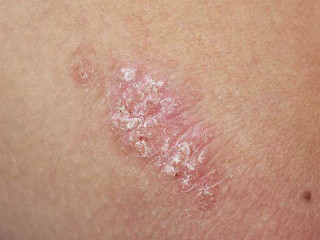
What can be allergic in winter?
Content
- What can be allergic in winter?
- Causes of appearance and diagnosis
- How to deal with allergies?
Along with acute respiratory viral infections and flu, allergies in winter are also common. As in the warmer months, food, dust, and other allergens can cause sneezing and itchy nose.
Let's figure it out together why an allergy occurs, what it can be and how to deal with it in winter.
The ingestion of various substances inside or on the surface of the skin can cause tearing, coughing, sneezing and other unpleasant symptoms. Allergy goes through three stages of development: immune, pathochemical and clinical. At first, the disease does not manifest itself, the production of immunoglobulin occurs. Following this, histamines are released, which provoke the development of the clinical stage. It takes several hours, sometimes days, from the ingress of the substance to the appearance of the first symptoms.
What can be allergic in winter?
During the period when plants do not bloom and insects do not sting, other dangers await allergy sufferers. As a rule, an allergy to one product implies the appearance of a reaction to another substance, sometimes even one that is difficult to think about. The main winter allergens are presented in the table:
| Allergen | Where is | How to fight |
|---|---|---|
| Mushroom spores, mold | Walls around the taps | Repair with wall sanding, treatment with antifungal drugs |
| Dust, dust mite | Mattresses, pillows, bed linen | Regular cleaning, changing bed linen, cleaning down and feather items |
| Wool | Animals, clothing, blankets, etc. | Hypoallergenic animals (or getting rid of them completely), regular care of clothes, washing, airing, drying blankets, etc. |
| Cold | Open space | Wearing warm clothing, hats, scarves, gloves. Protection of exposed parts of the body with a special cream. |
| Food products | Compliance with a hypoallergenic diet, food disinfection | |
| Household and other chemicals | Home care products, cosmetics, hygiene items | The use of natural, hypoallergenic chemicals, protective items (gloves, glasses, etc.) |
Disputes. Mold loves damp and warm air, so it is not surprising that it multiplies with a vengeance during the heating season. It looks like brown or black spots in the corners and next to moisture sources. But the allergy is not caused by the mold itself, but by what it multiplies - disputes. After inhalation of these microscopic particles, swelling of the mucous membranes and sneezing appear. Later, clear nasal discharge, redness of the eyes and itching join.
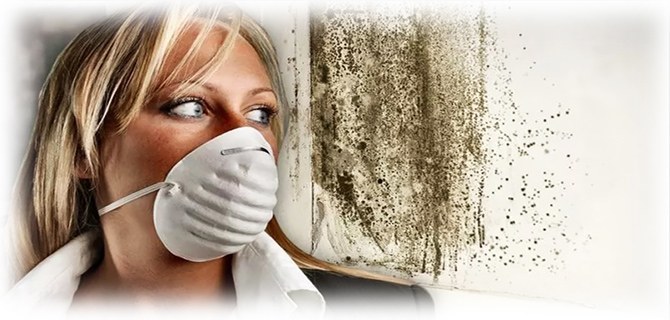
It is impossible to remove the mold by simply washing the plastered walls and wallpaper; you will have to make high-quality repairs. After removing the mushrooms, the surface must be treated with a special solution. To avoid allergy to it, consult with an allergist first.
Ticks. Dust is the dead particles of the inhabitants of the house. Naturally, there can be no allergy to your own skin, what then causes itching and sneezing? Dust mite is the cause of the disease. This microscopic creature feeds on human skin, which dies off in the process of life. The tick lives in bed, there is the most nutrient residues and an ideal, warm environment. Allergic conjunctivitis, rhinitis and bronchial asthma are caused both by the microscopic inhabitant of the bed and by its chitinous membranes.
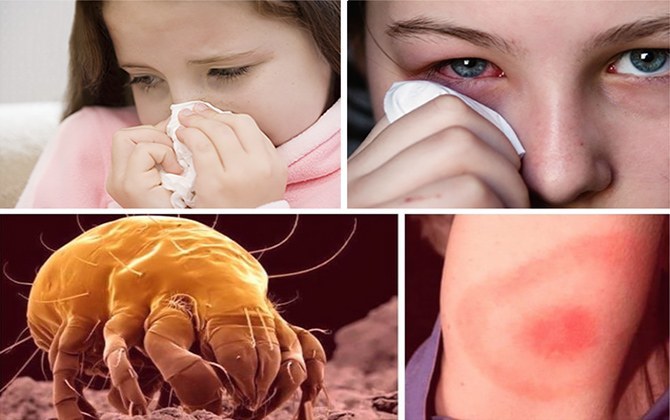
It is impossible to solve the problem once and for all. It is necessary to constantly clean, take out bedding to fresh air, and then thoroughly vacuum.
Wool. Cats, dogs, and other "fuzzies". Many people love them, despite the appearance of allergies from these animals. It turns out that the wool itself does not have substances that can provoke an attack. Allergies are to skin particles, saliva and other secretions of pets, which contain proteins.
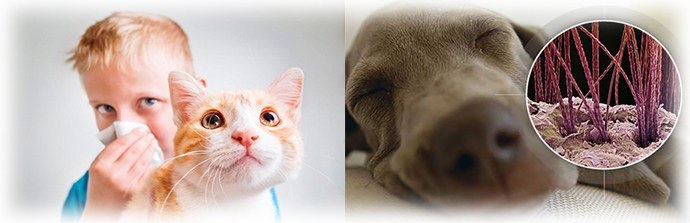
Accordingly, you should not neglect the purchase of a fur coat for the winter. It is important to remember that if not properly cared for, bacteria and insects can lodge in it, which can lead to allergies. To avoid trouble, you need to entrust the processing of a fur coat in the spring to qualified specialists, and it is better not to have pets for allergy sufferers at all.
Cold as an allergen
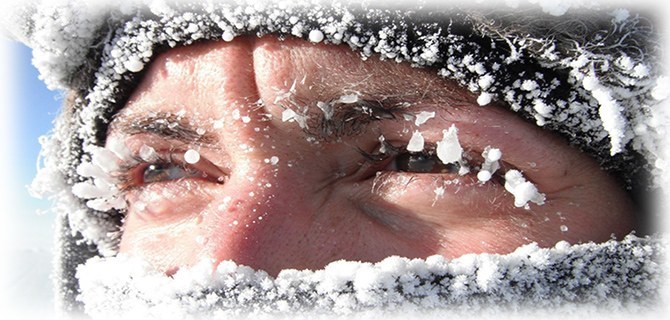
Many people are familiar with the feeling of nasal congestion or watery eyes in the cold. About 70% of people over the age of 30 know firsthand what winter allergies are. Frost violates the integrity of the membranes of skin cells and mucous membranes, contributes to a decrease in body temperature, which causes a reaction. Symptoms such as nasal discharge or, conversely, congestion, redness of the skin and sneezing suggest allergies. Recently, doctors have noticed that this reaction tends to fade away and goes away without treatment after a few years.
Winter allergy is divided into several types and manifests itself as:
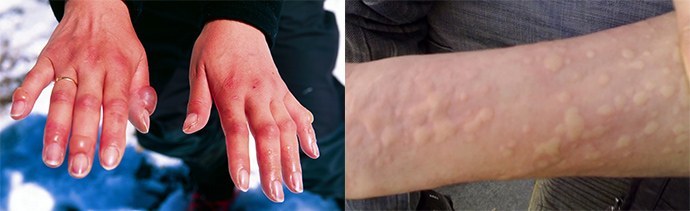
- Dermatitis. Exposure to low temperatures causes inflammation and redness of the skin, peeling and itching appear. With prolonged and frequent exposure to cold, this reaction can turn into edema.
- Hives. After walking in the cold, small blisters (blisters with liquid) appear on the skin, the same as from nettles. Sometimes the appearance of a common rash accompanied by itching is possible.
- Conjunctivitis. Burning eyes from cold wind, itching and tears are signs of allergies.
- Rhinitis. When the frosty air is inhaled, the nasal mucosa is irritated and edema appears. Runny nose and sneezing continue until the person enters a warm room.
A severe course is extremely rare and is characterized by the presence of nausea, shortness of breath and general weakness. With further development, the pressure may decrease, the pulse becomes more frequent. The attacks are long lasting up to 3 days. In warm weather, cold allergies can even be from a glass of cold water, a draft or a refreshing shower.
In addition to the usual household irritants and the cold itself, many other substances await in winter that can cause allergies.
Perfume. Who doesn't love pleasant scents and floral, marine, fresh or woody notes of perfume? Undoubtedly, every woman dreams of an expensive perfume, but often the joy of shopping is overshadowed by sneezing and a runny nose. How so? After all, back in the fall, in the store, there was no such reaction. Everything is explained by the fact that the allergy does not appear immediately, but the substance accumulates gradually. It is during the cold snap that the body's resistance decreases, and reactions to familiar substances, especially perfumes or perfumes, may appear.

Food products. In the cold season, the desire to bask in foreign resorts increases. New foods can trigger an allergy attack. When traveling, you should be careful when trying new dishes. Most often, a reaction appears to foods such as oysters, soy, various nuts, citrus fruits, eggs, milk.

Household chemicals. At any time of the year, we keep the house clean using special products. Due to the beginning of the heating season, the premises are less often ventilated, the air becomes drier. Suspensions of household chemicals that are in the air enter the respiratory tract and, accumulating, cause an allergic reaction.

Neglecting protective gloves can lead to rashes and reddening of the skin of the hands, which also speaks of allergies. To avoid this problem, it is enough to take it as a rule - after cleaning with household chemicals, go outside and ventilate the room for 20-30 minutes.
Causes of appearance and diagnosis
The first symptoms appear before the age of 30. This is due to a decrease in immunity or due to improper metabolism. Taking antibacterial drugs for a long time also provokes the development of an allergy to frost. A prolonged illness of an infectious nature contributes to the appearance of a reaction to low temperatures. With a deeper examination of such a patient, as a rule, doctors diagnose diseases of the thyroid or pancreas, as well as the liver. But not always lacrimation and nasal congestion in the cold speaks of an allergy; to clarify the diagnosis, it is necessary to conduct an examination.
As with any allergy, a cold reaction will trigger the production of immunoglobulin E. If it was detected during a blood test, the diagnosis is confirmed. The non-laboratory method is to test the reaction directly to the stimulus itself. A piece of ice is wrapped in a cloth and applied to the inner surface of the forearm to diagnose allergies.
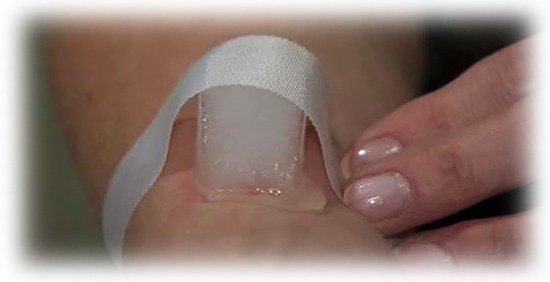
Suspicions are confirmed if there is itching, redness, or a rash at the site of exposure.
How to deal with allergies?
Knowing that the cold will cause unpleasant symptoms, you should dress warmer than usual. By choosing clothing styles and accessories that maximally protect the skin from wind and snow, you can avoid allergies. Knitted scarves, various shawls, gloves and mittens, as well as hats with "ears" will help keep you warm. A protective cream for the face and hands must be applied before every time you go outside. If the diagnosis is confirmed by laboratory, after each hypothermia, you need to take an allergy drug. What you shouldn't do is eat ice cream and drink ice water.
In the case when the disease is inherited, it is rather difficult to prevent its development. In the absence of allergic reactions in relatives, it is highly possible to live a life without allergies. To begin with, it is important to try all new products with a small portion, gradually increasing it. For hygiene, it is better to use hypoallergenic products without fragrances. The use of perfumed products is best kept to a minimum. Potentially allergenic foods should not be overused.
An active lifestyle contributes to maintaining good physical shape and serves as an excellent prevention of allergies.
It is better to get used to the cold gradually, starting from childhood. The more the child is outdoors, the less likely it is to develop allergies. Proper nutrition normalizes the digestive tract and minimizes the risk of a reaction to various foods. Naturally, it is worth giving up smoking and drinking alcohol, as they help to reduce the body's resistance.