Tooth cancer: symptoms and photos of the initial stage - methods of diagnosis and treatment
Many people do not even know if tooth cancer really or anything is meant by this term.However, such a disease exists and is diagnosed.Malignant tumor can form in any type of dental tissue - enamel, dentin, cement.
As a rule, the tumor develops from a tooth germ, where separation of dentin and enamel should occur.In case of belated diagnosis of the disease, the worst case scenario will be metastasis in the tissues of neighboring organs, which can lead to such types of pathologies as cancer of the throat, lips, gums, tongue, etc.
Symptoms of dental cancer
As a rule,Formed from the rudiments on the lower jaw.The main difficulty in his cure is that even surgical intervention does not guarantee final recovery.
Successful treatment requires the use of standard procedures to date, such as chemotherapy and radiation.
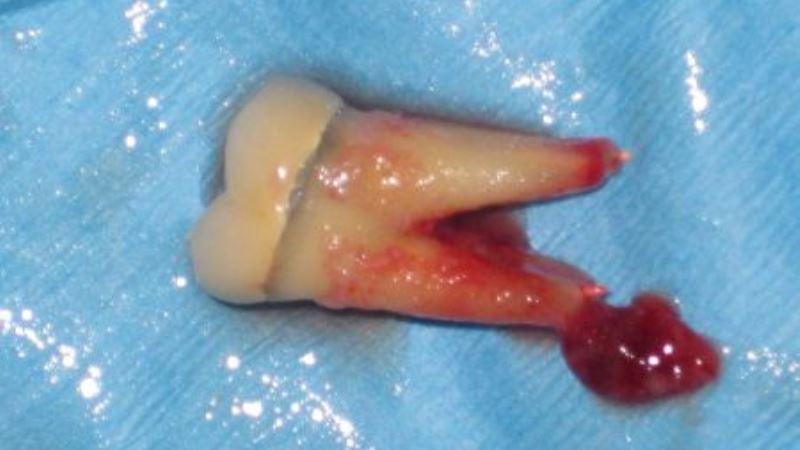
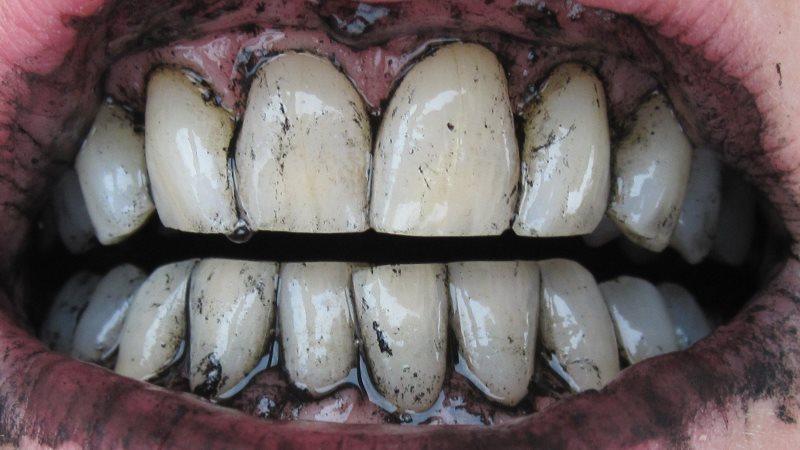
Symptoms of tooth cancer( see photo) are able for a long time not to give the appearance of , which significantly complicates its detection.Nevertheless, there are a number of signs that may serve as a signal that the patient has a tooth cancer and these include:
- weakening of the osseous structure of the jaw, resulting in frequent fractures and fistula;
- difficulty with swallowing and inability to open wide mouth due to tumor growth;
- infringement of harmony of a dentition and loosening of a teeth;
- aching pain as a result of the effect of the tumor on the nerve endings;
- crunch in the lower jaw with pressure;
- inversion of the jawbone from the outside.

Radiography can detect the presence of a malignant tumor
Varieties of dental tumors
Typically, the nosological type of tumor depends on what tissues are affected by cancer and what its localization is.So, tooth cancer( see photo) can be divided into the following categories:
- Adamantino .Not the most common type of dental cancer.It affects the enamel cells of the teeth and is found, mainly, in people aged 18-25 years.The focus of the disease is most often located in the region of molars of the lower jaw.The development of adamanthinoma is accompanied by deformation of the maxillofacial structure and forms an obvious swelling.In turn, it has two main forms:
- solid( massive) ameloblastoma - a spongy tissue containing many small cysts in the cavities;
- Cystic ameloblastoma is the most common type, in the form of a cyst lined from the inside with an epithelial membrane.
- Odontogenic fibroid .It develops mainly from the side of the lower jaw and is characterized by slow growth.It is distributed mainly among middle-aged people and becomes visible only as a result of radiography or excessive proliferation.
- Cement to .A tumor in the form of a capsule located in the region of the roots of molars and premolars of the lower jaw.With an increase in the size of the tumor, inflammation and pain in the soft tissues of the oral cavity begin.
- Odontoma .Odontogenic tumor, formed from various tissues of the tooth germ.Also divided into two main variations:
- soft ameloblastofibroma , consisting of periodontal and enamel cells;
- is a solid ameloblastofibroma that occurs on both jaws and is formed from various parts of the formed tooth.

Dental cancer can release metastases into the tongue and other soft tissues
Diagnosis of a dental cancer
Most often the following occurs.During the treatment of the patient to the dentist with complaints, he conducts a primary examination of the oral cavity and, if necessary, appoints an X-ray examination.
In case of detection of foreign elements in the bone structure, the patient is sent to an oncologist who must render the final verdict.
To accurately determine the composition, type and level of development of the tumor, the cytological analysis of is used, in which the necessary cellular material of the neoplasm is removed by biopsy.
In some cases is detected by the root of the tooth root.Often, a basal cyst is used for it.
A cyst is a cavity filled with dead cells of the epithelium and dead bacteria.The most common cause of the appearance of the root cyst is the penetration of the infection into the root canals.The inflammatory process does not go beyond a certain area, as it is restrained by the walls of the cavity.But a permanent increase in its volume leads to a gradual degeneration of bone tissue.
In the future, the cyst can develop into a real cancer tumor.This turn of events compels doctors to resort to the removal of the tooth along with the tumor.
This is mainly due to the fact that patients seek treatment at the later stages of the disease.However, in a number of cases, it is possible to save the tooth as a result of laser therapy.
Some people are afraid to resort to oncology methods of treatment.They ask themselves questions like, will the teeth fall out after irradiation with cancer of the tongue, larynx, throat and so on?Answer: The doses used in treatment do not cause such an effect.

Timely diagnosis of the disease will stop it at an early stage
Whatever the problem with your teeth, will never be superfluous to resort to a qualitative examination of .A timely trip to the dentist will help to identify and prevent in the early stages of dangerous diseases of the jaw bone and oral cavity.To such concerns and a cancer of a tooth at an initial stage( see a photo).
In addition, a cancerous tumor can not always be detected without error from the first time.Removing the tooth with ignoring oncological pathologies and setting the wrong diagnosis can lead to an accelerated development of cancers.Therefore, it is extremely important to consult an oncologist at the slightest hint of a tumor.