Vertebrobasilar insufficiency (VBI): symptoms and treatment
Content
- What is vertebrobasilar insufficiency?
- Symptoms of vertebrobasilar insufficiency
- Symptoms in young children
- Complications of VBI
- Causes of vertebrobasilar insufficiency
- Diagnostics
- Treatment of vertebrobasilar insufficiency
- Medications
- Surgical intervention
- Prevention of VBI
- Prognosis for vertebrobasilar insufficiency
What is vertebrobasilar insufficiency?
Vertebrobasilar insufficiency (abbr. VBI or vertebrobasilar syndrome) is a condition characterized by poor blood circulation in the back (dorsal) part of the brain, feeding on two vertebral arteries that connect, turning into basilar artery. The blockage of these arteries occurs over time as a result of a process called atherosclerosis, or plaque formation. Plaques are made up of deposits of cholesterol, calcium, and other cellular components. Not only do they stiffen arteries, but they increase growth over time and can interfere with or even block blood flow to the brain.
Vertebrobasilar arteries supply oxygen and glucose to the areas of the brain responsible for consciousness, vision, coordination, balance and many other important functions. Both limited blood flow and complete blockage of it - the so-called
ischemic events - have serious consequences for brain cells. Ischemia occurs when blood flow to the brain damages cells. Transient ischemic attack (TIA), or "mini-stroke," is an ischemic event that leads to a temporary loss of brain function. If the resulting loss of brain function is permanent, it is called stroke (cerebral infarction or cerebral attack). Stroke can be caused by a blockage in the vertebral or basilar artery, or by rupture of an intravascular substrate (emboli) that travels downstream and blocks some of the blood flow to the brain.Symptoms of vertebrobasilar insufficiency

Symptoms and signs of VBI are usually divided into two main groups:
- Temporary manifestations.
- Constant symptoms.
Temporary symptoms vary in duration - from a couple of hours to several days. At the same time, they manifest themselves in the form of ischemic attacks of a transient type, characterized by acute disturbances in blood circulation in the brain area.
Most often temporary symptoms manifest themselves as follows:
- painful manifestations in the back of the head, are pressing in nature;
- discomfort in the area of the cervical spine next to the spinal column;
- dizziness.
Persistent symptoms are characterized by an increase in manifestations as the vertebrobasilar develops. failure, and as a result can cause ischemia, which, in turn, increases the risk of stroke.
The main persistent symptoms VBN include:
- severe headaches that press on the head or cause throbbing, spreading to the occipital region;
- dizziness, with their frequent manifestations is possible fainting;
- feeling of nausea;
- hearing impairment;
- constant noise in ears;
- attentiveness and memory significantly deteriorate;
- distraction arises;
- vision problems - there is no clarity of the image, there are dark dots in front of the eyes, occasionally there is diplopia (instead of one object, a person sees two);
- chronic fatigue;
- fast fatiguability;
- unreasonable aggression, excessive irritability, panic;
- increased sweating;
- heat in the face and hands;
- tachycardia of the heart;
- the throat is sore, there is a sensation of a foreign object.
Symptoms in young children
It was previously believed that vertebrobasilar insufficiency is mainly a disease of adults, but according to over time, we found out that in fact VBN can affect even small children starting from the age of three age.
According to the researchers, the causes of VBI in children are congenital pathologies in the vertebral and basilar arteries and various kinds of trauma.
If the child has the following symptoms, then this is a clear sign that the baby may have vertebro-basilar syndrome:
- very fatigue;
- the child constantly cries and feels unreasonable anxiety;
- there is frequent drowsiness;
- posture is sharply disturbed;
- while in a stuffy room, the child begins to feel very dizzy, a similar state can result in fainting.
Complications of VBI
If, after the onset of the above signs, the vertebrobasilar syndrome was not diagnosed, and accordingly, no measures were taken to treat it, the development of the following symptoms:
- significant difficulty in swallowing;
- deterioration in speech clarity due to numbness in the mouth area;
- the occurrence of hallucinations;
- complete loss of vision;
- drop attacks (unexpected falls);
- stroke.
Causes of vertebrobasilar insufficiency
VBI can develop as a result of a number of different reasons, but the most common of them are the following:
- atherosclerosis and pathologies associated with vascular conductivity;
- osteochondrosis of the cervical spine;
- neck injury, leading to compression in the vertebral artery;
- high blood pressure;
- narrowing (stenosis) and stretching of the wall (aneurysm) of medium-sized arteries;
- hypoplasia in the region of the vertebral arteries;
- inflammatory processes in the vessels;
- pathologies of the scalene muscle, which provoke compression in the region of the vertebral artery;
- Congenital heart defect;
- stratification in the arteries of the vertebro-basilar type: as a result of deformation of the walls between the tissues, blood begins to seep;
- the occurrence of a blood clot in the area of the arteries;
- diabetes as a result, the defeat of small vessels in the brain area is observed;
- antiphospholipid syndrome - a disease resulting in an increase in the number of blood clots thrombosis) and the permeability of blood through the arteries decreases;
- spondylosis of the cervical spine;
- spondylolisthesis;
- hernia in the spine;
- genetic predisposition.
Diagnostics
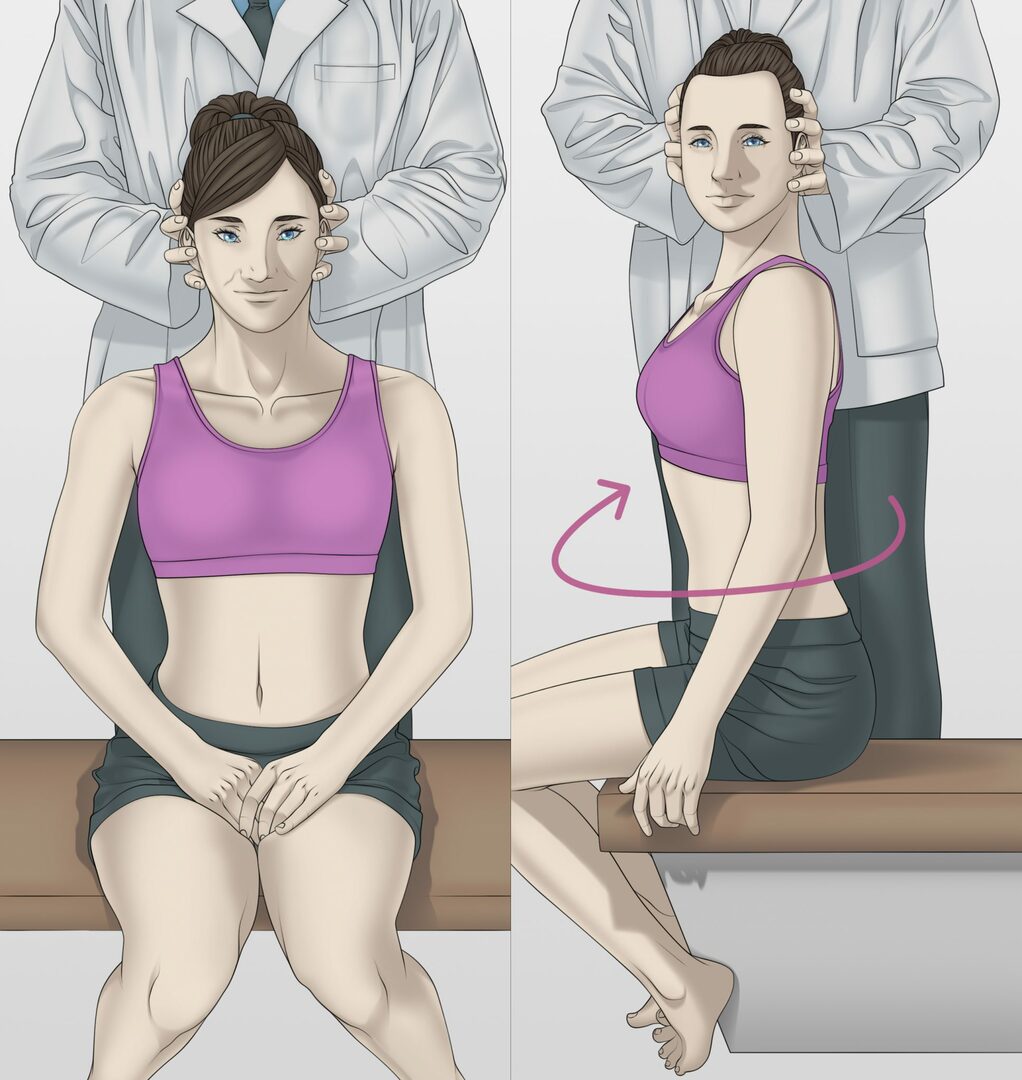
It is rather difficult to diagnose VBI, since most of its symptoms are identical to a number of other diseases. Therefore, a number of functional tests are used to confirm the presence of circulatory failure. For example, a patient is asked to track a rapidly moving object. If, in the process of these actions, a person develops a headache or dizziness, then this is the most striking sign of the presence of vertebro-basilar insufficiency.
In addition, they carry out de Klein test in the course of which the patient turns his head in different directions, and then throws it back. If, after these actions, the above symptoms appear (dizziness, headache), then this indicates the presence of VBI.
Among the hardware-type diagnostic methods, the following are widely used:
- Ultrasound examination of cerebral vessels - is the most popular method for detecting this disease, it is also used to assess the state of blood circulation in the brain;
- MR-angiography - with its help, you can visualize the main part of the lesions in the brain and neck, and then determine their size, nature and degree;
- Spiral CT - used to visualize the lumens and walls of blood vessels;
- Digital (digital) subtraction angiography is another method of vascular imaging;
- Rheoncephalography - makes it possible to study the cerebral type of blood circulation;
- Conducting neuropsychological tests. With the help of specially prepared tests, a person's perception of the disease and the restrictions created by it are studied.
Treatment of vertebrobasilar insufficiency
The chosen method of VBI therapy directly depends on the nature of vascular lesions.
At the initial detection of the disease, especially if it is a syndrome of the vertebrobasilar arterial system, a number of rules must be observed:
- a blood pressure measurement procedure should be performed every day;
- you should go on a diet in which foods such as salt, white bread, various semi-finished and smoked foods, canned food, fried and fatty foods should be reduced in the diet;
- it is required to give up such a bad habit as smoking;
- alcoholic beverages should be removed from your diet, with the exception of a small amount of red wine;
- all physical activity should be of medium intensity.
If, after such changes in life, no improvement is observed for 3-6 months, then you should switch to medication and physiotherapy.
Medications
In the presence of VBN, treatment includes the use of the following groups of drugs:
- Blood thinning products and preparations and preventing the formation of blood clots. They start to consume with small doses, which are gradually increased. If a certain drug from this group does not give the desired effect, then several similar drugs are used.
- Antiplatelet agents - reduce blood clotting. Their use is required to prevent blood clots. The most common drug in this group is Aspirin. The disadvantage of such funds is their strong effect on the stomach and intestines, which can provoke the development of bleeding.
- Nootropic and metabolic drugs - used for the functioning of the brain. These funds include Seamax, Glycine, Actovegin.
- Medicines for blood pressure regulation (Adelfan, Akcupro). Their appointment is not made to all patients and depends entirely on the individual characteristics of the organism.
In turn, the following groups of drugs are used to combat symptoms:
- pain relievers;
- antidepressants;
- antiemetics;
- hypnotic.
Surgical intervention
If the disease is in an advanced state, then, apart from surgery, no other methods of treatment can help.
At this stage of time, the following operations are performed:
- removal of intervertebral hernia;
- endarterectomy - during its implementation, the atherosclerotic plaque is removed along with the affected area of the artery;
- restoration of the primary appearance of intervertebral discs using a laser;
- angioplasty - a special stent is installed in the artery to prevent blockage of the lumen and maintain a stable level of blood permeability.
An important condition for the quality treatment of the disease is consultation with a professional doctor. There can be no thoughts about self-medication, since this can lead to significant complications during the course of the disease, and even, in general, death.
It is required to fully follow the recommendations of the attending physician, then a positive effect will soon be noticeable.
Prevention of VBI
Sometimes VBI cannot be prevented. Especially in those who are aging or who have had a stroke. However, for others, there are preventive steps that reduce the development of atherosclerosis and VBI. These include:
- quit smoking;
- blood pressure control;
- control of blood sugar levels;
- Eating a healthy diet rich in fruits, vegetables, and whole grains
- be physically active.
Prognosis for vertebrobasilar insufficiency
The prognosis for VBI depends on the existing symptoms, health status and age. Younger people who experience mild symptoms and control them through lifestyle changes and medications generally have good results. Older age, weakness, and strokes can negatively affect prognosis. Talk with your doctor about treatment strategies and medications that can help prevent NDI or reduce its symptoms.