Ebstein's anomaly: what is it, symptoms, treatment, prognosis
Content
- Introduction
- What is Ebstein's anomaly?
- What are the heart problems with Ebstein's anomaly?
- Causes of Ebstein's anomaly
- Ebstein's anomaly symptoms
- Diagnostics
- Ebstein's anomaly treatment
- Forecast
- Conclusion
Introduction
Ebstein's anomaly is a type of congenital heart disease characterized by an abnormally developed tricuspid valve and right ventricle. These deviations can be relatively mild or quite severe. Depending on the severity of these anatomical problems, the symptoms of those born with the abnormality can vary greatly.
Some babies with Ebstein's anomaly are critically ill at birth. Others live as adults without any symptoms. However, almost everyone who was born with this condition will develop heart problems sooner or later.
What is Ebstein's anomaly?
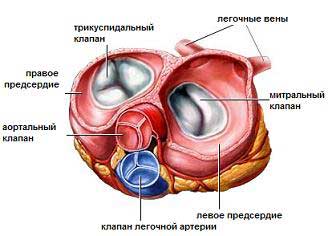
First of all, Ebstein's anomaly is caused by a violation of the normal development of the tricuspid valve in the fetus. During development, the leaflets (leaflets) of the tricuspid valve cannot move in their normal position, at the junction of the right atrium and the right ventricle. Instead, the leaflets move downward within the right ventricle. In addition, the leaflets themselves often laminate (“stick”) to the wall of the right ventricle and therefore do not open or close properly.
Since the tricuspid valve is displaced downward in the abnormality, the part of the right ventricle located above abnormal tricuspid valve, considered "atrialized" (becomes part of the enlarged right atria). That is, the atrial chamber of the heart will not only contain normal atrial tissue, but it will also be part of what would be the right ventricle of the heart.
What are the heart problems with Ebstein's anomaly?
Due to the abnormal position and deformation of the tricuspid valve that occurs with Ebstein's anomaly, the valve is usually regurgitant, or "leaky." As a result, tricuspid regurgitation is usually the main manifestation of this condition.
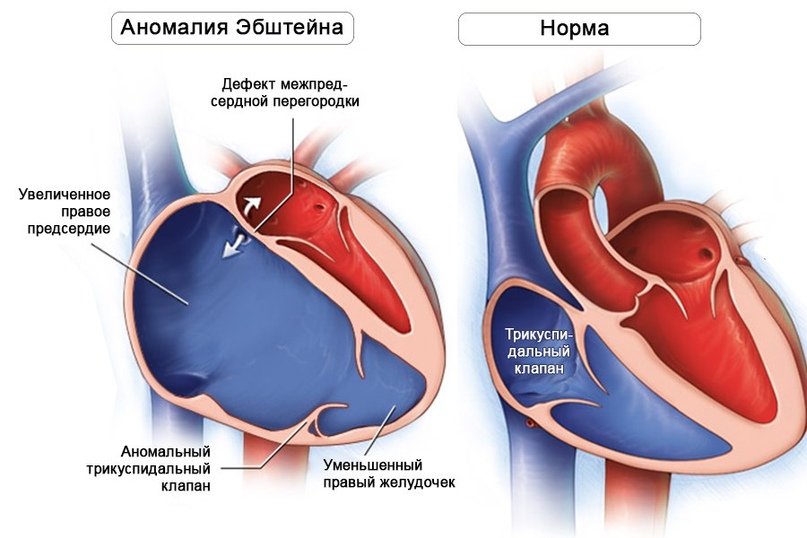
In addition, problems also arise in the atrium of the portion of the right ventricle above the displaced tricuspid valve. The atrial part of the right ventricle begins to beat when the rest of the right ventricle beats, not when the right atrium beats. This discordant muscular action in the atrial chamber enhances tricuspid regurgitation as well as creates a tendency for blood to stagnate in the right atrium - a condition that can lead to the formation blood clots.
The severity of Ebstein's anomaly is related to the degree of displacement and deformation of the tricuspid valve, as well as the amount of right ventricular tissue that subsequently atrializes. People born with the abnormality who have relatively few or no symptoms usually have very little valve displacement and, therefore, have little atrialization of the right ventricle.
In addition to the Ebstein anomaly itself, people with the condition also have a high incidence of additional congenital heart problems. These include an open foramen ovale (i.e., a small opening between the right and left atrium), atrial septal defect, pulmonary outflow obstruction, patent ductus arteriosus, a ventricular septal defect and additional electrical pathways in the heart that can cause cardiac arrhythmias.
When one or more of these additional congenital problems are present, the symptoms and outcomes of people with the abnormality often worsen significantly.
Causes of Ebstein's anomaly
Ebstein's anomaly occurs in about 1 in 20,000 live births.
Although previously identified genetic mutations have been associated with the abnormality, no particular mutation is believed to be the main cause of this condition.
An association has been reported between Ebstein's anomaly and the use of lithium or benzodiazepines by a pregnant mother, but a causal relationship has also not been proven.
So, for the most part, this anomaly occurs sporadically (accidentally).
Ebstein's anomaly symptoms

Symptoms and signs experienced by people with Ebstein's anomaly vary greatly, depending on both degree of tricuspid valve abnormality, and the presence or absence of other congenital problems with heart.
Babies born with severe tricuspid valve dysfunction caused by the abnormality often have other congenital heart problems and may be critically ill from birth. These children often have:
- heavy cyanosis (low oxygen levels in the blood);
- shortness of breath;
- weakness and swelling.
Babies born with the abnormality who have significant tricuspid regurgitation but do not have other serious congenital heart problems may be healthy but have often develops right-sided heart failure either in childhood or adulthood.
On the other hand, if tricuspid valve dysfunction is mild, the person with the abnormality may be asymptomatic for their entire life.
There is a strong connection between Ebstein's anomaly and abnormal electrical pathways in the heart. These so-called "accessory pathways" create an abnormal electrical connection between one of the atria and one of the ventricles; with anomalies, they almost always connect the right atrium to the right ventricle.
These additional paths often called type of supraventricular tachycardiacalled atrioventricular nodal reentrant tachycardia (AVNRT). Sometimes these same additional pathways can cause Wolff-Parkinson-White syndrome, which can lead not only to AVNRT, but also to much more dangerous arrhythmias, including ventricular fibrillation. As a result, these additional pathways may pose an increased risk. sudden cardiac death.
Because Ebstein's anomaly often slows down blood flow in the right atrium, blood clots tend to form. If these blood clots embolize (ie, become clogged), they can pass through the circulation and cause tissue damage. Thus, Ebstein's anomaly is associated with an increase in the frequency pulmonary embolism (PE), and (since clots from the right atrium can travel through the open foramen ovale into the left atrium), they can also cause stroke.
The main causes of death from the anomaly are heart failure and sudden death from cardiac arrhythmias.
Diagnostics
The key examination method for diagnosing an anomaly is echocardiogram (Ultrasound of the heart), usually transesophageal echocardiographygives the most accurate results. An echocardiogram can accurately assess the presence and extent of tricuspid valve abnormalities and can identify most other congenital heart defects that may be present.
In adults and older children who receive an initial assessment of Ebstein's anomaly, an exercise test is usually performed to assess their physical performance, blood oxygenation during exercise and the response of heart rate and blood pressure to physical load. These measurements are useful for assessing the overall severity of the heart condition and the need and urgency for surgical treatment.
It is also important to evaluate people who have the abnormality for the presence of cardiac arrhythmias. In addition to annual electrocardiogram (ECG) and ambulatory ECG monitoring, most of these people should be examined by an electrophysiologist after being diagnosed to assess the likelihood of developing potentially dangerous arrhythmias.
Ebstein's anomaly treatment
In general, if the abnormality is causing significant symptoms, treatment is surgical repair.

Surgery in newborns with severe Ebstein's anomaly is usually delayed as long as possible due to the high risk of repairing the problem in infants. These children usually receive aggressive medical attention in the intensive care unit, trying to postpone surgery until they grow up. If possible, the operation is postponed for at least several months.
In older children and adults newly diagnosed with Ebstein's anomaly, surgical treatment is strongly recommended as soon as any symptoms appear. However, if they have a significant degree of heart failure, an attempt is made to stabilize them with medical therapy before surgery.
The surgical procedures used to correct the abnormality can be quite complex, and the specific surgical procedures that are performed vary from person to person. depending on the state of the tricuspid valve, on the presence or absence of additional congenital heart defects, on whether or not there is severe heart failure and on age the patient.
In general, the goal of the operation is to normalize (as much as possible) the position and function of the tricuspid valve and to shrink the right ventricular atrium. In milder cases, this goal can be achieved using surgical repair techniques and tricuspid valve repositioning. In more severe cases, replacement of the tricuspid valve with an artificial valve is necessary.
Ebstein's anomaly surgery also includes the correction of atrial and / or ventricular defects septa, if any, and any other congenital heart problems that have been diagnosed.
Children and adults who have only a mild anomaly and are asymptomatic often do not need surgery at all. However, they still need to be closely monitored for the rest of their lives for any changes in their heart condition.
In addition, despite their "mild" abnormality, they can still have additional electrical pathways and hence the risk of cardiac arrhythmias, including an increased risk of sudden death. Therefore, this risk should be carefully assessed. If potentially hazardous additional electrical pathways are identified, ablation therapy should be strongly recommended to get rid of the abnormal electrical connection.
Forecast
The prognosis of Ebstein's anomaly depends on the severity of the tricuspid valve problem and the presence or absence of other congenital heart problems. Critically born babies with the disease have a high mortality risk - more than 30 percent die before they are discharged from hospital.
The risk of premature death when the anomaly is diagnosed in later childhood or adulthood also depends on the severity of the condition. However, in recent decades, aggressive surgical treatment and prophylactic treatment of potential cardiac arrhythmias have significantly improved the prognosis in people with Ebstein's anomaly.
Conclusion
Ebstein's anomaly is a congenital deformity and malposition of the tricuspid valve. The severity of the condition varies from person to person and ranges from extremely severe to relatively moderate (mild).
It is important for anyone with an abnormality, even a very mild one, to undergo a complete cardiac examination and monitoring throughout their life.
Thanks to modern surgical techniques and careful management, the prognosis of people with Ebstein's anomaly has improved significantly over the past decades.