Fournier's gangrene: causes, symptoms (photo), treatment, prognosis
Content
- What is Fournier's gangrene?
- Signs and symptoms
- Causes
- Causative agents
- Affected populations
- Symptomatic Disorders
- Diagnostics
- Standard treatments
- Forecast
What is Fournier's gangrene?
Fournier's gangrene Is an acute necrotizing infection of the scrotum; penis; or perineum. The condition is characterized by scrotal pain and redness, with rapid progression to gangrene and tissue detachment. Fournier's gangrene is usually secondary to perirectal or periurethral infections associated with local trauma, surgical procedures, or urinary tract disease.
Since 1950, more than 1,800 cases of the condition have been reported in the medical literature for study. The disease occurs throughout the world and, although the disease is more common in adult men, cases have also been identified in women and children.
Treatment usually consists of surgical removal (debridement) of large areas of necrotic tissue (dead tissue) and intravenous administration of broad-spectrum antibiotics. Surgical reconstruction may follow if necessary.
Signs and symptoms
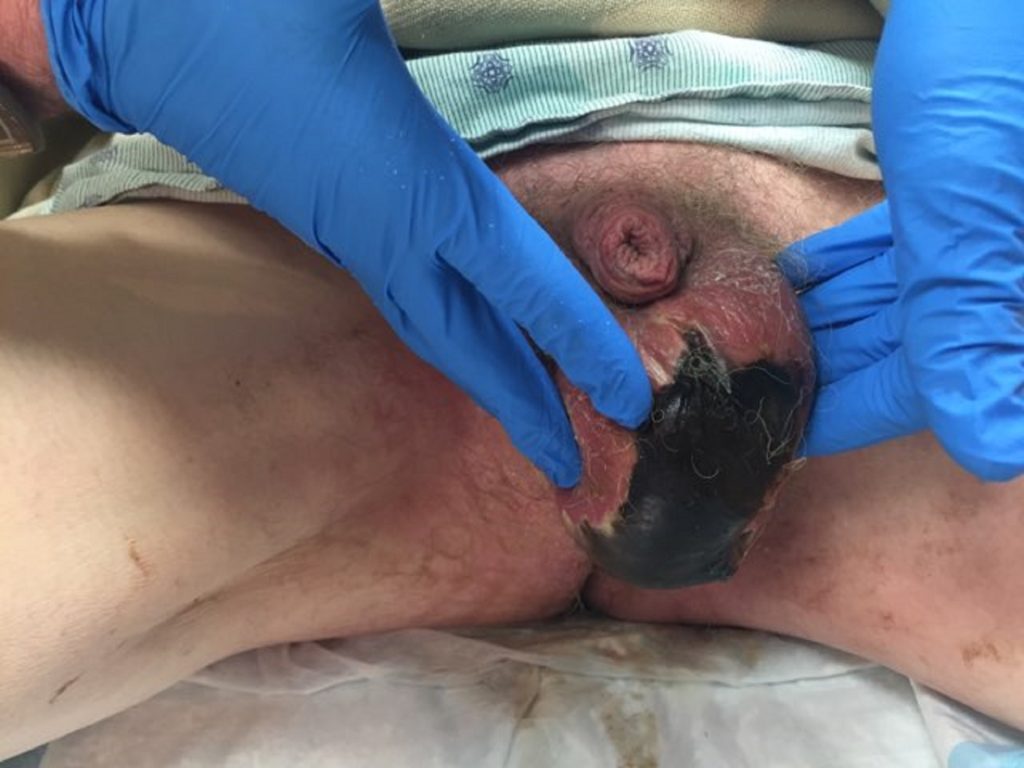
Symptoms include fever, general discomfort (malaise), moderate to severe pain, and swelling in the genital and anal areas. area (perineum), accompanied by irritation and odor of the affected tissue, resulting in full blown (lightning fast) gangrene (see. Photo). Rubbing the affected area results in distinct sounds (crepitus) of gas in the wound and tissue moving against each other (palpable crepitus). In severe cases, tissue death can spread to parts of the thighs, through the abdominal wall, and up to the chest wall.
The disease usually occurs in conjunction with other disorders (comorbidities), especially those that weaken the immune system. Some disorders that increase the predisposition to Fournier's gangrene are diabetes, deep obesity, cirrhosis of the liver, violation of the blood supply to the pelvis and various malignant neoplasms.
Causes
The gateway for bacteria, fungi, and / or viruses responsible for a particular case of Fournier's gangrene, usually the colorectal and urogenital areas or skin. Anorectal abscesses, urinary tract infections, surgical interventions and other contributing factors can provoke the onset of the disease. In some cases, the cause is unknown (idiopathic). Why this process sometimes develops in people with common diseases is still not clear.
There are many ways for a virulent microorganism to gain access to a host when a compromised immunological system cannot prevent the spread of infection. The virulence of the emerging disorder is believed to be enhanced by toxins and enzymes produced by a combination of microorganisms (synergy).
Causative agents
Wound cultures of patients with Fournier's gangrene show that it is a polymicrobial infection with an average of 4 isolates in each case. Escherichia coli (E. coli) is the predominant aerobic and Bacteroides (Bacteroids) - the predominant anaerobic.
Other common microflora include:
- Proteus;
- Staphylococcus aureus;
- Enterococcus;
- Streptococcus (aerobic and anaerobic);
- Pseudomonas;
- Klebsiella;
- Clostridium.
Affected populations
The average age at onset of the disease is about 50 years, but the age range of patients in reported cases is from 8 days to 90 years. Fournier's gangrene is more commonly diagnosed in men. It is possible that the high ratio of men to women in diagnosis is a result of insufficient recognition of the disease among women by doctors. It is believed that the ratio between men and women can range from 5: 1 to 10: 1.
Symptomatic Disorders
Symptoms of the following disorders may be similar to those of Fournier's gangrene. Comparisons can be useful for differential diagnosis.
- Epididymitis Inflammation of the long, tightly coiled tube behind each testicle (epididymis) that carries sperm from the testicle into the seminal duct. In sick people, painful swelling of one epididymis and the associated testicle is usually observed. In some cases, the second testicle may also be painful. In addition, affected individuals have fever, painful swelling, and redness (erythema) of the scrotum and / or inflammation of the tube that drains urine from the bladder (urethritis). There are two main forms of epididymitis - the sexually transmitted form and the nonspecific bacterial form.
- Gas gangrene - Severe tissue necrosis, usually caused by bacteria that do not need oxygen (anaerobic bacteria), such as Clostridium perfringens. The disease can be the result of infections caused by bacteria Group A streptococci and Staphylococcus aureus and Vibrio vulnificus (Vibrio vulnicus). Clostridium bacteria produce toxins that cause tissue death and associated symptoms in a low oxygen environment. Gas gangrene is rare, with 1,000-3,000 cases annually in the United States. There are no statistics for Russia.
- Hydrocele (dropsy of the testicle) is a fluid-filled sac along the spermatic cord in the scrotum. Hydroceles are common in newborn babies. They can be unilateral or bilateral and disrupt the tract through which the testicle descends from the abdomen into the scrotum to close. Peritoneal fluid drains through an open tract from the abdominal cavity into the scrotum, where it becomes trapped, causing the scrotum to expand. Hydrocele can also be caused by inflammation or injury to the testicle or epididymis, or blockage of fluid or blood within the spermatic cord. The incidence of this type of hydrocele is higher in older men.
- Orchitis - inflammation of one or both testicles, often caused by an infection. Orchitis can be caused by numerous bacterial and viral organisms. Orchitis is usually due to epididymitis (see. above). The most common viral cause of orchitis is parotitis. About 30% of patients who have mumps develop orchitis during the course of the disease. It is most common in post-pubertal boys (rarely under 10 years of age). Orchitis usually appears 4-6 days after the onset of mumps. One third of boys who have mumps orchitis may develop testicular atrophy (testicular shrinkage).
Defective diseases such as diabetes, alcoholism, HIV infection, and malnutrition appear to increase a person's susceptibility to Fournier's gangrene, but are not related disorders.
Diagnostics
Diagnosis is mainly clinical. Ultrasonography can provide early differentiation between Fournier's gangrene and an acute inflammatory process such as epididymitis or orchitis. Computed tomography can help determine the gateway and spread of the process, but this is not necessary and should not delay surgical treatment.
X-ray examinations are useful to confirm the location and extent of gas distribution in wounds. Ultrasonography is useful for detecting gases and / or liquids, but patients with severe pain may not be able to withstand the pressure on the skin to obtain an acceptable image. Computerized tomography (CT) images are preferred because they can detect more gases and fluids in soft tissue.
Standard treatments
It is very important to recognize the disorder and initiate aggressive resuscitation and intravenous administration as soon as possible. broad-spectrum antibiotics. Such antibiotics should be followed by urgent surgical debridement of all affected dead (necrotic) skin and subcutaneous tissue, with repeated removal of the wound edges if necessary. If a colorectal or urogenital origin is established, source control is mandatory, as appropriate for each case.
Patients with severe blood infection (sepsis) are at increased risk of developing blood clots (blockage (embolism) of blood vessels) and may need antithrombotic drugs (anticoagulants) to reduce the risk of thrombosis. Reconstructive surgery is performed after the infection is under control.
In addition, any comorbidities (eg diabetes, alcoholism) must eventually be eliminated. Such conditions are common in these patients and potentially predispose to Fournier's gangrene. Failure to adequately manage comorbid conditions can threaten the success of even the most appropriate interventions for treating an infectious disease.
Forecast
Large skin defects of the scrotum, perineum, penis and abdominal wall may require restorative procedures; however, the prognosis for patients after Fournier's gangrene reconstruction is generally good. The scrotum has a remarkable ability to respond to treatment and regenerate (recover) as soon as infection and necrosis disappear. However, about 50% of men with penile involvement develop erectile pain, often associated with genital scarring. Consultation with a psychiatrist can help some patients cope with the emotional stress caused by a change in body image.
If extensive soft tissue is lost, lymphatic drainage may be impaired; thus, addictive edema and cellulite may occur. The use of external support aids can be helpful in minimizing this postoperative problem.