Cockayne syndrome: what is it, causes, symptoms, treatment, prognosis
Content
- What is Cockayne Syndrome?
- Signs and symptoms
- Causes (etiology)
- Affected populations
- Related disorders
- Diagnostic methods
- Standard treatments
- Forecast
What is Cockayne Syndrome?
Cockayne Syndrome (SK) is a rare form of dwarfism. It is a hereditary disease, the diagnosis of which depends on the presence of three signs (1) of stunted growth, i.e. short stature, (2) abnormal sensitivity to light (photosensitivity), and (3) premature aging (progeria).
In the classic form of Cockayne's syndrome (type I SC), symptoms progress and usually appear after one year. An early onset or congenital form of Cockayne's syndrome (type II KS) appears at birth (congenital). There is a third form, known as Type III Cockayne Syndrome (Type III KS), which appears later in the child's development and is usually a milder form of the disease. Fourth form; currently named complex pigmented xeroderma/ Cockayne's syndrome (PC / SK complex), combines the features of both of these disorders.
Signs and symptoms
The symptoms of all forms of Cockayne's syndrome are similar. The different types of disease are determined by the age of onset.
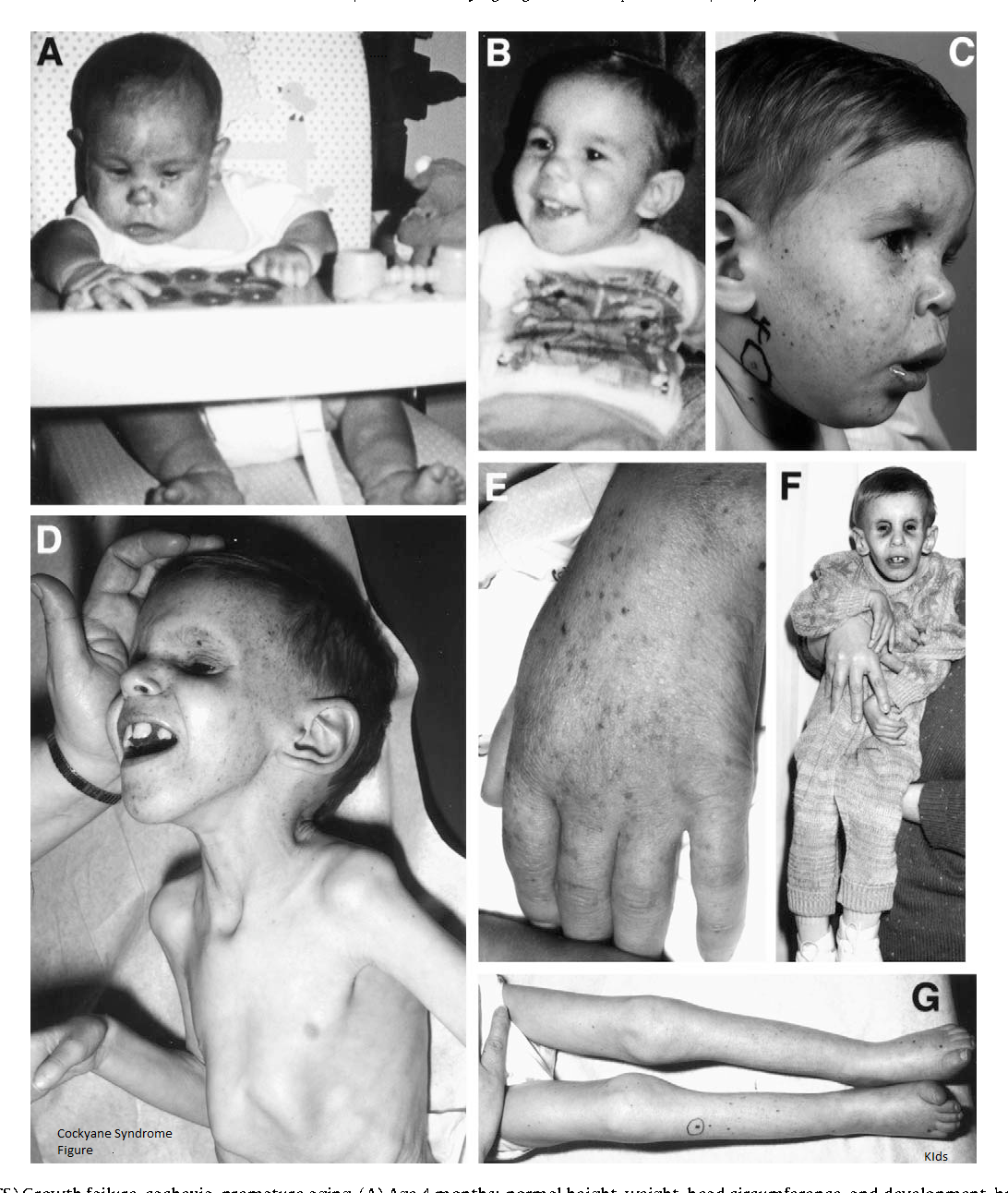
SK type I, the classic form, is characterized by the normal appearance of the newborn, symptoms may appear only after the first year. Height and weight, as well as other measures of height and size, are in the 5th percentile. Over time, vision, hearing and the functioning of the nervous system (central and peripheral) deteriorate, which can lead to serious disability.
Few cases of congenital SK type IIwhich have been reported are characterized by apparent lack of growth at birth and little or no neurological development after birth. Serious visual impairment (cataract and other structural abnormalities of the eye) are usually present at birth. Early skeletal aberrations also occur. It is likely that type II KS includes some patients previously diagnosed with cerebro-oculophacioskeletal syndrome and type II Pena-Shocker syndrome due to the identification of a common defect gene in these patients.
III type SK even more rare and characterized by mostly normal growth and mental development in the early years, but is interrupted by the late onset of the typical symptoms of Cockayne's syndrome.
PK / SK complex is the rarest form and includes signs of both diseases. Widespread freckles and early skin cancers are typical of xeroderma pigmentosa, while short stature, mental retardation, and insufficient sexual development are typical of KS.
Key characteristics of Cockayne syndrome include:
- delayed normal growth (dwarfism) in late childhood;
- extreme sensitivity to light (photosensitivity);
- premature aging (progeroid).
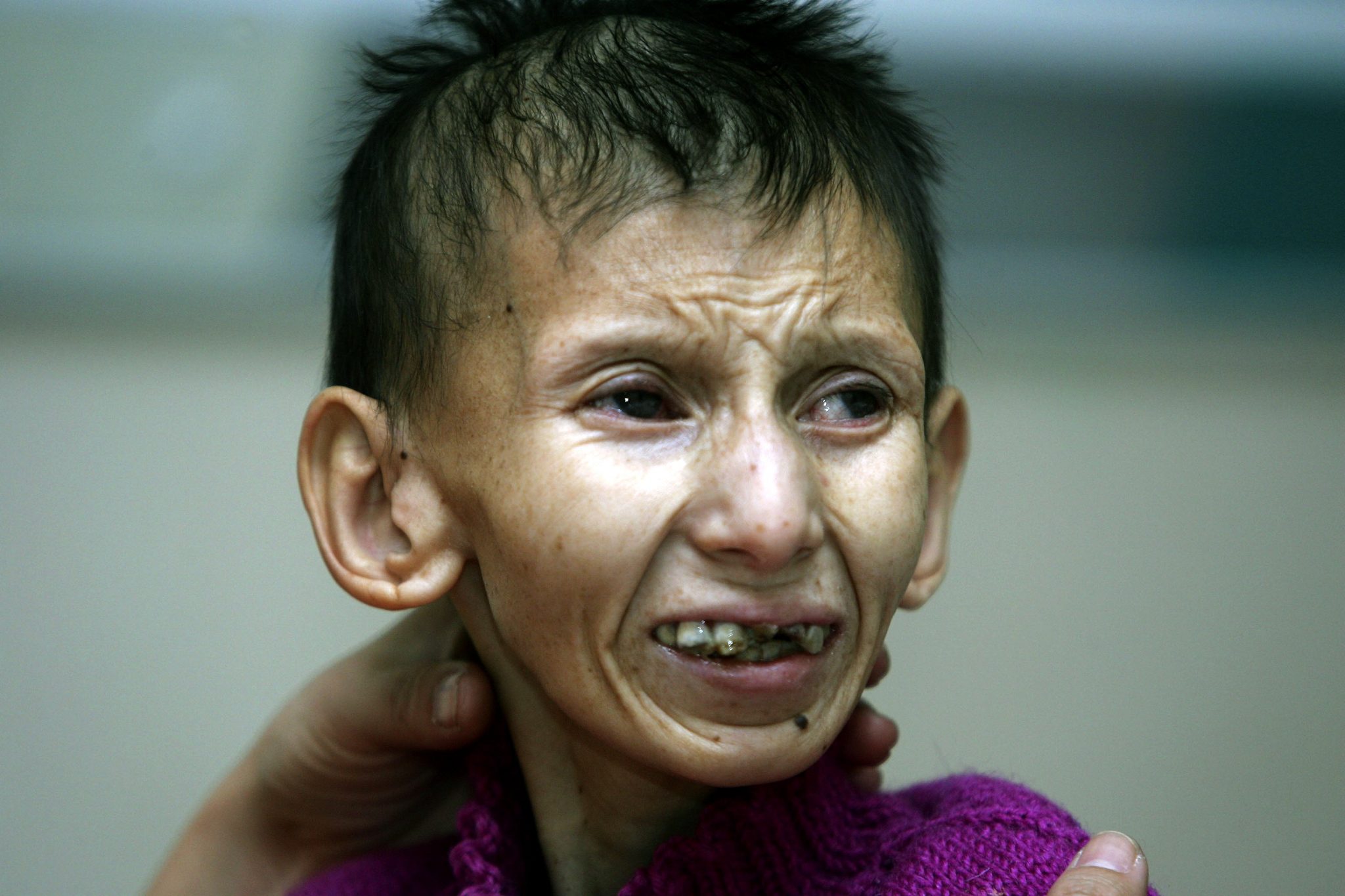
The skin appears wrinkled and aged, especially on the face, arms and legs, due to the loss of fat under the skin (subcutaneous adipose tissue). Children with this condition may have increased skin pigmentation.
Children with Cockayne syndrome have unusual physical characteristics, including:
- an abnormally small head (microcephaly)
- unusually thin nose
- Sunken or sunken appearance in the eye
- large misshapen ears
- jaw protrusion (prognathism).
There may be an unusual amount of tooth decay due to the misalignment of the teeth. Affected people usually have unusually long arms and legs in proportion to their body size. The joints can also be abnormally large and remain in a fixed position (flexed), and the spine can be bent outward when viewed from the side (kyphosis). Other features of Cockayne's syndrome may include decreased sweating (hypohidrosis), lack of tears in the eyes, and premature gray hair.
Other symptoms of Cockayne syndrome may include an abnormal blue skin tone (cyanosis) on hands and feet, which may also be cold to the touch. Neurologic symptoms may include rhythmic, shaky movements (tremors), unsteady gait (ataxia), and / or an inability to coordinate movement. Affected children may experience varying degrees of mental retardation, partial hearing loss and / or progressive loss of previously acquired intellectual abilities.
Symptoms of Cockayne syndrome that affect the eyes (eye signs) may include:
- progressive clouding of the lens of the eyes (cataract);
- loss of vision due to depletion of nerve fibers in the eyes (optic atrophy);
- retinal degeneration;
- retinal pigmentation.
Some people with Cockayne syndrome may also have abnormally high blood pressure (arterial hypertension), enlargement of the liver (hepatomegaly) and / or premature accumulation of fatty plaques on the walls of the arteries around the heart (atherosclerotic disease). Adults with this disorder may be sexually underdeveloped.
Causes (etiology)
At the molecular level, SC is caused by a defect in one of the genes involved in the normal repair of DNA that has been damaged by ultraviolet light. This is the body's natural defense against sunburn. Exposure to the ultraviolet component of sunlight damages DNA, but the cell is no longer able to repair damaged DNA as it forms and accumulates in the cell.
It is likely, or at least suspected, that some of the genes that cause CK are also are involved in protein synthesis, and that other signs of SC are the result of the production and accumulation of abnormal proteins in a cage.
The gene responsible for type I CK is mapped to chromosome 5 and is called ERCC8. The type II CK gene has been mapped to chromosomal locus 10q11 and is called ERCC6. Mutations in ERCC6 account for about 75% of cases, while mutations in ERCC8 cause about 25% of cases.
Cockayne syndrome is inherited as an autosomal recessive genetic trait. Human traits, including classic genetic diseases, are determined by two genes, one from the father and the other from the mother. Recessive disorders occur when a person inherits the same abnormal gene for one trait from each parent. If a person receives one normal gene and one gene for the disease, the person will carry the disease but usually show no symptoms. The risk for two carrier parents passing on both defective genes and therefore having a sick child is 25% with each pregnancy. The risk of having a carrier child, like the parents, is 50% with each pregnancy. The risk for a child to receive normal genes from both parents and be genetically normal for this particular trait is 25%.
Affected populations
Cockayne's syndrome is very rare and affects men and women in equal numbers. There are no signs of ethnicity or race. The incidence of KS is less than 1 in 250,000 live births. As of 1992 in the literature, about 140 cases of SK have been reported.
Related disorders
Symptoms of the following disorders may be similar to those of Cockayne's Syndrome. Comparisons can be useful for differential diagnosis:
- Hutchinson-Guildford syndrome (progeria) - a very rare disease of childhood, characterized by premature aging, short stature and unusual facial features. The primary symptoms of the disorder are associated with the aging process, including gray hair, wrinkled skin, arthritis, and heart diseases. Newborn babies with Hutchinson-Guildford syndrome have a normal birth weight, but profound growth disturbances occur during the first year of life. At about 10 years of age, most children with Hutchinson-Guildford syndrome reach an average height of three years old and have many health problems as older adults.
- Seckel's syndrome (or a combination of dwarfism with "bird-headedness") - a rare genetic disorder characterized by insufficient growth of the fetus and infants, mental retardation and typical facial features. Physical characteristics include abnormally small jaws (micrognathia) and head (microcephaly), as well as a bulging midface and beak-shaped nose. The ears are usually set low and misshapen, and the eyes are unusually large. Abnormal curvature of the spine may also be present (scoliosis) and underdevelopment of the external genital organs.
- Laron's dwarfism Is a rare genetic disorder characterized by short stature, unusual facial features, and abnormally high levels of growth hormone in the blood. Children with this disorder produce enough of this hormone, but their bodies cannot use it properly due to the lack of growth hormone receptors. Babies with Laron's dwarfism have severe growth retardation, delays in the appearance of teeth, disproportionate height between the crown of the head and jaws, flat wide nose and / or deep set eyes.
Diagnostic methods
Diagnosis is based on the detection of a specific TCR defect that can be identified using radioactive assay in cultured fibroblasts, which measures the recovery of RNA synthesis after UV irradiation. This DNA repair test is a critical tool for the diagnosis of KS. Specialized imaging testing (MRI) can demonstrate fat loss (demyelination) on certain nerve fibers in the brain.
Standard treatments
Treatment for Cockayne syndrome is exclusively supportive and symptomatic, and includes physiotherapy, sun protection, wearing a hearing aid, and often tube feeding, or gastrostomy.
Forecast
In type I KS, death occurs before the end of the second decade as a result of progressive neurological degeneration. Patients with type II have a more severe prognosis (on average, they live 2-7 years), while patients with type III live in adulthood, since type III proceeds with mild symptoms. People with type III Cockayne syndrome live in adulthood with an average life expectancy of 40-50 years.