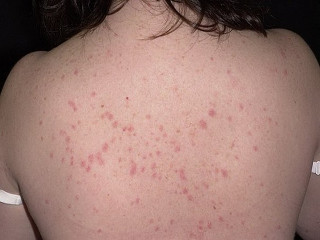
Zudeck's syndrome: what is it, causes, symptoms, treatment, prognosis
Content
- What is Zudeck's Syndrome?
- Signs and symptoms
- Causes and risk factors
- Pathophysiology
- Diagnostics
- Treatment
- Forecast
- Prophylaxis
What is Zudeck's Syndrome?
Sudeck's Syndrome - a disease leading to gradual exhaustion (muscle atrophy and bone loss. If not treated on time, the disease can lead to a deterioration in the condition of the diseased part of the body and further disability. Its development is primarily affected by people after bone fractures, joint injuries or frostbite. The syndrome is more common in women.
Signs and symptoms
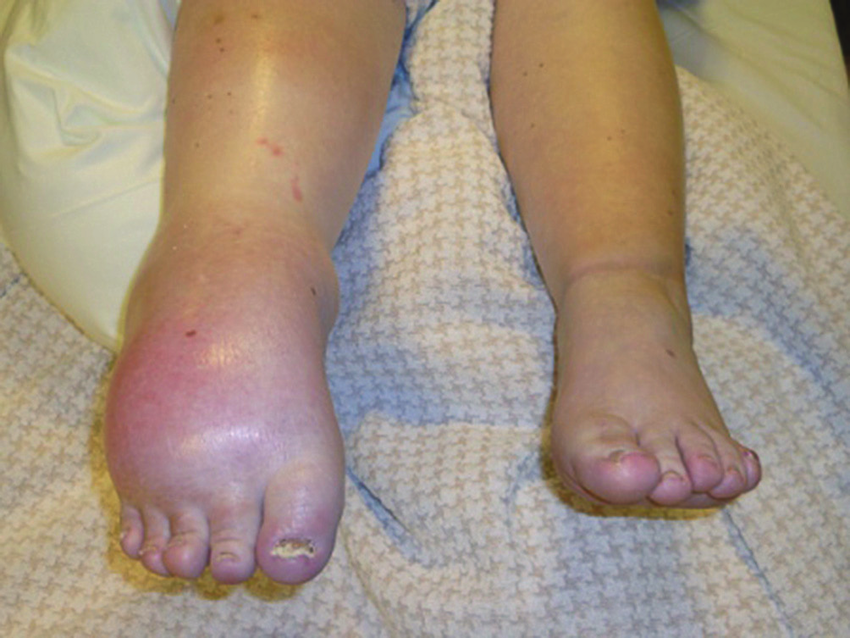
Symptoms usually appear after about 3 to 4 weeks and include:
- Significant changes in color (from red to purple) and temperature of the skin in the limb (the skin in the affected area can be either warmer than the surrounding skin or colder).
- Severe, burning, continuous pain, increased sensitivity of the skin of the hand, sweating is observed, edema is visualized.
- Changes in skin texture: it shines, becomes thinner.
- There is stiffness of the damaged joints, muscle weakness.
- The growth of hair and nails is impaired: hair grows more slowly, nails exfoliate.
- Decreased ability to make hand movements.
Symptoms are variable and appear differently from patient to patient. The main symptoms begin with generalized burning pain; this is usually accompanied by changes in skin condition that can become shiny. In severe cases, the affected part of the body may swell, and due to dysfunction of the sympathetic nervous system, the part of the body may sweat more than usual. Because of the pain, the patient may not want to move the damaged part. This leads to muscle wasting and a sticky cycle where stiffness and pain intensify. If the condition persists, there may be adverse changes in the underlying bone.
Causes and risk factors
Sudeck's syndrome is a disease that has many definitions: complex regional pain syndrome, algodystrophic syndrome, reflex syndrome sympathetic dystrophy. Its essence is progressive muscle and bone wasting and joint stiffness. However, in order to distinguish Zudeck's syndrome from other diseases in which dystrophy occurs, it is necessary to recognize five signs: spontaneous pain, soreness on pressure, physical symptoms of local circulatory disorders, increased sweating and local osteoporosis. It is not known exactly what causes Zudeck's syndrome; it is believed that the disease disrupts the abnormal activity of the sympathetic nerves that innervate the damaged part of the body.
However, the risk factors for the development of the disease are known. Zudek syndrome develops most often after bone fractures, joint injuries, soft tissue bruises, frostbite, burns, and nerve damage. The disease usually affects the ankle and bones of the wrist and hand - especially after a fracture of the distal base of the radius, a sprained wrist, and bruised fingertips. A factor contributing to the development of the disease is an incorrectly and too tightly applied bandage, which fixes the limb in a motionless and incorrect position.
Pathophysiology
Each injury, to a greater or lesser extent, causes a violation of the autonomic nervous system and vasomotor mechanism. However, thanks to the compensatory mechanisms of the body, proper treatment and successful restorative measures, these phenomena disappear, and an expedient cure reaction occurs. With long-term stimuli - pain, infection or edema - the disorder becomes permanent. The increased tone of the sympathetic nerve is fixed, becomes independent of the primary source of irritation (and causes narrowing of small blood vessels). Stasis and oxygen starvation sets in. The exchange of tissues is impaired. Tissue acidosis occurs.
Degeneration processes prevail over regeneration processes, which leads to the proliferation of connective tissue. All this additionally irritates the sympathetic nerve. A vicious circle is created. Soon, all the elements of the vicious circle acquire independent meaning and influence each other. The lesion also encompasses the skeletal system, where stagnation causes the well-known spotted bone atrophy. Thus, severe anatomical and functional disorders occur, expressed in fibrosis of the sliding apparatus of the tendons, hardening of the joints, bone loss and violations of trophism.
Diagnostics
The diagnosis is made on the basis of a characteristic clinical picture. To confirm the diagnosis, additional diagnostic procedures are prescribed, in the first place X-ray examination of the problem area, which allows you to identify ankylosis of the joint and osteoporosis.
An informative study with a thermal imager, indicating the difference in temperature of different areas of the affected limb. In addition, it is possible to conduct an ultrasound examination, which provides information about the condition of the blood vessels. Correct complex diagnostics makes it possible to carry out high-quality treatment.
Treatment
Since there is some evidence that the patient's mood influences this condition, therapy should be comprehensive (i.e. therapy should take into account the psychological and emotional needs patient). Like physical therapy, anesthesiologist and psychologist are often required for the successful rehabilitation of patients with Zudeck's syndrome. Under the supervision of a physician, drug treatment for Zudeck's syndrome may include tricyclic antidepressants, non-steroidal anti-inflammatory drugs (NSAIDs) and / or corticosteroids. A useful adjunct to drug therapy is the use of transcutaneous electrical nerve stimulation. During therapy, a special device generates a low frequency electrical current that is very effective in relieving pain. The device unit is powered by a 1.5-volt battery, which provides a current that is transmitted through wires to electrodes that are placed on the patient's skin.
After these treatments have had a positive effect on the signs and symptoms of the disease, mild rehabilitation can begin. The goal of this treatment is to restore the joint, range of motion and muscle strength, as normal function is restored, skin condition and perspiration problems gradually improve. It is important not to be too aggressive and strenuous physical activity should be avoided. Hydrotherapy exercise in water is ideal if the shoulder, elbow, wrist, knee, or ankle is affected. Gradually, this can move to weight training, followed by functional and athletic activities.
Despite the constant development of methods for the treatment of neuropathies, Zudeck's syndrome continues to be a complex pathology. For the success of treatment, it is very important to get to a qualified specialist in a timely manner.
Forecast
Good treatment success can be achieved if treatment is started early, ideally within three months of the onset of the first symptoms. However, if treatment is delayed, the disease can quickly spread to the entire limb, and changes in bones, nerves and muscles can become irreversible.
Prophylaxis
Vitamin C may be helpful in preventing forearm or foot and ankle fracture syndrome.