Elephantiasis (elephantiasis): causes, symptoms, treatment, prognosis
Content
- What is elephantiasis?
- Signs and symptoms
- Causes of elephantiasis
- Affected populations
- Related disorders
- Diagnostics
- Elephant disease treatment
- Elephant disease prognosis
What is elephantiasis?
Elephantiasis (also called elephantiasis, elephantiasis, elephantiasis) Is a condition characterized by a gross expansion of body parts, especially limbs (legs, arms). Other areas that are commonly affected include the vulva. Elephantiasis results from an obstruction (blockage) of the lymphatic system, which results in an accumulation of a fluid called lymph in the affected areas.
By functioning as part of the immune system, the lymphatic system helps protect the body from infection and disease. The lymphatic system is made up of a network of tubular channels (lymph vessels) that drain a thin watery fluid known as lymph from various areas of the body into the bloodstream. Obstruction of these vessels first leads to lymphedema (more often legs or arms), and then can gradually progress to massive edema and a general increase in body parts, characteristic of elephantiasis.
The most common cause of elephantiasis is a parasitic disease known as lymphatic filariasis. Also, lymphatic damage associated with elephantiasis has other causes, including certain sexually transmitted diseases (eg, lymphogranuloma venereum); tuberculosis; an infectious disease called leishmaniasis; repeated streptococcal infections; leprosy; and environmental factors such as exposure to certain minerals (eg, silica). In some cases, the cause of the disease cannot be identified (idiopathic).
Signs and symptoms
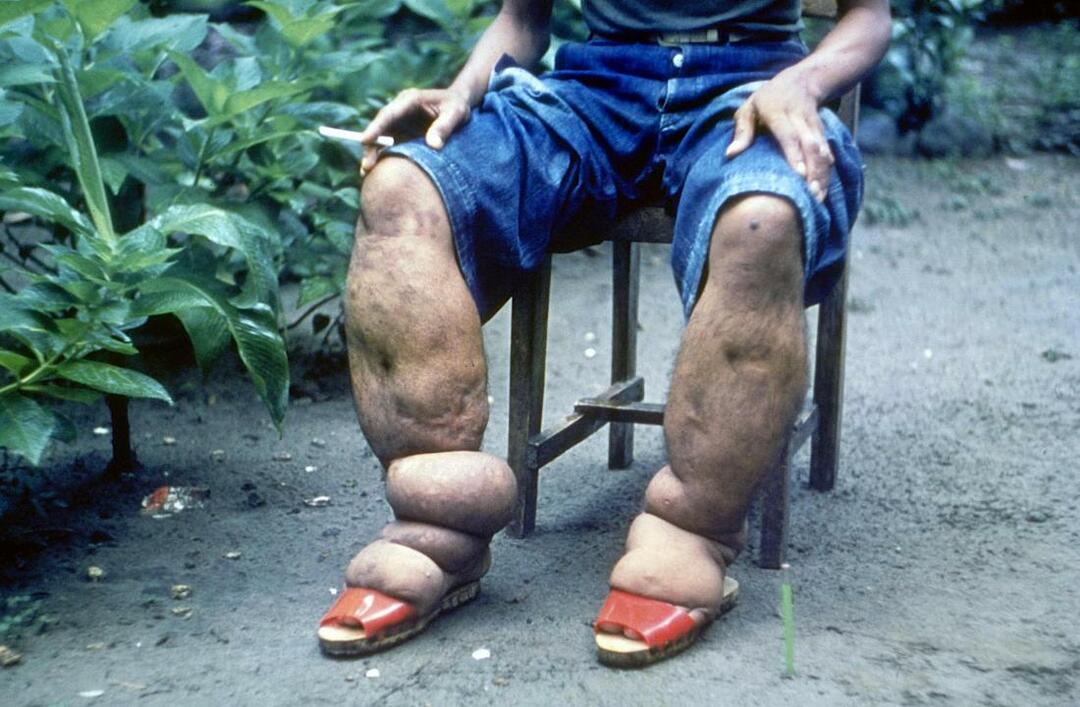
The primary symptom of lymphatic dysfunction is mild edema, which can gradually progress to elephantiasis if left untreated.
The main symptom of elephantiasis is significant enlargement and swelling of the body area due to fluid accumulation. The arms and legs are the areas most commonly affected. An entire arm or leg may enlarge several times its normal size, which resembles the thick, round shape of an elephant's leg. photo above). The skin of the affected area is usually dry, thickened, pebbled and may become ulcerated, pitted, and darkened (hyperkeratosis). Fever, chills, and general ill health (malaise) may also be present.





Elephantiasis can also affect the male and female external genitals. In men, there may be an enlarged scrotum and the penis may be pulled under skin that looks thickened, inelastic, warm, and painful. Sperm may thicken. Affected people may experience pain and burning sensation.
The external parts of the female genital organs (vulva) can also be affected by elephantiasis. A tumor mass covered with thickened and ulcerated skin may develop between the thighs, which may be accompanied by swollen lymph nodes (lymphadenopathy) in the legs. Some women may have breast enlargement.
Major damage to the lymphatic system can make people susceptible to secondary bacterial and fungal infections, which can make the condition much worse. Although the legs, arms, and genitals are most commonly affected, elephantiasis can affect any area of the body.
Causes of elephantiasis
Elephantiasis is caused by insufficient treatment of lymphedema and blockage of the lymphatic vessels of the lymphatic system. As lymph travels through the lymphatic system, it is filtered by a network of small structures known as lymph nodes that help remove microorganisms (e.g. viruses, bacteria, etc.) and other foreign body.
Groups of lymph nodes are found throughout the body, including in the neck, under the arms (armpits), in the elbows, and in the chest, abdomen, and groin. In addition to the lymph nodes, the lymphatic system includes spleenwhich filters out worn red blood cells and produces lymphocytes; and tonsils, which are collections of lymphoid tissue in the throat that help fight infection.
Lymphatic tissues also include the thymus gland, a relatively small organ behind the breastbone that is believed to play an important role in the immune system until puberty, as well as bone marrow, which is a spongy tissue inside the bone cavities that produces cells blood. Lymphatic tissue can also be located in other areas of the body, such as the skin, small intestine, liver and other bodies.
In underdeveloped regions of South America, Central Africa, Asia, the Pacific Islands and the Caribbean basin obstruction can be caused by a parasitic disease known as lymphatic filariasis. Lymphatic filariasis is caused by three different types of worms (parasites) known as Brugia malayi, Brugia timori and Wuchereria bancrofti. These worms cause damage and inflammation of the lymphatic system. The larva of worms enter the human body through the bites of infected mosquitoes.
Genital elephantiasis can also be caused by bacterial venereal diseases such as lymphogranuloma venereum (LHV) and donovanosis. The bacterium that leads to LGV Chlamydia trachomatis serovar L1-L3, damages the lymphatic system, which leads to obstruction of the lymph nodes in the genitals. Chronic obstruction ultimately leads to genital elephantiasis. Donovanosis is caused by granulomatosis bacteria Calymmatobacterium (Klebsiella). Donovanosis causes genital elephantiasis because the body's immune system responds to bacteria causing inflammation and constriction (constriction) of the lymphatic vessels.
Elephantiasis is also associated with a disorder known as podoconiosis. Suboconiosis, sometimes called not filary elephantiasis, is a disorder caused by the absorption of tiny mineral particles from the soil with bare feet. The mineral particles are thought to trigger a response from the immune system, which ultimately leads to the formation of inflammatory nodules (granulomas) in the lymphatic vessels of the feet and legs.
Additional causes of elephantiasis include the simplest diseases called leishmaniasis, tuberculosis, leprosyand repeated streptococcal infection. Elephantiasis can also occur secondary to trauma, surgery, or radiation if the lymphedema is left untreated. For example, treatments such as surgical removal of lymph nodes in cancer therapy can lead to lymph accumulation and subsequent edema (lymphedema).
Affected populations
Elephantiasis is present throughout the world, but with greater frequency in poorer regions of the Third World. including Southeast Asia, India, Africa and South America, and not only as a manifestation of lymphatic filariasis.
Elephantiasis for other reasons is not uncommon. Elephantiasis can affect men or women of any age.
Related disorders
Symptoms of the following disorders may be similar to those of elephantiasis. Comparisons can be useful for differential diagnosis.
- Hereditary lymphedema - an inherited disorder of the lymphatic system, characterized by abnormal swelling of certain parts of the body. The lymphatic system is a circulatory network of vessels, ducts, and nodes that filter and distribute certain fluid (lymph) and blood cells throughout the body. Lymphatic fluid accumulates in soft tissues inside and under the skin due to obstruction, malformation or underdevelopment (hypoplasia) of various lymphatic vessels. There are three forms of hereditary lymphedema: congenital hereditary lymphedema or Nonne-Milroy's disease, subcutaneous lymphedema or Meige's disease, and lymphedema tarda. Symptoms include swelling of the affected areas and thickening and hardening of the skin in the affected areas. In most cases, hereditary lymphedema is inherited as an autosomal dominant trait.
Diagnostics
The diagnosis of elephantiasis is made on the basis of a careful clinical assessment, a detailed medical history, and identification of characteristic symptoms. A variety of tests can be used to determine the underlying cause of lymphatic damage and subsequent elephantiasis.
Elephant disease treatment
Treatment for elephantiasis always includes treatment for the underlying disease. Lymphatic filariasis is chronic lymphedema that should be treated early with good compression therapy. Other symptoms are treated with diethylcarbamazine. Lymphogranuloma venereum is treated with doxycycline. Donovanosis can be treated with azithromycin.
However, in most cases, medical therapy alone is not enough, and surgery may be required as a last resort. In cases where the male genital organs are affected, reconstructive operations on the penis and scrotum are successful. Antistreptococcal antibiotics are used to relieve secondary infections. Lymphatic tissue can be removed with surgery or radiation therapy.
Other treatments are symptomatic and supportive.
Elephant disease prognosis
The prognosis for filariasis is good if the infection is recognized and treated early. Filarial disease is rarely fatal, but the effects of infection can cause significant personal and socioeconomic hardship for those affected.
The incidence of human philariasis is mainly due to the host's response to microfilariae or the development of adult worms in various areas of the body. In rare cases, long-term disability may result as a result of chronic lymphatic damage or blindness, depending on the infectious filamentous organism.