Harlequin ichthyosis: what is it, photo, symptoms, treatment, prognosis
Content
- What is Harlequin ichthyosis?
- Signs and symptoms
- Causes
- Affected populations
- Symptomatic disorders
- Diagnostics
- Standard treatments
- Forecast
What is Harlequin ichthyosis?
Harlequin ichthyosis is a rare genetic skin disorder. The newborn baby is covered with thick, scaly plates that crack and split. Thick scaly plates can pull and distort facial features and can restrict breathing and food intake. Newborns with Harlequin ichthyosis should be cared for immediately in the neonatal intensive care unit. This type of ichthyosis is inherited in an autosomal recessive manner.
Signs and symptoms

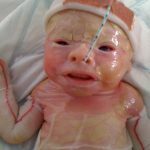

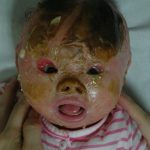
The skin of infants with Harlequin ichthyosis is covered with thick, scaly, rhomboid plates (see picture). photo above). The tightness of the skin stretches around the eyes and mouth, causing the eyelids and lips to turn inside out, exposing the red inner lining. The chest and abdomen of an infant can be severely restricted due to tightness in the skin, making it difficult to breathe and eat. The arms and legs may be small, swollen, and partially bent. The ears may look misshapen or missing, but in reality they are fused with the head due to the thick skin. Children born with Harlequin ichthyosis may also have:
- flat nose (depressed nasal bridge);
- hearing impairment;
- frequent respiratory infections;
- decreased joint mobility.
Premature birth is common, leaving babies at risk of complications from early birth. These babies are also at high risk for low body temperature, dehydration, and hypernatremia (increased sodium levels in the blood). Narrowing and edema oral cavity may interfere with absorption, and babies may need tube feeding. Infant corneas need to be lubricated and protected if the eyelids are opened by the pressure of the tightened skin.
Causes
Harlequin ichthyosis is caused by changes (mutations) in a gene ABCA12which provides instructions for making the protein needed for the normal development of skin cells. Gene ABCA12 plays a key role in the transport of fats (lipids) to the outermost layer of the skin (epidermis), creating an effective skin barrier. When this gene mutates, the skin barrier is destroyed.
Harlequin ichthyosis is inherited in an autosomal recessive manner. Recessive genetic disorders occur when a person inherits an abnormal gene from each parent. If a person receives one normal gene and one abnormal gene for a disease, the person will be a carrier of the disease, but usually asymptomatic. The risk that two carrier parents will both pass on the abnormal gene and therefore conceive a sick child is 25% with each pregnancy. The risk of having a child who will be a carrier, like the parents, is 50% with every pregnancy. The probability for a child to receive normal genes from both parents is 25%. The risk is the same for men and women.
Affected populations
Harlequin ichthyosis affects men and women in equal numbers. This disease affects approximately one in 500,000 people, or about 7 newborns, each year in the United States. There is no information on Russia.
Symptomatic disorders
Symptoms of the following disorder may be similar to Harlequin ichthyosis.
- Lamellar ichthyosis - a hereditary skin disease characterized by wide dark lamellar scales separated by deep cracks. Lamellar ichthyosis can also cause reddening of the skin (erythroderma), thickening of the skin on the palms and soles, and decreased sweating with intolerance to heat.
Diagnostics
Harlequin ichthyosis is diagnosed at birth based on the baby's appearance. Prenatal testing is possible by testing the fetal DNA for mutations in the gene ABCA12. In addition, some signs of Harlequin ichthyosis can be seen on ultrasound (ultrasound) in the second trimester and beyond.
Standard treatments
Once a baby with Harlequin ichthyosis is born, a multidisciplinary team of doctors takes part in the care of the baby. It has been proven to improve results and reduce complications such as respiratory distress, dehydration, electrolyte imbalance, impaired thermoregulation, systemic bacterial infections and Difficulty eating. Early treatment with oral retinoids is believed to improve outcomes. However, they are only used in severe cases due to their known toxicity and side effects.
The thick, scaly lamellar skin of Harlequin-type ichthyosis will gradually split and flake off over several weeks. Antibiotic treatment may be necessary to prevent infection during this time. Administration of oral acitretin may accelerate the secretion of thick scales. Most babies with Harlequin ichthyosis will need one-on-one care in the first few weeks of life.
After the thick scaly plates have peeled off, the skin remains dry and reddened and may be covered with large, thin scales. Skin symptoms are treated with skin emollients. This can be especially effective after bathing while the skin is still damp. Many patients with severe ichthyosis are exfoliated by hand by rubbing off the thick scales with special exfoliating gloves with a rough surface.
Skin barrier repair formulas containing ceramides or cholesterol, moisturizers with petroleum jelly or lanolin, and mild keratolytics (products containing alpha hydroxy acids or urea) can help keep skin hydrated and supple and prevent cracking and cracking that can lead to infection. To avoid loss of blood circulation, it may be necessary to remove damaged tissue (debridement) from the fingers if they are compressed by strips of skin.
Forecast
The mortality rate from Harlequin ichthyosis is high, and worldwide this figure is close to 50%. A review of 45 cases by Dr. Rajpopat et al found 25 survivors (56%) aged 10 months to 25 years. Twenty deaths (44%) occurred from day 1 to day 52 and were as likely to cause respiratory failure as fulminant sepsis. A Japanese survey of 16 patients reported a survival rate of 81.3% (13 out of 16 patients). Respiratory failure, fulminant sepsis, or a combination of both are the most common causes of death in newborns.
Lilia Khabibulina/ article author
Higher education (Cardiology). Cardiologist, therapist, functional diagnostics doctor. I am well versed in the diagnosis and treatment of diseases of the respiratory system, gastrointestinal tract and cardiovascular system. She graduated from the academy (full-time), has a wide experience of work.
Specialty: Cardiologist, Therapist, Physician of functional diagnostics.
More about the Author.