Bloch-Sulzberger syndrome: what is it, causes, symptoms, treatment, prognosis
Content
- What is Bloch-Sulzberger Syndrome?
- Signs and symptoms
- Causes
- Affected populations
- Related disorders
- Diagnostics
- Standard treatments
- Forecast
What is Bloch-Sulzberger Syndrome?
Bloch-Sulzberger syndrome (or pigment incontinence) Is a genetic ectodermal dysplasia that affects the skin, hair, teeth, microvasculature and the central nervous system. Progressive skin changes occur in four stages, the first of which appears in early childhood or may be present at birth. Bloch-Sulzberger syndrome is an X-linked dominant genetic disorder caused by changes (mutations) in a gene IKBKG.
Signs and symptoms
- Skin manifestations.
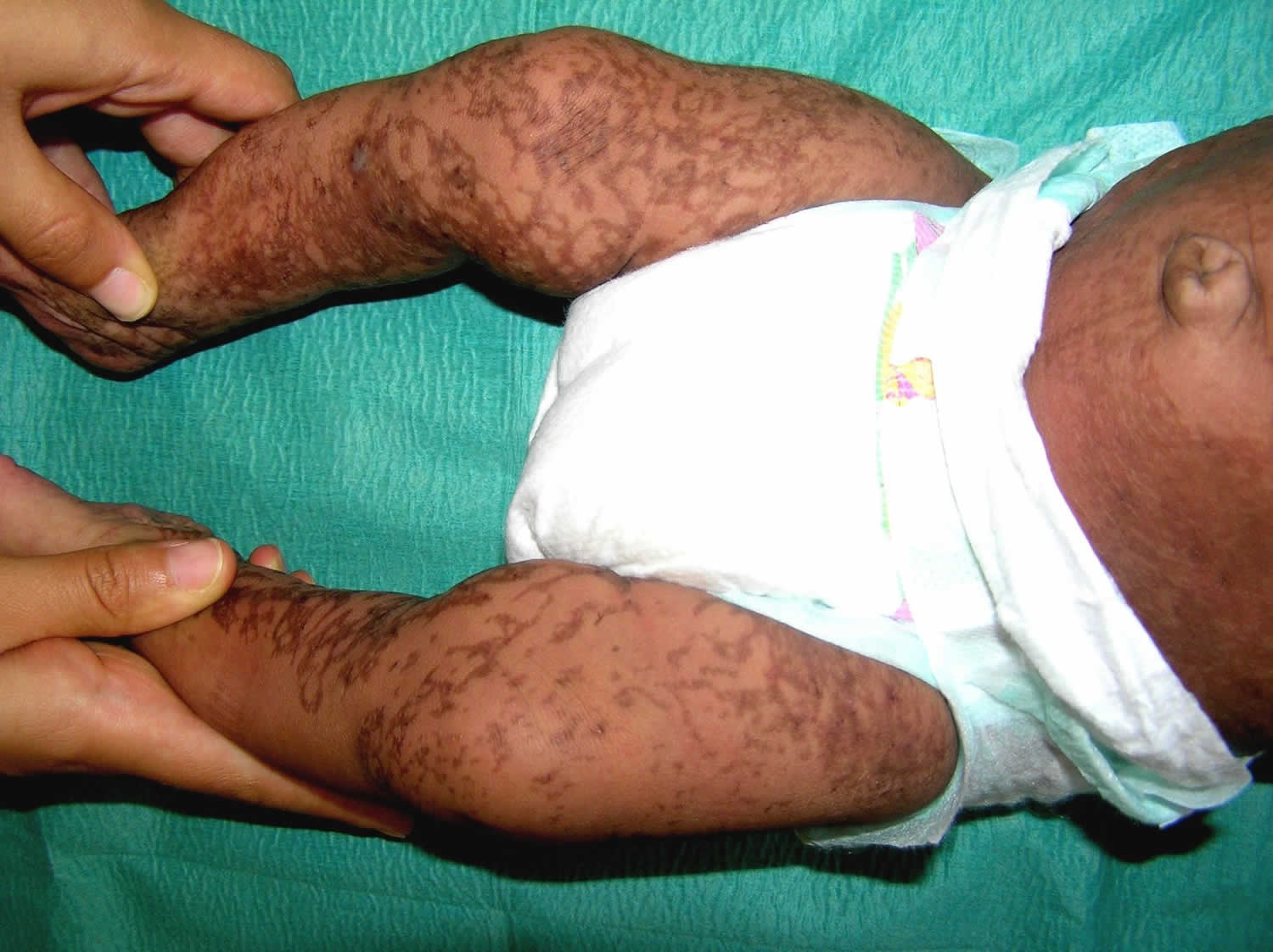
Skin changes are the most characteristic and common features of pigment incontinence. They are described in four stages. In the stages of the stages, lesions appear as lines on the arms and legs or in the form of a swirling pattern on the torso. They can be found on the face and scalp.
- First stage may be present at birth or appear in early childhood. The first phase of the disease consists of redness or inflammation of the skin (erythema), blisters and boils, most often affecting the limbs and scalp. It can disappear and come back again and again, usually when the illness is accompanied by a fever. These repetitions can take years.
- Second stage may overlap the first and be present at birth. During this phase, the blisters take on a convex, warty appearance. There may be thick crusts or scabs that heal and areas of darkened skin (increased pigmentation). At this stage, only the limbs are involved. Such relapses can occur for many years.
- Third stage may be present at birth in a small number of affected individuals, but usually appears between 6 and 12 months of age. At this stage, the skin darkens (hyperpigmented). Hyperpigmentation does not always occur at the site of the rash, as in stage I and II. Severe pigmentation may fade over time, although it is persistent in many patients.
- Stage four called "Atrophic stage". There are suggestions that it may be present at birth, but not be obvious. At this stage, the skin becomes pale or hypopigmented and hairless. The number of sweat glands may decrease.
- Teeth manifestation.
50 to 75 percent of people with Bloch-Sulzberger syndrome have dental abnormalities. These disorders include delayed eruption of deciduous teeth; abnormal contours of the teeth, giving them the appearance of pegs or cones; or congenital absence of both primary and secondary teeth (anodontia); or small teeth (microdontia).
- Nails.
Some patients have ribbed, pitted, thickened (onychogryphosis) or even missing nails on the hands and / or feet. In some patients, painful formations may develop under the nail. These changes can be permanent.
- Hair.
Approximately 50 percent of people have pathological bald patches on the scalp (alopecia). Alopecia can occur when grade 1 and 2 lesions are scarred or are part of congenital skin dysplasia. Hair can be rough or coarse.
- Eye manifestations.
Almost a third of people have eye disorders. The most serious, but least common, is small congenital abnormal eye. Any patient can have impaired growth of blood vessels in the membrane lining the eyes (retina). If this happens, it usually appears before the age of five. This problem can be resolved if detected early. If left untreated, it can cause retinal detachment, resulting in permanent visual impairment or complete blindness.
- Nervous system.
Most people with Bloch-Sulzberger syndrome have no nervous system problems. However, some may develop severe neurological complications from the disease, the most serious of which is congenital or neonatal strokes. Some sufferers may experience episodes of uncontrolled electrical disturbances in the brain (epilepsy). About 30 percent of children have slow motor development, muscle weakness on one or both sides of the body, and mental retardation.
- Other signs.
Sometimes people with the disease have abnormalities in breast development, ranging from the appearance of extra nipples to the complete absence of breasts.
There are unconfirmed reports of heat intolerance or lack of normal sweating, but they have not been formally studied.
Causes
Bloch-Sulzberger syndrome is an X-linked dominant genetic disorder caused by mutations in the gene IKBKG (formerly called NEMO). IKBKG encodes a protein that helps regulate other proteins that help protect cells from self-destruction in response to certain triggers.
X-linked dominant disorders are caused by a gene disorder on the X chromosome and occur primarily in women. Women with this rare disorder suffer when they have an X chromosome with an abnormality that causes a particular disorder. Men with the abnormal gene for the dominant X-related disorder are more affected than women and often die during childbirth. Surviving males may have a gene mutation IKBKG with relatively mild effects, mutation IKBKG only in some cells of the body (mosaicism) or an additional copy of the X chromosome in each cell.
Affected populations
There are about 1200 cases of pigment incontinence reported in the scientific literature. Most of the victims were women, but several dozen men were also reported. Current estimates from public health systems and analysis suggest that fertility prevalence is 0.6–2.1 / 1,000,000. The ratio of women to men is 20: 1.
Related disorders
Mutations in IKBKG can also cause:
- Anhydrotic ectodermal dysplasia with immunodeficiency, osteopetrosis, and lymphedema was found in two boys whose mother suffered from Bloch-Sulzberger syndrome. Both had anomalies named in the title of the disease and died of multiple infections at the age of 3 years.
- Hypohydrotic ectodermal dysplasia with immunodeficiency Is an X-linked recessive disorder with various ectodermal and immunological features. Most often, there is a decrease in sweating (hypohidrosis) or no sweating (anhidrosis) as an ectodermal trait. There may be violations of teeth and nails. There are also varying degrees of infection.
Symptoms of the following disorders may be similar to Bloch-Sulzberger syndrome. Comparisons can be useful for differential diagnosis:
- Interleukin-1 receptor antagonist deficiency (DARI) causes blistering skin lesions that may be present at birth but do not follow a linear or swirling pattern. In this case, nail abnormalities can be observed, and skin biopsy has some common features with the first stage of Bloch-Sulzberger syndrome. Patients with DARI have bone abnormalities, in particular, increased periosteum.
- Franceschetti-Jadasson syndrome characterized by changes in skin pigmentation similar to those of pigment incontinence, but symptoms begin in adolescence and are not accompanied by inflammatory skin changes. In addition, the skin may thicken on the arms and / or legs, the ability to sweat is reduced, and yellow spots on the teeth may appear. This disorder appears to be inherited in an autosomal dominant manner.
- Kaffi's disease characterized by discoloration, accompanied by swelling of soft tissues over benign bone formations, usually covered with cartilage. Fever and irritability may also occur. Symptoms tend to fluctuate in severity. This disorder, also known as cortical infantile hyperostosis, mainly affects children under six months of age and often resolves with age. Kaffi's disease is caused by mutations in a gene COL1A1.
Diagnostics
The diagnosis of the disease is based on clinical assessment, detailed medical history, and molecular genetic testing for mutations in the IKBKG gene. IKBKG is the only known gene associated with Bloch-Sulzberger syndrome. 65 percent of patients have a specific deletion in the gene. Another 20 percent have mutations found by gene sequencing. A skin biopsy to confirm a woman's diagnosis may be helpful, but may be considered secondary or subsequent test, given the wide availability and sensitivity of molecular genetic testing. A skin biopsy may be helpful in confirming the diagnosis in a woman with borderline or questionable results in which molecular genetic testing did not reveal a mutation that causes disease.
For babies born with Bloch-Sulzberger syndrome, it is very important to have an eye exam with a pediatric ophthalmologist. This should be done monthly until four months of age, then every three months from four months to one year, every six months from one year to three years and annually after three years age. Eye problems associated with the syndrome can be serious but can be effectively addressed if recognized early.
Standard treatments
Skin abnormalities characteristic of pigment incontinence may resolve in adolescence or adulthood without any treatment. Stage I and II lesions may recur with common febrile illness in adulthood.
Neurological symptoms such as seizures, muscle spasms, or paralysis can be controlled with a variety of drugs and / or medical devices. Developmental delays and / or intellectual disabilities should be addressed as needed with targeted therapy and school assistance.
Cryotherapy and laser photocoagulation can be used to treat patients with retinal neovascularization, which predisposes to retinal detachment.
Dental abnormalities can often be effectively treated by dentists who can place implants in childhood if needed. If dental abnormalities interfere with chewing and / or speech, the help of a speech therapist and / or pediatric nutritionist may be required.
Hair problems may require the attention of a dermatologist, although they are usually not serious.
Genetic counseling is recommended for those affected and their families. Other treatments are symptomatic and supportive.
Forecast
The prognosis is variable and depends on the degree of damage to other organ systems, in addition to the skin, in particular, the presence of complications of neurodevelopment. As a rule, there are no serious consequences secondary to cutaneous manifestations. Morbidity and mortality are mainly associated with neurological and ophthalmic complications, including mental retardation, seizures, and vision loss. Patients with structural brain abnormalities and neonatal seizures are at greater risk of motor and intellectual impairment.