Marshall syndrome in children: what is it, symptoms and treatment, prognosis
Content
- What is Marshall Syndrome?
- Signs and symptoms
- Causes
- Affected populations
- Symptomatic disorders
- Standard treatments
- Forecast
What is Marshall Syndrome?
Marshall Syndrome is a rare autosomal dominant genetic disorder caused by mutations in a gene COL11A1. The main symptoms of Marshall syndrome in children may include a characteristic face change with a flattened nasal bridge and nostrils, looking up, wide-set eyes, myopia, cataracts and loss hearing. People with the disorder may also be short.
Some researchers argue that Marshall syndrome is a type of Stickler syndrome; however, this remains a controversial issue.
Signs and symptoms
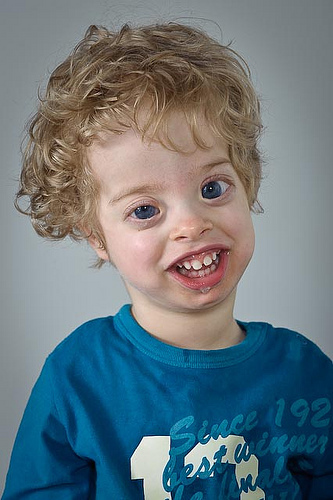
Children and adults with Marshall syndrome have a characteristic flat, sunken midface with a flattened nasal bridge, upward-looking nostrils, and a wide space between the eyes (hypertelorism). The dome-like top of the skull is thicker than usual, and calcium deposits can be found in the skull. Frontal sinuses may be missing. Eye defects in patients with Marshall syndrome are
myopia, an eye disease in which the lens loses clarity (cataract), and a large space between the eyes, which makes the eyeballs appear larger than usual. Hearing loss can range from mild to severe; distortion of sound is a consequence of nerve damage (neurosensory). Other symptoms that some people with Marshall syndrome show include:- strabismus (esotropia);
- a condition in which the line of sight in one eye is higher than in the other (hypertropia);
- retinal detachment;
- glaucoma;
- protruding upper incisors (teeth);
- smaller than normal or missing nasal bone.
Causes
Marshall syndrome is a rare autosomal dominant genetic disorder caused by mutations in the alpha-1 collagen polypeptide gene (COL11A1) located on chromosome 1p21.1. Typically, the mutations causing Marshall syndrome are splice mutations involving base pair insertions or intron 50 deletions. Dominant genetic disorders occur when only one copy of an abnormal gene is needed to cause a specific disease. The abnormal gene can be inherited from either parent, or it can be the result of a new mutation (gene change) in the affected person. The risk of passing the abnormal gene from the affected parent to the offspring is 50% with every pregnancy.
One Saudi family has been reported with two sons with Marshall syndrome with homozygous missense mutations COL11A1. There was concern in this family about possible autosomal recessive inheritance, as each parent had one glycine substitution missense mutation, and these parents had short stature, thickened skull and mild hearing loss on a normal ophthalmologic examination and did not have a diagnosis of Stickler syndrome or Marshall. Recessive genetic disorders occur when a child inherits two abnormal copies of a gene, one from each healthy parent. Perhaps, in this family, both parents are weakly susceptible to Stickler's syndrome, and in this situation, inheritance will be called a double dominant. In any situation, the risk of recurrence will be 25% with every pregnancy. The risk is the same for men and women.
Affected populations
Due to the rarity of the disease, there is very little demographic data. Fewer than 100 cases of this syndrome have been reported in the medical literature worldwide. Some cases are probably underdiagnosed due to the high cost of genetic testing. Marshall syndrome is known to manifest in infancy or early childhood, and severe symptoms such as hearing loss and cataracts appear before the age of 10. Marshall syndrome affects men and women in equal numbers.
Symptomatic disorders
Symptoms of the following disorders may be similar to those of Marshall Syndrome. Comparisons can be useful for differential diagnosis:
- Congenital spondyloepiphyseal dysplasia - a rare genetic disorder characterized by growth deficit even before birth (intrauterine), malformations of the spine and / or abnormalities affecting the eyes. As patients age, growth deficits ultimately lead to low growth (dwarfism), in part due to a disproportionately short neck and torso, and a deformity of the thigh in which the femur is tilted toward the center body. In most cases, the victims may experience a decrease in muscle tone (hypotension), abnormal curvature of the front and back and across (kyphosis and scoliosis), abnormal curvature of the spine inward (lumbar lordosis) and / or unusual bulging of the sternum, a condition known as a funnel chest. Affected people also have disorders that affect the eyes, including myopia and, in about 50 percent of cases, detachment of the nerve-rich membrane that lines the eye (retina). Congenital spondyloepiphyseal dysplasia is inherited as an autosomal dominant trait, also associated with mutations, deletions and gene duplications COL2A1, with autosomal dominant inheritance.
- Congenital syphilis - a chronic infectious disease caused by a spirochete (treponema pale) acquired by the fetus in the uterus. Symptoms may not appear earlier than a few weeks or months after birth, and in some cases they may last for years. Congenital syphilis transmitted to a child from a mother who acquired the disease before or during pregnancy. Symptoms of early congenital syphilis include fever, skin problems, and low birth weight. With late congenital syphilis, symptoms usually appear only between two and five years of age. Symptoms of late congenital syphilis include bone pain, spiky upper central incisors (teeth), opacification vision, eye pain and insensitivity to light, saddle nose, bony forehead, short maxilla and deafness. In rare cases, the disease can remain latent for many years with symptoms not diagnosed until adulthood.
- Stickler syndrome refers to a group of connective tissue disorders that affect various organ systems in the body, such as the eyes, skeleton, inner ear and / or head and face. Connective tissue, which is the material between the cells of the body that gives the tissue shape and strength, is found throughout the body. Connective tissue is made up of a protein known as collagen, which has several different types in the body. Stickler syndrome often affects the connective tissue of the eye, especially the inner part of the eyeball (vitreous humor). specialized tissue that buffers or cushions bones in joints (cartilage) and at the ends of the bones that make up joints body (pineal gland). Five different forms of Stickler syndrome have been identified in the medical literature based on the location of the mutated gene, clinical symptoms, and inheritance patterns. Type I with membranous vitreous caused by mutations in the gene COL2A1; type II caused by mutations in a gene COL11A1; type III is an ocular type caused by mutations in COL11A2, type IV causes vitreous degeneration with progressive liquefaction and has an autosomal recessive inheritance with mutations in COL9A1, type V has the same clinical symptoms as types I and II, but the location of the mutation has not yet been found.
- Stickler syndrome type II caused by mutations in the same gene COL11A1as Marshall syndrome. Some researchers believe that the two disorders are the same or different expressions of the same disorder. Others think the two disorders are different. Recent studies show that mutations in a gene COL11A1associated with Marshall syndrome are splicing mutations in exons in the C-terminal regions COL11A1 with a "hot spot" in exon 50.
- Wagner's Syndrome is a very rare genetic disorder inherited as an autosomal dominant trait and caused by a mutation in a gene CSPG2 on chromosome 5q13-14. Gene CSPG2 encodes versican, a structural component of the vitreous humor. This was discovered in a study by a Swiss family. The eye problems of this syndrome include vitreoretinal degeneration and cataracts. Retinal detachments are extremely rare. No extraocular problems were found.
Standard treatments
Plastic surgery can improve saddle nose in children with Marshall syndrome. Other surgical procedures are used to remove the lenses from eyes affected by cataracts, after which artificial lenses are used as replacements. Subsequently, contact lenses can help improve visual acuity. Laser techniques are used to loosen any material, such as the cornea or lens capsule, that can adhere to the lens.
Using a hearing aid can be helpful in some cases. Genetic counseling is recommended for those affected and their families. Other treatments are symptomatic and supportive.
Forecast
Information on the average life expectancy of someone with Marshall Syndrome is limited. One article describes a family with many affected relatives over several generations, and mentions individuals with Marshall Syndrome in their 30s and 40s. There are also specific reports of individuals suspected of having Marshall Syndrome and doing well between the ages of 29 and 35.
It follows from the medical literature that individuals with Marshall syndrome can have a relatively normal life expectancy. The underlying signs of Marshall syndrome are not expected to be life-threatening, although the severity of symptoms may vary among affected individuals. Only one article in the medical literature states that life expectancy can be shortened by the presence of one condition; the authors suggest that breathing problems associated with Marshall syndrome may lead to a reduction in life expectancy. However, breathing problems are not currently considered as a symptom of this disease, and no other article mentions this problem.
Lilia Khabibulina/ article author
Higher education (Cardiology). Cardiologist, therapist, functional diagnostics doctor. I am well versed in the diagnosis and treatment of diseases of the respiratory system, gastrointestinal tract and cardiovascular system. She graduated from the academy (full-time), she has a wide experience of work.
Specialty: Cardiologist, Therapist, Physician of functional diagnostics.
More about the Author.