Mucomycosis: what is it, causes, symptoms, treatment, prognosis
Content
- What is mucomycosis?
- Signs and symptoms
- Causes
- Affected populations
- Symptomatic disorders
- Diagnostics
- Standard treatments
- Forecast
What is mucomycosis?
Mucomycosis(zygomycosis) Is a general term for a group of unusual infections caused by a fungus. Mucoromycosis is caused by a group of related molds of the order Mukorovye (lat. Mucorales). "Order" is a scientific term for classifying such organisms. These infections usually occur when mold spores are inhaled or, less commonly, enter the body through a cut in the skin.
Mucormycosis is an aggressive, life-threatening infection that occurs in people whose immune systems are poorly functioning (i.e., those with an immunodeficiency), including those with uncontrolled diabetes mellituspeople with low levels of neutrophils, a type of white blood cell that helps the body fight infections and treat themselves (neutropenia), or people whose immune systems are suppressed by drugs (immunosuppression) as part of treatment blood cancer (hematologic malignancies), hematopoietic stem cell transplants, or solid organ transplants. The infection is not contagious; it cannot be transferred from one person to another. Fast diagnosis and early treatment are critical. Treatment usually consists of antifungal drugs and surgery.
Mucormycosis was once called zygomycosis, but the organisms that cause infection, specific types of mold, have been scientifically reclassified and the term mucormycosis is now preferred.
Signs and symptoms
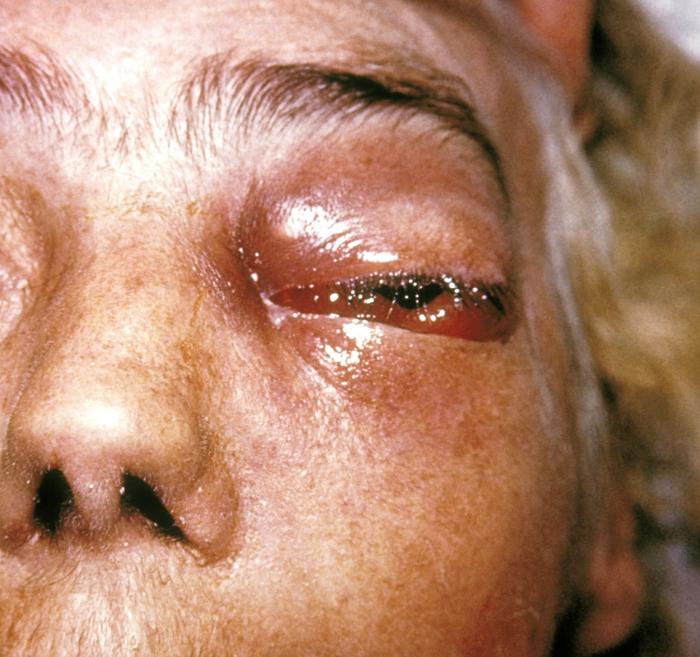
The most common manifestation of the disorder is sinus infection (sinusitis), which is accompanied by nasal congestion, nasal discharge, and sinus pain. Fever and headache may also occur.
If the infection spreads outside the sinus, symptoms may include tissue loss (necrosis) the upper part of the mouth (palate), destruction of the thin wall of cartilage and bone that separates the nostrils (partitions), edema areas around the nose (perinasal region) and redness (erythema) of the skin covering the sinus and orbit (orbit).
Sometimes a bluish discoloration of the skin near the sinuses or eye socket occurs due to lack of oxygen (cyanosis). Blurry vision may sometimes appear or double vision. If not recognized and treated, significant tissue death (necrosis) can occur and infection can significantly damage facial structures.
Sometimes mucormycosis can spread to the brain. This can cause:
- lethargy;
- epilepsy;
- slurred speech;
- partial paralysis;
- anomalies of the nerves of the face and eyes (cranial neuropathies);
- brain abscess;
- altered consciousness;
- to whom.
When the sinuses and brain are affected, this infection can be called rhinocerebral mucormycosis.
When the infection spreads to the eye, the following may occur:
- Swelling due to fluid buildup around the eyes (periorbital edema)
- bulging or displacement of the eye (proptosis);
- loss of vision and possibly blindness.
Some people who are affected experience paralysis or weakness in the muscles that move the eyes (ophthalmoplegia), making it difficult to move the eyes.
Mucormycosis can affect the lungs (pulmonary mucormycosis), most often when the spores are inhaled and reach the respiratory system. Pulmonary mucormycosis is often a rapidly progressive disease characterized by fever and dry cough (nonproductive cough). Less commonly, spitting or coughing up blood (hemoptysis), chest pain and shortness of breath (dyspnea).
When mucormycosis affects the skin (cutaneous mucormycosis), people may develop a single, painful, hardened area of the skin and inflammation of the underlying tissue. Nearby skin may become reddened, warm, swollen, and painful. Sometimes open sores and blisters form, and tissue loss (necrosis) can occur when the affected tissue turns black. Affected people may have a fever. Cutaneous mucormycosis can develop slowly or be severe and sudden (fulminant).
Sometimes, the gastrointestinal system may be affected. This most likely occurs when a person inhales spores through the mouth and then eats food. Symptoms may include abdominal pain and bloody vomiting (hematemesis). Lesions may develop that cause holes in the stomach or intestines (perforation). Inflammation of the peritoneum (peritonitis), the membrane that lines the abdominal wall and covers the organs inside the abdominal cavity can also develop. Sometimes, due to insufficient blood flow (intestinal infarction), severe pain in the intestines can occur, and people may fall into shock due to significant blood loss (hemorrhagic shock).
Disseminated cormycosis is a rare form often seen in people with severely compromised immunity. In this form, the infection spreads to other areas of the body and becomes widespread (disseminated). Other areas that may be affected include the brain, heart, spleen, skin and other organs. In rare cases, mucormycosis can affect or spread to the kidneys, lining of the heart chambers, and heart valves (causing endocarditis) and bones (causing osteomyelitis). The signs and symptoms of disseminated mucormycosis vary considerably depending on the organ system involved.
Causes
Mucormycosis is a fungal infection caused by certain types of mold. These forms are known as Mukorovye. They are ubiquitous and can be found in soil and decaying organic matter such as decaying vegetation.
Mukorovykh are usually found in nature and do not cause problems. However, in people with weakened immune systems, these fungi can cause serious, even life-threatening, infections. Most people develop infection by inhaling mold spores. Less commonly, an infection can develop when spores enter the body through a cut or open wound.
There are people who are at greater risk of developing cystic fibrosis. These risk groups include:
- People with low levels of neutrophils (i.e., people with neutropenia), which are white blood cells that help fight infection
- patients receiving broad-spectrum antibiotics;
- patients taking drugs that suppress the activity of the immune system (immunosuppressive drugs).
With cancer, neutropenia is observed and immunosuppressive drugs are taken, especially when blood cancer (hematological).
Mucormycosis affects people who have recently undergone hematopoietic stem cell transplant (HSCT). Hematopoietic stem cells are found in the bone marrow and are cells that eventually turn into red blood cells, white blood cells, and platelets. A transplant involves destroying the existing bone marrow and replacing it with bone marrow from a healthy donor. Affected people must take immunosuppressants to fight rejection, but this can make them more susceptible to infections, including mucormycosis.
Some sick diabetes mellitus may be at risk of developing mucormycosis, especially if their diabetes is poorly controlled and develops diabetic ketoacidosis. Ketoacidosis is a complication of poorly controlled diabetes in which the body produces high levels of blood acids called ketones. Ketoacidosis can cause a variety of symptoms. The exact reasons why people with poorly controlled diabetes are more susceptible to mucormycosis are not are completely understandable, although this may be due to the fact that these patients have an excess of gland.
People who have too much iron in their body (iron overload) due to frequent blood transfusions or certain blood disorders are also at risk of developing mucormycosis. Researchers believe that fungi can use excess iron to grow and spread.
Other conditions can increase your risk of developing mucormycosis, including:
- renal failure;
- HIV /AIDS;
- using contaminated medical equipment near or in open wounds;
- long-term use corticosteroidsthat are very strong anti-inflammatory drugs;
- trauma to the skin, including burns or other damage to the skin;
- extreme malnutrition;
- illegal drug use using needles.
Premature newborns may be at greater risk of infection, including mucormycosis.
In rare cases, some people develop mucormycosis, but there is no identifiable risk factor.
Researchers have found that mucormycosis infection has a high affinity for blood vessels. This means that the infection often affects blood vessels, but researchers don't know exactly why this is. A blood vessel infection can block blood flow, depriving tissues of oxygen and causing tissue death (necrosis).
Affected populations
Mucormycosis is a rare fungal infection. The exact number of people who have the infection is unknown because there is no national surveillance for the infection. By one estimate, the incidence was 1.7 per 1,000,000 of the general population. Morbidity is one of the new diagnoses. According to the medical literature, the incidence of mucormycosis is increasing. The disease has been reported worldwide. This infection can potentially affect people of any age, including premature infants.
Symptomatic disorders
Symptoms of the following disorders may be similar to those of mucormycosis. Comparisons can be useful for differential diagnosis.
- AspergillosisIs a fungal infection caused by aspergillus (lat. Aspergillus), a type of mold found all over the world. Over 300 different Aspergillus species have been identified, and more are being identified. Most of these molds are harmless, but some types can cause various diseases in people, ranging from simple allergic reactions and ending with life-threatening invasive diseases. Collectively, this group of diseases is called aspergillosis and is broadly divided into three categories - allergic, chronic, and invasive. There are usually four main clinical types of aspergillosis - allergic bronchopulmonary aspergillosis, aspergilloma, invasive aspergillosis, and chronic necrotizing aspergillosis. Aspergillosis rarely develops in healthy people; it develops much more often in patients with asthma, cystic fibrosis, diabetes and lung diseases or in people with weakened immune systems who are taking corticosteroid medications, have had a bone marrow transplant or organ transplant. In most cases, aspergillosis develops when susceptible individuals inhale Aspergillus spores.
There are many different disorders, infections, or conditions that can have symptoms similar to those of aspergillosis. These include:
- nocardiosis;
- fusarium;
- anthrax;
- cavernous sinus thrombosis;
- sinusitis;
- bacterial orbital cellulite;
- Churg-Strauss syndrome (CHARGE syndrome);
- granulomatosis with polyangiitis (Wegener's granulomatosis);
- pulmonary eosinophilia;
- acute respiratory distress syndrome;
- pulmonary tuberculosis;
- lungs' cancer;
- fungal, bacterial or viral pneumonia.
Diagnostics
The diagnosis of mucormycosis is based on the identification of characteristic symptoms, a detailed history of the patient, a thorough clinical assessment, and various specialized tests. The diagnosis of mucormycosis is difficult because the symptoms are common to many diseases, including other types of infections. The diagnosis is made by detecting mold in the affected tissue and can sometimes be confirmed with a test called a fungal culture. A quick diagnosis is important so that treatment can be started as early as possible.
The diagnosis of mucormycosis can be suspected when patients who have a fungal infection do not respond to antifungal drugs targeting aspergillosis, especially in cases where biomarkers are lacking aspergillosis. Biomarkers of aspergillosis include galactomannan antigen Aspergillus. Antigens are substances that cause a reaction of the immune system; Biomarkers are measurable substances that can indicate the presence of a disease. There are no identified biomarkers for mucormycosis.
Standard treatments
Treatment for mucormycosis will include the use of antifungal drugs. Antifungal drugs inhibit the growth of fungal infections and play an important role in controlling the spread of infection. The most commonly used drug is called amphotericin B. Initially, high doses of this drug are given intravenously. If the patient improves, which may take several weeks, doctors may ask the patient to switch to oral antifungal drugs such as posaconazole or isavuconazole. This is called lowering therapy.
If patients do not respond to amphotericin B or cannot tolerate the drug due to side effects, posaconazole or isavuconazole can be given intravenously. This is called life-saving therapy.
Surgery may be required to remove infected or dead tissue, damaged skin, and affected subcutaneous tissue. Specific surgical recommendations will vary depending on the exact location and extent of the infection.
Some victims may receive additional hyperbaric oxygen therapy. Adjunctive therapy is treatment that is in addition to the initial, primary therapy. There were no clinical trials for a large group of patients, but there were small reviews for a small number of patients. Hyperbaric oxygenation (HBO) is a method of saturating a patient with oxygen under high pressure in medical purposes, is carried out in hyperbaric pressure chambers and is effective in the treatment of many types of serious infections. There are some studies that show that hyperbaric conditions can inhibit infection.
Doctors will also treat the underlying risk factor that may be associated with mucormycosis infection. Controlling underlying disorders is important when treating this infection. This may include prescribing medication to increase white blood cell counts in people with neutropenia; insulin administration to patients with uncontrolled diabetes; or using drugs called iron chelators, which lower blood iron levels, like deferiprone, for people with iron overload. It is extremely important to avoid the use of an iron chelator called deferoxamine, as this medication actually promotes the growth and spread of mucormycosis in the body.
Forecast
Rinocerebral mucomycosis causes significant morbidity in surviving patients because treatment usually requires extensive, and often disfiguring, facial surgery.
Survival of mucormycosis requires rapid diagnosis and aggressive coordinated medical and surgical therapy.
Mucormycosis has a mortality rate of 50-85%. The mortality rate associated with rhinocerebral disease is 50-70%. Diseases of the lungs and gastrointestinal tract (GI tract) have an even higher mortality rate, since these forms are usually diagnosed in the later stages of the disease. Disseminated cormycosis has a mortality rate that approaches 100%. Skin diseases have the lowest mortality rate (15%). The emergence of new antifungal agents such as Kresemba (isavuconazole) may improve these mortality rates; However, further research is needed.