Black hairy tongue: what is it, symptoms, photos, treatment, prognosis
Content
- What is a Hairy Tongue?
- Signs and symptoms
- Causes and risk factors
- Affected populations
- Diagnostics
- Standard treatments
- Complications
- Forecast
What is a Hairy Tongue?
Hairy tongue Is an unusual benign condition also known as black hairy tongue. It is characterized by abnormal elongation and discoloration to blackish or dark brownish or "Staining" of the filamentous eminences (filiform papillae) covering most of the surface of the tongue (back of the tongue). Such changes often begin in the posterior region of the apex of the tongue and extend towards the anterior surface of the tongue, but never affect the lower surface.
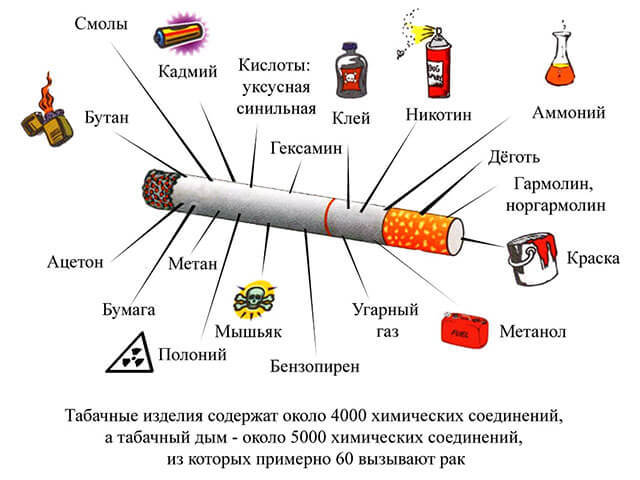
The exact cause of the hairy tongue is unknown. However, possible predisposing factors may include poor oral hygiene and overgrowth of pigment bacteria. or fungus in the mouth, taking certain antibiotics, smoking, chewing tobacco, and / or using a mouthwash mouth.
Signs and symptoms
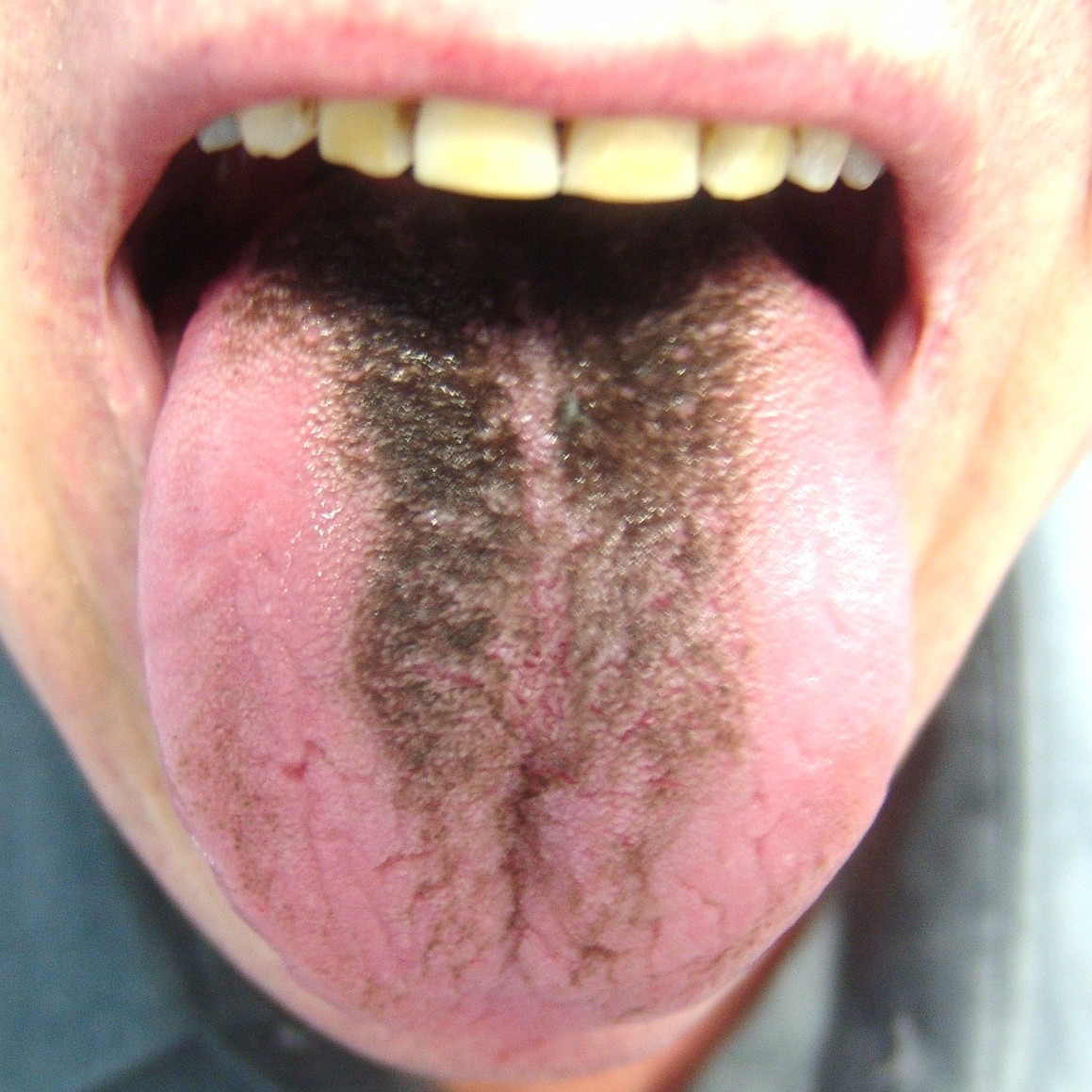


A black hairy tongue is characterized by elongation and proliferation (hyperplasia) of filiform papillae into "hairy" protrusions and the development of dark brown or black plaque on the surface of the tongue. Such changes usually occur in the triangular area in front of the rounded papillae, which are the largest papillae of the tongue. (These nodal eminences, which typically range from 8 to 12, are arranged in a "V" shape.) As noted above, the posterior region of the apex of the uvula may first be affected, followed by expansion. forward.
Many people with hairy tongue have no associated symptoms (asymptomatic course). However, some with this condition may have:
- nausea;
- vomit;
- change in taste;
- bad breath (halitosis);
- and / or other associated symptoms.
In some cases, the black hairy tongue may disappear spontaneously. In addition, it usually goes away after proper oral hygiene and other predisposing factors have been removed. (For more information see See Standard Treatments section below.)
Causes and risk factors
It is believed that the black hairy tongue is the result of a violation of the normal "exfoliation" (desquamation) of the outer layer of filiform papillae, excessive growth certain pigment bacteria or fungi commonly present in the mouth and an abnormal accumulation of pigment, keratin or other debris residues in that area. (Keratin is a fibrous protein that is a major component of the outermost layer of skin, nails, and hair.) the specific underlying cause of hairy tongue remains unknown, there are several potential predisposing factors. Such factors include:
- treatment with certain antibiotics (for example, tetracycline therapy, which can lead to overgrowth of certain fungi);
- the use of certain oral preparations containing bismuth;
- using mouthwashes;
- smoking;
- chewing tobacco;
- excessive alcohol consumption;
- and / or poor oral hygiene.
Read also:Macroglossia
Hairy tongue is not contagious and does not cause cancer onloyalties mouth.
Affected populations
A review of the medical literature shows that black hairy tongue (hereinafter referred to as PFA) is not uncommon. A large cross-sectional study of 5,150 Turkish outpatient dental patients found that an overall the prevalence of PTS is 11.3%, with rates higher in men (18%) than in women (6%). However, a cross-sectional study of 1901 Iranian dental patients showed a prevalence of only 1.2%. PVE was found in 0.6% of school-age children from Minnesota compared with 8.4% of young patients in Finland. The discrepancy between the observed indicators may occur due to differences in the demographic characteristics of patients (age, gender, ethnicity, customs and habits) and differences between observers in defining lesions in the respective subjects populations.
Selected populations are at higher risk of developing PTS. Cancer patients, smokers, black tea drinkers, and people with poor oral hygiene are more likely to develop PEF. The black hairy tongue also shows a clear gender and age predisposition. Men get sick about three times more often than women. This may be due to a higher smoking prevalence and higher rates of poor oral hygiene in men. This difference is evened out in Finland, where smoking rates among men are decreasing and young women are slightly more likely to contract PTS. In addition, PEF is positively correlated with age, with some studies showing prevalence of almost 40% in patients over 60 years old, although cases have been reported in patients in from the age of 2 months. In older patients, albeit infrequently, additional tongue conditions associated with PCI may include cracked tongue (12%) and macroglossia (4%).
Read also:Symptoms and treatment of cheilitis on the lips
Advanced age, poor general condition, as well as certain neurological disorders affecting tongue movement and chewing, expose the patient to a higher the risk of developing a black hairy tongue, mainly due to the limited effective friction that leads to desquamation of the stratum corneum papillae. Finally, on a global scale, there may also be geographic variations in the prevalence of PTS. due to differences in oral hygiene habits and dietary habits, as well as in the diversity of the flora of the cavity mouth.
Diagnostics
Diagnosis is usually based on clinical appearance without the need for tissue biopsy. However, when performing a biopsy, the histological appearance is one of the pronounced lengthening and hyperparakeratosis of filigree papillae and numerous bacteria growing on the epithelial surface.
Hairy tongue can be confused with hairy leukoplakia, but the latter usually occurs on the sides of the tongue and is associated with an opportunistic infection Epstein-Barr virus against the background of immunocompromise (almost always infections of the human immunodeficiency virus, but other conditions that suppress the immune system can rarely be found).
Standard treatments
It is important for people with suspected hairy tongue to undergo a thorough examination by doctors, dentists and / or dental surgeons to rule out other underlying conditions and confirm the diagnosis of hairy language. Recommended treatment measures usually include addressing potential predisposing factors such as smoking cessation, stopping treatment antibiotics, if possible, and receiving appropriate alternative treatments, if necessary, under the guidance of a physician and / or others appropriate measures. In addition, victims should speak with their dental professionals for advice on appropriate oral hygiene measures in their particular case. Such measures usually include using a soft bristled toothbrush to brush your tongue regularly.
Complications
Typically, black hairy tongue is a self-limiting disorder, and the development of this condition usually causes only aesthetic problems in affected individuals. In rare cases, patients may experience irritation, nausea, and vomiting, mainly due to the size of the unusually elongated papillae. Others may experience a disabling metallic taste, generalized dysgeusia, and a sensation of halitosis. Microbial or fungal superinfection is an important factor in the management of patients with hairy tongue, and proper recognition and treatment can prevent the progression of burning mouth.
Read also:Oral candidiasis: causes, symptoms and signs (photo), treatment
Forecast
The prognosis for a black hairy tongue is excellent as the disease is benign and may even improve spontaneously. A literature review shows a rapid resolution of the condition within days or weeks after mechanical treatment and removal of the suspected precipitate. Good oral hygiene and lifestyle changes, including smoking cessation and abstinence from alcohol, are vital to prevent relapse. The development of the disease usually does not cause any consequences. Other comorbid clinical conditions associated with the disorder (xerostomia, HIV, cancer and trigeminal neuralgia) should be sought and treated appropriately to reduce the risk of disease recurrence.