Visual snow syndrome: what is it, causes, symptoms, treatment, prognosis
Content
- What is visual snow syndrome?
- Introduction
- Signs and symptoms
- Causes and risk factors
- Affected populations
- Related disorders
- Diagnostics
- Standard treatments
- Forecast
What is visual snow syndrome?
Visual snow Is a neurological disorder characterized by persistent visual impairment that occupies the entire field of view and is described as tiny flickering dots resembling the noise of a detuned analog television. In addition to static noise, or “snow,” affected people may experience additional visual symptoms such as visualizations that persist or recur after image removal (palynopsia); light sensitivity (photophobia); visual effects occurring within the eye itself (entoptic phenomena) and disturbance of night vision (nyctalopia).
The prevalence of visual snow syndrome in the general population is currently unknown. The average age of the visual snow population appears to be younger than that of many other neurological diseases. This early onset, coupled with a general lack of acceptance by health professionals, suggests that this is a rare problem.
Research has been limited due to problems in case identification and diagnosis, the latter in is now largely resolved, and also due to the limited size of any investigated cohorts. Initial functional brain imaging research suggests that visual snow syndrome is a brain disorder.
Visual snow is a chronic, sometimes highly unusual, disabling condition that requires collaborative research and thinking outside the box to make progress in understanding, treating and recovery.
Introduction
Since the first description, the introduction of the term visual snow and its formal clinical definition less than 5 years ago, visual snow is now recognized by doctors and scientists as a new problem in neurological the world. The first literary reports of visual snow syndrome were mostly isolated clinical descriptions in context larger groups of patients with persistent visual impairment, previously defined as' persistent positive visual phenomena ".
Visual snow was misdiagnosed in a series of cases mixed with constant migraine with auraleading to mechanistic confusion, diagnostic inaccuracy and, of course, the use of unhelpful treatments. Visual snow is considered the same condition as hallucinogen-related chronic perception disorder. hallucinogen persisting perception disorder, eng. abbr. HPPD). While it seems that hallucinogens can cause a similar disorder, it is clear that visual snow syndrome can be completely independent of hallucinogenic substances. Finally, many patients are told that they are doing well. The confusion of these problems delayed the recognition of the syndrome.
Signs and symptoms
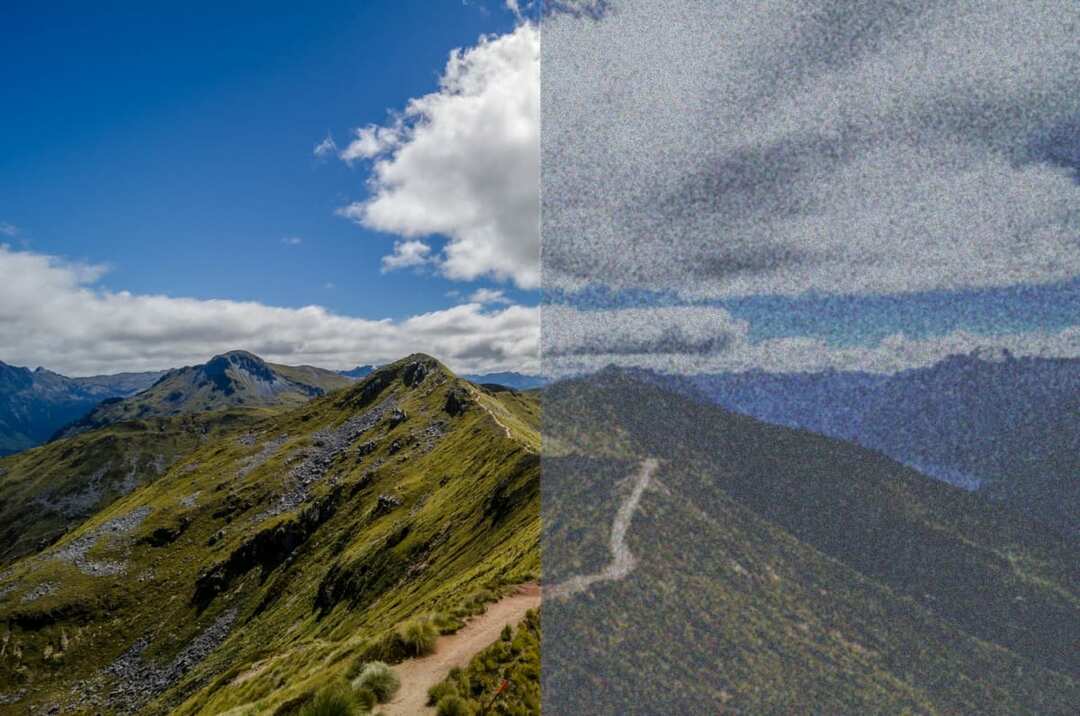
The main clinical feature of the syndrome consistently described by patients is an unrelenting positive visual phenomenon, present throughout the entire field of vision and characterized by an uncountable number of tiny flickering dots located between a person's vision and background. This “static” phenomenon is usually black and white, but can also be colored, flashing, or transparent.
Read also:Agenesis of the corpus callosum
In addition to static noise or snow, patients may experience additional visual symptoms either directly neurological origin, such as palynopsia (either as stored images from still scenes or as visual trace), photophobia and nyctalopia, or entoptic phenomena. The latter constitute a group of symptoms believed to arise from the optical apparatus, which in the case of visual snow is completely intact and intact. Entoptic phenomena that occur (individually or in combination) in visual snow syndrome - these are photopsy, the phenomenon of entoptic blue field, destruction of the vitreous body, ghostly vision, halo (aura).
Up to 75% of persons with visual snow report at least three of these four auxiliary visual phenomena, which together with the static effect itself form the “visual snow syndrome”. It is important for researchers and clinicians to distinguish visual snow from other phenomena and recognize associated symptoms. Most of them can indeed be observed in healthy people (especially in the case of floating floats or retinal residual images) or in patients with ophthalmic diseases; the key difference from visual snow is that it manifests itself in a repetitive, debilitating and pervasive way, and in the context of a perfectly functioning visual apparatus.
Causes and risk factors
The cause of visual snow syndrome is currently unknown. However, some key features of the syndrome indicate a neurological impairment in image processing in the cerebral cortex. This is mainly due to the characteristic of the main symptom of the syndrome (ie, visual noise), which is visual impairment throughout the field; this makes it highly unlikely that the problem will be localized in the visual pathway or primary visual cortex. In addition, additional symptoms such as palynopsia, which can be seen as an inability to suppress what is just seen, and increased entoptic phenomena in context Normal ophthalmic tests also point in the same direction for a central neurological disorder of the visual pathway for reasons that remain to be determined.
A neuroimaging study using 18F-fluorodeoxyglucose PET appears to support these hypotheses. The study demonstrated hypermetabolism of the medial lingual gyrus in patients affected by visual snow; it is an area of the visual cortex involved in several other conditions, including photophobia. The lingual gyrus is also a key element of complex physiological functions such as visual memory, color perception, and facial expression identification.
Visual cortex hyperexcitability and thalamocortical dysrhythmia have also been suggested as possible causes of the pathophysiology underlying visual snow.
Read also:Peripheral neuropathy
Further studies in more patients are needed to confirm these initial hypotheses.
Affected populations
It is currently unknown how many patients worldwide suffer from visual snow. The available evidence suggests that the disease is probably more common in the male population and that the average age of those affected is relatively young (13 years).
Symptoms can appear very early in life, with most people having symptoms throughout their lives. There is also a proportion of subjects whose disease began suddenly and unpredictably; this sometimes, but not necessarily, follows for an identifiable reason.
Related disorders
A disorder that is closely related to visual snow is tinnitus (ringing /noise in ears). Tinnitus is a common condition often referred to as "ringing in the ears" and is characterized by the perception or sensation of sound even when there is no visible external source of sound. Tinnitus is extremely common in patients with visual snow, with up to three quarters of subjects reporting this symptom. This has led some researchers to hypothesize a possible relationship between the two conditions, which possibly represent a similar dysfunction of sensory processing, respectively, of the visual and auditory systems in brain. (For more information about this condition, enter "Tinnitus" as a search term on the site.)
The differential diagnosis of visual snow includes a prolonged migraine aura. Connection between migraine and the visual snow is tricky; In fact, it has been shown that migraine can aggravate the clinical manifestations of visual snow syndrome and that it is more common in this disorder than in the general population.
On the other hand, the visual aura does not alter the typical visual snow phenotype, but it is also common with this condition. However, these two disorders should not be confused; It is important to remember about their main difference, which lies in the unrelenting characteristic, as well as in the constant impairment of vision in the case of visual snow, as opposed to a temporary disorder that usually only occupies a specific area of the visual field in the aura migraine.
Visual snow must also be distinguished from long-term (chronic) hallucinogenic perceptual disorder. This disorder is characterized by the presence of sensory and, in particular, visual impairments, and shares with visual snow the feature of permanence. However, this is necessarily associated with the consumption of hallucinogenic substances, which, of course, is not necessary. visual snow condition, as evidenced by the fact that the syndrome has been reported even in small children.
Diagnostics
Visual snow is a clinical diagnosis that is made as a result of meeting a number of criteria and exclusion secondary causes of similar visual impairments, such as major ophthalmic and neurological diseases.
Read also:Aniridia
After systematic characterization of 78 visual snow patients, these criteria were defined as follows:
- A. Visual Snow: dynamic, continuous, tiny dots throughout the entire field of view, lasting more than 3 months (dots are usually black / gray on a white background and gray / white on a black background; they can also be transparent, flashing white or colored).
-
B. The presence of at least two additional visual symptoms of the four following categories:
- Palinopsia. At least one of the following: afterimages or traces of moving objects (afterimages must be different from retinal residual images that occur only when looking at a high-contrast image and have additional Colour).
- Enhanced entoptic phenomena. At least one of the following: photopsia, entoptic blue field phenomenon, destruction of the vitreous humor, ghostly vision. Entoptic phenomena arise from the structure of the visual system itself. The entoptic blue field phenomenon is described as countless small gray / white / black dots or rings that shoot across the field of view of both eyes when looking at uniform bright surfaces such as blue sky; ghostly vision is described as colored waves or clouds when the eyes are closed in the dark; spontaneous photopsy is characterized by bright flashes of light.
- Photophobia (photophobia).
- Nyctalopia (or night blindness [impaired night vision]).
- V. Symptoms do not match the typical visual aura of migraine (as defined by the International Headache Society in the International Classification of Headache Disorders - currently).
- G. Symptoms are no better explained by other medical conditions (routine eye examinations; not caused by previous use of psychotropic drugs).
Standard treatments
Lack of knowledge of the basic biology of visual snow syndrome has led to a general lack of effective treatment strategies for most patients. To date, no clinical and systematic trials have been conducted and all available treatment data is from individual patients or case reports. Current evidence appears to show that commonly used medications such as migraine medications, antidepressants, or pain relievers do not improve or worsen visual snow syndrome. There are sporadic positive experiences with a drug such as lamotrigine, which should be considered in the context of their low level of evidence.
Forecast
Typically, visual snow syndrome does not progress, but it does not go away either. Patients usually have chronic and recurrent symptoms. Some patients respond positively to treatment for migraine with aura or seizure conditions.