Wiedemann-Rautenstrauch syndrome: what is it, causes, symptoms, treatment
Content
- What is Wiedemann-Rautenstrauch syndrome?
- Signs and symptoms
- Causes and risk factors
- Affected populations
- Diagnostics
- Standard treatments
What is Wiedemann-Rautenstrauch syndrome?
Wiedemann-Rautenstrauch syndrome (SVR), also known as neonatal progeroid syndrome, is a very rare genetic disorder characterized by aging at birth, stunting before and after birth (prenatal and postnatal growth retardation), as well as insufficiency or absence of a fat layer under the skin (subcutaneous lipoatrophy). It is assumed that life expectancy has decreased in most patients with SVR. Only a few of them survived to adolescence, and even fewer to 20 years.
SVR is a complex of symptoms and signs with an unknown cause, and the pathogenesis remains distinct enough to make an accurate diagnosis. Wiedemann-Rautenstrauch syndrome is inherited in an autosomal recessive manner, since several pairs of siblings have been recorded in families with healthy parents. Few of the parents were blood relatives.
Signs and symptoms
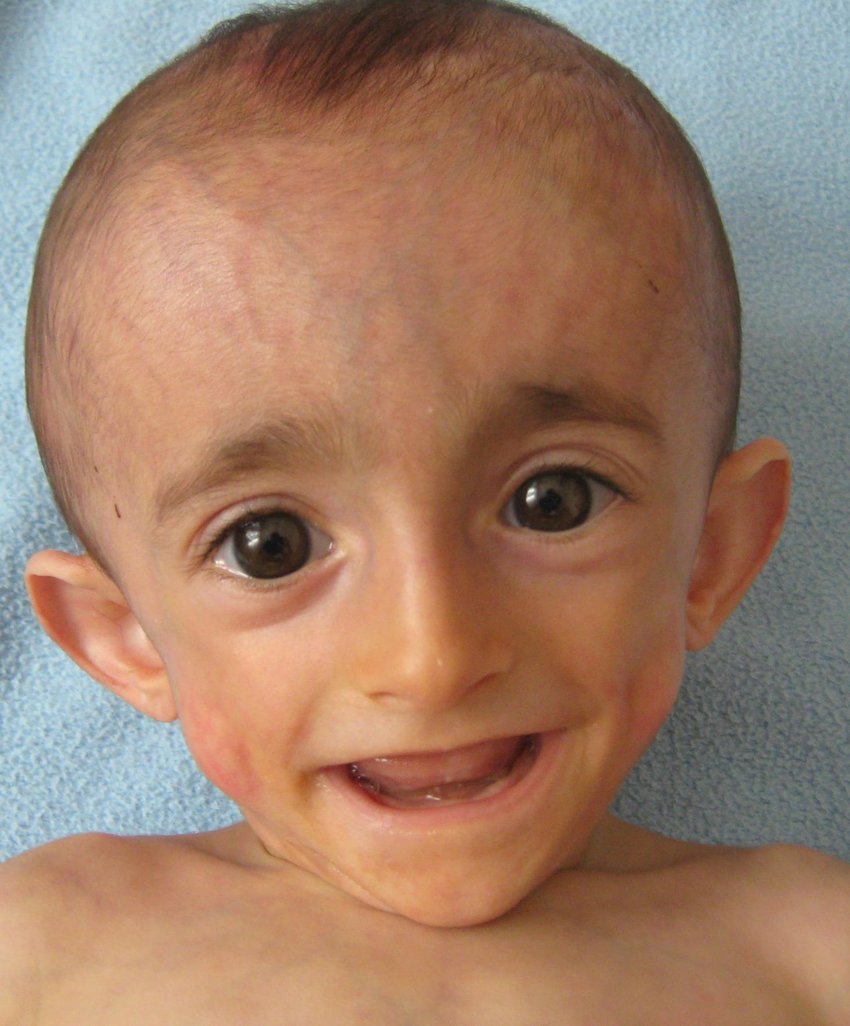
SVR is characterized by aging at birth and a lack or absence of a layer of fat under the skin (subcutaneous lipoatrophy). As a result, the skin can appear unusually thin, fragile, dry, shiny, wrinkled and aged. Some veins and muscles may protrude excessively, especially on the forehead. For unknown reasons, as the affected infants age, abnormal fat deposits may accumulate under the skin in the lower (caudal) areas of the body, especially around the buttocks, areas around the genitals and anus (anogenital area), and the area between the ribs and thighs (sides). In addition, in infants and children with this condition, the abdomen may appear unusually large and bulging.
In patients with Wiedemann-Rautenstrauch syndrome, growth retardation can occur before birth (intrauterine growth retardation), especially during the last three months (third trimester) of fetal development. Growth retardation will continue after birth (postpartum). Patients with SVR also gain poor weight and cannot develop throughout their lives. In addition, in some cases, affected infants may have difficulty swallowing (dysphagia) and feeding, which can contribute to stunted growth and development.
With SVR, progressive neurologic impairment may occur. Specific symptoms can vary from person to person as people may not have all of the symptoms listed below.
Infants and children with SVR also have characteristic craniofacial abnormalities. In many patients, the soft spot in the front of the skull may be abnormally large and wide, and may be delayed to close. Fibrous spaces between other bones of the skull (cranial sutures) can also be abnormally wide. In addition, in infants with SVR, the frontal bones and lateral portions of the skull (parietal bones) protrude excessively and the facial bones are unusually small and underdeveloped (hypoplasia).
Such deviations can cause the head to appear unusually large (pseudohydrocephalus). In affected infants and children, characteristic facial abnormalities may include:
- an unusually small mouth (microstomy);
- protruding chin;
- low set ears, which are strongly tilted towards the back of the head (back).
Read also:Russell-Silver Syndrome
Facial features usually appear unusually small compared to the large forehead and sides of the skull. In addition, affected infants may have an unusually small, distinct "beak" nose that becomes more pronounced with age.
Most infants and children with Wiedemann-Rautenstrauch syndrome also have additional craniofacial abnormalities. Affected infants may have 2 to 4 front teeth (neonatal incisors) that fall out in early infancy. The subsequent development of the teeth (bite) is delayed and disrupted. Also, in infants and children with the disorder, the lower eyelids may drop or twist outward. (ectropion), exposing the thin and delicate mucous membranes lining the eyelids as well as part of the eyeballs (conjunctiva). One patient also described spastic volvulus, a condition in which the eyelid turns inward so that the eyelashes and skin rub against the surface of the eye. An interesting feature in some cases is that the lower eyelids can cover more than the lower half of the eyeball, as if the eyelids are higher than expected. Sick infants and children also have unusually thin hairs on the scalp, eyebrows, and eyelashes (hypotrichosis). Various eye abnormalities have also been reported in a family with three affected siblings, including:
- cataract;
- clouding of the cornea;
- perforation of the cornea;
- microphthalmos (unusually small eye size).
Infants and children with SVR can also have distinctive abnormalities affecting the hands, feet, arm, and legs (extremities). Arms and legs are abnormally thin, hands and feet are disproportionately large; fingers and toes are long, with unusually small, underdeveloped (atrophic) or thickened (dystrophic) nails. The joints are thick and stiff, especially in the shoulders, elbows and knees. Recent MRI (magnetic resonance imaging) studies have confirmed the presence of a normal amount of subcutaneous fat in the trunk and a noticeable loss of fat in the face and distal extremities. Thinning of bones (osteopenia) can predispose to bone fractures. The transformation of bone progenitor cells into bones (osteoblasts) and cartilage cells (chondrocytes) is also impaired. The lack of cell differentiation capacity in CBP patients may be the cause of the clinical manifestations and symptoms of this rare disease.
Most infants and children with Wiedemann-Rautenstrauch syndrome also have varying degrees of mental retardation, which can range from mild to severe. However, some children showed almost normal mental development. In infancy, patients may develop progressive neurological and neuromuscular disorders. Most patients experience a severe delay in the acquisition of skills that require coordination of physical and mental activity (psychomotor retardation). In addition, in many cases, infants and children with the disorder do not have head control and exhibit decreased muscle growth. tone (hypotension) and have an impaired ability to coordinate voluntary movements in the chest and abdominal cavity (ataxia torso). For example, they may have difficulty controlling range of motion during certain muscle movements. actions and may experience rhythmic involuntary tremors when performing certain movements (intentional tremor). Infants and children with this condition may also experience rapid involuntary horizontal eye movements (horizontal nystagmus) and limited visual acuity. Babies may have dysphonia, and older children may have an unusually high voice.
Read also:Osteogenesis imperfecta
In addition, the researchers reported that neurological deterioration seen in some patients with SVR may be related to loss of the myelin sheath of nerve fibers (demyelination) in the white matter of the brain (eg, pure sudanophilic leukodystrophy). Myelin is a whitish, fatty substance that forms a protective sheath or "sheath" around certain nerve fibers (axons) and serves as an electrical insulator, ensuring efficient transmission of nerve impulses. The "white matter" of the brain and spinal cord (central nervous system) mainly consists of bundles of myelinated nerve fibers. Most patients with SVR at the indicated age did not have leukodystrophy. Dandy-Walker malformation and ventriculomegaly, basal ganglia calcification, and agenesis of the corpus callosum.
The absence of subcutaneous adipose tissue prompted researchers to compare SVR with generalized lipodystrophy syndrome (Berardinelli-Seyp syndrome). However, laboratory studies in these studied cases did not show an increase in glucose, lipid or insulin on an empty stomach, as would be expected in Berardinelli-Seip syndrome. However, some patients had elevated triglyceride levels. Fat pads are located on the side rather than on the buttocks, which is characteristic of this syndrome, but can also be observed with congenital glycosylation disorders. Patients with SVR may also develop abnormal side-to-side curvature of the spine (scoliosis). In addition, infants and children with SVR are often prone to recurrent respiratory infections, which can lead to life-threatening complications.
In one of the few cases when an autopsy was performed, an almost complete absence of the mesentery, tissue that fixes the small intestine on the back of the abdominal wall, and the absence of the mesocolon, the tissue that fixes the transverse portion of the large intestines.
Causes and risk factors
Wiedemann-Rautenstrauch syndrome is most likely inherited as an autosomal recessive genetic disorder.
Recessive genetic disorders occur when a person inherits two copies of an abnormal gene for the same trait, one from each parent. If a person receives one normal gene and one gene for the disease, he is a carrier of the disease, but is usually asymptomatic. The risk of contracting a baby from two carrier parents is 25% with each pregnancy. The risk of having a child who will be a carrier, like the parents, is 50% with every pregnancy. The probability that a child will receive normal genes from both parents is 25%. The risk is the same for men and women.
Some patients with SVR had parents who were blood relatives.
Read also:Trimethylaminuria
All humans carry several abnormal genes. Parents who are close relatives (blood relatives) have a higher chance than parents who are not blood relatives, have the same abnormal gene, which increases the risk of having children with a rare recessive genetic disease.
The specific underlying defect responsible for the disease remains unknown. However, some researchers suggest that disorders of bone maturation, hormonal and lipid (lipid) metabolism may play a role.
Affected populations
Wiedemann-Rautenstrauch syndrome is an extremely rare genetic disorder that affects men and women relatively equally. SVR has been observed in various ethnic and racial groups. The disease was originally described as a separate disease in 1979 (Wiedemann HR) based on follow-up for two unrelated people, as well as previous reports of two stricken sisters in 1977 (Rautenstrauch T). To date, more than 35 victims have been described in the medical literature.
Diagnostics
In some cases, impaired growth, macrocephaly, and / or other characteristic signs that indicate Wiedemann-Rautenstrauch syndrome, can be detected before birth (prenatally) with ultrasound.
In most patients, Wiedemann-Rautenstrauch syndrome is diagnosed shortly after birth on the basis of careful clinical evaluation and identification. characteristic physical signs (eg, short stature, characteristic craniofacial and skeletal malformations, absence or deficiency of subcutaneous fat etc.). In some cases, specialized tests may also be performed to detect certain abnormalities that are potentially associated with the disease. For example, x-rays can reveal and / or confirm wide cranial sutures and / or other abnormalities of the skull bones. In addition, it is possible that computed tomography (CT), magnetic resonance imaging (MRI) and / or other special studies may reveal widespread fat loss. coatings (myelin sheath) on nerve fibers (demyelination) in the white matter of the brain (pure sudanophilic leukodystrophy) or other abnormalities as described higher.
Standard treatments
Treatment for Wiedemann-Rautenstrauch syndrome is aimed at eliminating specific symptoms that appear in each person. Treatment may require the coordinated efforts of a team of specialists. Pediatricians, professionals who evaluate and treat disorders of the nervous system (neurologists), physiotherapists and / or other health care providers may need systematic and comprehensive treatment planning for the victim child.
Specific treatments for Wiedemann-Rautenstrauch syndrome are symptomatic and supportive. In some cases, if affected infants and children have difficulty swallowing and feeding and cannot eat properly through a tube may be surgically inserted into the mouth, stomach, or part of the small intestine to ensure proper nutrition (feeding through probe). In addition, affected infants and children should be closely monitored to prevent respiratory infections. Genetic counseling will benefit those affected and their families.