Werdnig-Hoffmann disease: what is it, symptoms, treatment, prognosis
Content
- What is Werdnig-Hoffmann disease?
- Signs and symptoms
- Causes
- Affected populations
- Symptomatic disorders
- Diagnostics
- Standard treatments
- Forecast
- Complications
What is Werdnig-Hoffmann disease?
Werdnig-Hoffmann disease Is type 1 spinal muscular atrophy (type 1 SMA). Spinal muscular atrophy characterized by degeneration of nerve cells (motor nuclei) in the lowest part of the brain (lower brain stem) and certain motor neurons of the spinal cord (anterior horn cells), which leads to muscle weakness of the trunk and muscles of the limbs in the beginning, followed by difficulty in chewing, swallowing and breathing. Motor neurons are nerve cells that transmit nerve impulses from the spinal cord or brain (central nervous system) to muscle or glandular tissue.
About 80 percent of people with SMA have severe SMA (i.e., Werdnig-Hoffmann disease or SMA 1). Infants with Werdnig-Hoffmann disease experience severe weakness before the age of 6 months and cannot sit on their own during placement. Muscle weakness, lack of motor development, and low muscle tone are the main clinical manifestations of type 1 SMA. Infants with the most severe prognosis have problems sucking or swallowing. Some people experience diaphragmatic (abdominal) breathing in the first few months of life. Abdominal breathing occurs when the abdomen protrudes forward during inhalation. Usually, the ribcage expands during inhalation as the intercostal muscles (the muscles between the ribs) expand during inhalation. Abdominal breathing occurs when the intercostal muscles are weak and the diaphragm muscle is responsible for inhaling. The movement of the diaphragm (the muscles between the chest and abdomen) expands, causing the abdomen to move during the inhalation cycle. Twitching of the tongue (fasciculations) is common. Cognitive development is normal. Most affected children die before 2 years of age, but survival may depend on the degree of respiratory function and respiratory support.
The different subtypes, SMA 0–4, depend on the age at onset of symptoms and the course and progression of the disease. SMA is a continuum or spectrum of disease with mild to severe end. Patients with SMA 0 are very weak at birth, require immediate mechanical ventilation, and can never breathe on their own. Werdnig-Hoffmann disease, also known as type 1 spinal muscular atrophy (SMA 1) or acute spinal muscular atrophy, refers to people who develop symptoms before the age of 6 months. Patients with SMA 2 show symptoms before the age of 1 year, can sit, but never walk. Patients with SMA 3 (Kugelberg-Welander disease) show symptoms after 1 year and can walk for a period of time until they lose motor ability. Patients with SMA type 4 will not develop symptoms until much earlier than 10 years.
All spinal muscular atrophies are inherited in an autosomal recessive manner. Molecular genetic testing has shown that all types of autosomal recessive SMA are caused by abnormalities or errors (mutations) in the gene SMN1 (from the English. Survival of motor neuron 1, which means survival motor neuron 1) on chromosome 5.
Signs and symptoms

Symptoms and progression of type 1 SMA or Werdnig-Hoffmann disease vary from person to person. Sick babies are weak up to 6 months of age. Early signs include general muscle weakness, decreased muscle tone (hypotension) resulting in "lethargy", abnormal flexibility (hypermobility) of the joints, lack of tendon reflexes, twitching (fasciculation) of the tongue, frog posture with hips and bent knees apart (set aside), as well as alert (alarming) view. The facial muscles are not initially affected. Mental development is usually normal. Usually, the child does not control the head, cannot roll over, and cannot sit or stand. In addition, children with SMA may have difficulty sucking, swallowing, and breathing; increased susceptibility to respiratory infections, or other complications that can lead to potentially life-threatening abnormalities in the first months or years of life.
Read also:What is extrapyramidal syndrome (disorder): symptoms and treatment, varieties
Infants who appear to develop normal muscle weakness for several months before the onset of the disease may progress more slowly. The muscles of the lower extremities are disproportionately affected. As the disease progresses, decreased muscle tone and weakness may gradually spread and affect almost all voluntary muscles, with the exception of certain muscles, controlling eye movements.
The rate of progression of Werdnig-Hoffman disease varies. Difficulty breathing may develop over the course of several months (dyspnea) and constipation. The infant may not be able to swallow. Respiratory distress may occur or food entering the lungs (aspiration) may cause choking. Most affected children die before the age of 2, but survival may depend on the degree of respiratory function.
Causes
All forms of spinal muscular atrophy are caused by gene mutations SMN1 (from the English. Survival of motor neuron 1, which means survival motor neuron 1) at chromosomal locus 5q11-q13. The second gene, known as the gene SMN2 (survival motor neuron 2), plays a role in the development of SMA. Gene SMN2 is next to the gene SMN1 on chromosome 5. Although SMA causes gene mutations SMN1, evidence was obtained that SMN2 affects the severity of the disease; people with many copies of the gene SMN2tend to have a milder form of spinal muscular atrophy.
Chromosomes present in the nucleus of human cells carry its genetic information. The cells of the human body usually have 46 chromosomes. Pairs of human chromosomes are numbered 1 through 22, and the sex chromosomes are labeled X and Y. Men have one X and one Y chromosome, while women have two X chromosomes. Each chromosome has a short arm, indicated by the letter "p", and a long arm, indicated by the letter "q". Chromosomes are further subdivided into many numbered bands. For example, "chromosomal locus 5q11-q13" refers to bands 11-13 on the long arm of chromosome 5. The numbered stripes indicate the location of the thousands of genes present on each chromosome.
Genetic diseases are defined by a combination of genes for a specific trait that are found on chromosomes received from the father and mother. All SMA are inherited in an autosomal recessive manner. Recessive genetic disorders occur when a person inherits the same abnormal gene for the same trait from each parent. If a person receives one normal gene and one gene for the disease, they will be a carrier of the disease, but usually asymptomatic. The risk for two carrier parents of passing on the defective gene and therefore having a sick child is 25% with each pregnancy. The risk of having a child who will be a carrier of the disease, like the parents, is 50% with each pregnancy. The probability that a child will receive normal genes from both parents and be genetically normal for this trait is 25%.
The parents of several people with Werdnig-Hoffmann disease were close relatives. All humans carry 4-5 abnormal genes. Consanguineous parents are more likely than unrelated parents to have the same abnormal gene, which increases the risk of having children with a recessive genetic disorder.
The specific underlying cause of Werdnig-Hoffmann disease is unknown. In SMA, genes SMN1 and SMN2 produce (encode) a protein that is necessary for the proper functioning of motor neurons. Mutation SMN1 causes a gene to produce a defective protein that cannot perform its function. It is believed that the gene SMN2 produces a partially effective protein that motor neurons need to function. This is why people with a lot of copies SMN2 have a lighter form of SMA.
Additional genes can influence the development of SMA. Gene deletion NAIP (a protein that inhibits neuronal apoptosis), which is close to the gene SMNmay also be associated with SMA. More patients with Werdnig-Hoffmann disease (SMA type 1) have deletions NAIP. Some researchers suggest that gene loss NAIP and / or various gene mutations SMN may play a role in influencing the severity of the disease. Some researchers also point out that other genetic factors may contribute to the variable clinical presentation of the disorder.
Read also:Aphasia
Affected populations
Werdnig-Hoffmann disease is a rare disease that affects men and women equally. Estimated prevalence of all types muscle atrophy the spine is 4-7.8 per 100,000 live births. Approximately 80% of patients with SMA have a Werdnig-Hoffmann form.
Symptomatic disorders
Symptoms of the following conditions may be similar to those of Werdnig-Hoffmann disease. Comparisons can be useful for differential diagnosis:
- Prader-Willi syndrome - a rare genetic disorder characterized by decreased muscle tone (hypotension), feeding difficulties and an inability to grow and gain weight (inability to develop) infancy; short stature; genital anomalies; mental retardation. In addition, patients may develop overweight (obesity), especially in the lower parts of the body (eg, lower abdomen, thighs, buttocks). Progressive obesity occurs as a result of insufficient physical activity and excessive food intake, which may be associated with a lack of feelings of satisfaction (satiety) after finishing a meal, food obsessions, unusual food rituals, and eating habits that cause binge eating. People with Prader-Willi syndrome can also have a distinctive facial appearance due to certain features, including almond-shaped eyes, a thin upper lip, and full cheeks. Diagnosis is by chromosomal analysis.
- Pompe disease - hereditary metabolic disorder caused by complete or partial deficiency of the enzyme acid alpha-glucosidase. This enzyme deficiency causes an excess of glycogen to accumulate in the lysosomes of many cell types, but predominantly in muscle cells, including heart muscle cells. Pompe disease is a single disease continuum with a variable rate of progression. The infantile form is characterized by severe muscle weakness and abnormally decreased muscle tone (hypotension) and usually appears during the first few months of life. Additional abnormalities may include enlargement of the heart (cardiomegaly), liver (hepatomegaly) and / or language (macroglossia). Progressive heart failure usually causes life-threatening complications between 12 and 18 months of age. The infant form usually begins in infancy or early childhood. The degree of organ damage can vary from person to person; however, skeletal muscle weakness is usually present with minimal cardiac involvement. Treatment for Pompe disease is available.
- Congenital muscular dystrophy (AMD) is a general term for a group of genetic muscle diseases that occur at birth (congenital) or early infancy and show similar findings on microscopic examination muscle tissue. Congenital muscular dystrophy is usually characterized by decreased muscle tone (hypotension); progressive weakness and muscle degeneration (atrophy); Abnormally fixed joints, which occur when tissue thickens and shortens, such as muscle fibers, causing deformations and restricting movement of the affected area (contractures); and delays in reaching basic motor skills such as sitting or standing unaided. Some forms of AMD may be associated with structural defects in the brain and possibly mental retardation. The severity, specific symptoms, and progression of these disorders vary greatly. Almost all known forms of AMD are inherited in an autosomal recessive manner.
- Congenital myopathies - a group of muscle disorders (myopathies) that are present at birth (congenital). These disorders are characterized by muscle weakness, loss of muscle tone (hypotension), decreased reflexes, and delay in reaching motor milestones (eg, walking). In some conditions, muscle weakness progresses and can lead to life-threatening complications. This group of disorders includes central nucleus disease, nemaline myopathy central core, myopathy with hyaline bodies, central nuclear myopathy, congenital structural myopathy with a disproportion of muscle fiber types. Congenital myopathies usually appear in the neonatal (neonatal) period, but may appear much later, even in adulthood. In most cases, the inheritance of these disorders is either autosomal recessive or autosomal dominant. Diagnosis is made by microscopic examination of muscle tissue.
Read also:Dyscirculatory encephalopathy of 1, 2 and 3 degrees, what is it, symptoms and methods of treatment
Additional disorders are included in the differential diagnosis of muscular atrophy of the spine, including multiple congenital arthrogryposis, adrenoleukodystrophyand congenital myasthenia gravis.
Diagnostics
The diagnosis of SMA can be suspected based on a detailed history of the patient, careful clinical examination, and identification of characteristic signs. The diagnosis can be confirmed by molecular genetic testing, which can determine if a mutation is present in the gene SMN. SMA is caused by partial or complete loss of a gene SMN, and in about 95 percent of affected patients, deletions of both copies of a particular portion (exon 7 or exon 8) of the gene are found. About 5 percent of those affected will have an exon 7 deletion in one copy of the gene SMN and another mutation in another copy of the gene SMN.
Before molecular testing became available, electroneuromyography was used for diagnosis. (neurophysiological examination of muscles) and microscopic examination of samples of affected muscle tissue (biopsy).
Testing the media SMA gene is a molecular genetic study, or DNA diagnostics, in which the number of copies of a gene is determined SMNin which exons 7 and 8 are present.
Standard treatments
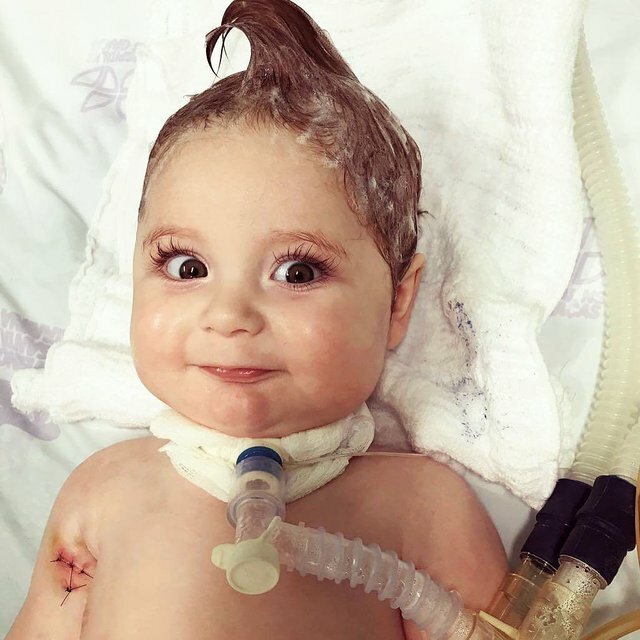
There is no medicine that could cure Werdnig-Hoffmann disease. Treatment is directed at specific symptoms that are present in every patient. A team of specialists may be required for treatment.
Nusinersen is an antisense oligonucleotide targeting the survival of motor neuron-2 (SMN2) and is FDA approved for the treatment of SMA in adults and children. It is administered intrathecally. It increases the inclusion of exon 7 in the messenger ribonucleic acid SMN2 (mRNA) and promotes the production of the full-length SMN protein.
- Supportive treatment.
Medicines that are often used to improve symptoms include phenylbutyrate, valproic acid, albuterol, and hydroxyurea. Unfortunately, clinical trials have not shown any definite evidence that these drugs prevent disease progression. Treatment is aimed at controlling symptoms. Symptomatic treatment is aimed at supporting feeding, breathing and motor weakness.
Feeding problems.
Babies often have difficulty feeding and may have malnutrition or aspiration pneumonia caused by difficulty swallowing. Percutaneous endoscopic gastrostomy (PEG) tubing can help with nutrition.
Breathing problems.
Children may need non-invasive ventilator support early on because the disease affects the respiratory muscles. As symptoms worsen, they may need tracheostomy and mechanical ventilation.
Motor weakness.
Physical therapy and occupational therapy can help stretch, strengthen muscles, and minimize contractures. Surgical procedures and braces can be helpful to help with scoliosis.
Forecast
The prognosis for Werdnig-Hoffmann disease is very poor. The disease manifests itself before 6 months of age and is a progressive muscle disease that often leads to early death. Most patients die prematurely, either in infancy or early childhood, often by 2 years of age. It is the most common genetic cause of infant mortality.
Complications
- Orthopedic complications often arise from hypotension, muscle weakness, and wasting. Often observed scoliosis, joint contractures, ankylosis. Physical and occupational therapy, orthopedic surgery, and braces can help manage these symptoms.
- Aspiration pneumonia can develop against the background of bulbar paralysis.
- Malnutrition is a common complication secondary to difficulty swallowing.