
Internal hemorrhoids: causes, symptoms, treatment and first signs
The modern lifestyle and sedentary work affect the spread of hemorrhoids - a disease of the century. Previously, the pathology manifested itself in the older age group (from 45 years old). Today this diagnosis is given to young people.
Content
-
1 "Royal" disease
- 1.1 First signs and symptoms
- 2 Foundation of the disease
- 3 Diagnostic measures
-
4 Fighting the disease
- 4.1 Drug treatment
- 4.2 Folk remedies
- 4.3 Surgical intervention
- 5 Identify and neutralize
"Royal" disease
Hemorrhoids are a common vascular disease in proctology. Manifested by expansion, inflammation of the veins of the rectum, causing hemorrhoids. Hemorrhoids look like a lump - a collection of inflamed blood vessels and capillaries. Venous blood stagnates inside hemorrhoids.
There are two types of this disease:
- external (external) - causes varicose veins on the outside of the anus;
- interior.
Internal hemorrhoids are characterized by varicose veins in the depths of the anal canal where it becomes part of the rectum, which cannot be seen visually. This is the danger. Such nodes are painless, but ignoring the symptoms leads to serious complications.
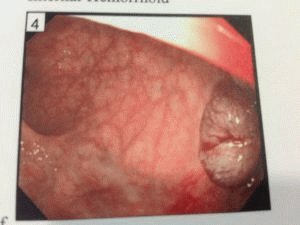
Lumps inside the rectum
Preventive measures:
- Normalization of digestive activity (if constipation or diarrhea appears), regular bowel movements.
- Reducing the proportion of salty and spicy foods, alcohol in the diet.
- Hygiene procedures after each bowel movement.
- Drinking enough water and laxative foods (fruits and vegetables).
- Elimination of extra pounds.
- Increased physical activity.
- Refusal from tight belts.
- Correct selection of power load when playing sports.
Doctors have developed a specialized set of exercises to strengthen the abdominal muscles and improve blood circulation in the pelvic organs:
- Sitting or standing with an effort to squeeze the sphincters of the anus.
- Raise the pelvis to the maximum point, lying on the floor, leaning on the feet and back.
- Raise and spread your legs while lying on the floor.
- Lying on your back perform "scissors" and "bicycle", press the legs bent at the knees to the stomach.
Regular nutrition with the right foods - way to prevent hemorrhoids. Adequate intake of plant fiber in food will reduce the tendency to constipation by absorbing water and increasing the mass of stool.
First signs and symptoms
Early disease is easily recognizable by a small amount of blood after a bowel movement, which can be seen on toilet paper, and discomfort in the anus when sitting on hard surfaces.
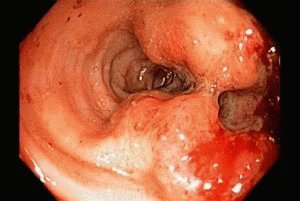
Blood with hemorrhoids
Internal hemorrhoid symptoms:
- The disease leads to irritation of the mucous membrane and skin, erosion of the walls of blood vessels. There is a feeling of itching and burning.
- Pain syndrome. Dull pains of a constant nature are associated with the chronic course of the disease. Pain after defecation occurs in acute thrombosis.
- Bleeding from the anus or blood in the stool. As a result of stagnation of blood in the hemorrhoids, the walls stretch, which leads to the formation of microcracks and ruptures. A bowel movement causes bleeding and iron deficiency anemia.
- Swelling of the nodes causes a feeling of heaviness when walking.
- Inflammation of the hemorrhoidal cones causes them to be indurated and sore to the touch.
- Loss of nodes. The bumps are attached from the inside by connective tissue to the inner surface of the rectum. Gradually, they move towards the anus and fall out. The process is accelerated by prolonged sitting on the toilet and strong straining when relieving himself.
- The onset of an acute course of the disease (pinching of the node) causes pain during walking and defecation, as well as a feeling of distention of the anus while sitting.
Hemorrhoidal disease occurs with episodes of chronic exacerbation with deep thrombosis. Over time, the periods between exacerbations become shorter and the symptoms of the acute stage become more intense. In remission, a person does not hurt anything, he feels healthy, but this is an erroneous feeling.
Signs of internal hemorrhoids are specific, accompanying other diseases (cancerous). If vague discomfort in the anus does not look dangerous, it is better not to delay a visit to the doctor!
Foundation of the disease
Disease does not arise without a cause. There are two bases for hemorrhoids:
- mechanical character;
- vascular character.
The first group of factors is associated with external influences and with an increase in the size of hemorrhoids. The muscle that holds the bumps inside slowly stretches - with internal hemorrhoids, the node, initially hidden inside, falls out.
The second group of reasons is characterized by impaired blood circulation in the veins and the outflow of blood from them. There is stagnation of blood and stretching of the walls of blood vessels.
If we talk about the immediate causes of the disease, it overtakes those genetically predisposed to it. Disturbances in the work of the circulatory system are inherited from the parents.
Excessive force loads cause an increase in pressure in the vessels of the intestine and the pelvic organs. Vessels enlarge over time, the walls become thinner and lose elasticity. Therefore, it is important for weightlifting enthusiasts to choose the load wisely and increase it gradually.
Sedentary work and a sedentary lifestyle provoke stagnation of blood in the vessels and the formation of blood clots, blood clots. Blood circulation is impaired and hemorrhoids are manifested.
Improper nutrition leads to a delay in the intestines of dense feces, which press on the walls of the rectum and injure the vessels. Defecation during constipation can cause a violation of the integrity of the mucous membrane and the appearance of inflammatory processes, and straining increases the pressure in the vessels of the rectum, which leads to wear and tear. Eating spicy foods irritates the inner walls of the intestines.

Pregnancy and childbirth are considered a separate cause. The reason is fundamental physiological changes in a woman's body. The volume of blood increases, while the vessels are under increased stress. The intensity of the blood supply to the pelvic organs increases, and the decreasing physical activity provokes blood stagnation. The growing uterus presses on the vessels. During childbirth, the risk of vascular damage is high, and attempts to increase it to a maximum.
Diagnostic measures
Diagnosis of hemorrhoids carried out in a clinical setting and includes examination and examination of the anal canal using a finger.
If the patient has no pain and the defecation occurs without blood, the disease is not in the acute stage. Colonoscopy or sigmoidoscopy is used - endoscopic examination methods, implying an examination of the internal the surface of the intestine inside the rectum, sigmoid and large intestine using an endoscope or rectomanoscope by introducing them into anus.
Patients are examined in a standing position, tilted, knee-elbow position, or on a gynecological chair with legs pressed to the stomach. Examination on the left or right side is allowed if the patient is in serious condition. The doctor determines the stage of the disease, the size and location of the nodes, the fact of loss or pinching, the strength of bleeding.
There are the following stages of hemorrhoids:
- The first, which is determined by bleeding from the anus and mild discomfort.
- The second is accompanied by the prolapse of hemorrhoids and their independent reduction.
- The third is characterized by frequent loss of nodes and the need to reposition them manually.
- With the fourth, the nodes fall out constantly along with the rectal mucosa, while it is impossible to set them back.
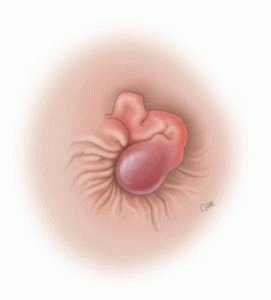
External hemorrhoids
Based on the results of the diagnostic examination, the surgeon (or proctologist) prescribes treatment.
Fighting the disease
If the doctor has made an unpleasant diagnosis, it becomes interesting how to treat internal hemorrhoids. The choice of therapy depends on the type and degree of neglect of the disease. Follow your doctor's orders and your chosen line of treatment.
Drug treatment
Doctors advise starting actions to combat the disease immediately, since it is not possible to cure an advanced form of the disease without surgery.
At an early stage, the disease is treated with medications with anti-inflammatory, hemostatic, analgesic effect and aimed at improving blood flow (outflow of blood from the veins). The patient is prescribed means to improve digestion and get rid of constipation, increase vascular tone and relieve symptoms. Apply topical preparations - ointments, rectal suppositories.
Folk remedies
In the initial stages, hemorrhoids can be treated with folk remedies (in combination with drug treatment and after consulting a doctor):
- a special collection of herbs, which is brewed and taken orally by the course;
- treatment with a decoction of yarrow;
- using raw potato candles;
- topical application of honey and propolis;
- hirudotherapy.
Surgical intervention
If hemorrhoids are running, you will have to resort to minimally invasive surgical methods of treatment (they minimize interference with the body and imply the use of endoscopic instruments). Surgical treatment of internal hemorrhoids is carried out in a number of ways:
- Exposure to problem areas with increased temperature - a burn is caused, which leads to the death of the node.
- A special composition is injected into the lump with the help of an injection, leading to its atrophy.
- Using latex rings to block blood flow in the node.
- Ligation of the vessels feeding the node.
- Using alternating current to denature the node.
- Using a laser to remove knots is a painless method.
Identify and neutralize
It is easier to prevent a disease than to cure it. If you are at risk, take a set of preventive measures to prevent the development of the disease. Prophylaxis was late and there is already discomfort, pain or itching in the anus - do not delay a visit to the doctor, despite the delicacy of the problem.
It is impossible to get rid of hemorrhoids at home. Diagnostics and treatment are important, otherwise the patient has a great chance to wait for serious complications, ignoring alarming manifestations.


