Rehydration for diarrhea: symptoms in children and adults
Intestinal infection, settling in the human body, provokes disturbances and malfunctions in the gastrointestinal tract, getting into the intestinal tract, blocks the absorption of beneficial trace elements and water. The process is accompanied by unpleasant symptoms:
- Sharp pain in the abdomen;
- Vomit;
- The body temperature rises.
When a person is sick, a mass of fluid is lost through the sweat glands, vomiting, and diarrhea. The body is dehydrated. This process can pass unnoticed by the internal organs or lead to the occurrence of other, more serious diseases.
Content
- 1 Causes of fluid loss
- 2 Rehydration
-
3 Medicines
- 3.1 Regidron
- 3.2 Glucosolan
- 3.3 Hydrovit
- 4 Rehydration in children
- 5 Home solution
Causes of fluid loss
What can provoke diarrhea:
- Gastritis. Disease of the gastric mucosa. As a result, food is poorly digested, stagnation is formed. Food, along with nutrients, releases toxins that cause diarrhea, heartburn, belching, vomiting, and pain in the upper abdomen.
- Enteritis. Provokes excessive gas, rumbling in the intestines, pain with an indefinite location; feeling that the pain syndrome is spread throughout the abdomen. The disease is accompanied by defecation, the feces are liquid and mucus and blood are observed.
- Colitis. Frequent false urge to empty, pain appears in the right side. Defecation with liquid feces with mucus and blood.
Infants and children in the first 3 years of life are susceptible to dehydration.

In a child's body, fluid is contained in a large volume outside the cells, the genitourinary system is not fully matured. The baby loses a large amount of fluid through the skin and lungs. This is due to the ratio of vaporized surface to body weight compared to body weight in adults.
Rehydration
Diarrhea is considered a dangerous ailment that threatens human life, depleting the body. When a child suffers from diarrhea, toxic substances and water are washed out of his digestive system, as well as electrolytes, which are responsible for the transmission of nerve impulses from the central nervous system to the internal organs. Violation of the water-electrolyte balance provokes negative consequences.
The main electrolytes lost during diarrhea are sodium and potassium ions. This affects the state of the body and leads to a severe form of acidosis, when acids accumulate in tissues and destroy them.
With the loss of fluid, patients are diagnosed with isotonic dehydration - the loss of water exceeds the loss of sodium. Dehydration of the hyponatremic type is extremely rare - sodium is washed out of the body in greater quantities than water. The second type of loss is observed in cases of cholera or dysentery. It is easy to aggravate the situation by drinking fluids without sufficient electrolyte content.
Rehydration is the replenishment of the missing volume of fluid and electrolytes. The procedure is performed in an emergency mode if there is a threat to human health and life. There are two methods of administration of rehydration solutions: oral and intravenous.
Intravenous is rarely used, as a last resort, when there are difficulties with swallowing, or other obstacles.
The oral route of administration is more often used. Glucose-salt solutions are used. Glucose has the ability to carry sodium and potassium ions, deliver them to the intestines and replenish the water-salt balance.
The elimination of dehydration is carried out in stages:
- Stage 1. Restoration of the content of lost fluid and salts in the body.
- Stage 2. Correction of the loss process.
How effective the rehydration will turn out to be depends entirely on the timeliness of the application. It is necessary to use the solution in the first hours of the onset of symptoms.
Medicines
The drugs used depend on the type of dehydration:
- Sole deficiency. There is a large loss of electrolytes from the body.
- Water scarce. More water comes out with diarrhea.
- Isotonic. Both water and electrolytes leave the body in equal proportions.
For rehydration, use a self-prepared solution or a ready-made drug. For self-preparation: a rehydration solution powder is purchased at the pharmacy, and at home it is dissolved in water and drunk.
Regidron
Sold in powder form. Contains sodium citrate, sodium chloride, potassium chloride, glucose.
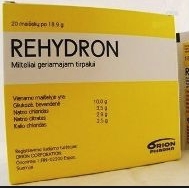
The action of the drug is aimed at correcting and normalizing the electrolyte balance, preventing the development of metabolic acidosis. Helps relieve other symptoms that accompany dehydration: weakness, nausea, pain. It can be used in severe conditions associated with dehydration. Also with heat or sunstroke, when the body sweats heavily.
Preparing a rehydration solution is easy: a sachet of powder in 1 liter of non-cold water. It is allowed to store the prepared suspension for up to 8 days. Shake well before use.
The dosage is calculated on the basis of body weight: 10 ml per 1 kg of body weight. It is taken in small sips, after each attack of vomiting or diarrhea. For children, the dose is calculated by the doctor. The acute period of the disease is treated: 10 ml for each kilogram of child weight.
- With diarrhea. Adults take 100 ml of suspension every 3-5 minutes. Children take 2 teaspoons every hour.
- Heatstroke. Assign 150 ml of solution every 40 minutes, repeat the dose until the unpleasant symptoms disappear.
Glucosolan
A drug that restores the balance of electrolytes. With its help, therapy is carried out: diarrhea, heatstroke, intense sweating.
Pharmacological form of release: dissolving tablets and powder for preparation of suspension for oral administration. Prepare the solution as follows: take the main and additional package and dissolve in a liter of cold water.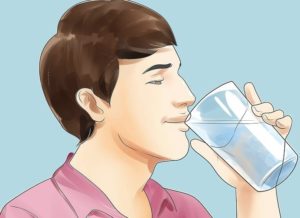
If it is supposed to use the solution for prophylaxis, it is diluted in two liters of water.
Hydrovit
Medication aimed at restoring lost fluid. It is used to combat severe poisoning, which are accompanied by profuse vomiting and frequent bowel movements.
Available in powder form. 10 sachets per pack. Active active ingredients contained in the medicine: sodium chloride, sodium hydrocitrate, potassium chloride, dextrose hydrate. The drug contains silicon as an auxiliary component. It is prescribed for adults and children when symptoms occur:
- Diarrhea.
- Profuse, violent vomiting.
- Increased temperature, provoking a change in the balance of acids and alkalis in the blood.
- Increased sweating. It occurs when the body is ill with infectious ailments or during excessive physical exertion.
The dosage of the drug is prescribed by the doctor and is determined based on the severity of the disease, the age and body weight of the patient:

- Babies and children under 3 years old. Take no more than 5 sachets per day.
- 3-10 years old. 1 sachet is taken after emptying or vomiting.
- For children over 12 years old and adults: the medicine is taken immediately after a bowel movement or vomiting, 1 sachet.
The course is calculated based on individual indicators and the complexity of the disease.
Rehydration in children
The child's body is sensitive to dehydration. It is difficult to correct fluid loss, the body weight of a child is small compared to an adult, and active removal of moisture is dangerous for a baby.
Rehydration solutions have a salty taste; not every child will agree to drink tasteless water. Therefore, pharmacists have released medicines with a pleasant taste.
- Humana Electrolyte. Available in powder form. With its help, the treatment of the disease in children from 3 years old is carried out. Take a glass of water, dissolve 1 sachet of the drug. In addition to active substances in the form of salts, the powder contains fennel, which helps to eliminate intestinal colic, and pectin, which helps to effectively remove toxins from the body.
- Tour. Medication, produced in the form of tablets. 1 tablet dissolves in 10 ml of water. Appointed for children from birth. It has a pleasant taste. Fights inflammation, cramping and bloating.
Every parent has encountered diarrhea in children. Various situations arise, including the need to relieve the symptoms of dehydration without waiting for an ambulance. For moms, the following is an algorithm of action in the event of such situations:
- Disinfect your hands by treating with an antiseptic.
- Wear medical gloves.
- Lay the child on a sofa or bed (the surface is chosen flat) so that the head is turned to one side.
- Apply a self-prepared solution (made according to the instructions) or ready-made.
- It is necessary to solder the child within 6 hours. Give the solution 1 teaspoon at a time, do the approaches every 5-10 minutes. The procedure lasts until the symptoms of diarrhea and vomiting are eliminated. In severe cases of dehydration, the solution is introduced through the nose with a probe.
- The absence of urination for 6-8 hours is stopped by the introduction of the solution intravenously. The dosage is precisely calculated.
- Wash the dishes in contact with the solution (spoon, plate).
- Remove gloves and treat hands with disinfectant.
Home solution
It is permissible to prepare the solution yourself, without the use of pharmacy powders. You will need the following components:
- One fourth of a teaspoon of salt.
- 4 tbsp. tablespoons of sugar.
- 1 glass of freshly squeezed orange juice
- 1 glass of water.
The ingredients are mixed and taken orally in small sips.
Classic solution to combat dehydration: 2 tbsp. tablespoons of sugar dissolve in a glass of water. Also add 1/4 teaspoon of salt and baking soda. 100 ml is taken after each emptying or vomiting. For children, give 2 teaspoons after symptoms. The solution is used until diarrhea and vomiting completely disappear.
A decoction of raisins is prepared for children: for 100 g of raisins, 1 liter of water, cook for 30 minutes, strain and grind the raisins. 1 tsp is added to the gruel. salt, 0.5 tsp. soda and 4 tsp. Sahara. Boil for 2 minutes, cool down. Give the baby a teaspoon.