Diarrhea with mucus in a child: causes and quick treatment
Diarrhea with mucus in a baby may indicate to parents that there is a problem in the child's body. Responsible parents will make the right decision - see a doctor. Moreover, if the stool is liquid, frequent and accompanied by a number of other symptoms. The doctor will help determine the cause of the phenomenon. Diarrhea is not considered a disease - it is an indicator that the baby's health is at risk.
Content
- 1 Causes
- 2 Associated symptoms
-
3 Diseases that provoke diarrhea with mucus
- 3.1 Salmonellosis
- 3.2 Dysentery
- 3.3 Rotavirus infection
- 3.4 Dysbacteriosis
- 4 Parents' actions
-
5 Diagnostics and treatment
- 5.1 Diagnostics
- 5.2 Treatment
- 5.3 Diet
- 6 Prophylaxis
Causes
In children under one year old, diarrhea is a frequent occurrence, rarely indicating a serious pathology in the infant's body, even if mucus is present in the stool. This is due to the peculiarities of the children's digestive system - the baby's intestines do not work fully. An upset bowel movement in a nursing infant is triggered by the introduction of a new product as a complementary food. The reasons for the development of a symptom in infants:
- Improper nutrition of the mother;
- Digestive disorders that provoked dysbiosis;
- Excessive food intake;
- Intolerance to milk, mixture, products;
- Intestinal infection;
- Congenital pathologies of the gastrointestinal tract;
- Teething.
Liquid, dark-colored stools with mucus are considered normal in a one-month-old baby. This is how meconium comes out. The digestive system of a baby during the first month of life is adapting to new conditions. If a 4-5 month old baby has teething, diarrhea is possible. In this case, the process is not dangerous and takes place after a while.

The stool of a child over one year old is influenced by external factors and diseases. Causes diarrhea in children older age:
- The use of low-quality products or products with an expired shelf life;
- Emotional disorder
- Intoxication of the body;
- Intestinal infection;
- Disease of the gastrointestinal tract;
- Dysbacteriosis resulting from antibiotic therapy.
A serious cause for concern is diarrhea with mucus, which can indicate the presence of an acute intestinal infection.
Associated symptoms
Often, diarrhea with mucus occurs for reasons that do not pose a threat to the health of the child. If diarrhea is caused by a chronic illness or infection, other symptoms also occur:
- Weakness, fever;
- Blood in liquid stool;
- Green or white flakes in feces;
- Yellow, green, black diarrhea;
- Frequent loose stools - more than 10 times a day;
- Nausea, vomiting, abdominal pain.
The listed signs require immediate medical intervention, especially if they are present in a newborn baby.
Diseases that provoke diarrhea with mucus
Certain diseases provoke loose stools with mucus, sometimes streaked with blood. Frequent childhood infections include:
- Salmonellosis;
- Dysentery;
- Rotavirus infection;
- Staphylococcus aureus.
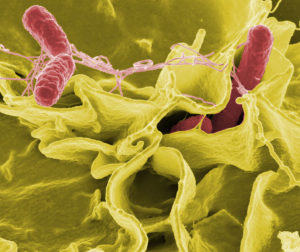
Salmonellosis
Bacterial infection acquired through dirty water, spoiled food. A severe disease occurs in a newborn baby up to one year old. The child feels weak, is capricious. The temperature rises to 39 degrees.
Diarrhea begins later. Diarrhea is frequent - more than 10 times a day. The bowel movement has a green tint. There is mucus in the diarrhea. After a week, blood can be seen in the stool.
Salmonellosis is an extremely dangerous disease for children. In case of complication, an infectious-toxic shock develops.
Salmonellosis disease
Dysentery
A common bacterial infection in preschool children. The incubation period lasts up to a week. Depending on the form, the disease has different symptoms and duration of the course. The disease begins with a rise in temperature, sometimes to critical levels. The baby has a headache. Nausea and vomiting appear. Frequent bowel movements - up to 30 times a day. The feces are liquid, slimy, mixed with blood. In severe form, it is transparent mucus with a green admixture.
Rotavirus infection
An intestinal infection affecting the upper respiratory tract. Most common among children 6 months to 5 years old.
In the first days after infection, there are no symptoms of the disease. Then there is a sign of poisoning - the patient is sick, vomits.
Sometimes the disease begins like a common cold - with a cough and a runny nose, without fever. Then abdominal pain and stool disorder join. At first, the urge is frequent - up to 15 times. The color of the stool is yellow, the consistency is liquid. With diarrhea, stools with a sour odor. Foam and mucus can be seen in loose stools. Later, the stool thickens and becomes grayish in color.
Dysbacteriosis
Pathology in which the intestinal microflora is disturbed. The predominance of harmful bacteria over useful ones is noted. Often, this condition is noted in young children and even in infants.

The disease is manifested by stool instability - alternating constipation and diarrhea. The diarrhea has an unnatural color and mucus is seen in it. The patient's appetite worsens, abdominal cramps appear.
Often, during the diagnosis, it turns out that the dysbiosis is caused by another, more serious disease.
Parents' actions
Anxious parents often do not know what to do if a small child is feeling unwell. The first thing a mother should do is see a doctor. When the doctor hears the complaints, makes an initial examination, he will prescribe treatment or give a referral for an examination to clarify the diagnosis. Before the visit of the pediatrician, you need to take measures:
- If diarrhea with mucus in an older child, limit food intake. The recommendation does not apply to infants.
- Increase your drinking volume. Pure mineral water without gas, herbal teas are recommended.
- It is allowed to give the baby sorbents. For little ones, Smecta is suitable. Older kids will take activated charcoal.
The main thing is to avoid dehydration. To replenish the water-salt balance, parents can give their child a rehydration solution purchased from a pharmacy. Closely monitor the patient's condition. Dry lips, skin, lack of urine - all of the above are considered signs of dehydration. If you suspect, you need to call an ambulance.
After stabilizing the baby's condition, it is necessary to adhere to a gentle diet for some time so that the digestive system is fully restored.

Diagnostics and treatment
If mucous diarrhea does not go away after a day, the doctor prescribes a laboratory study of the child's biological material and an apparatus examination of the organs of the gastrointestinal tract. Only after finding out the reason, appropriate treatment is prescribed.
Diagnostics
The doctor will recommend a complete blood count to assess the child's condition and determine the severity of the disease. Stool analysis for dysbiosis will help to establish the presence and types of microbes that caused diarrhea with mucus.
Mandatory is analysis of feces for eggs of worms.
Additionally, the doctor will prescribe an ultrasound examination of the gastrointestinal tract. The procedure is completely safe, does not cause discomfort in infants, and helps to identify various organ pathologies.
Treatment
First of all, therapy is aimed at eliminating the disease that caused the bowel disorder. If diarrhea is caused by an intestinal infection or intoxication, the doctor prescribes an antibacterial drug that eliminates the microorganism. At the same time, a probiotic is prescribed to normalize the intestinal microflora. The most commonly prescribed drugs are Bifidumbacterin, Bifiform baby, Narine.
To remove toxins, sorbents are prescribed - Polysorb, Smecta. If the baby is sick, it is allowed to give Enterosgel. Sorbents are given first when a symptom appears. Activated carbon is recommended for children from 7 years old.
If the baby has a fever, the doctor may prescribe Panadol or children's Paracetamol.
Diet
To recover from diarrhea, you need a strict diet. A baby who is under 1 year old and is breastfed can consume breast milk at the same interval. Breast milk will help you quickly replenish fluid lost from diarrhea.
Diarrhea in a one-year-old baby and older children - you need to reduce the volume of food and increase the volume of fluid. Remove heavy and irritating foods from the diet.
Prophylaxis
To avoid recurring symptoms, it is necessary to adhere to simple rules:
- The child's menu should be complete and varied, age appropriate.
- Observe the rules of personal hygiene. Teach children to wash their hands after going outside and using the toilet.
- Drink clean, filtered water.
- Avoid contact with sick people.
- Heat vegetables and fruits.
The body of children is less resistant to various infections. Certain diseases that cause diarrhea with mucus can seriously affect health and even threaten life. It is important to seek medical help in a timely manner, determine the cause and begin treatment in order to avoid unwanted consequences.